Author Archives: Simon Lucas

JBL 4305P

New floor can solely be damaged as soon as, after all. After that it’s only a land-grab.

Take, not fully at random, the idea of the self-contained, all-in-one audio streaming system contained inside a pair of seemingly typical loudspeakers. It’s been accomplished, proper? And now all the pieces is only a variation on a theme.

For its 4305P powered loudspeaker streaming system JBL has chosen, each predictably and properly, to play to its strengths. And the consequence, not less than in visible phrases, is a pair of loudspeakers the corporate may need turned out at any level within the final 60 years. Not solely is not any new floor being damaged right here, nevertheless it seems to be very very like we’re firmly on the previous floor.

Only JBL

The 4305P may solely be a JBL loudspeaker. The cupboard is MDF, squared edged and completed in walnut veneer (that’s our evaluate pattern, anyway. A black walnut veneer various is out there). A dark-blue grille covers a 130mm pure-pulp black paper cone and a few bass-reflex ports. Up above, sitting in a housing that’s meant to be black however as an alternative is a species of very deep gray, there’s a 25mm Teonex diaphragm compression driver with a hoop encompass sitting within the throat of an oblong High Definition Imaging horn aperture. This association, after all, is solely uncompromised and uncompromising JBL from again within the day – however the general aesthetic could be very ‘studio oriented’ for a home loudspeaker. It’s doubtless extra than simply seems to be; alongside the passive 4349 and 4309, the 4305P is a part of JBL’s Studio Monitor line.

However, these aren’t passive audio system. Far from it.

JBL 4305P

Each speaker is fitted with Class D amplification – 150 watts every, to be exact. It’s divvied up at 25 watts per tweeter and 125 watts per mid/bass driver. And every speaker has a kettle-socket for mains energy, a CAT5 socket to make a wired connection to its associate and a button to allow the identical factor however wirelessly. They’ve each acquired an influence change. After that, one of many audio system takes management. It’s loaded with further socketry and a few extraordinarily small buttons.

Specifically, it’s fitted with quarter-inch balanced XLR inputs with a change to pick out both -10db or +4dB sensitivity. It has an Ethernet socket, and a USB-A enter for servicing. It’s acquired a 3.5mm analogue enter, a digital optical enter and a USB-B enter ( the one – it’s the form of USB your printer has). There’s a pre-out for a subwoofer, a change to assign the speaker because the ‘left’ or ‘proper’ channel, and a change to toggle between -3db and 0dB as a bass contour. Oh, and a ‘reset’ button in case one thing goes essentially incorrect.

More happening…

As a consequence, this speaker additionally has barely extra happening on the entrance than its associate. Across the demilitarised zone that separates the horn-loaded tweeter from the grille protecting the mid/bass driver there are two little ‘flip/press’ controls (one governing ‘quantity/mute’, the opposite ‘enter choice/Bluetooth pairing’) and a row of even smaller lights that reveal which enter has been chosen – if you happen to get very, very near them.

The speaker might be related to your community wirelessly (if it’s too far out of your router for a bodily connection) utilizing Google Home. Once it’s on there, Apple AirPlay is out there, as is Google Chromecast – and there’s additionally Bluetooth 5.1 wi-fi connectivity. This final tops out at 48kHz, whereas the utmost decision if the audio system are wirelessly related to one another is 24bit/96kHz. Join them collectively utilizing the provided CAT5-terminated cable and you’ll have 24bit/192kHz out of your native community and the digital optical enter. Every worthwhile digital audio file sort is supported, together with MQA, and it’s Roon-ready.

The 4305P is provided with a full-function distant management handset that appears and feels as prosaic because the audio system themselves. Control can be accessible through the third-party MusicLife app – right here’s the place you’ll be able to combine your streaming service of alternative (offered it’s Amazon Music, Deezer, Napster, Qobuz or TIDAL), choose the web radio station or podcast you’d prefer to hearken to, verify for firmware updates and all the opposite traditional stuff. There’s no EQ adjustment right here, although, and the quantity management has no discernable impact.
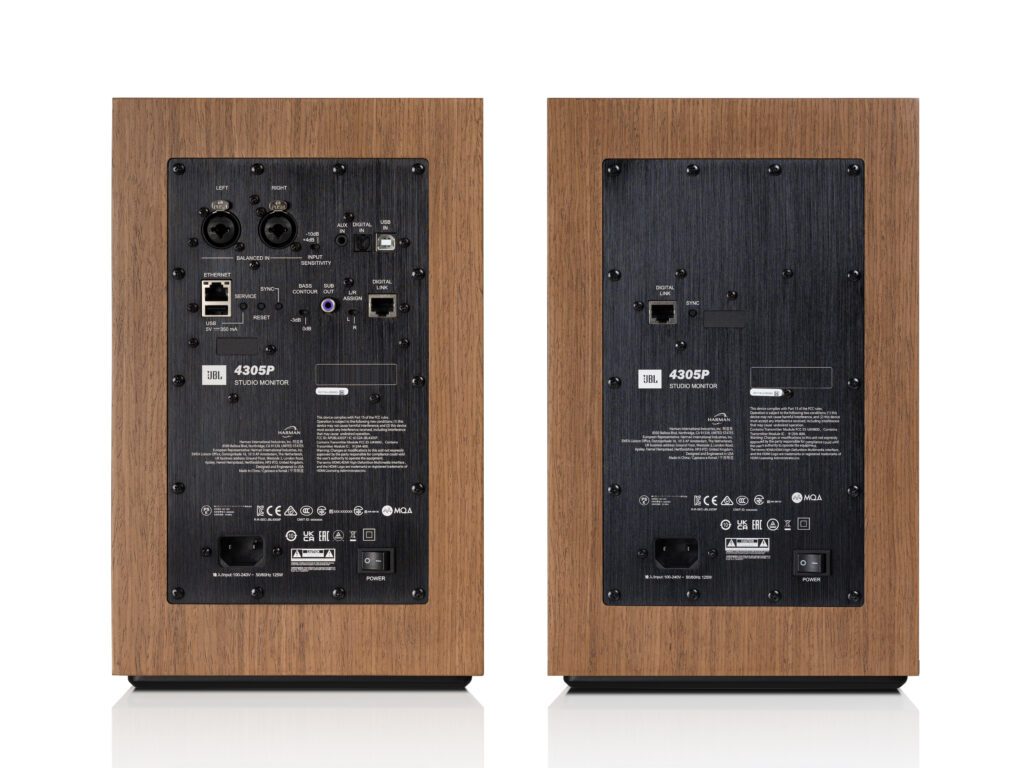
JBL 4305P rear

Set-up is painless, and for the needs of this check the extra overworked speaker is related to an area community utilizing an Ethernet cable, to a Clearaudio Concept turntable through a Chord Huei phono stage utilizing the three.5mm analogue enter, to an Apple iPhone 13 utilizing AirPlay and to a Rega Apollo CD participant through digital optical. The audio system are positioned securely on a pair of Atacama Moseco 6 stands and we’re in enterprise.

Paris-based web radio station FIP has lengthy acted as an indication of simply how discerning and tasteful the French might be relating to fashionable music – and its customary combination of jazz, reggae, hip-hop and Leonard Cohen seldom fails to fulfill. Tuning in (if certainly that’s what one does with an web radio station) simply as Sons of Kemet’s The Hour of Judgement [Naim Jazz] kicks off permits the 4305P to disclose slightly of what they’re product of.

Texture and solidity

There’s actual texture and solidity to the tune’s blown bass, a correct expression of the laborious enter and singular output of the tuba participant. The heated contributions of saxophone and clarinet are properly managed, with convincingly straight edges marking the assault and decay of particular person notes. The integration of the frequency vary is clean (though that is hardly the perfect recording for showcasing the flowery tweeter association these audio system get pleasure from), the soundstage is unambiguously described, and the nuance of the dynamic and harmonic variations that consequence from musicians all bearing down on a chunk of music as a single entity are given good expression too.

The reasonably extra conventional charms of Simon & Garfunkel’s Bookends [CBS] on vinyl grant the JBL much more freedom. This is painstakingly recorded music, ‘musicianly’ in essentially the most demonstrative sense, and the 4305P get pleasure from it a fantastic deal.
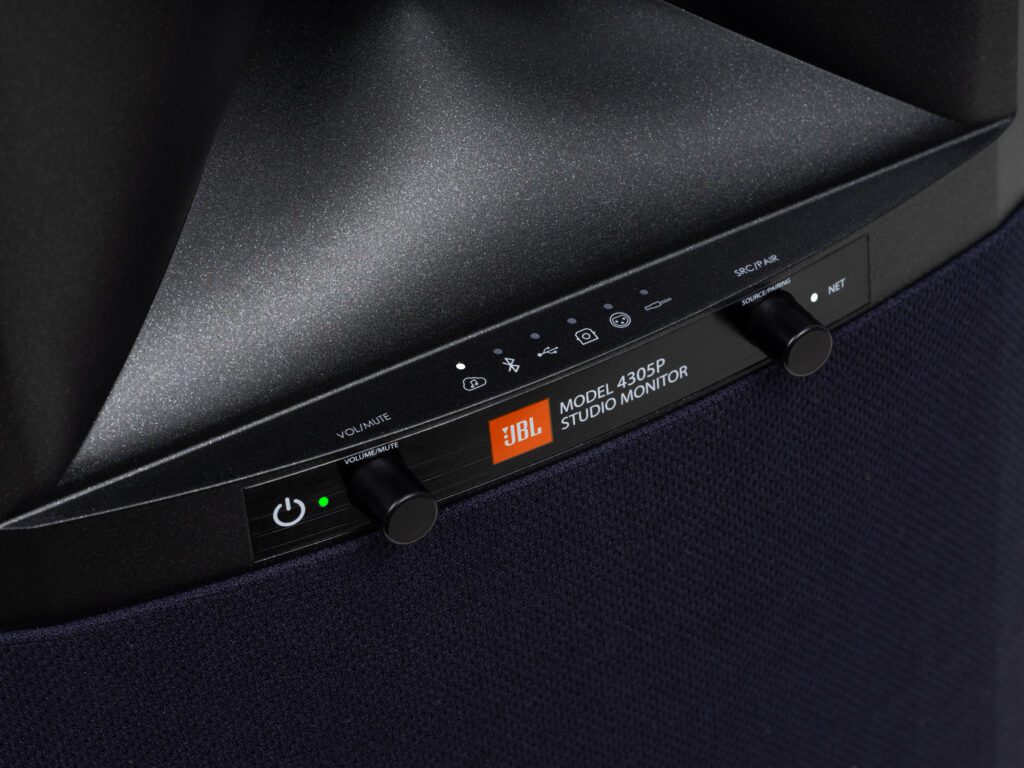
JBL 4305P control panel

Low frequencies are confidently formed, correctly managed and provide each underpinning and momentum in equal measure. Detail ranges all through the frequency vary are sky-high, which so far as bass is worried means all the pieces from string-gauge to plectrum-weight is described. There’s easy ‘punch’ accessible when a recording calls for it, however the JBL are removed from a blunt instrument and their perception into the specifics of low-frequency data is spectacular.

The purity and character of the voices right here permits the standard of the 4305P midrange copy to shine – and you’ll make sure there’s no subtlety missed, no fleeting harmonic occasion left unidentified. All the heat, all of the approach, all of the striving to speak is totally expressed – and the voices get pleasure from a definite pocket of area wherein to function. ‘Explicit’ is essentially the most applicable phrase right here.

At the highest finish, the reasoning behind JBL’s insistence on the comparatively complicated and costly tweeter association it’s persevered with for all these years is made obvious. There’s tangible substance and solidity to treble data, nevertheless it’s accompanied by a deft airiness that eludes nearly all of extra prosaic tweeter preparations. The sensation of rigorous focus mixed with extensive‑open dispersal of sound is much from widespread, and it’s uncomplicatedly spectacular.

A CD copy of Dreams by The Whitest Boy Alive [Service] permits the 4305P to reveal its facility with dynamics, and likewise spotlight the remarkably direct and optimistic perspective it has to emptier, sparer records corresponding to this. The general presentation is full and strong, however the JBL pay correct consideration to the gaps and areas – so the album’s clear ‘superior demo-tape’ vibe is adhered to with out it sounding spindly or (heaven forbid) low-cost.

A recreation of two halves

The JBL 4305P audio streaming system is a traditional ‘recreation of two halves’. The first half consists of perceived worth, delight of possession and all that stuff – and let’s not beat across the bush right here, the 4305P come up quick on this regard. That ‘Seventies studio’ look may need some retro-appeal however it’s not for everybody, and different, extra modern-looking designs have better tactility than this method. When the second half kicks off, although, and we begin to think about the way in which the 4305P performs, effectively, it’s a special story.

In each significant respect, the JBL 4305P is an pleasing and galvanising pay attention. It will get all of the technical features proper, and it manages to take action with out being in any manner dispassionate or analytical about it. ‘Meticulous’ just isn’t the identical as ‘impassive’, in spite of everything, and the way in which the 4305P seems to be and feels just isn’t the identical as the way in which it sounds.

Technical specs

  • Type Bass-reflex loudspeaker system with built-in amplification, dsp, and wi-fi connectivity
  • Driver complement 130mm paper cone woofer; 25mm compression driver
  • Amplification energy (w)/sort 300/Class D
  • Frequency response 45Hz–25kHz
  • Crossover frequencies 1750Hz
  • Inputs Balanced 6.3mm XLR; unbalanced 3.5mm; digital optical Toslink; USB-B
  • Wireless inputs wi-fi; Bluetooth 5.1
  • Outputs subwoofer
  • Digital audio pattern charges 192kHz (streaming and optical); 48kHz (Bluetooth)
  • File sorts AAC; AIFF; ALAC; DSD; FLAC; MP3; MP4; OGG; WAV; WMA
  • Dimensions (hwd, cm) 34 × 21 × 22
  • Weight (kg) 6.6
  • Finishes Satin walnut; black walnut
  • Price £1,999 per pair
  • Manufacturer JBL   www.jbl.com    0161 222 3325

Distributor

Harman International Industries

www.harman.com

+44(0)161 222 3325

Back to Reviews

The publish JBL 4305P appeared first on Hi-Fi+.

JBL 4305P

New floor can solely be damaged as soon as, in fact. After that it’s only a land-grab.

Take, not totally at random, the idea of the self-contained, all-in-one audio streaming system contained inside a pair of seemingly standard loudspeakers. It’s been accomplished, proper? And now the whole lot is only a variation on a theme.

For its 4305P powered loudspeaker streaming system JBL has chosen, each predictably and properly, to play to its strengths. And the outcome, at the least in visible phrases, is a pair of loudspeakers the corporate might need turned out at any level within the final 60 years. Not solely isn’t any new floor being damaged right here, but it surely seems to be very very similar to we’re firmly on the previous floor.

Only JBL

The 4305P might solely be a JBL loudspeaker. The cupboard is MDF, squared edged and completed in walnut veneer (that’s our overview pattern, anyway. A black walnut veneer various is accessible). A dark-blue grille covers a 130mm pure-pulp black paper cone and a few bass-reflex ports. Up above, sitting in a housing that’s meant to be black however as a substitute is a species of very deep gray, there’s a 25mm Teonex diaphragm compression driver with a hoop encompass sitting within the throat of an oblong High Definition Imaging horn aperture. This association, in fact, is solely uncompromised and uncompromising JBL from again within the day – however the total aesthetic may be very ‘studio oriented’ for a home loudspeaker. It’s seemingly extra than simply seems to be; alongside the passive 4349 and 4309, the 4305P is a part of JBL’s Studio Monitor line.

However, these aren’t passive audio system. Far from it.

JBL 4305P

Each speaker is fitted with Class D amplification – 150 watts every, to be exact. It’s divvied up at 25 watts per tweeter and 125 watts per mid/bass driver. And every speaker has a kettle-socket for mains energy, a CAT5 socket to make a wired connection to its associate and a button to allow the identical factor however wirelessly. They’ve each acquired an influence change. After that, one of many audio system takes management. It’s loaded with extra socketry and a few extraordinarily small buttons.

Specifically, it’s fitted with quarter-inch balanced XLR inputs with a change to pick out both -10db or +4dB sensitivity. It has an Ethernet socket, and a USB-A enter for servicing. It’s acquired a 3.5mm analogue enter, a digital optical enter and a USB-B enter ( the one – it’s the form of USB your printer has). There’s a pre-out for a subwoofer, a change to assign the speaker because the ‘left’ or ‘proper’ channel, and a change to toggle between -3db and 0dB as a bass contour. Oh, and a ‘reset’ button in case one thing goes essentially flawed.

More happening…

As a consequence, this speaker additionally has barely extra happening on the entrance than its associate. Across the demilitarised zone that separates the horn-loaded tweeter from the grille protecting the mid/bass driver there are two little ‘flip/press’ controls (one governing ‘quantity/mute’, the opposite ‘enter choice/Bluetooth pairing’) and a row of even smaller lights that reveal which enter has been chosen – for those who get very, very near them.

The speaker could be linked to your community wirelessly (if it’s too far out of your router for a bodily connection) utilizing Google Home. Once it’s on there, Apple AirPlay is accessible, as is Google Chromecast – and there’s additionally Bluetooth 5.1 wi-fi connectivity. This final tops out at 48kHz, whereas the utmost decision if the audio system are wirelessly linked to one another is 24bit/96kHz. Join them collectively utilizing the provided CAT5-terminated cable and you may have 24bit/192kHz out of your native community and the digital optical enter. Every worthwhile digital audio file sort is supported, together with MQA, and it’s Roon-ready.

The 4305P is provided with a full-function distant management handset that appears and feels as prosaic because the audio system themselves. Control can also be accessible by way of the third-party MusicLife app – right here’s the place you’ll be able to combine your streaming service of alternative (supplied it’s Amazon Music, Deezer, Napster, Qobuz or TIDAL), choose the web radio station or podcast you’d prefer to hearken to, test for firmware updates and all the opposite standard stuff. There’s no EQ adjustment right here, although, and the quantity management has no discernable impact.

JBL 4305P rear

Set-up is painless, and for the needs of this take a look at the extra overworked speaker is linked to a neighborhood community utilizing an Ethernet cable, to a Clearaudio Concept turntable by way of a Chord Huei phono stage utilizing the three.5mm analogue enter, to an Apple iPhone 13 utilizing AirPlay and to a Rega Apollo CD participant by way of digital optical. The audio system are positioned securely on a pair of Atacama Moseco 6 stands and we’re in enterprise.

Paris-based web radio station FIP has lengthy acted as an illustration of simply how discerning and tasteful the French could be on the subject of standard music – and its customary combination of jazz, reggae, hip-hop and Leonard Cohen seldom fails to fulfill. Tuning in (if certainly that’s what one does with an web radio station) simply as Sons of Kemet’s The Hour of Judgement [Naim Jazz] kicks off permits the 4305P to disclose a bit of what they’re manufactured from.

Texture and solidity

There’s actual texture and solidity to the tune’s blown bass, a correct expression of the laborious enter and singular output of the tuba participant. The heated contributions of saxophone and clarinet are properly managed, with convincingly straight edges marking the assault and decay of particular person notes. The integration of the frequency vary is clean (though that is hardly the most effective recording for showcasing the frilly tweeter association these audio system take pleasure in), the soundstage is unambiguously described, and the nuance of the dynamic and harmonic variations that outcome from musicians all bearing down on a chunk of music as a single entity are given good expression too.

The reasonably extra conventional charms of Simon & Garfunkel’s Bookends [CBS] on vinyl grant the JBL much more freedom. This is painstakingly recorded music, ‘musicianly’ in essentially the most demonstrative sense, and the 4305P take pleasure in it a fantastic deal.

JBL 4305P control panel

Low frequencies are confidently formed, correctly managed and supply each underpinning and momentum in equal measure. Detail ranges all through the frequency vary are sky-high, which so far as bass is anxious means the whole lot from string-gauge to plectrum-weight is described. There’s simple ‘punch’ accessible when a recording calls for it, however the JBL are removed from a blunt instrument and their perception into the specifics of low-frequency info is spectacular.

The purity and character of the voices right here permits the standard of the 4305P midrange copy to shine – and you may be certain there’s no subtlety ignored, no fleeting harmonic occasion left unidentified. All the heat, all of the approach, all of the striving to speak is absolutely expressed – and the voices take pleasure in a definite pocket of house wherein to function. ‘Explicit’ is essentially the most applicable phrase right here.

At the highest finish, the reasoning behind JBL’s insistence on the comparatively advanced and costly tweeter association it’s persevered with for all these years is made obvious. There’s tangible substance and solidity to treble info, but it surely’s accompanied by a deft airiness that eludes the vast majority of extra prosaic tweeter preparations. The sensation of rigorous focus mixed with vast‑open dispersal of sound is way from frequent, and it’s uncomplicatedly spectacular.

A CD copy of Dreams by The Whitest Boy Alive [Service] permits the 4305P to reveal its facility with dynamics, and likewise spotlight the remarkably direct and constructive angle it has to emptier, sparer records comparable to this. The total presentation is full and strong, however the JBL pay correct consideration to the gaps and areas – so the album’s clear ‘superior demo-tape’ vibe is adhered to with out it sounding spindly or (heaven forbid) low-cost.

A recreation of two halves

The JBL 4305P audio streaming system is a traditional ‘recreation of two halves’. The first half consists of perceived worth, satisfaction of possession and all that stuff – and let’s not beat across the bush right here, the 4305P come up quick on this regard. That ‘Nineteen Seventies studio’ look might need some retro-appeal however it isn’t for everybody, and different, extra modern-looking designs have larger tactility than this technique. When the second half kicks off, although, and we begin to take into account the best way the 4305P performs, nicely, it’s a distinct story.

In each significant respect, the JBL 4305P is an pleasurable and galvanising hear. It will get all of the technical elements proper, and it manages to take action with out being in any manner dispassionate or analytical about it. ‘Meticulous’ shouldn’t be the identical as ‘impassive’, in any case, and the best way the 4305P seems to be and feels shouldn’t be the identical as the best way it sounds.

Technical specs

  • Type Bass-reflex loudspeaker system with built-in amplification, dsp, and wi-fi connectivity
  • Driver complement 130mm paper cone woofer; 25mm compression driver
  • Amplification energy (w)/sort 300/Class D
  • Frequency response 45Hz–25kHz
  • Crossover frequencies 1750Hz
  • Inputs Balanced 6.3mm XLR; unbalanced 3.5mm; digital optical Toslink; USB-B
  • Wireless inputs wi-fi; Bluetooth 5.1
  • Outputs subwoofer
  • Digital audio pattern charges 192kHz (streaming and optical); 48kHz (Bluetooth)
  • File varieties AAC; AIFF; ALAC; DSD; FLAC; MP3; MP4; OGG; WAV; WMA
  • Dimensions (hwd, cm) 34 × 21 × 22
  • Weight (kg) 6.6
  • Finishes Satin walnut; black walnut
  • Price £1,999 per pair
  • Manufacturer JBL   www.jbl.com    0161 222 3325

Distributor

Harman International Industries

www.harman.com

+44(0)161 222 3325

Back to Reviews

The submit JBL 4305P appeared first on Hi-Fi+.

Sennheiser IE600

“Fashion is ephemeral, harmful and unfair.” Admittedly Karl Lagerfeld didn’t have the world of shopper electronics uppermost in his thoughts when he made this assertion, but it surely however applies. Sennheiser actually appears to suppose so.

As of proper now, it’s arduous to consider a much less modern sector of the hi-fi market than that of wired in-ear displays. Mainstream shoppers gave up on them some time in the past – at nearly precisely the identical time as smartphone producers gave up on headphone sockets, the truth is. You may be forgiven for pondering wired headphones are the protect of airways who need you to benefit from the in-flight ‘leisure’ however don’t need you to be tempted to make off with their headphones after touchdown.

Wired beats wi-fi

Those who take listening severely, although, know that for sound high quality a wired connection beats the wi-fi equal 99 instances out of 100. These are the individuals who know a conveyable digital audio participant wipes the ground, the place sound high quality is worried, with even probably the most succesful and least compromised smartphone. And these are the folks Sennheiser has squarely in its sights with the IE600 wired in-ear displays.

As with its IE900 wired in-ear displays we reviewed again in situation 197, Sennheiser intends the IE600 to ship a superior on-the-go listening expertise. Unlike the IE900, although, the IE600 are merely very costly somewhat than eye-wateringly dear.

But regardless of what Sennheiser would little doubt describe as a ‘reasonably priced’ worth, there’s next-to-no proof of corners being lower or pennies being pinched. The IE600 could also be essentially small, however they’re very large certainly on specification.

TrueResponse

Inside every tiny, light-weight (4g) housing, Sennheiser has discovered room for a 7mm ‘TrueResponse’ transducer to do the audio enterprise. The firm is adamant {that a} single, full-range driver is preferable to the multiple-driver-plus-balanced-armature different many self-proclaimed ‘high-end’ different designs utilise – so long as it’s correctly applied, that’s. Given that Sennheiser is claiming a frequency response of 4Hz to very practically 47kHz, its assertion that the motive force fitted right here is ‘full vary’ appears tough within the excessive to argue with. And on condition that Sennheiser is claiming probably the most correct channel-matching and the bottom unit-to-unit variations anyplace within the business for its drivers, due to a producing operation that features precision cameras to observe the method, ‘correctly applied’ appears to be lined too.

Also inside every earpiece is Sennheiser’s ‘D2CA’ know-how. In layman’s phrases (that are, let’s face it, the phrases with which we’re all most comfy), there are two tuned resonator chambers contained in the nozzle of every IE600 – they’re designed to mitigate the ‘masking’ impact that may present itself at decrease volumes. When comparable sounds happen concurrently in a bit, it’s difficult for human listening to to resolve – so D2CA captures and attenuates these frequencies, permitting uncolored and naturalistic replica. The non-layman’s clarification is method too lengthy to enter right here.

3D Printed

The earbuds themselves are the results of engineering that’s no much less concerned and no extra compromised than that of what’s inside them. The housing is shaped utilizing metal-powder-based 3D printing, which means all vital chambers and channels are created with no milling required. And the zirconium alloy from which they’re shaped has triple the power and flex-resistance of (all of a sudden antiquated) high-performance metal – it options within the drilling head of NASA’s Mars Rover, which bodes effectively for its possibilities of standing as much as a stint within the departure lounge adopted by a long-haul flight. After an intensive cleansing, steel-shot blasting, sharpening and floor therapy (this final, admittedly, within the identify of aesthetic attraction solely), the housing is full and prepared to withstand corrosion and scratches irrespective of how careless the eventual proprietor.

The IE600 are equipped with a few paramid-reinforced cables – one’s an unbalanced cable with a 3.5mm termination and the opposite a balanced 4.4mm different. They hook up with the earbuds utilizing gold-plated MMCX (micro miniature coaxial) connections which can be recessed into the housing for optimum stability. The cables themselves have built-in, versatile and pliant earhooks to assist obtain a snug match – and Sennheiser offers six pairs of eartips (three foam, three silicone) to the identical finish. A tough, compact carry-case and a somewhat self-important ‘certificates of authenticity’ full the bundle.

Painstaking engineering

In order to do some justice to this overtly painstaking engineering, the IE600 are linked to each the 4.4mm output of an iFi iDSD Diablo DAC/headphone amp hooked up to a 2020 Apple MacBook Pro and and the three.5mm output of an EarMen TR-Amp DAC/headphone amp linked to the identical laptop computer – although not on the identical time, clearly. Surely nobody goes to drop £600 on a pair of in-ear displays after which simply hook them straight into the headphone socket of their laptop, in any case. Are they?

And then to double down on all of the high-end high-quality good style that this listening session appears to be all about, the primary hear is to a DSD64 (5644.8kbps) file of Stevie Wonder’s mighty Living for the City [Tamla]. The outcomes are predictable, however no much less pleasurable and engrossing for it.

The sound of the Sennheiser IE600 is totally saturated intimately – it drips from each component of the recording, irrespective of how minor or how deeply buried within the combine. The soundstage the Sennheiser set up is prodigiously broad, completely rock-solid in the way in which it’s targeted, and so cleanly separated that no aspect of the recording can’t be positioned and individualised. No transient is just too short-lived to flee the eye of the IE600, and the powers of organisation on show listed here are such that the unity and coherence of the general efficiency isn’t a lot hinted at as made blindingly apparent.

Remarkable Extension

Down on the backside of the frequency vary there’s exceptional extension – maybe not right down to the 4Hz Sennheiser is claiming, however actually the low frequencies dig right down to a stage the place no daylight can attain them. To complement this prodigious depth, bass sounds are fanatically straight-edged, attacking and decaying with absolute certainty – when the left hand reaches right down to the far finish of the clavinet’s keyboard, the alacrity of the IE600 response is nearly startling. As with the remainder of the frequency vary, the Sennheiser give the low stuff all of the element (of tone, of texture, of timbre) to make each observe a person prevalence – and so they have the dynamic efficiency to distinguish one key-strike from the following with actual positivity.

The midrange, although, is the star of this recording – only a few singers push their voice as far ahead within the combine as Stevie Wonder, however then only a few singers have the purity and character of tone to get away with it. The IE600 are alive to the tiny contributions made by inhalation and palate noise, and consequently construct a vocal efficiency that’s thrilling in its immediacy.

The areas, silences and pauses for breath obvious all through the recording are all given due consideration too, and regardless that this track is generously overdubbed the IE600 current it as a lucid and consolidated complete. Only the highest of the frequency vary, which extends as gratifyingly far because it does on the different finish, sounds the mildest of alarms – there’s an nearly subliminal edginess to the way in which the Sennheiser serve up treble sounds. As far as this recording is worried, the shine and wolfish chew aren’t problematic – however give the IE600 a toothy recording or connect them to an unsympathetic supply of music and so they might be.

Power Struggle

And there are, it seems, limits to those displays’ powers of decision. ‘Girls in Their Summer Clothes’ by Bruce Springsteen [Columbia] is a slim, congested pea-souper of a recording, with competing parts piled on prime of one another – and regardless of their greatest efforts, the IE600 can’t open it up or unfold it out. The listener can nearly sense an influence wrestle happening, because the displays try to power far between the horns, the percussion, the piano and the voice. Still, that’s extra concerning the recording than the Sennheiser IE600.

Having sufficient cash to purchase premium in-ear displays and fasten them to a high-quality audio participant doesn’t robotically imply you solely take heed to shiny, high-fidelity recordings, in fact. But so long as you’re conscious of the constraints of the IE600 the place the silk purse/sow’s ear interface is worried, there’s little or no else that ought to dissuade you from making an attempt them out.

Technical specs

  • Type in-ear monitor
  • Drivers 7mm dynamic driver
  • Frequency Response 4Hz–46.5kHz
  • Impedance 18 Ohms
  • Noise cancellation none
  • Distortion < 0.06% at94dB / 1kHz
  • Sensitivity not quoted
  • Accessories 6 × silicon/foam eartips; arduous case; MMCX‑terminated 2.5mm and three.5mm cables
  • Weight 4g
  • Price £599

Manufacturer

Sennheiser

www.sennheiser.com

UK Distributor

Sennheiser

en-uk.sennheiser.com


Back To Reviews

The publish Sennheiser IE600 appeared first on Hi-Fi+.

Sennheiser IE600

“Fashion is ephemeral, harmful and unfair.” Admittedly Karl Lagerfeld didn’t have the world of client electronics uppermost in his thoughts when he made this assertion, but it surely however applies. Sennheiser actually appears to suppose so.

As of proper now, it’s exhausting to think about a much less trendy sector of the hi-fi market than that of wired in-ear screens. Mainstream customers gave up on them some time in the past – at nearly precisely the identical time as smartphone producers gave up on headphone sockets, the truth is. You may be forgiven for considering wired headphones are the protect of airways who need you to benefit from the in-flight ‘leisure’ however don’t need you to be tempted to make off with their headphones after touchdown.

Wired beats wi-fi

Those who take listening severely, although, know that for sound high quality a wired connection beats the wi-fi equal 99 occasions out of 100. These are the individuals who know a conveyable digital audio participant wipes the ground, the place sound high quality is anxious, with even probably the most succesful and least compromised smartphone. And these are the individuals Sennheiser has squarely in its sights with the IE600 wired in-ear screens.

As with its IE900 wired in-ear screens we reviewed again in challenge 197, Sennheiser intends the IE600 to ship a superior on-the-go listening expertise. Unlike the IE900, although, the IE600 are merely very costly fairly than eye-wateringly dear.

But regardless of what Sennheiser would little doubt describe as a ‘inexpensive’ value, there’s next-to-no proof of corners being reduce or pennies being pinched. The IE600 could also be essentially small, however they’re very large certainly on specification.

TrueResponse

Inside every tiny, light-weight (4g) housing, Sennheiser has discovered room for a 7mm ‘TrueResponse’ transducer to do the audio enterprise. The firm is adamant {that a} single, full-range driver is preferable to the multiple-driver-plus-balanced-armature different many self-proclaimed ‘high-end’ different designs utilise – so long as it’s correctly applied, that’s. Given that Sennheiser is claiming a frequency response of 4Hz to very almost 47kHz, its assertion that the motive force fitted right here is ‘full vary’ appears troublesome within the excessive to argue with. And on condition that Sennheiser is claiming probably the most correct channel-matching and the bottom unit-to-unit variations anyplace within the trade for its drivers, due to a producing operation that features precision cameras to watch the method, ‘correctly applied’ appears to be lined too.

Also inside every earpiece is Sennheiser’s ‘D2CA’ know-how. In layman’s phrases (that are, let’s face it, the phrases with which we’re all most snug), there are two tuned resonator chambers contained in the nozzle of every IE600 – they’re designed to mitigate the ‘masking’ impact that may present itself at decrease volumes. When comparable sounds happen concurrently in a chunk, it’s difficult for human listening to to resolve – so D2CA captures and attenuates these frequencies, permitting uncolored and naturalistic replica. The non-layman’s clarification is method too lengthy to enter right here.

3D Printed

The earbuds themselves are the results of engineering that’s no much less concerned and no extra compromised than that of what’s inside them. The housing is shaped utilizing metal-powder-based 3D printing, which means all needed chambers and channels are created with no milling required. And the zirconium alloy from which they’re shaped has triple the power and flex-resistance of (abruptly antiquated) high-performance metal – it options within the drilling head of NASA’s Mars Rover, which bodes nicely for its possibilities of standing as much as a stint within the departure lounge adopted by a long-haul flight. After an intensive cleansing, steel-shot blasting, sharpening and floor remedy (this final, admittedly, within the identify of aesthetic attraction solely), the housing is full and prepared to withstand corrosion and scratches regardless of how careless the eventual proprietor.

The IE600 are equipped with a few paramid-reinforced cables – one’s an unbalanced cable with a 3.5mm termination and the opposite a balanced 4.4mm different. They hook up with the earbuds utilizing gold-plated MMCX (micro miniature coaxial) connections which can be recessed into the housing for optimum stability. The cables themselves have built-in, versatile and pliant earhooks to assist obtain a snug match – and Sennheiser supplies six pairs of eartips (three foam, three silicone) to the identical finish. A tough, compact carry-case and a fairly self-important ‘certificates of authenticity’ full the bundle.

Painstaking engineering

In order to do some justice to this overtly painstaking engineering, the IE600 are related to each the 4.4mm output of an iFi iDSD Diablo DAC/headphone amp connected to a 2020 Apple MacBook Pro and and the three.5mm output of an EarMen TR-Amp DAC/headphone amp linked to the identical laptop computer – although not on the similar time, clearly. Surely nobody goes to drop £600 on a pair of in-ear screens after which simply hook them straight into the headphone socket of their pc, in spite of everything. Are they?

And then to double down on all of the high-end high-quality good style that this listening session appears to be all about, the primary hear is to a DSD64 (5644.8kbps) file of Stevie Wonder’s mighty Living for the City [Tamla]. The outcomes are predictable, however no much less pleasurable and engrossing for it.

The sound of the Sennheiser IE600 is totally saturated intimately – it drips from each component of the recording, regardless of how minor or how deeply buried within the combine. The soundstage the Sennheiser set up is prodigiously broad, completely rock-solid in the way in which it’s centered, and so cleanly separated that no aspect of the recording can’t be situated and individualised. No transient is simply too short-lived to flee the eye of the IE600, and the powers of organisation on show listed below are such that the unity and coherence of the general efficiency isn’t a lot hinted at as made blindingly apparent.

Remarkable Extension

Down on the backside of the frequency vary there’s exceptional extension – maybe not right down to the 4Hz Sennheiser is claiming, however actually the low frequencies dig right down to a stage the place no daylight can attain them. To complement this prodigious depth, bass sounds are fanatically straight-edged, attacking and decaying with absolute certainty – when the left hand reaches right down to the far finish of the clavinet’s keyboard, the alacrity of the IE600 response is sort of startling. As with the remainder of the frequency vary, the Sennheiser give the low stuff all of the element (of tone, of texture, of timbre) to make each notice a person incidence – they usually have the dynamic efficiency to distinguish one key-strike from the following with actual positivity.

The midrange, although, is the star of this recording – only a few singers push their voice as far ahead within the combine as Stevie Wonder, however then only a few singers have the purity and character of tone to get away with it. The IE600 are alive to the tiny contributions made by inhalation and palate noise, and consequently construct a vocal efficiency that’s thrilling in its immediacy.

The areas, silences and pauses for breath obvious all through the recording are all given due consideration too, and despite the fact that this tune is generously overdubbed the IE600 current it as a lucid and consolidated entire. Only the highest of the frequency vary, which extends as gratifyingly far because it does on the different finish, sounds the mildest of alarms – there’s an nearly subliminal edginess to the way in which the Sennheiser serve up treble sounds. As far as this recording is anxious, the shine and wolfish chew aren’t problematic – however give the IE600 a toothy recording or connect them to an unsympathetic supply of music they usually may very well be.

Power Struggle

And there are, it seems, limits to those screens’ powers of decision. ‘Girls in Their Summer Clothes’ by Bruce Springsteen [Columbia] is a slim, congested pea-souper of a recording, with competing parts piled on high of one another – and regardless of their greatest efforts, the IE600 can’t open it up or unfold it out. The listener can nearly sense an influence wrestle happening, because the screens try to drive a long way between the horns, the percussion, the piano and the voice. Still, that’s extra concerning the recording than the Sennheiser IE600.

Having sufficient cash to purchase premium in-ear screens and fasten them to a high-quality audio participant doesn’t robotically imply you solely hearken to shiny, high-fidelity recordings, in fact. But so long as you’re conscious of the restrictions of the IE600 the place the silk purse/sow’s ear interface is anxious, there’s little or no else that ought to dissuade you from making an attempt them out.

Technical specs

  • Type in-ear monitor
  • Drivers 7mm dynamic driver
  • Frequency Response 4Hz–46.5kHz
  • Impedance 18 Ohms
  • Noise cancellation none
  • Distortion < 0.06% at94dB / 1kHz
  • Sensitivity not quoted
  • Accessories 6 × silicon/foam eartips; exhausting case; MMCX‑terminated 2.5mm and three.5mm cables
  • Weight 4g
  • Price £599

Manufacturer

Sennheiser

www.sennheiser.com

UK Distributor

Sennheiser

en-uk.sennheiser.com


Back To Reviews

The publish Sennheiser IE600 appeared first on Hi-Fi+.

Eclipse TD307 mkIII

Time is of the essence, proper? Ask Eclipse the query and the Japanese firm’s reply is more likely to be alongside the strains of “nicely, sure and no”.

 “Yes” as a result of the corporate maintains loudspeakers that prioritise correct replica of the time area are extra convincing and satisfying than loudspeakers that concentrate on getting the frequency stability proper. Eclipse has been satisfied of this emphasis proper from the off – the ‘TD’ within the mannequin title stands for ‘time area’, simply in case there was any confusion.

On the opposite hand, “No” as a result of the TD307 mkIII is the primary new Eclipse mannequin for seven lengthy years. Plague years however, that’s a glacial launch schedule. And whereas I don’t doubt the corporate has been onerous at work for that total time, a look on the product itself suggests these seven years haven’t been spent rethinking its aesthetics.

If you’re in any respect acquainted with Eclipse loudspeakers, the looks of the TD307 mkIII goes to come back as no shock. The egg-shaped enclosure stands on a pedestal, and contains a single driver evident out – that is what Eclipse audio system at all times appear like, and the TD307mkIII  is only a very compact variation on the established theme.

Small is gorgeous

At 21cm excessive and barely lower than 14cm in width, the TD307 mkIII are little, all proper – although they’re really a bit bigger than the outgoing TD307 mkII, with almost 200cc further cupboard quantity. The thought is the additional house will assist low-frequency extension – Eclipse is claiming frequency response of 80Hz – 25kHz. That doesn’t point out teeth-rattling bass energy, true, however then once more Eclipse is positioning the TD307 mkIII as the best desktop speaker for the discerning at-work listener – and the very last thing anybody wants when attempting to get some work achieved is low-end exercise disturbing their paperwork.

Eclipse TD307 Mk III

The larger cupboard is way from the one modification over the outgoing mannequin. The single 65mm drive unit is now created from fibreglass reasonably than paper – the stiffer cone materials permits much less resonance and permits higher tour. There’s a brand new magnet system, consisting of a much bigger most important and sub-magnet, plus a ‘repulsive’ magnet giving a 20 % improve in magnetic drive which, in flip, permits for larger sound strain ranges. The transforming of the magnet system additionally reduces distortion and sound leakage.

The use of a single drive unit is central to the Eclipse philosophy. A single driver means there’s no requirement for a crossover community (which can inevitably promote part distortion and inhibits dynamic expression, regardless of how nicely carried out it is likely to be), and it means frequency integration must be smoother than the multi-driver various. And as is customary with Eclipse, the driving force itself isn’t connected to the cupboard – as a substitute, it’s related to an inside five-pillar stick with high-mass anchor, which is in flip related to the stand. This helps direct vibrations out of the construction, and means the cupboard itself is about as quiet as they arrive.

There have been different, extra sensible, adjustments too. The new speaker terminals are an enormous enchancment, for instance – they’ll now settle for both 4mm banana plugs or naked wire. There’s some rudimentary cable-management within the base of the stand. And there’s now just one screw that wants adjusting to be able to change the speaker’s angle of orientation on its stand – the earlier mannequin required you to regulate three.

Simpler and tidier

So the TD307 mkIII are far easier and tidier to place on a desktop than the mannequin they change – for the needs of this check they’re both aspect of a 2020 Apple MacBook Pro and toed in direction of the listening place only a tiny bit. The laptop computer feeds a Chord Electronics Anni amplifier (it’s each the best dimension for desktop use and each bit as proficient as the corporate’s full-size amps) by way of a Chord Electronics Qutest DAC. Admittedly this isn’t probably the most compact, nor probably the most reasonably priced, desktop system round – in addition to fairly deep pockets you’ll want a fairly large desk. But the ensuing sound isn’t particularly typical of desktop audio programs, both.

Using Colibri to entry correctly high-resolution digital audio recordsdata, and opening up with a 24bit/96kHz file of Nick Cave & The Bad Seeds’ (Are You) The One That I’ve Been Waiting For? [Mute], it doesn’t take lengthy for the TD307 mkIII to determine their modus operandi. The positives and negatives to their efficiency appear to reflect one another – the Eclipse coin most definitely has two sides.

The most blatant and speedy entry into the ‘plus’ column is the easy perception they appear to have into the recording. Resolution is approaching revelatory right here: the TD307 mkIII are alert to even probably the most minor, most transitory data and might combine it into their general presentation in probably the most pure and unforced form of means. The full story of the way in which brushes work together with drum-skin, the harmonic variations obvious from one piano key-press to the following, even the mouth-noises of a singer making ready to ship the following line… the Eclipse lock onto all of this and extra, and in consequence there appears little doubt you’re getting each scrap of data contained within the unique digital file.

Unambiguously unfussy

And, what’s extra, you’re getting it in probably the most unambiguous, most unfussily musical means. There’s a directness to the way in which the TD307 mkIII current the recording, a tangible sense of a efficiency in progress, of musicians sharing that hive thoughts that compels them to behave as a single unit like starlings in murmuration. The unity and singularity of the recording is made nearly indecently apparent.

As lengthy as you spend the time getting the positioning of the audio system proper, you’re additionally rewarded with soundstaging and imaging that’s a substantial distance forward of any nominal desktop rival.

You need them fairly shut, you need them pointing at you – after which the precision, the main target and the three-dimensionality of the stage the Eclipse conjure is yours to enjoy. Even a reasonably busy, fairly complicated and often reasonably hazy recording like Spiritualized’s I Think I’m In Love [Dedicated] completely snaps to consideration, as in thrall to the TD307 mkIII’s authority and powers of organisation because the listener is.

Eclipse TD307 Mk III

The tonal stability the Eclipse strikes is equally assured and convincing, and the place low-level variations in depth are involved they’re with out severe peer.

Of course, you may’t count on all this sunshine and not using a little rain. And the place the Eclipse TD307 mkIII are involved, it’s a predictable lack of low-frequency energy and extension, together with a corresponding lack of dynamic impetus, that rains on their parade.

It’s Scotty time

You can’t, as a well-known pretend-Scotsman used to say, change the legal guidelines of physics. And although the benefits to utilizing a single driver to cowl the whole thing of the frequency vary are unarguable, the disadvantages are equally apparent – particularly when it’s a driver of such modest dimensions to start out with. Both extremes of the frequency vary endure, but it surely’s bass extension (or the shortage thereof) that’s most blatant right here. The bass guitar is uncommonly excessive within the combine in the course of the Nick Cave tune, however right here it struggles to make its presence felt. And with a recording that’s propelled purely by low-end sounds – Mexico Sundown Blues by James Ray & The Performance [Cleopatra], for instance – the bass roll-off is so steep the recording adjustments character completely.

In the identical means {that a} greyhound is totally different from a bull mastiff, the Eclipse TD307 mkIII are totally different from all the opposite desktop audio system round. They have negligible bass weight and equally insignificant bass energy – and when you don’t take care with positioning, their treble response can roll off shortly too, leaving you with a sound that’s principally all midrange. Forget listening off-axis, in different phrases – the compromises are too nice. And that sensitivity score of 80 db/Wm means they received’t go notably loud – so don’t ask them.

Thrillingly direct

These, then, are the lodging you’ll have to succeed in if the thought of probably the most vivid, most focussed, most thrillingly direct-sounding desktop audio system out there appeals to you. What else? Well, all that cautious positioning goes to cowl the shiny plastic cupboards with finger- and palm-prints – so don’t go pondering you’ll get away with out doing common house-keeping.

The Eclipse TD307 mkIII are removed from good. But energy them appropriately, place them accurately and customarily settle for them on their very own phrases, they usually’re about as rewarding a hear as a desktop set-up might be.

Technical specs

  • Driver complement 1× 65mm fibreglass full-range dynamic driver
  • Frequency response 80Hz–25kHz
  • Crossover frequency n/a
  • Impedance 8 ohms
  • Sensitivity 80 db/Wm
  • Dimensions (H×W×D) 212 × 135 × 184mm
  • Weight 2kg per speaker
  • Finishes Gloss white and black
  • Price £600/pair

Manufacturer

Eclipse

eclipse-td.com/uk

UK Distributor

Decent Audio

decentaudio.co.uk

Back to Reviews

The publish Eclipse TD307 mkIII appeared first on Hi-Fi+.

Eclipse TD307 mkIII

Time is of the essence, proper? Ask Eclipse the query and the Japanese firm’s reply is prone to be alongside the strains of “properly, sure and no”.

 “Yes” as a result of the corporate maintains loudspeakers that prioritise correct replica of the time area are extra convincing and fulfilling than loudspeakers that target getting the frequency stability proper. Eclipse has been satisfied of this emphasis proper from the off – the ‘TD’ within the mannequin title stands for ‘time area’, simply in case there was any confusion.

On the opposite hand, “No” as a result of the TD307 mkIII is the primary new Eclipse mannequin for seven lengthy years. Plague years however, that’s a glacial launch schedule. And whereas I don’t doubt the corporate has been laborious at work for that whole time, a look on the product itself suggests these seven years haven’t been spent rethinking its aesthetics.

If you’re in any respect conversant in Eclipse loudspeakers, the looks of the TD307 mkIII goes to come back as no shock. The egg-shaped enclosure stands on a pedestal, and incorporates a single driver obvious out – that is what Eclipse audio system at all times appear to be, and the TD307mkIII  is only a very compact variation on the established theme.

Small is gorgeous

At 21cm excessive and barely lower than 14cm in width, the TD307 mkIII are little, all proper – although they’re truly a bit bigger than the outgoing TD307 mkII, with almost 200cc additional cupboard quantity. The thought is the additional area will assist low-frequency extension – Eclipse is claiming frequency response of 80Hz – 25kHz. That doesn’t point out teeth-rattling bass energy, true, however then once more Eclipse is positioning the TD307 mkIII as the perfect desktop speaker for the discerning at-work listener – and the very last thing anybody wants when attempting to get some work performed is low-end exercise disturbing their paperwork.

Eclipse TD307 Mk III

The larger cupboard is much from the one modification over the outgoing mannequin. The single 65mm drive unit is now constructed from fibreglass fairly than paper – the stiffer cone materials permits much less resonance and permits better tour. There’s a brand new magnet system, consisting of an even bigger foremost and sub-magnet, plus a ‘repulsive’ magnet giving a 20 % improve in magnetic power which, in flip, permits for larger sound strain ranges. The remodeling of the magnet system additionally reduces distortion and sound leakage.

The use of a single drive unit is central to the Eclipse philosophy. A single driver means there’s no requirement for a crossover community (which can inevitably promote section distortion and inhibits dynamic expression, regardless of how properly carried out it could be), and it means frequency integration must be smoother than the multi-driver various. And as is customary with Eclipse, the motive force itself isn’t hooked up to the cupboard – as a substitute, it’s linked to an inner five-pillar stick with high-mass anchor, which is in flip linked to the stand. This helps direct vibrations out of the construction, and means the cupboard itself is about as quiet as they arrive.

There have been different, extra sensible, adjustments too. The new speaker terminals are a giant enchancment, for instance – they’ll now settle for both 4mm banana plugs or naked wire. There’s some rudimentary cable-management within the base of the stand. And there’s now just one screw that wants adjusting with a view to change the speaker’s angle of orientation on its stand – the earlier mannequin required you to regulate three.

Simpler and tidier

So the TD307 mkIII are far easier and tidier to place on a desktop than the mannequin they exchange – for the needs of this check they’re both facet of a 2020 Apple MacBook Pro and toed in the direction of the listening place only a tiny bit. The laptop computer feeds a Chord Electronics Anni amplifier (it’s each the perfect measurement for desktop use and each bit as proficient as the corporate’s full-size amps) by way of a Chord Electronics Qutest DAC. Admittedly this isn’t probably the most compact, nor probably the most reasonably priced, desktop system round – in addition to moderately deep pockets you’ll want a fairly big desk. But the ensuing sound isn’t particularly typical of desktop audio techniques, both.

Using Colibri to entry correctly high-resolution digital audio information, and opening up with a 24bit/96kHz file of Nick Cave & The Bad Seeds’ (Are You) The One That I’ve Been Waiting For? [Mute], it doesn’t take lengthy for the TD307 mkIII to ascertain their modus operandi. The positives and negatives to their efficiency appear to reflect one another – the Eclipse coin most actually has two sides.

The most evident and instant entry into the ‘plus’ column is the easy perception they appear to have into the recording. Resolution is approaching revelatory right here: the TD307 mkIII are alert to even probably the most minor, most transitory info and may combine it into their total presentation in probably the most pure and unforced sort of method. The full story of the way in which brushes work together with drum-skin, the harmonic variations obvious from one piano key-press to the following, even the mouth-noises of a singer getting ready to ship the following line… the Eclipse lock onto all of this and extra, and because of this there appears little doubt you’re getting each scrap of data contained within the authentic digital file.

Unambiguously unfussy

And, what’s extra, you’re getting it in probably the most unambiguous, most unfussily musical method. There’s a directness to the way in which the TD307 mkIII current the recording, a tangible sense of a efficiency in progress, of musicians sharing that hive thoughts that compels them to behave as a single unit like starlings in murmuration. The unity and singularity of the recording is made virtually indecently apparent.

As lengthy as you spend the time getting the positioning of the audio system proper, you’re additionally rewarded with soundstaging and imaging that’s a substantial distance forward of any nominal desktop rival.

You need them moderately shut, you need them pointing at you – after which the precision, the main focus and the three-dimensionality of the stage the Eclipse conjure is yours to experience. Even a reasonably busy, moderately complicated and often fairly hazy recording like Spiritualized’s I Think I’m In Love [Dedicated] completely snaps to consideration, as in thrall to the TD307 mkIII’s authority and powers of organisation because the listener is.

Eclipse TD307 Mk III

The tonal stability the Eclipse strikes is equally assured and convincing, and the place low-level variations in depth are involved they’re with out critical peer.

Of course, you may’t anticipate all this sunshine and not using a little rain. And the place the Eclipse TD307 mkIII are involved, it’s a predictable lack of low-frequency energy and extension, together with a corresponding lack of dynamic impetus, that rains on their parade.

It’s Scotty time

You can not, as a well-known pretend-Scotsman used to say, change the legal guidelines of physics. And although the benefits to utilizing a single driver to cowl the whole lot of the frequency vary are unarguable, the disadvantages are equally apparent – particularly when it’s a driver of such modest dimensions to begin with. Both extremes of the frequency vary endure, but it surely’s bass extension (or the dearth thereof) that’s most evident right here. The bass guitar is uncommonly excessive within the combine through the Nick Cave tune, however right here it struggles to make its presence felt. And with a recording that’s propelled purely by low-end sounds – Mexico Sundown Blues by James Ray & The Performance [Cleopatra], for instance – the bass roll-off is so steep the recording adjustments character completely.

In the identical method {that a} greyhound is completely different from a bull mastiff, the Eclipse TD307 mkIII are completely different from all the opposite desktop audio system round. They have negligible bass weight and equally insignificant bass energy – and should you don’t take care with positioning, their treble response can roll off shortly too, leaving you with a sound that’s principally all midrange. Forget listening off-axis, in different phrases – the compromises are too nice. And that sensitivity score of 80 db/Wm means they received’t go significantly loud – so don’t ask them.

Thrillingly direct

These, then, are the lodging you’ll have to achieve if the thought of probably the most vivid, most focussed, most thrillingly direct-sounding desktop audio system obtainable appeals to you. What else? Well, all that cautious positioning goes to cowl the shiny plastic cupboards with finger- and palm-prints – so don’t go pondering you’ll get away with out doing common house-keeping.

The Eclipse TD307 mkIII are removed from excellent. But energy them appropriately, place them accurately and usually settle for them on their very own phrases, they usually’re about as rewarding a hear as a desktop set-up will be.

Technical specs

  • Driver complement 1× 65mm fibreglass full-range dynamic driver
  • Frequency response 80Hz–25kHz
  • Crossover frequency n/a
  • Impedance 8 ohms
  • Sensitivity 80 db/Wm
  • Dimensions (H×W×D) 212 × 135 × 184mm
  • Weight 2kg per speaker
  • Finishes Gloss white and black
  • Price £600/pair

Manufacturer

Eclipse

eclipse-td.com/uk

UK Distributor

Decent Audio

decentaudio.co.uk

Back to Reviews

The put up Eclipse TD307 mkIII appeared first on Hi-Fi+.

Mark Levinson No. 5909

Sony? Bose? Much too commonplace. Bowers & Wilkins? Bang & Olufsen? A little bit try-hard, aren’t they? So what’s a well-heeled and informed audiophile to do when it comes to choosing a pair of wireless, over-ear, active noise-cancelling headphones with which to slay the other occupants of the Business Class Departure Lounge?

 Well, a well-heeled, informed audiophile could do a lot worse than investigate the many and various charms of the headphones-shaped hat that Mark Levinson has just tossed into the ring.

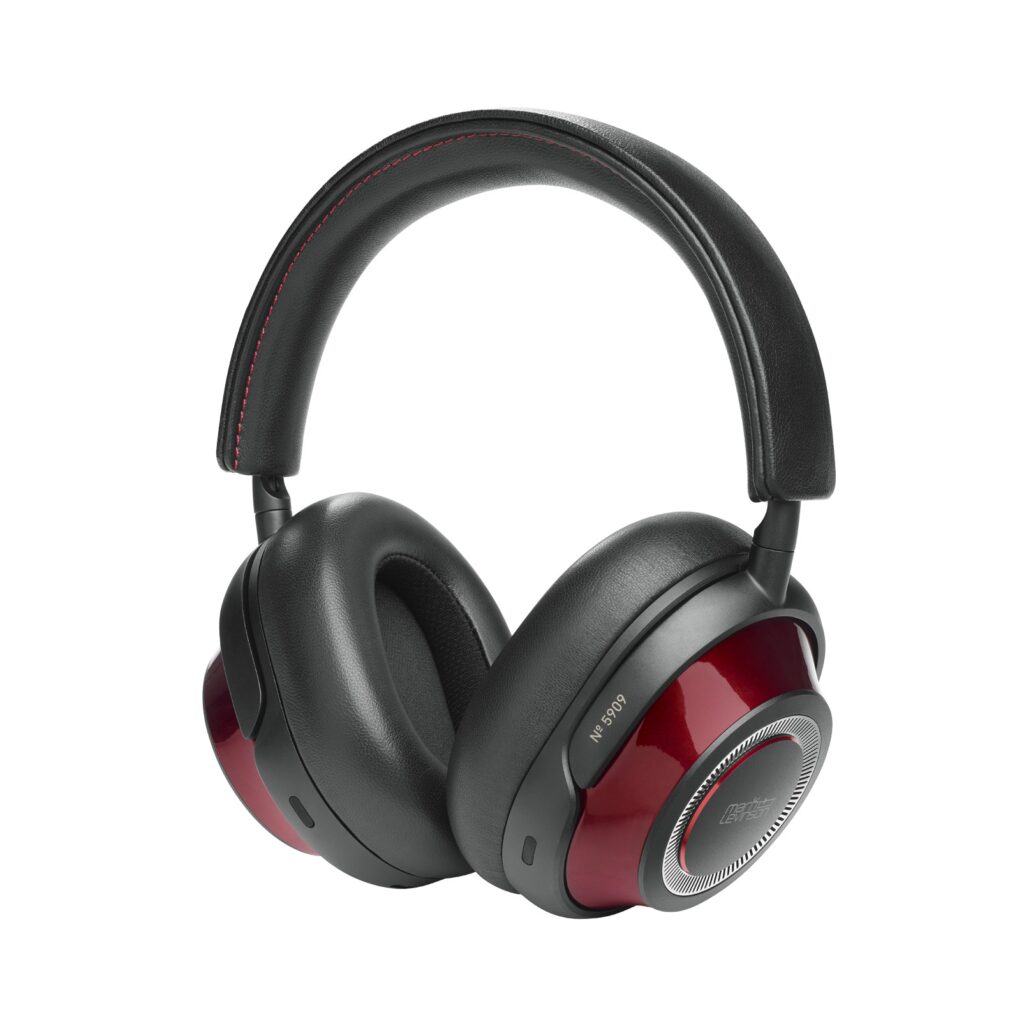
 The No. 5909 wireless, over-ear, active noise-cancelling headphones are currently the least expensive product in the entire Mark Levinson portfolio. ‘Least expensive’ doesn’t automatically equate to ‘affordable’, though, especially not in this instance – a pair of No. 5909 will set you back a quid shy of one thousand pounds. On the other hand, this is Mark Levinson we are talking about; a decidedly high-end name, whether in its traditional two-channel audio guise, or as the ICE system of choice for owners of the distinctly high-quality Lexus-brand cars and SUVs. Looking it from the ground up, the No. 5909 is currently the cheapest way to gain entry to the Mark Levinson luxury brand lifestyle.

Whiff of premium

Which means the No. 5909 need to have a bit more about them than a desirable logo on the earcups and a whiff of premium leather when their packaging is first opened.

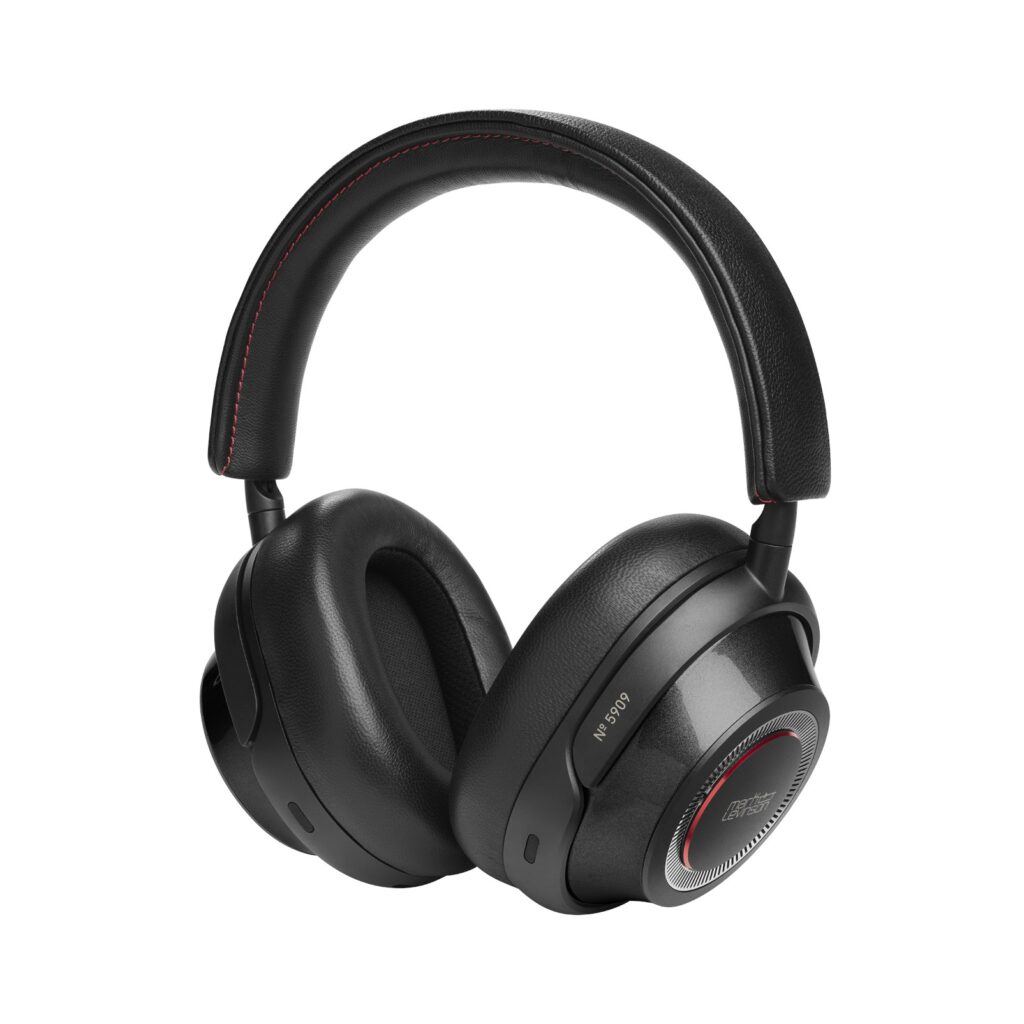
Mind you, there’s no denying the olfactory impact the No. 5909 make when first you take them from their (unnecessarily colossal) box. Sitting in their own little tray above an equally lavish and tactile semi-hard carry-case, these headphones look the part as well as that high-quality and flawlessly applied leather across the headband and on the (replaceable, memory foam-filled) earpads, the automotive gloss metallic paint and the anodised aluminium that compromises the frame looks and feels the business.

Mark Levinson No 5909

Even the plastic bits (the earcups themselves, mostly) feel good and look relatively sophisticated. And when you add in usefully compact dimensions (the earcups are deep enough to protrude from the wearer’s head in the classic Cyberman fashion, but at least the frame doesn’t leave those acres of space between it and the sides of the head that are common in less thoughtful designs) the No. 5909 seem a thoroughly judicious proposition before you’ve even heard them. Heck, even the complement of cables and accessories in the carry-case’s internal compartment (USB-C to 3.5mm in 4m and 1.25m lengths, USB-C to USB-C, USB-A to USB-C adapter, 3.5mm to 6.3mm adapter and two-prong flight adapter) look and feel upmarket.

But then you remember this is Mark Levinson and realise that ‘upmarket’ is exactly where it should be.

Attention to business

If anything, the amount of attention Mark Levinson has paid to the business aspect of the No. 5909 surpasses that of the aesthetic. Which, again, is as it should be. The No. 5909 use Bluetooth 5.1 for wireless connectivity, and it’s compatible with SBC, AAC, aptX Adaptive and LDAC codecs. Battery life is a competitive 30 hours with active noise-cancellation switched on, rising to 34 hours if you keep it switched off – and you can score six hours of playback time with just a 15min mains-power pit-stop.

Sound is delivered by a pair of 40mm full-range beryllium-coated dynamic drivers. They’re tuned to adhere as closely to the ‘Harman Curve’ as possible, and according to Mark Levinson they do so more faithfully than any other design.

(For the unenlightened the Harman Curve was created in 2012 by a Harman International team overseen by Sean Olive. It’s a sonic signature preferred by ‘most’ people ‘most’ of the time – and it turns out to be a basically flat EQ with bass and treble elevated by just a few dB. Unlike most exercises in market research, though, where attempting to please ‘most of the people most of the time’ results in blandness that satisfies no one for almost the entire time, the Harman Curve has both credibility and proven efficacy on its side.)

As far as control goes, Mark Levinson has ignored the opportunity to include any capacitive touch-controls on the earcups of the No. 5909. To get your bidding done with your fingertips you’re looking at a smattering of physical controls – on the right earcup there’s a group of three buttons dealing with ‘volume up/down’, ‘play/pause’, ‘skip forwards/backwards’, ‘answer/end/reject call’ and ‘activate voice assistant’, while on the left there’s a button for ‘power on/off/Bluetooth pairing’ and another to cycle through your noise-cancellation options.

Mark Levinson 5909

You’ll have decided on the sort of noise-cancellation you’re after (when it’s ‘on’ it can be set to ‘high’, ‘low’ or ‘adaptive’, and when ‘awareness’ is selected it can be either ‘voice pass’ or ‘ambient’`) in the Mark Levinson headphones app that’s available for Android and iOS. The app also hosts three EQ settings (or, as the app insists, ‘bass contours’) ‘neutral’, ‘attenuated’ or ‘enhanced’, and lets you set an auto-timer for when you’d like the headphones to power down in the absence of any incoming signal. What else? Well, there’s an ‘on/off’ control for on-head detection – but be aware its reactions are absolutely razor-sharp when it’s switched ‘on’, to the point that your music will pause if you nod your head.

Voice-control is responsive, and call-quality is equally impressive – the No. 5909 may only have four mics (a trifling number when compared to all those cheaper alternatives already mentioned) but they most certainly get the business done.

I think we can agree that the No. 5909 are pretty well specified both inside and out – but not so much that they’ve got anywhere near justifying the asking price. So if the price tag isn’t going to look expensive for its own sake, then sound quality is going to have to be pretty special.

Appropriately special

Happily, ‘special’ is a perfectly appropriate word to apply to the performance that’s on offer here. Whether it’s ‘special’ enough to part you from the asking price is very much down to the individual, but what’s not really up for question is the ability the No. 5909 have to make even accomplished ‘mainstream’ alternatives sound a bit hazy and lacking in positivity.

A properly premium pair of headphones deserves a properly premium source, of course – so during the course of this test the No. 5909 are wired to an Astell & Kern A&ultima SP2000T as well as being wirelessly connected to an Apple iPhone 12. And while the most enjoyable and most convincing sound is to be heard when using the A&K, the broad results are fundamentally the same.

No matter if you play a 24bit/96kHz file of Fela Kuti’s Ye Ye De Smell [Regal Zonophone], a DSD64 copy of Stevie Wonder’s Blame It On The Sun [Tamla], an MQA-enhanced Tidal stream of Dexys Midnight Runners’ There, There, My Dear [Parlophone] or a bog-standard file of Arvo Pärt’s Cantus In Memoriam Benjamin Britten from the Hungarian State Opera Orchestra [Naxos], the No. 5909 don’t alter their attitude in the slightest.

They’re lavishly, almost fanatically, detailed – their insight into even the most minor or most transient elements of a recording is quite startling at first and never ceases to impress. They have the sort of lung capacity to make the most of big dynamic variances and the alertness to identify the fleeting harmonic differences lesser designs will ignore as insignificant. Their tonality, from the very bottom of the frequency range to the very top, is consistent, convincing and naturalistic – and the top-to-bottom journey is completely even and smooth, with nothing understated and nothing overplayed.

Personal pocket of space

The soundstage the Mark Levinson describe isn’t the most expansive in all of headphone-land, but it’s authoritatively controlled and consequently extremely easy to understand. Every element of a recording stands securely in a personal pocket of space, enjoys absolute positivity where attack and decay of its contributions are concerned – but is nevertheless integrated into the overall performance in an entirely believable fashion. There’s nothing detached about the way the No. 5909 present music, any more than there’s anything ostentatious or self-satisfied about the way they sound. More than anything, in fact, they sound uncomplicatedly and thrillingly musical.

The post-COVID-19 world has gone a bit mad; people are paying £35,000 for an £8,000 Rolex watch now. So, getting a foot on the Mark Levinson ladder without buying either a room full of expensive equipment or a well-specified Lexus suddenly seems eminently sensible in today’s world. And if you’re fortunate enough to consider the No. 5909 a realistic option then a) lucky you, and b) make sure you hear a pair as soon as possible. You won’t regret it.

Technical specifications

  • Type wireless closed-back over-ear dynamic headphones
  • Drivers 40mm beryllium-coated full-range dynamic
  • Frequency response 10Hz–40kHz (wired)
  • Impedance 32ohms
  • Sensitivity 97dB
  • Distortion not quoted
  • Wireless connectivity Bluetooth 5.1
Codec support SBC, AAC, aptX Adaptive, LDAC
  • Accessories USB-C to 3.5mm (4m, 1.25m); USB-C to USB-C; USB-A to USB-C adapter; 3.5mm to 6.3mm adapter; flight adapter
  • Weight 340g
  • Price £999

Manufacturer

Mark Levinson

marklevinson.com

UK Distributor

Harman Luxury Audio Group

harman.com

+44 (0)1223 203200

Back to Reviews

The post Mark Levinson No. 5909 appeared first on Hi-Fi+.