Tag Archives: stand-mount loudspeakers

Eclipse TD307 mkIII

Time is of the essence, proper? Ask Eclipse the query and the Japanese firm’s reply is prone to be alongside the strains of “properly, sure and no”.

 “Yes” as a result of the corporate maintains loudspeakers that prioritise correct replica of the time area are extra convincing and fulfilling than loudspeakers that target getting the frequency stability proper. Eclipse has been satisfied of this emphasis proper from the off – the ‘TD’ within the mannequin title stands for ‘time area’, simply in case there was any confusion.

On the opposite hand, “No” as a result of the TD307 mkIII is the primary new Eclipse mannequin for seven lengthy years. Plague years however, that’s a glacial launch schedule. And whereas I don’t doubt the corporate has been laborious at work for that whole time, a look on the product itself suggests these seven years haven’t been spent rethinking its aesthetics.

If you’re in any respect conversant in Eclipse loudspeakers, the looks of the TD307 mkIII goes to come back as no shock. The egg-shaped enclosure stands on a pedestal, and incorporates a single driver obvious out – that is what Eclipse audio system at all times appear to be, and the TD307mkIII  is only a very compact variation on the established theme.

Small is gorgeous

At 21cm excessive and barely lower than 14cm in width, the TD307 mkIII are little, all proper – although they’re truly a bit bigger than the outgoing TD307 mkII, with almost 200cc additional cupboard quantity. The thought is the additional area will assist low-frequency extension – Eclipse is claiming frequency response of 80Hz – 25kHz. That doesn’t point out teeth-rattling bass energy, true, however then once more Eclipse is positioning the TD307 mkIII as the perfect desktop speaker for the discerning at-work listener – and the very last thing anybody wants when attempting to get some work performed is low-end exercise disturbing their paperwork.

Eclipse TD307 Mk III

The larger cupboard is much from the one modification over the outgoing mannequin. The single 65mm drive unit is now constructed from fibreglass fairly than paper – the stiffer cone materials permits much less resonance and permits better tour. There’s a brand new magnet system, consisting of an even bigger foremost and sub-magnet, plus a ‘repulsive’ magnet giving a 20 % improve in magnetic power which, in flip, permits for larger sound strain ranges. The remodeling of the magnet system additionally reduces distortion and sound leakage.

The use of a single drive unit is central to the Eclipse philosophy. A single driver means there’s no requirement for a crossover community (which can inevitably promote section distortion and inhibits dynamic expression, regardless of how properly carried out it could be), and it means frequency integration must be smoother than the multi-driver various. And as is customary with Eclipse, the motive force itself isn’t hooked up to the cupboard – as a substitute, it’s linked to an inner five-pillar stick with high-mass anchor, which is in flip linked to the stand. This helps direct vibrations out of the construction, and means the cupboard itself is about as quiet as they arrive.

There have been different, extra sensible, adjustments too. The new speaker terminals are a giant enchancment, for instance – they’ll now settle for both 4mm banana plugs or naked wire. There’s some rudimentary cable-management within the base of the stand. And there’s now just one screw that wants adjusting with a view to change the speaker’s angle of orientation on its stand – the earlier mannequin required you to regulate three.

Simpler and tidier

So the TD307 mkIII are far easier and tidier to place on a desktop than the mannequin they exchange – for the needs of this check they’re both facet of a 2020 Apple MacBook Pro and toed in the direction of the listening place only a tiny bit. The laptop computer feeds a Chord Electronics Anni amplifier (it’s each the perfect measurement for desktop use and each bit as proficient as the corporate’s full-size amps) by way of a Chord Electronics Qutest DAC. Admittedly this isn’t probably the most compact, nor probably the most reasonably priced, desktop system round – in addition to moderately deep pockets you’ll want a fairly big desk. But the ensuing sound isn’t particularly typical of desktop audio techniques, both.

Using Colibri to entry correctly high-resolution digital audio information, and opening up with a 24bit/96kHz file of Nick Cave & The Bad Seeds’ (Are You) The One That I’ve Been Waiting For? [Mute], it doesn’t take lengthy for the TD307 mkIII to ascertain their modus operandi. The positives and negatives to their efficiency appear to reflect one another – the Eclipse coin most actually has two sides.

The most evident and instant entry into the ‘plus’ column is the easy perception they appear to have into the recording. Resolution is approaching revelatory right here: the TD307 mkIII are alert to even probably the most minor, most transitory info and may combine it into their total presentation in probably the most pure and unforced sort of method. The full story of the way in which brushes work together with drum-skin, the harmonic variations obvious from one piano key-press to the following, even the mouth-noises of a singer getting ready to ship the following line… the Eclipse lock onto all of this and extra, and because of this there appears little doubt you’re getting each scrap of data contained within the authentic digital file.

Unambiguously unfussy

And, what’s extra, you’re getting it in probably the most unambiguous, most unfussily musical method. There’s a directness to the way in which the TD307 mkIII current the recording, a tangible sense of a efficiency in progress, of musicians sharing that hive thoughts that compels them to behave as a single unit like starlings in murmuration. The unity and singularity of the recording is made virtually indecently apparent.

As lengthy as you spend the time getting the positioning of the audio system proper, you’re additionally rewarded with soundstaging and imaging that’s a substantial distance forward of any nominal desktop rival.

You need them moderately shut, you need them pointing at you – after which the precision, the main focus and the three-dimensionality of the stage the Eclipse conjure is yours to experience. Even a reasonably busy, moderately complicated and often fairly hazy recording like Spiritualized’s I Think I’m In Love [Dedicated] completely snaps to consideration, as in thrall to the TD307 mkIII’s authority and powers of organisation because the listener is.

Eclipse TD307 Mk III

The tonal stability the Eclipse strikes is equally assured and convincing, and the place low-level variations in depth are involved they’re with out critical peer.

Of course, you may’t anticipate all this sunshine and not using a little rain. And the place the Eclipse TD307 mkIII are involved, it’s a predictable lack of low-frequency energy and extension, together with a corresponding lack of dynamic impetus, that rains on their parade.

It’s Scotty time

You can not, as a well-known pretend-Scotsman used to say, change the legal guidelines of physics. And although the benefits to utilizing a single driver to cowl the whole lot of the frequency vary are unarguable, the disadvantages are equally apparent – particularly when it’s a driver of such modest dimensions to begin with. Both extremes of the frequency vary endure, but it surely’s bass extension (or the dearth thereof) that’s most evident right here. The bass guitar is uncommonly excessive within the combine through the Nick Cave tune, however right here it struggles to make its presence felt. And with a recording that’s propelled purely by low-end sounds – Mexico Sundown Blues by James Ray & The Performance [Cleopatra], for instance – the bass roll-off is so steep the recording adjustments character completely.

In the identical method {that a} greyhound is completely different from a bull mastiff, the Eclipse TD307 mkIII are completely different from all the opposite desktop audio system round. They have negligible bass weight and equally insignificant bass energy – and should you don’t take care with positioning, their treble response can roll off shortly too, leaving you with a sound that’s principally all midrange. Forget listening off-axis, in different phrases – the compromises are too nice. And that sensitivity score of 80 db/Wm means they received’t go significantly loud – so don’t ask them.

Thrillingly direct

These, then, are the lodging you’ll have to achieve if the thought of probably the most vivid, most focussed, most thrillingly direct-sounding desktop audio system obtainable appeals to you. What else? Well, all that cautious positioning goes to cowl the shiny plastic cupboards with finger- and palm-prints – so don’t go pondering you’ll get away with out doing common house-keeping.

The Eclipse TD307 mkIII are removed from excellent. But energy them appropriately, place them accurately and usually settle for them on their very own phrases, they usually’re about as rewarding a hear as a desktop set-up will be.

Technical specs

  • Driver complement 1× 65mm fibreglass full-range dynamic driver
  • Frequency response 80Hz–25kHz
  • Crossover frequency n/a
  • Impedance 8 ohms
  • Sensitivity 80 db/Wm
  • Dimensions (H×W×D) 212 × 135 × 184mm
  • Weight 2kg per speaker
  • Finishes Gloss white and black
  • Price £600/pair

Manufacturer

Eclipse

eclipse-td.com/uk

UK Distributor

Decent Audio

decentaudio.co.uk

Back to Reviews

The put up Eclipse TD307 mkIII appeared first on Hi-Fi+.
Rega System One

I used to be speaking to a former govt at Technics not too long ago who instructed me about the best way the enterprise labored within the days when separates bought within the kind of numbers that solely headphones and Bluetooth audio system do at the moment. For Technics, the sport was all about market share and the best way to attain that was with promoting. This meant double-page spreads in Sunday dietary supplements and again pages on each hi-fi journal. It labored… and the model made loads of hay within the shining solar. At the identical time Rega was doing issues reasonably in a different way; with the Planar 2 and three turntables, the corporate turned one of many principal turntable makers in British hi-fi with out recourse to advertising and marketing however reasonably by constructing a superb product at a aggressive worth. Those turntables nonetheless maintain their worth at the moment, which is greater than you’ll be able to say for many hi-fi of the Seventies and Eighties, Technics turntables excepted.

Rega is now the UK’s foremost unbiased producer of full audio programs has a broad vary of turntables, electronics and loudspeakers and, in my humble opinion, makes one of many absolute best turntables on the earth. But critically Rega additionally does its utmost to maintain its merchandise inexpensive to the person and lady on the street. There are numberless small corporations on this enterprise who make nice merchandise however due to the size of their operations they don’t seem to be capable of carry them to market at costs that the informal music fanatic would take into account approachable. Rega has at all times seemed for effectivity in manufacturing and inbuilt enough numbers to attain this enviable purpose, one which solely the bigger manufacturers which amenities in China can compete with.

My first Rega

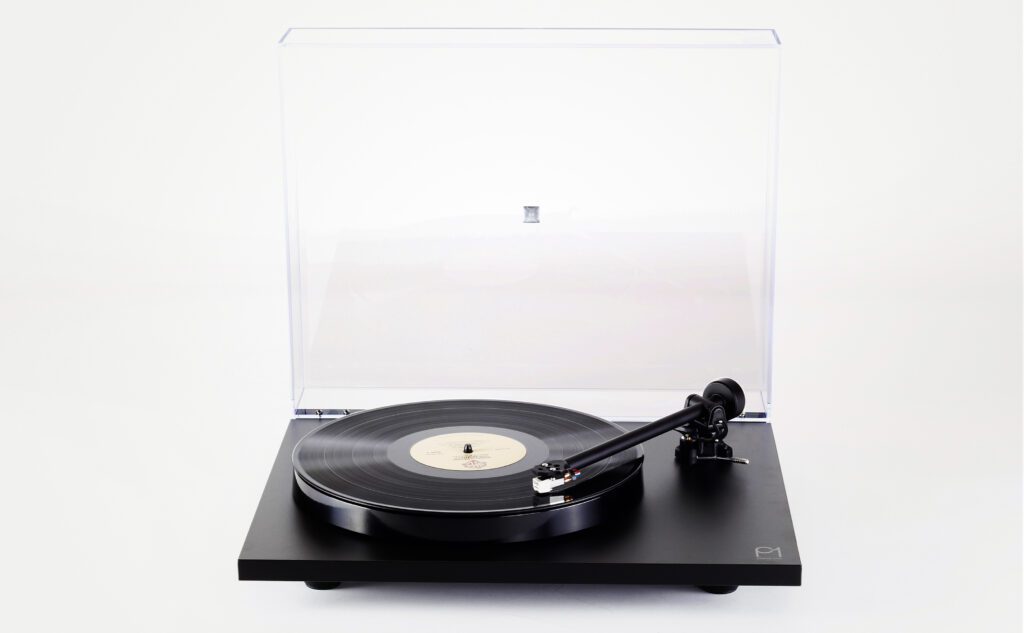
The Rega System One is the epitome of this excessive worth ethos. It is the corporate’s first full hi-fi system in a field and contains all the pieces it’s worthwhile to make vinyl records sound nice in your house, cables and all. The supply is Rega’s most inexpensive turntable; the P1 is a full-size report participant with a correct mud cowl and top quality motor, bearing, platter, plinth, arm and cartridge. The Planar 1 to present it its full title has a phenolic resin flywheel platter; this tough plastic affords a stiff and flat floor and has peripheral weighting to assist pace stability. Like all Rega turntables, drive is achieved by way of a smaller subplatter, an method that may be discovered within the Linn LP12 amongst a couple of enlightened others and avoids the issues inherent in driving the periphery of the platter with a belt or loafer wheel. The principal one being significantly decrease vitality switch from the motor to the platter. Remember {that a} turntable’s job is to ‘learn’ miniscule vibrations in a vinyl groove, something that provides vibration to the system will distort the sign being learn so extraneous vibration is to be prevented in any respect prices.

Rega Planar 1

The Rega RB110 tonearm isn’t primarily based on the casting that kinds extra expensive Rega arms however as a substitute is a top quality piece of engineering that ought to final significantly longer than the flimsy trying choices discovered on many price range turntables. Bias or anti-skate is described as automated and can’t be adjusted, and this fits the Rega Carbon shifting magnet cartridge provided. Some take into account this to be a limitation however on condition that bias is at all times a compromise (like monitoring angle, no single bias setting is right throughout the entire facet of a report), it’s a suitable manner of decreasing value. Downforce is, in fact, adjustable however the RB110 has a cease to go well with the requirement of the Carbon, making consumer arrange very straightforward certainly. The arm additionally has a correct carry/decrease system, that appears very very like the sort fitted to Rega’s prime fashions. The arm bearings use a patented mixture of polymer casings and metal ball races and are present in each the RB110 and RB220 arms.

A 24V synchronous AC motor – as discovered throughout the Rega turntable vary – powers the P1; the costlier fashions get the motors that measure finest in fact however the primary design is similar. This motor drives a spherical part belt from an aluminium pulley with separate steps for 33.3 and 45rpm. This means altering pace requires the platter to be eliminated and the belt moved from one to the opposite, however in actuality it’s ‘simples,’ as that mysteriously Russian-accented African meerkat insurance coverage salesman is liable to saying.

Motor switching is underneath the entrance of the plinth and simple to seek out by really feel. Not a terrific deal is claimed concerning the plinth itself save that it is available in matt white or black finishes, it looks like furnishings grade wooden however is presumably some sort of particulate board with a ending pores and skin. The turntable sits on three rubber ft for stability and damping, and has a socket on the rear for the wallwart energy provide. Its tonearm cable is mounted in an effort to present a direct connection between arm and amplifier. Some manufacturers supply RCA outputs on their turntables however the low energy nature of the sign produced by a cartridge signifies that such interfaces are detrimental to sound high quality.

The built-in amplifier that Rega developed largely for this technique is known as Io. It’s (naturally) the least costly mannequin they make and but affords the all necessary phono stage required for the P1. It relies on the identical circuit because the outstanding Brio amplifier and whereas it has a smaller energy provide and thus decrease 30 Watt output, it’s the least costly amplifier that’s made within the UK. Features lengthen to a headphone output and distant management with two line inputs alongside the MM phono stage. It’s attention-grabbing to notice that the primary two incarnations of the Naim Nait supplied solely 13W; it wasn’t till the Nait 3 in 1993 that it reached the kind of Wattage on supply within the Io. Another similarity is that the early Naits additionally had simply three inputs together with phono… coincidence, maybe?

Rega Io

The most radical ingredient within the Rega System One is the Kyte loudspeaker. This eschews wooden virtually solely in favour of a Rega’s favorite plastic, phenolic resin. This is the fabric that you just discover in mild switches and mains sockets; it’s not intrinsically costly but making such a big moulding proved a tough course of to get proper and Rega doesn’t make sufficient audio system to carry the worth down that far. The field is stiffened utilizing ceramic plates and a picket cross brace.

The drivers are just about an identical to these present in Rega’s extra typical RX1 bookshelf mannequin and include a 125mm mid/bass driver with a paper cone and the Rega ZRR gentle dome tweeter. These have trim rings to cover fixings for a neat look and sit in a baffle set into the primary cupboard. This has a reflex port moulded into the rear and a pair of cable terminals above each other and near the fixing holes for a supporting leg. Because the cupboard moulding has to have sloping sides for manufacturing functions the underside just isn’t at 90 levels to the entrance as is the case with picket containers; the bolt on help signifies that the entrance baffle sits vertically however does make it nigh on not possible to Blu-tack to a stand. However, given Rega’s dislike of damping that is in all probability deliberate. The different consideration is that this technique is for normal people who don’t have or need stands however put their audio system on a shelf or sideboard… the weirdos!

Freedom from pleasure

Being not averse to speaker stands nor notably anti-damping I bucked conference and Blu-tacked the Kytes to a pair of Custom Design 60cm stands with out utilizing the T bar help leg. I reviewed the Kytes alone a few years again and found that this sounds higher than utilizing the leg or the metallic adaptor that Rega sells for individuals who wish to use typical stands. This meant that the entrance baffle leans again barely however loads of audio system work like this by design and the bottom angle is barely 5 levels so the lean isn’t excessive by any requirements. The turntable went on my common rack – which is nicely remoted – so it received a greater likelihood than a typical state of affairs and in my expertise stable plinth turntables do profit from as a lot freedom from exterior pleasure as doable. I linked the audio system up with the provided cables that are three metres lengthy and marked for polarity, they don’t have plugs so it’s worthwhile to pull off the pre-cut insulation at both finish and bind them to amp and speaker terminals.

Rega Kyte

Being an audio nut I took the lid off the Planar 1; it’s straightforward and removes a possible supply of vibration (particularly when left up), then dropped the needle fastidiously onto John Renbourn’s Another Monday and shortly turned immersed in fabulous enjoying and singing. This system does what Rega parts have at all times been notably good at; producing a musically coherent and completely partaking listening expertise. It will get to the “crux of the biscuit” as Frank Zappa used to say, bringing out the center of the musical matter in such a direct and unaffected manner that you could’t assist however take pleasure in your self. It’s restricted when it comes to bandwidth, the Carbon doesn’t fairly soar to the heights of treble and the Kytes don’t go right down to the bottom octaves of bass, but all of the necessary musical cues are current and proper. Timing is spot on, vinyl has an enormous benefit over digital on this respect as a result of it’s an actual time, non-processed system involving changing a mechanical sign to {an electrical} one. There is loads of potential for tonal aberration however little for errors within the time area and people are those that get in the best way of realism in my e-book.

Typically Rega

This system’s stability is usually Rega by which I imply barely lean, the Kytes are largely answerable for this as a result of there may be so little mass to retailer and subsequently launch vitality as is the case with wooden primarily based containers. This makes them very quick and agile with no thickness which isn’t to all tastes however finally serves the music reasonably nicely. They do assault and decay very nicely and even reproduce depth of picture to an honest customary, and bass is powerful sufficient to make bass guitars, drums and so forth very convincing. I additionally tried the Io and Kytes with a digital supply within the Silent Angel Munich M1 streamer. Playing Ronnie Size’s ‘Brown Paper Bag’ on this proved an exhilarating expertise, the depth of the drum and bass making for an adrenaline rush that left me wanting extra. On the luxurious manufacturing of Beck’s ‘Paper Tiger’ the size got here by means of with ease albeit the electrical guitar appeared a bit extra keen than traditional. It’s not a wealthy tonal stability that’s for certain, it’s extra about tempo and engagement than polish however when you put a luxurious recording on you get a luxurious sound out. The caveat right here is that the distinction in stage between vinyl and line sources corresponding to a DAC might be fairly giant with some recordings so it’s sensible to show it down when switching between them.

Vinyl is the pure supply for this technique in fact and at all times essentially the most rewarding, I discovered myself extra distracted by the Rega System One than anticipated fact be instructed; its skill to supply all of the element that contributes to an attractive and rewarding musical expertise outweighs its limitations by a big issue. That it prices not more than a number of the cables in my traditional system is outstanding and goes to indicate that if the producer places its thoughts to it there isn’t a must spend extra. It is feasible to place collectively an identical system from various manufacturers for the same worth nevertheless it appears unlikely that you’d find yourself with the sonic coherence, construct high quality and lifelong assure supplied right here. Rega is a really uncommon firm in some ways however its success in each business and product worth phrases means it competes with the easiest.

Technical specs

Rega Planar 1

  • Type Belt drive, guide operation turntable, arm and cartridge with mud cowl
  • Rotational Speeds 33 1/3 RPM, 45 RPM
  • Tonearm Length 9-inch
  • Drive Mechanism EBLT belt pushed by way of 24V AC motor
  • Speed Control Not specified
  • Platter Type 23mm phenolic resin 12‑inch platter
  • Platter Weight Not specified
  • Bearing Type Performance brass principal bearing
  • Plinth Configuration Solid plinth
  • Dimensions (H×W×D): 117 × 447 × 360mm (lid closed)
  • Weight 4.35kg

Rega Io

  • Type Solid-state, 2-channel built-in amplifier with built-in phono stage
  • Analogue inputs One MM phono enter (by way of RCA jacks), two single-ended line‑stage inputs (by way of RCA jacks)
  • Digital inputs None
  • Analogue outputs None
  • Supported pattern charges N/A
  • Input impedance line – 47kOhms, Phono – 47kOhms, 220pF
  • Output impedance (preamp) N/A
  • Headphone Loads 32–300 Ohms
  • Power Output 30Wpc @ 8 Ohms
  • Bandwidth Not specified
  • Distortion Not specified
  • Signal to Noise Ratio Not specified
  • Dimensions (H×W×D) 68 × 180 × 290mm
  • Weight 2.9kg

Rega Kyte

  • Type 2-way, two-driver stand-mount with rear-ported bass reflex enclosure.
  • Driver complement One 19mm gentle dome tweeter, one 125mm paper cone mid-bass driver
  • Frequency response Not specified
  • Crossover frequency Not specified
  • Impedance 6 Ohms nominal
  • Sensitivity 89dB/W/m
  • Dimensions (H×W×D): 325 × 188 × 232mm
  • Weight 3.7kg/every
  • Finishes Black

System worth £1,199

Manufacturer

Rega Research

www.rega.co.uk

+44(0)1702 333071

Back to Reviews

The publish Rega System One appeared first on Hi-Fi+.
Gold Note system

There has always been a reluctance on the part of your average audio enthusiast to source their entire system from a single manufacturer. The reasons are historic and founded in the kind of knowledge and truths that perhaps tend to linger long after any real relevance. Few manufacturers are as good at making electronics as they are loudspeakers and to break that down still further, there are many examples of electronic manufacturers being better at designing and producing preamplifiers than power amplifiers, or vice versa. The resultant thinking has been to mix ’n match what each company does best and this, in my experience, can have mixed success.

Things have moved along though and for every rule, there have always been exceptions. Then there is always the thorny issue of component compatibility and system synergy to consider. I once hooked the best preamplifier I have ever heard into a pair of the best mono amplifiers that had crossed my path and the results were disappointing. Balancing the musical strengths of one component against another is tricky, but can also be an ultimately rewarding business. Getting them both to sing the same song, especially when the rather thorny issue of cabling is thrown into the mix, can be dicey. Then again, it can be glorious.

Fuss-free

Recently, I had the great pleasure of spending some time with the Gold Note DS-10 EVO, a single box network streamer DAC that also offered a really fine output level section that enabled it to be deployed as a preamplifier. Nothing especially new there you might think, except the performance was so musically involving and the function in tandem with its dedicated app so fuss-free that I could see that this machine had real system potential. I wrote as much and then discovered that there was an optional dedicated power supply available so, before it went back the distributor dropped one off and it did exactly what it should have and moved the performance onto an entirely new level. Things were becoming more serious and my curiosity was piqued.

A glance through the Gold Note catalogue was revealing in its depth of products. Alongside a £62,000 turntable there was an entire 10-series range including a neat power amplifier that could be used as a stereo chassis or a pair of them could be employed as mono amplifiers, with a quite surprising lift in quoted available power. I am sure you can see where this is going as the idea of a full Gold Note system began to look more and more appealing if the DS-10 EVO experience was anything to go by. What about a pair of speakers? Lo and behold, Gold Note produce a range of five models, the smallest and immediately the most appealing to me were the A3 EVO II, a conveniently sized and quite beautiful little design which, I figured, would allow me to enjoy Il Suono Italiano, Gold-Note’s motto, to the full. The course was set with only a few details to sort before I could embark on the journey.

GoldNote_A3 EVO II pair-matt

As the system arrived without speaker stands or cabling that was the first issue that needed sorting. Running through my stash of speaker stands yielded some very variable results. No surprise in itself but the end solution was as unexpected as it was impractical. I still had a pair of the now defunct Quadraspire acrylic stands that slot neatly together from two pieces. If memory serves, these were the shorter versions and I had superb results when I used them a lot, several years ago, especially with lighter weight speaker designs. I would normally hesitate to recommend equipment that is no longer made but perhaps the low-mass construction of the Quadraspire designs gives a clue as to wringing the best from the A3 EVO IIs. Whatever the case, these stands set the speakers musically free. Primarily dynamically, but also in their whole sense of lightness of touch and speed. This was to remain the very best I could wring for them. Often these small designs are claimed to be suitable for shelf mounting. Personally I couldn’t imagine a worse location for these speakers and this is a real compliment to their potential. They like and need free air to breathe, especially through that rear-facing port. Correctly mounted, they will surprise and delight you and perhaps the bolt-together stands that Gold Note have designed for them are the answer. I don’t know. Not having a pair means that I can’t speak to that but my advice is to get your dealer to loan you several pairs of stands and try them in your listening room. The differences you will hear will guide you.

Stand out

The cabinets of the review pair were a real stand-out. A gloss walnut-veneered side panel has been shaped into a kind of diamond profile where the broadest point is alongside the 153 mm treated paper bass/mid driver and supplemented by a tasteful metallic inlay that runs the full depth of the cabinet. Atop that is a 28 mm silk-domed tweeter where the side panels taper down to give a truly elegant and classy cabinet dynamic. The front baffle that seems almost like a sub-structure in appearance is small and most people would be able to span the centres of the drivers with one hand. The cabinet is very stiff, thanks to those side panels but it has a bit of depth to it too at around 300mm and the bass is loaded through a rear facing port. It’s a compact design but its performance is anything but. In many ways it was the surprise package of the whole system, then again, no part of any system operates entirely independently.

I soon discovered that, like many Italian systems, this one majored on a smooth dynamic performance, full of colour and tonal light and shade. Cabling ended up as Nordost Blue Heaven. The reason I decided to go this way was because I like the linearity and speed of the Nordost cables which have an extremely delicate dynamic touch too without any excess baggage in the low end. I found that it balanced very nicely with the system’s qualities. You might choose another option but the slight tonal lift that the Blue Heaven bought through midband worked well for me.

The PA-10 amplifier is the same size as each of the boxes in this system which means that the overall system aesthetics are great. This is a fully-balanced design that can be simply switched from a stereo chassis to a mono-block. Like all the 10-series electronics it is substantially constructed from a solid steel chassis and thick aluminium panelling for appropriate shielding. As a single stereo design it sounds sweet and very smooth with notable resolution and the sort of tonality and grip that the Gold Note speakers thrive on. Driven from the pre-out of the DS-10 EVO it has power levels that most smaller rooms are going to find entirely adequate. If you have a PA-10 operating in this configuration my advice is to double up with another unit bridged for mono as soon as you can because the improvements are exponential. Once you’ve heard the sheer musical authority that this configuration brings, you won’t want to go back I promise you.

A small panel on the upper right of the rear panel carries the BTL (Bridge Tied Load) switch that turns the amplifier into a bit of a beast as well as releasing copious amounts of power. I used the balanced inputs from the DS-10 EVO. Don’t think that this is all about pure output levels though. The extra control and levels of articulate resolution change much more than that and the system is notably better at low levels too. Suddenly the speaker becomes a wider window into the stereo soundstage and this now expands way beyond the physical boundaries of the cabinets.

Balance and presence

The depth of the sound and the way the speaker can now layer instruments and voices tier upon tier with a sense of balance and presence that often evades much more costly designs is a really attractive feature of this system. For anybody thinking that the style has been placed before sound quality then I have to tell you that you couldn’t be more wrong. It is all those things but this is a really serious music system too. That extra power is actually quite startling but it has been deployed entirely to bring the music closer to you by allowing for greater dynamic freedom and the EVO II speakers really come to life when they are supplied with that extra level of musical energy that the upgrade brings.

At the front end of course the DS-10 EVO streaming DAC that I previously had a lot of fun with received its own boost in just about everything from the PSU-10 external power supply. The system felt the changes from back to front. That’s the level of the improvements on offer here. The DS-10 EVO is a great little Streamer/DAC and Line Stage in its own right but turbo boost it with the PSU-10 and you’re again talking about a whole new level of performance. It connects via a single umbilical lead to a much stiffer and more robust transformer set-up. This is a dual-choke hybrid design comprising of a four transformer layout where three are dedicated to supplying the power and one for the inductive filter. It also has ultra-low noise voltage regulators and you can hear that the DS-10 EVO operates in a quieter musical domain as a result.

So, we are looking at a very configurable system here. I could use it as a simple, very compact two-box source and amplifier or a four-box set-up where the Streamer/DAC /Pre has its own dedicated power supply and the amplification is effectively doubled up. The result is a system that doesn’t take up too much more room but is much more focussed musically and sounds a lot more intense and involving.

The Gold Note speakers are particularly ‘stiff’ when straight out of the box; this pair had seen action but would still need a period of use before they started to perform. After initial installation, I selected a playlist and just let the music energise the system for a while, but I just wasn’t expecting the depth and width that flowed out of those little boxes. Running Tidal through the GN Control app the random music playlist that I heard began with tracks from an old David Crosby album from about 40 years ago. It caught me cold. The recording was so solid and the vocal so intimate that I ended up sitting and listening for a straight hour as the playlist unfolded.

Exceeded expectations

One of the lovely things about this system is that it reserves the ability to surprise you every time you spend time with it. I like small speakers and while I acknowledge their size limitations, I have seldom heard any with this much sense of tone and pure colour. Couple that with a real feeling of dynamic drive from the amplifiers and I soon understood that this system constantly exceeded my expectations. The other notable thing about it is how adaptable it is to just about any style or flavour of music. It has the sort of body, weight and depth that makes sweeping classical pieces come alive and it never grows thin or compressed like so many small cabinet designs. Yet, when you ask it to do intimate music of extreme subtlety with tiny micro-shifts of emphasis then the electronics are enormously capable. I will long remember listening to one of my favourite musicians Masaaki Kishibe, a wonderful Japanese composer/guitarist seduce me with beautiful tones, subtle phrases and melodies very soon after the system had arrived. That will live long in my memory because it paints musical pictures.

This is a very nice system that just does its thing bringing music from its streamer to your ears without fuss. It is so very easy and unchallenging to listen to and I really like that. It takes up very little room and I can imagine it looking great in many homes where system aesthetics are important.

Technical specifications

Gold Note DS-10 EVO Streaming DAC

  • Type Streaming DAC / Pre
  • Streaming from Roon, Airplay, MQA, Qobuz, Deezer, Spotify Connect, Tidal Connect, V-Tuner
  • Price £2,900

Gold Note PA-10 Stereo power amplifier

  • Type Stereo power amplifier with bridging option
  • Power Output 75 watts at 8 ohms, 150 watts into 4 ohms
  • Power Output in BTL 600 watts per channel into 4 ohms
  • Audio Inputs 1 × RCA unbalanced, 1 × XLR balanced
  • Price  £1,700

Gold Note PSU-10 EVO external power supply

  • Type external power supply for DS-10
  • Price £1,200
  • Dimensions of all electronics 80 × 200 × 260 mm (H×W×D)

Gold Note A3 EVO II speakers

  • Type 2-way stand-mounted loudspeaker
  • Drivers 1 × 153mm Mid/Bass driver, 28mm Silk-Domed tweeter
  • Port Rear facing
  • Sensitivity 87dB
  • Nominal impedance  6 Ohms
  • Dimensions 350 × 240 × 295mm (H×W×D)
  • Weight 20Kg pair (net)
  • Finishes available Black cabinet with matt or gloss walnut side panels
  • Price £4,000

Manufacturer

GOLD NOTE

www.goldnote.it

UK distributor

Airt Audio

www.airtaudio.com

+44 (0)1354 652566

Back to Review

The post Gold Note system appeared first on Hi-Fi+.
Dynaudio Emit 20

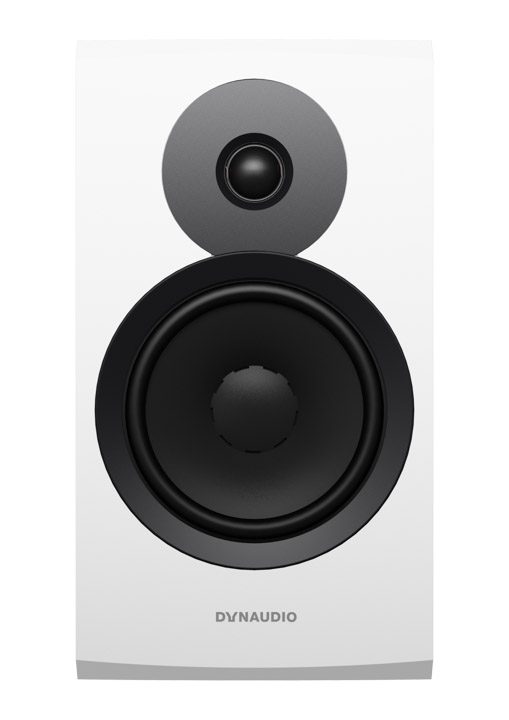
There are hundreds of loudspeaker companies now, but few have the clout of Dynaudio. The company is one of the big names in audio design for a reason; unlike many brands that are bound by the strictures of other people’s drive units, Dynaudio has long made its own drivers. This makes a profound difference to the performance of its higher end models, but can it really make a difference to the more down to earth Emit 20 stand‑mount loudspeaker? Two words… hell yes!

The Emit series is Dynaudio’s entry level range and the Emit 20 is the larger of two stand-mount models that sits alongside two pairs of floorstanders and a centre channel with prices starting at just over £600.

The Emit 20 replaces the Emit M20, which makes use of a 140mm main driver; the newcomer offers a long throw, 180mm drive unit that affords the new model deeper bass and greater power handling. Dynaudio uses magnesium silicate polymer drivers, which are bonded to the voice coil for maximum stiffness; that’s not a dust cap in the centre, but an intrinsic part of the driver. The company also uses aluminium wire for voice coils and winds them onto two-layer glass fibre formers; the idea being to keep weight down and thus allow maximum control.

Dynaudio Emit 20

The tweeter is what Dynaudio call a Cerotar type; it’s a 28mm soft dome that is derived from the HF unit found in the decidedly up-market Confidence range and incorporates a Hexis device, which sounds like a Star Trek McGuffin but was in fact conceived to smooth the response and reduce unwanted resonance. It’s a 3D printed plastic latticework dome that sits beneath the fabric dome and therefore effects the airflow and looks like a relatively inexpensive yet cunning piece of technology.

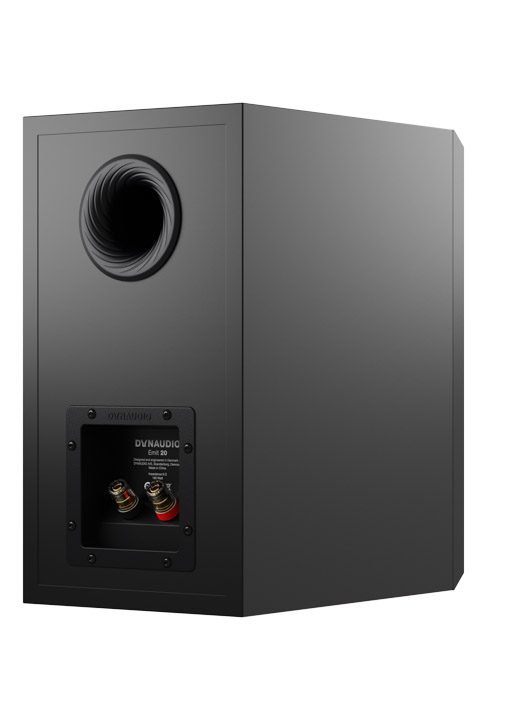
Emit 20’s cabinet has that Danish simplicity of design that looks so right when it’s done well but – as other brands may have noticed – is difficult to achieve in an entry level product. Its cabinet has a thick front baffle with profiled top and bottom edges and driver fixings hidden beneath trims. The main wrap is not real wood but a good imitation thereof in the walnut version sent for review. On the back are single wire terminals in an inset tray and a reflex port with spiral sculpting on the flared exit, which both looks good and is a method for keeping output from the port smooth. The Emit 20s are supplied with robust magnetic protectors for the tweeters in transit, which is both laudable and unusual at this end of the market. There’s also pair of foam bungs and these can be used to partially block the reflex port in situations where the speakers have to be placed near to room boundaries that might otherwise exaggerate the bass. Port bungs do not generally enhance dynamics, however, so don’t use them if you don’t need to.

Set course for Jupiter!

Ask any loudspeaker designer and they will (sometimes reluctantly) admit that an affordable two-way stand-mount is very easy to design and very hard to design well. One of the ways Dynaudio achieves this task is by not cutting any corners in the development… of course having access to the company’s Jupiter free-field measuring facility in its Danish HQ helps! To the handful of speaker builders who know what that means, their interpretation might be a couple of long poles in a quiet field, but Dynaudio has a 13m cubed space with a device for placing a loudspeaker at its centre, as far away from boundaries as possible. I asked Dynaudio’s senior acoustics engineer Stephen Entwistle how this works; “Jupiter uses a microphone arm which has 31 microphones mounted on a 3m radius and then time window out the reflections, we do the same for the low frequency reflections. These combined with a corner measurement (referenced to measurements made in true anechoic half-space conditions, outside at the local football club) allow us to measure a ‘simulated free-field’ response on-axis from 10 Hz–96 kHz and a full sphere around the loudspeaker with a 6° angular resolution up to 20 kHz in approximately 30 mins. The on-axis microphone has an extended high frequency response beyond 100 kHz, but the maximum sample rate we run is 128 kHz.

Dynaudio Emit 20

“Using Jupiter allows us more freedom in the room, but the most notable reason is the use of the large microphone arm which allows us to capture the full sphere in a reasonably short period of time.” In other words, Dynaudio’s approach is both highly accurate and fast, which is what you want when developing any product. Of course, having a large body of work to draw upon and some very high end designs that can trickle down into more attainable and affordable models all help, but the Dynaudio ethos begins and ends with extensive research and development in its product creation. And this shows in the loudspeakers Dynaudio produces, seemingly irrespective of price point.

I found that the Emit 20s needed more space than usual for their size; a gap of 40cm between them and the wall giving a good tonal balance when 60cm stands were used. Other speakers of this variety can often be placed much closer in my relatively lean sounding room. Initially I hooked them up to a Moor Amps Angel 6 power amplifier which is a bit of a beast for such affordable speakers but they certainly didn’t mind, in fact the more I experimented with the Dynaudios the more it became apparent that they are extremely revealing of partnering equipment. They are more neutral than many loudspeakers at their price; if a speaker’s balance changes with source and amplifier to the degree that this one does it must be pretty revealing and have minimal character of its own.

Unusually refined

The Emit 20s are also unusually refined for their price; the work that Dynaudio has done on the tweeter – and for that matter the crossover and main driver – has resulted in a degree of sophistication that is uncommon for a sub-£1,000 loudspeaker. This might need some care in the selection of matching entry-level electronics; where coarse-sounding electronics might be able to ‘hide’ behind a woolly sounding loudspeaker, that lack of high-frequency finesse has no safe harbour here. That being said, ‘reports from the front line’ suggest many good pairings with entry level electronics. Regardless, with my reference Angel 6, all was rather good with the sound being articulate and open right from the off; the sound being crisp, rhythmically coherent and unhurried. These first two qualities can be found in a range of competing speakers but the last is an indication of the sophistication on offer from this one alone . It allows the plushness of Steely Dan’s ‘Babylon Sisters’ [Gaucho, MCA] to flood through with no addition of grain or edginess. This track also highlights how little run-in these loudspeakers need, but how much they gain from the process; it sounded a little restrained at first, but a week down the line this quality had all but vanished.

Dynaudio Emit 20

I found the best balance was with the Emit 20s directly on axis but this is a taste and room thing and it’s always a good idea to experiment with orientation and placement with any speaker. The bass isn’t ‘prodigious’ but it’s clean and well extended and this is a good thing; it’s common for ported stand-mount speakers to be designed with ‘impressive’ bass that sounds great on first exposure in the demonstration room but can be fatiguing in the long term because it’s ultimately quite distorted. Dynaudio has clearly gone for a more sensible balance that allows these speakers to deliver bass you can feel but also bass that remains controlled and is thus tuneful. It doesn’t mask what’s going on in the midrange either; lyrics are clear and there’s plenty of detail too. Radiohead’s ‘Decks Dark’ [A Moon Shaped Pool, XL] washes over you in a more fluent fashion than is often the case; some pricier speakers present stronger imaging on this track but I like the way that the music comes before the sonic effects in the Emit 20s presentation.

A different class

I tried another amplifier in the form of Aavik’s I-180, which is a Class D design with a very different sound to most of the Class A/B options I used in the review. This worked rather well delivering a distinctly open sound with impressively natural highs and precise bass, and once again the Dynaudio’s ability to track those changes in amplifier are indicative of its class. The timing wasn’t as strong through this amp, but it still had the power to engage especially with more intense pieces of music like Binker and Moses’ latest album Feeding the Machine [Gearbox]; here the sax and drum duo lay down some blistering tunes that many similarly priced alternatives would struggle to deliver with such calm clarity. I rarely find affordable speakers that can do saxophone well, especially when that sax is played with vigour, but these delivered the power without any added glare.

Dynaudio are to be congratulated on the Emit 20. This is the sort of loudspeaker that will grow with a system, revealing the benefits of upgrades to source and amplifier. It’s a very grown-up speaker in its own right; don’t let the real-world pricing fool you, this is the real deal.

Technical specifications

  • Type Two-way, two-driver stand-mount monitor with rear-ported bass reflex enclosure
  • Driver complement One 28mm soft dome tweeter, one 180mm MSP mid-bass driver
  • Frequency response 53Hz–25kHz +/-3dB
  • Crossover frequency 3.8kHz
  • Impedance 6 Ohms
  • Sensitivity 86dB/W/m
  • Dimensions (H×W×D) 370 × 205 × 311.5mm
  • Weight 10.3kg/each
  • Finishes Walnut , Black, White
  • Price £825 per pair

Manufacturer

Dynaudio A/S

Distributor

Dynaudio UK

Tel: +44(0)7852 867661

URL: dynaudio.com

Back to Reviews

The post Dynaudio Emit 20 appeared first on Hi-Fi+.
EgglestonWorks Nico Evo

EgglestonWorks. The name conjures up a product that emerges, dusty and rusty, from a foundry in West Yorkshire (perhaps adjacent to the Sugden amplifier mines?), not a high-end loudspeaker manufacturer from Memphis. But 25 years ago the home of Elvis Presley, and the innumerable legends of Sun Records, Stax Records and Gibson guitars begat another musical hero in the form of EgglestonWorks’ first offering, the Andra. I first encountered them in the UK a decade or so ago and was struck by the big hearted, dynamic sound, but rather more by the candy apple red and emerald green high gloss paint finishes of the demo models on show. And EgglestonWorks still make a thing of offering these auto paint finishes, to special order, so if you want your speakers to match your lipstick pink Rolls Royce or your purple metalflake Bugatti, give these guys a call.

EgglestonWorks Nico Evo

The Nico Evo is the only standmounting loudspeaker in the range, and priced as the entry level product at £6,000, including a pair of substantial, and heavy, metal stands. However, and somewhat pervesely, there are a few dealers who view the (£7,500) Emma Evo floorstander as the entry point to EgglestonWorks’ range – given the Nico is the only standmount on offer it sometimes gets put in a different category entirely. This might give the designers a little latitude, perhaps there’s less expectation that the standmounters will conform to any ‘house sound’ and they can perform in their own terms. Having said that, EgglestonWorks themselves say that their design objective is just to make each model the best it can be for its price, there’s no pressure to compromise just to integrate a model into a range, nor are they benchmarking against competitors’ products. So this one is designed to give the user the benefits of a standmounting loudspeaker, not merely to enter the market at a price point.

Mid Sized

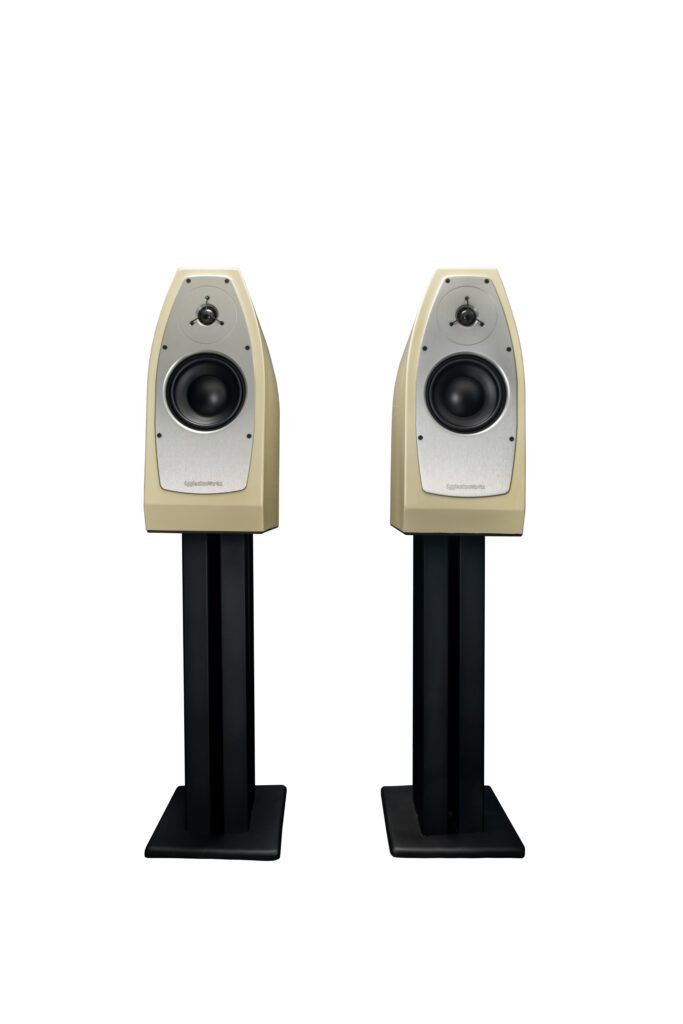
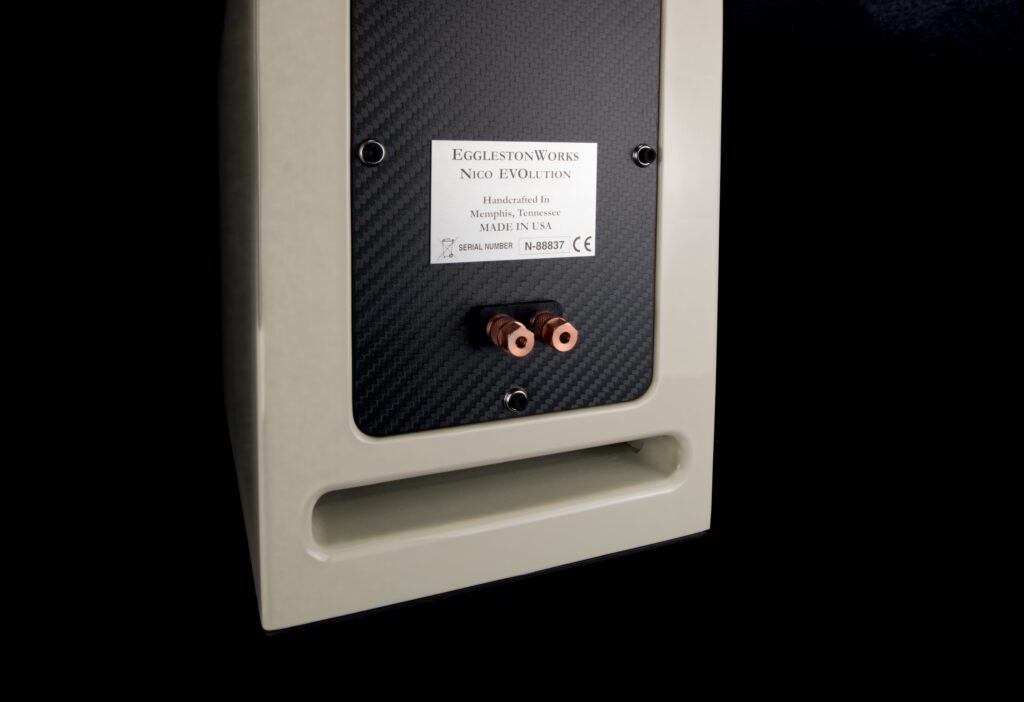
The Nico Evo is a mid-sized design, recognisably an EgglestonWorks product from the metal plate and sloping front baffle (for a measure of time alignment); clever cabinet design reduces the sense of visual mass, keeping the volume where it is needed, around the 150mm bass/mid driver and rear-facing slotted reflex port. The cabinet tapers towards the top in a boat-shaped form, what top plate there is, is small, with a significant downward slope toward the rear. A recess in the baseplate fits snugly over the top plate of the supplied stands, but the base is rectangular so most aftermarket stands are usable. I used both the supplied stands and a pair of considerably lower mass stands of a similar (600mm) height.

It’s no surprise that the first impression on moving from my Amphion Argon 7LS floorstanders is of the reduced heft in the lower bass. EgglestonWorks’ own measurements reflect this, an in room usable bottom end at around 40Hz is entirely in keeping with a standmounting design of this size. First impressions are usually valid but not definitive, though, and what you get in return here is vivid imaging and arrestingly convincing vocal portrayal. In fact, vocal and instrumental timbres are generally rendered very convincingly indeed, guitar is almost uncannily ‘guitar’, piano is natural, rich and sonorous, and if it lacks the ultimate degree of bottom-end weight and power, it more than makes up for it in speed, agility and tunefulness. It’s a bit like the difference between a 9’ Steinway, and a 7’6” Steinway that’s just been prepped by the best piano technician in town.

Relish The Power

The speakers do seem to relish a bit of power. EgglestonWorks give a recommended minimum, but no upper power handling limit. The drivers are, they say, ‘robust’. I used them with a 180W Accuphase E470, and a 250W Hegel H390 and they absolutely sang when I turned the wick up a bit. There’s clearly plenty of headroom here, no sense of compression or shoutiness at really quite antisocial volume levels, they just go louder without apparent strain. It’s a genuinely impressive trait and I think you could use these in quite a large room and not feel short-changed; these are clearly not standmounters designed just for a modestly-sized domestic setting.

EgglestonWorks Nico Evo

This all seems to translate readily into the way the speakers depict the performance. Phrasing is both easy to follow and entirely unforced; if the musicianship is there the Nico Evos can bring it to you. Dynamics feel largely free and unconstrained, despite the modest driver size. Stanley Clarke’s ‘Bass Folk Song No 6’ from The Stanley Clarke Band [Heads Up], the instrument is vivid, colourful and beautiful, but the striking thing is the degree of insight into his playing, the phrasing, his style and technique. The music was just more enjoyable and enthralling. I’ve heard deeper bass, sure, but there is real quality on display here, taut and fast and tuneful, and rather better behaved than many ported designs I’ve encountered. The lucid, limpid presentation and the absolute level of communication of that musical intent, and how it was realised in the performance, was easily worth the trade in that bottom octave. I was reminded of EgglestonWorks’ own aim, to make each speaker the best it could be for its price. They could probably make this box go deeper, but if that meant losing some of this agility and communication, then the speaker would not be the best it could be. As it is, the bass response is deep enough, and so fast, solid and tight so you just don’t miss the stuff that isn’t there.

Spatial Detail

Smaller cabinet sizes also seem to help with imaging, and the Nico Evos excel at projecting a clearly delineated image, whether a small jazz trio, or a symphony orchestra and chorus. The spatial detail they evoke, and the stability of the soundstage they project is up there with the better box loudspeakers I’ve encountered. They do have that lovely habit of just disappearing – one of the main benefits of standmounting designs in my experience, but one seldom achieved quite as convincingly as this. The drivers used here are very similar to those employed in the larger, often much more expensive models, and their quality is apparent since they just don’t seem to draw attention to themselves. Timbres and textures abound, from the sheer variety of different marimba voices conjured up on the title track from Simon Haram’s album Frame [Black Box], to the interplay of sax, guitar and tabla on Andy Sheppard’s toe-tapping ‘Peshwari’ from Learning to Wave [Provocateur Records], and all helped by that uncanny way with imaging that larger, floorstanding speakers so often struggle to emulate.

But sometimes, not everything gelled quite so well. Take ‘Roxanne’ from Sting’s live album All This Time [A&M], his bass playing, never shy at the best of times, became intrusive, the timing was slightly off and its tunefulness a touch vague; similarly on ‘Brand New Day’ the pulse of the bass was ever so slightly behind the beat, but not in the deliberate way that a good jazz musician might play with the rhythm. Vincent Charbonnier does it subtly and effectively for the Jacques Loussier Trio, try ‘Pastorale in C Minor’ from Plays Bach [Telarc], and it really contributes to the groove. The Nico Evo’s gave me most of that, but something wasn’t quite right.

Stands and Sting

Given the quality of almost everything else, I suspected the speaker wasn’t entirely to blame here. Substituting a pair of relatively lightweight stands was revealing. Sting’s bass playing now took its proper place and everything locked in as it should. Even tracks that had previously impressed, were better. Back to Stanley Clarke, this time ‘Bass Folk Song no.10’, electric rather than acoustic bass now, and there’s a highly dynamic whipcrack riff which, on the supplied metal stands, had lacked that ultimate degree of impact and emphasis, the leading edge of the note didn’t pin you back in the seat quite as much as I know it can do. Overall, the funkiness and the groove had felt a little bit forced, it didn’t strut, or push the beat in quite the way I expect. The bass playing came across as clever, rather than musically relevant and engaging. But change to lower mass stands and the musicianship is clear, compelling and draws the listener in, the speed and agility takes a significant leap forward and any suggestion that the playing was a little prosaic is quickly banished. I’m inclined to think that this is a truer representation of the abilities of these increasingly engaging speakers.

EgglestonWorks Nico Evo

EgglestonWorks hasn’t gone for a niche in the market – a standmounter for places where their floorstanders won’t fit. It has instead taken the opportunity to deliver what a good standmounting loudspeaker does best, be that imaging, coherence, speed, or intimacy. And it can go loud and drive hard without obvious signs of strain, so it’s clearly not just a smaller speaker for smaller spaces. I could well imagine this as a winning solution for a larger, but acoustically ‘difficult’ room. Subject to my reservations about the supplied stands, I think EgglestonWorks have largely succeeded in their aim to let the Nico Evo be the best loudspeaker it can be for its price.

TECHNICAL SPECIFICATIONS

  • Type: 2-way stand mounting, reflex-loaded loudspeaker with rearward-facing slotted port
  • Driver complement: 1× 25mm soft dome tweeter, 1× 150mm poly composite mid/woofer
  • Power handling: minimum 50W recommended, no upper limit specified
  • Crossover frequency: 2.3kHz
  • Crossover type: Single-wired, low pass and high pass crossover 4th order Linkwitz Riley Acoustic slope via a 2nd order electrical circuit
  • Frequency response: (in-room, typical) 38Hz–25kHz +/-3dB
  • Impedance: 8 Ohms nominal, 6.8 Ohms minimum at 180Hz and 4.5kHz
  • Sensitivity: 87dB for 1 Watt at 1 Metre
  • Dimensions (H×W×D):
    480 × 210 × 400mm (cabinet)
  • Weight: 13 Kg each
  • Finishes: white, silver or black high gloss finish. Any automotive paint colour by arrangement (extra cost option)
  • Price: £6,000/pair, including stands

Manufacturer:

EgglestonWorks

URL: egglestonworks.com

UK Distributor:

Auden Distribution

Tel: +44(0)7917 685 759

URL: audendistribution.co.uk

Back to Reviews

The post EgglestonWorks Nico Evo appeared first on Hi-Fi+.

ProAc Tablette 10 Signature

This was the review I never wanted to write. The autograph on the back of the ProAc Tablette 10 Signature is that of Stewart Tyler, founder and managing director of ProAc loudspeakers (before that Celef). On July 1, 2021, ProAc announced that Stewart had passed away.

The Tablette 10 Signature is very much Stewart’s legacy. Every inch of the ‘Tab’ is Stewart, and the loudspeaker cemented in place in many an audiophile’s homes, being the first ‘serious’ loudspeaker for many music lovers. You can count me among those whose blossoming interest in audio was piqued by ProAc’s tiny titans, and although I ultimately went in a different direction for a while, hearing what they did never left me.

ProAc Tablette 10 Signature

While it’s more than 35 years later and the Tablette 10 Signature has little in common with the ‘Tabs’ and ‘Super Tabs’ of the era, some of the core properties of the loudspeaker remain; a small two-way stand-mount loudspeaker with a soft 25mm silk-dome tweeter, and a 125mm bass driver.

Boxing clever

There is a significant change with the Tablette 10 and Tablette 10 Signature; however, it’s a sealed box rather than the rear-ported designs that have carried the Tablette name since 1979. That changes a lot. It means the loudspeaker doesn’t require the same degree of rear breathing space and could conceivably be used close to or up against a wall. It also emphasises getting the bass driver precisely right as there is no more relying on some port reinforcement to bolster up that all‑important 80Hz region.

ProAc Tablette 10 Signature

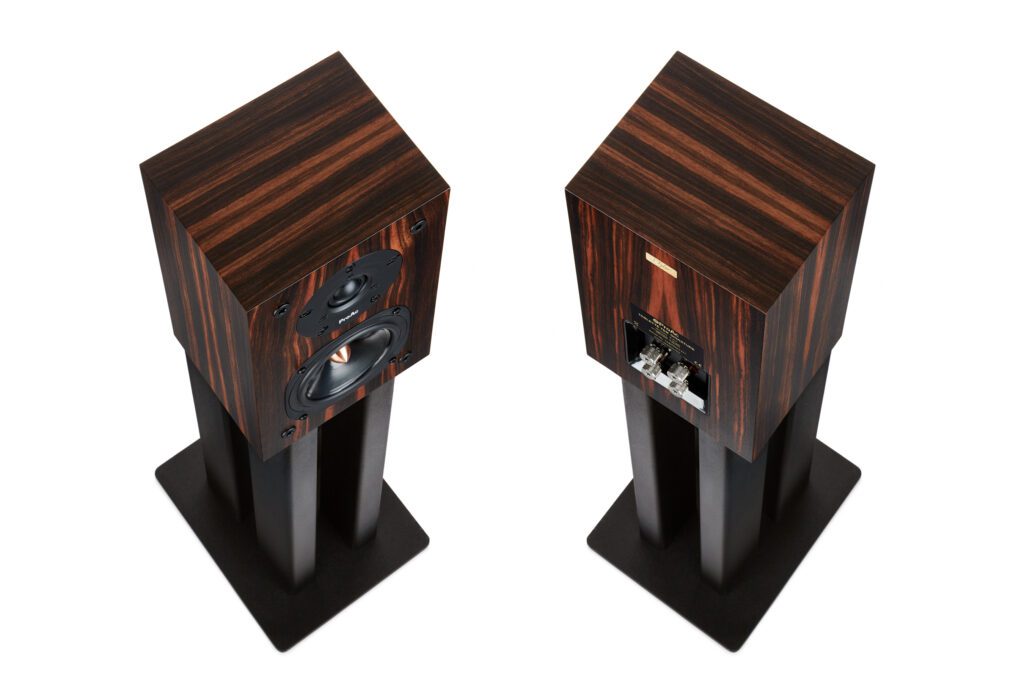
The Tablette 10 Signature has the same 25mm soft dome tweeter as the regular Tablette 10 but another specially developed (and slightly purple-hued) 127mm Pagina Mika driver with an improved magnet system and a copper phase plug, unique to the Signature edition. This necessitated a complete redesign of the crossover network compared to the standard Tablette 10; itself a radical rethink of crossover design compared to previous Tablettes. At the back are two pairs of silver speaker connectors for bi-amplifying or bi-wiring.

Almost a eulogy

We missed out on both loudspeakers going into the lockdowns, and in speaking to Stewart for what would (sadly) be the last time at the Bristol Sound & Vision Show, I was keen to take these on personally. Little did I realise then that this review would be almost a eulogy.

Back in the mid-1980s, when I first heard a pair of Stewart’s little wonders, the shortlist was down to the Super Tabs, a pair of LS3/5a or Linn’s Kan loudspeakers. I preferred the space and effortlessness of the Tablette loudspeakers but ultimately chose Kans for their speed, precision, and ability to play against a wall. Today, that decision would have gone in the other direction because the Tablette 10 Signature has the speed to go with the spatial properties. It still sounds as room-filling as ever, but now it sounds fast and just as much fun as before. And with no rear port, a rear wall can get ever closer. No, this isn’t designed as a pure boundary loudspeaker, but with so little rear radiation, it can be used in free space or very close to a wall without complaint.

Some loudspeakers are crying out for better equipment, and some are the first rung on the ladder. Although the ProAc Tablette 10 Signature can be both, it’s also perfectly happy in its groove. Partner this with something just as evergreen in amplifier terms (like an A21SE from Sugden) and a couple of good sources, and you have a system that you’ll never feel the need to change or upgrade.

From every pore

ProAc claims the longest part of the Tablette 10 to 10 Signature development cycle went into the crossover. If so, that seems perfectly likely as the sophistication of the design drips from every pore of this loudspeaker (if loudspeakers had pores, of course). But let’s not run before we can walk. The basic Tablette 10 Signature is a low-sensitivity, low-power handling small sealed box loudspeaker with limited bass output… and when you listen to them, you won’t care about any of those things!

Some loudspeakers have an almost intangible alluring nature that transcends what they can do on paper, and the Tablette 10 Signature is just that loudspeaker. It doesn’t cheat or break the laws of physics to do what it does so well but instead has one of those intensely refined and effortless sounds that just makes you play more and more music.

While I would strongly argue that the overall balance of the Tablette 10 Signature is inherently ‘neutral’ (if, understandably, light in the bass), it’s perhaps more neutral to the intent of the musicians, engineers and composers than to a dreary, yet correct, set of audio benchmarks.

I had difficulty listening to the Tablette 10 Signature by bringing myself back to listening critically. Every time I listened to a track on a test-disc album, I added the rest of the album… often followed by something I was drawn to as a result of those tracks. Eventually, I’d turn to the next test track… and repeat the distraction process. Either I suddenly developed ADHD, or these loudspeakers inspire you to listen to your music wide and deep; I’m going with the… oh look, a squirrel!


No good for/bad for

I don’t like reviews with a ‘good for/bad for’ ethos, but the limitation on bass and ultimate sound pressure levels suggests hardcore metal heads might go elsewhere for their jollies. Which is a shame; Lateralus by Tool [Volcano] sounds marvellous through the Tablette 10 Signatures, filling the room with extremely well-recorded graunch.

That room-filling sound is part of the Tablette 10 Signature’s mini-miracle performance. These loudspeakers remarkably fill a room with sound, especially if a little away from the wall. In a medium to large room, these loudspeakers act almost as point sources, sonically disappearing from the image. And the interaction between woofer and tweeter is so elegant, so inherently ‘right’ that it produces a sound that just sings at you.

ProAc Tablette 10 Signature

When you play female vocals through the Tablette 10 Signature, these twin elements (excellent driver integration, almost point source imagery) combine in stunning form. Joyce DiDonato’s powerful mezzo-soprano is perfectly rooted in three-dimensional space and extremely easy to understand.

The giant-killing just keeps going on when you try to place the ProAc Tablette 10 Signature in ultimate terms. If you put them up against some really big hitters, you quickly hear the limitations in terms of sheer bass delivery, loudness levels, headroom and even cabinet ‘noise’ relative to some of the best. That list (naturally) includes many of ProAc’s more high-end designs. But the point to all this is you never feel short-changed by the Tablette 10 Signature, and unless you have a pressing desire to spend big or play lots of intestine-redirecting bass, the Tablette 10 Signature just keeps putting a smile on your face.

Trading blows

The Uni-Q sporting elephant in the room is the KEF LS50 Meta, the knock-it-out-the-park small speaker of the moment. That the two trade blows are a first for the KEF LS50 Meta as it tends to flatten the opposition. The ProAc scores highly on its effortless and peak-free highs, while the KEF is more driven and forward in the bass. You can’t get ‘both’ in a similarly sized box, unfortunately,

There is something truly incredible about an unassuming two-way loudspeaker that sings its little heart out. Sure, bigger and better speakers – even bigger and better ProAcs – are available, but that’s not the point of the Tablette 10 Signature. If you are happy in your own skin and don’t need to keep up with the Joneses or ‘push the limits of the Zeitgeist’, these truly charming, room-filling loudspeakers are all you need. Stewart’s daughter Zoe and her husband John will make sure ProAc lives on, but this is Stewart Tyler’s legacy. And what a musical legacy it is. Thanks, Stewart!

Technical specifications

  • Type Two-way stand-mount sealed box loudspeaker
  • Drivers ProAc 25mm (1”) ProAc silk dome air cooled and inner damping tweeter; ProAc 127mm (5”) Pagina Mica cone with acoustic coating and copper excel magnet system with solid copper phase plug
  • Frequency Response 55Hz–30kHz
  • Nominal Impedance 10 ohms
  • Sensitivity 86dB linear for 1 watt at 1 metre
  • Recommended Amplifiers 5–50W
  • Finishes Black Ash, Mahogany, Cherry, Silk White, Natural Oak and Walnut (standard), Rosewood, Ebony (Premium Finishes to order at extra cost)
  • Dimensions (W×H×D) 19.1 × 30.5 × 15.9cm
  • Weight 5.5kg Per Loudspeaker
  • Price £1,585 per pair (stands extra)

Manufacturer


ProAc

proac-loudspeakers.com  

Tel: +44(0)1280 700147

Back to Reviews

The post ProAc Tablette 10 Signature appeared first on Hi-Fi+.

Rogers LS3/5A SE stand-mount loudspeakers

To say the classic BBC LS3/5A is ‘iconic’ is something of an understatement. Even though the design is older than many of the people who buy a pair today, despite the BBC having long since moved on to other loudspeakers for speech monitoring in small spaces, and the age of the design notwithstanding, the LS3/5A still pulls in the kind of cult following that few other products can match.

As such, the LS3/5A’s specification sheet is functionally sacrosanct. Which means that Rogers making an ‘SE’ version could be the stuff of pitchforks and burning torches (OK, angry posts on internet forums and Twitter feeds… but that is merely the 21st Century version of the angry mob). In fairness, Rogers is one of the few brands that could make a souped-up LS3/5A, as most of those original era BBC-designed loudspeakers sold in the domestic market had a Rogers badge. But that brand equity would be eaten up fast if the SE version of the LS3/5A was more an ‘homage’ to the speaker than the speaker itself.

Rogers already makes standard 15-ohm versions of the LS3/5A, using new versions of the 19mm Mylar dome tweeter and 110mm Bextrene mid-bass cone originally made by KEF. Everything about those standard Rogers LS3/5A is as per the original LS3/5A; an outstanding mini-monitor of its time that still sets a high bar in terms of transparency, especially in the mid-range. However, if we are being truly honest about the LS3/5A, its dynamic range is somewhat ‘muted’ in its standard guise. In an effort to not be burned at the stake for my heretical stance, that is set against modern loudspeaker designs, many of which trade tonality and accuracy for excitability, and that’s one of the big reasons why the LS3/5A deserves its cult status.

The whole SE version project actually started out as trying to find a way to make the LS3/5A more dynamic without changing the speaker itself. Rogers experimented with the loudspeaker stand and found Panzerholtz (a.k.a. ‘Tankwood’) to be a perfect, if costly, partner. Panzerholtz is a mix of hardwood and phenolic resin, prized both for its acoustic properties and the fact it’s literally bulletproof! It ends up being about the densest material this side of making the stand of solid metal, but without the hysteresis issues or the problem of making a stand into a kind of 24” tuning fork you can get with solid metal stands. It wasn’t too much of a step from there to seeing what impact Panzerholtz would make when replacing one or more of the thin walls of the LS3/5A’s cabinet. Listening tests followed fast.

The post Rogers LS3/5A SE stand-mount loudspeakers appeared first on Hi-Fi+.