
The submit 2023 Editors’ Choice: Phonocartridges $2,000 – $5,000 appeared first on The Absolute Sound.
Tag Archives: Analog Sources
Originally publish on trackingangle.com
It’s no secret that the world’s two largest cartridge producers, Audio-Technica and Ortofon generate most of their cartridge earnings from cheap, mass-produced models, lots of which they provide OEM to turntable producers. Yet each lavish time, consideration, and monetary assets on the far smaller (it might be truthful to say “tiny”) high of the market, the place ultra-precision hand-built limited-edition fashions garner extra consideration than gross sales from audio fanatics. So why try this? Partly for the status, partly for the “trickle down” tech advantages and partly in all probability simply to push the envelope and see far it may possibly go and to the place it leads.
Back in 2016 Audio-Technica launched the ART 1000 cartridge, designed by the then retired Mitsuo Miyata alongside together with his younger successor then Product Development supervisor Yosuke Koizumi. Miyata’s dream, (some thirty years earlier!) had been to provide a cartridge with coils mounted immediately atop the stylus, so stylus motion would immediately translate to sign era, the advantages of which needs to be apparent to all studying this. The draw back is added mass immediately atop the stylus and an open structure that made the coils weak to wreck. But CDs received in the best way earlier than Miyata may notice his dream, so he turned his consideration to designing headphones.
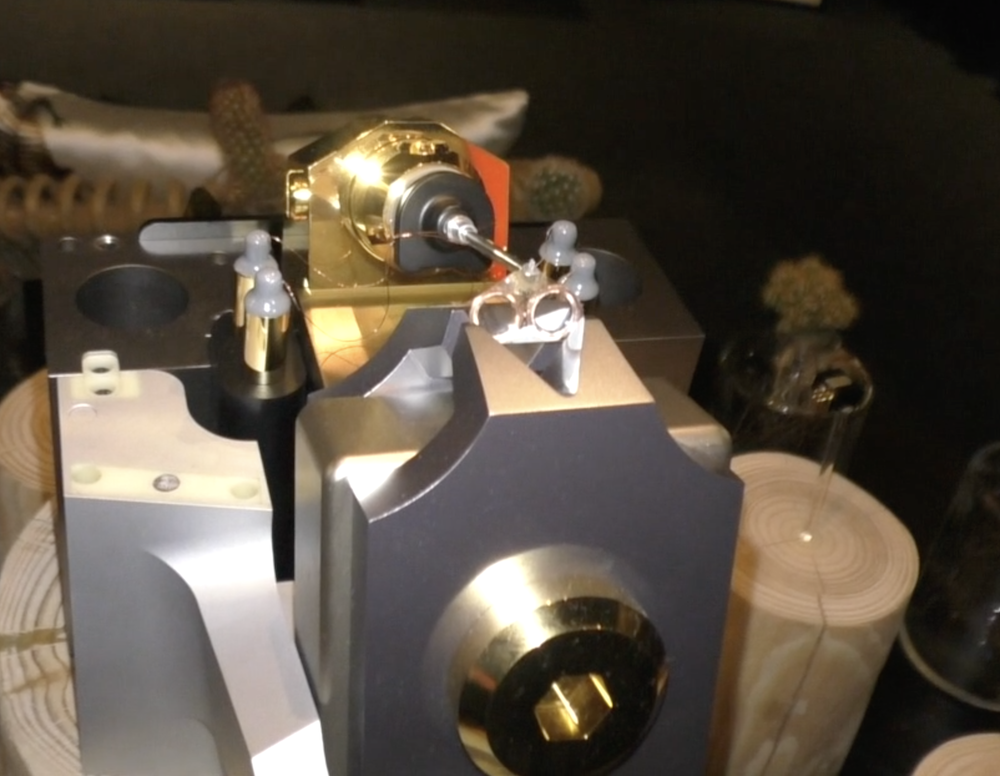
When Audio-Technica put into manufacturing the AT ART-1000 I flew to Tokyo to each watch it being constructed and to higher get to know the corporate. It was an eye fixed and ear opening journey. The ART-1000 remains to be obtainable from some sellers for $4,999.
While there I met younger Yosuke Koizuma, now listed as “Audio Technica cartridge engineer” who honored me by bringing to the manufacturing facility his tremendous 45rpm document assortment. Don’t skip this video!
Hideo Matsushita based Audio-Technica in 1962. At the time he had a tenured place curating an artwork museum. His long-term high-quality audio ardour bit, he stop to begin Audio-Technica, and shortly thereafter launched the AT-1 cartridge. The new MC2022 celebrates the corporate’s sixtieth anniversary. Today, the founder’s son Kazuo is Audio-Technica’s president.
Like the opposite massive scale cartridge producer, Audio-Technica’s line options orderly steps upward in sonic and technical high quality. As Ken Redmond identified in his wonderful ART20 assessment , to create the ART20, Audio-Technica took its $1500 AT-ART 9XI and changed its aluminum/plastic physique with an aluminum/titanium physique and elevated the magnet system’s yoke mass. The value elevated as effectively, from $1500 to $2900.
The new AT MC2022 prices $9000. Its electrical specs are an identical to the ART 20’s indicating that the “motor” might be an identical or very related. The static and dynamic compliance specs differ however not appreciably. The large distinction after all is the unified stylus-cantilever meeting, shaped from a single, lab-grown diamond utilizing chemical vapor deposition. This was beforehand achieved by Sony in its XL-88D cartridge circa 1980, which I’ve been instructed was “carved” from a naturally occurring diamond and price as a lot as Honda car (I’ve not been capable of verify that).
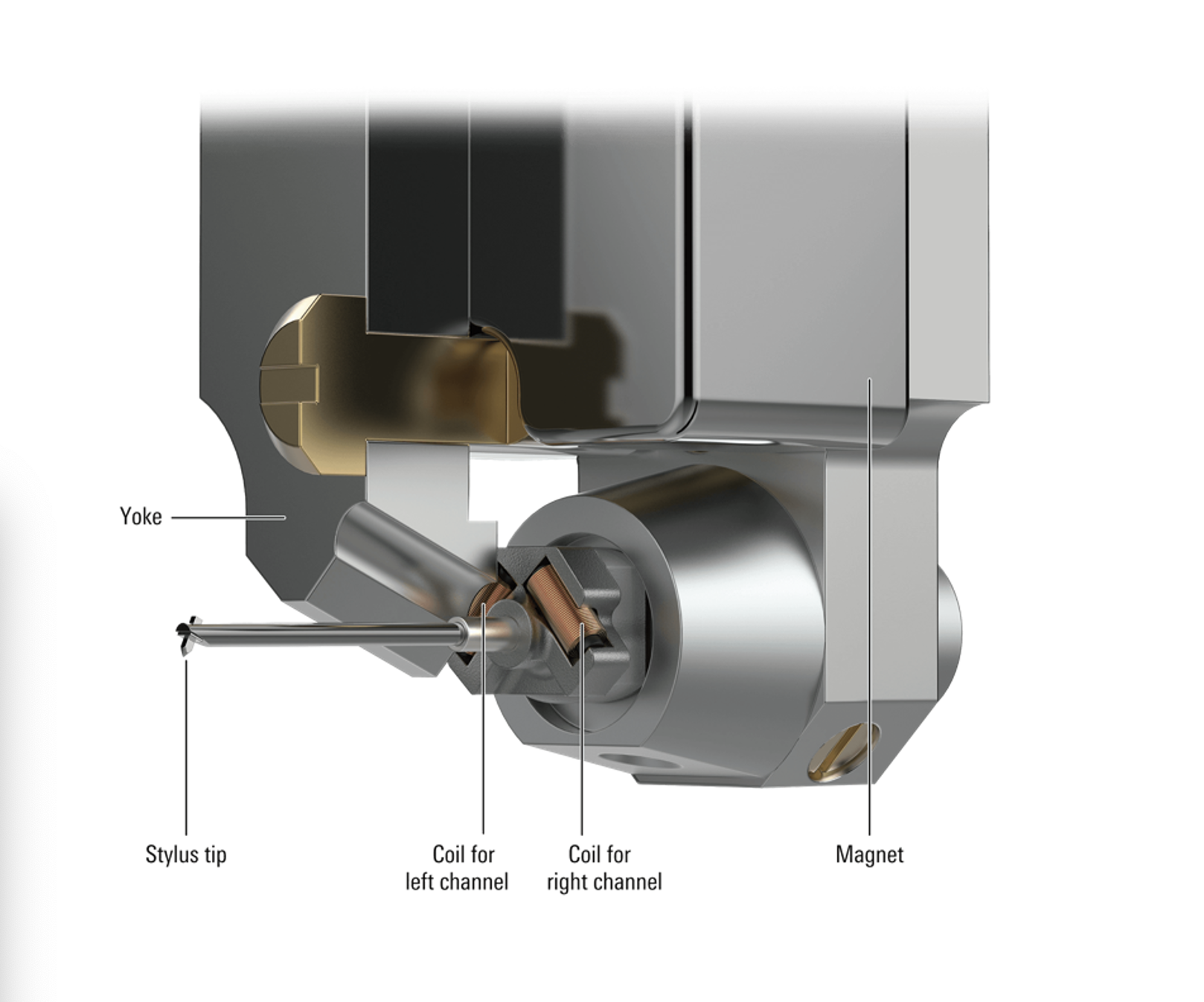
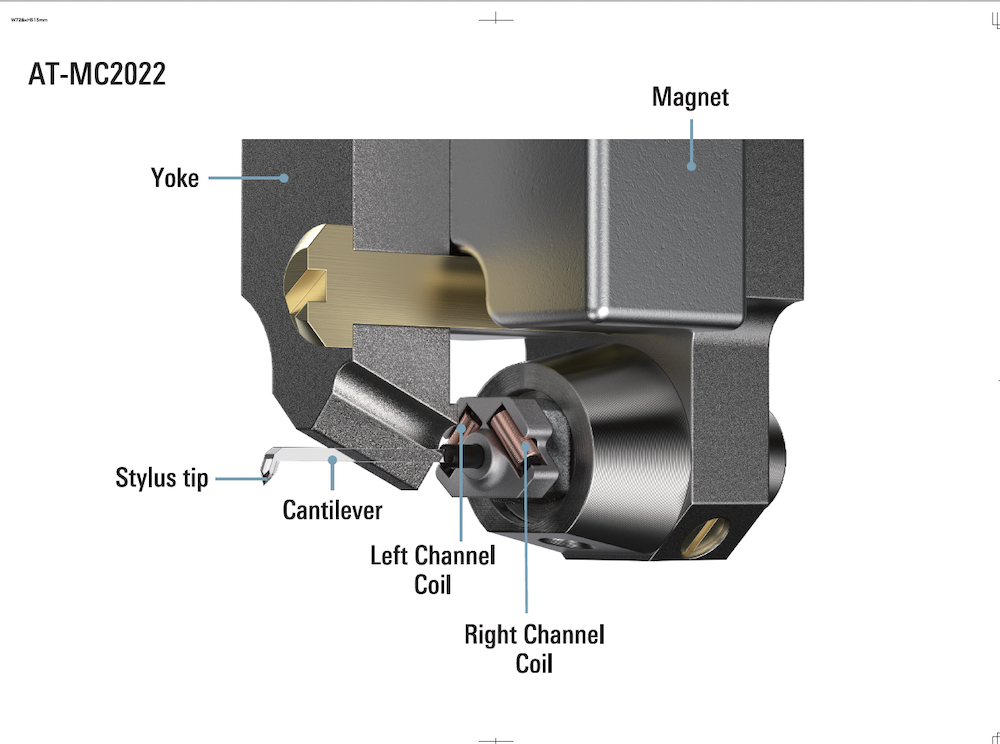
The MC2022’s sq. cantilever is 0.22mm (0.0087”) extensive, which could be very slim. The dimensions of the road contact diamond stylus shaped on the tip is 2.2 x 0.12 mil (or 56 x 3 µm) whereas the AT20’s is 1.5 x 0.28 mil (or 38 x 7 µm), which suggests the MC2022’s small radius is lower than half that of the AT20 so it’s a real line contact that in comparison with the AT 20 ought to produce better element.
The physique can be similar to the ART 20’s (titanium and aluminum with an elastomer undercover), although with a better gleaming gold “bling” issue enhanced with black cartridge physique accents Audio-Technica says are impressed by conventional shippo enameling (Japanese cloisonné). It’s introduced in a deluxe wood enclosure.
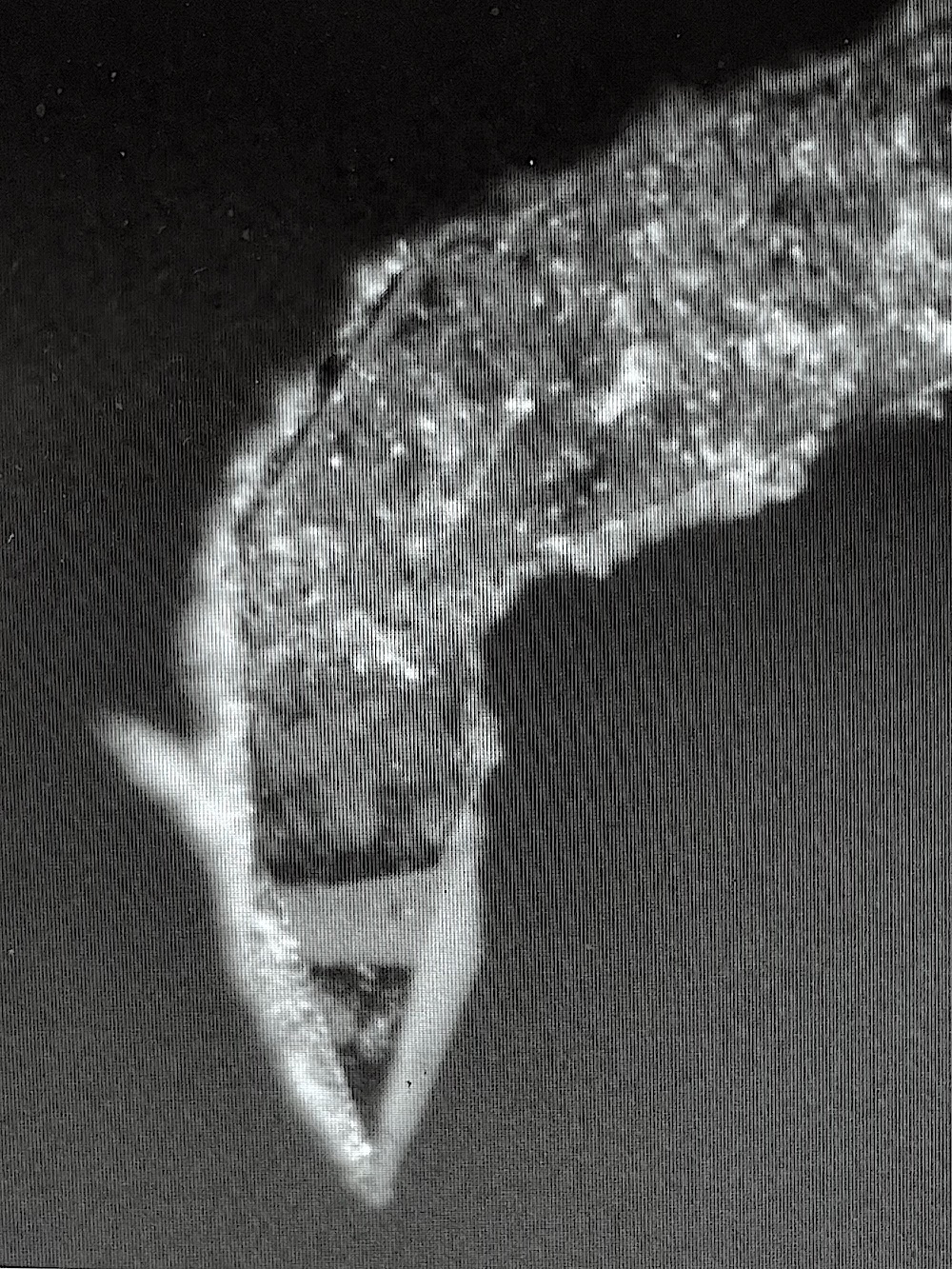
 But the true keys to the MC2022’s sonic efficiency are the cantilever materials itself and particularly the decrease tip mass produced by there being no stylus/cantilever joint requiring bonding or an insertion mechanism or mounting plate, and naturally this design can’t be bested by way of junction rigidity, as a result of there isn’t one. However, as you possibly can see within the microscope picture, the diamond makes a 90 diploma flip effectively above the precise stylus, in order that does add tip mass. Clearly the general advantages of this design conceptually outweigh that one minor unfavorable and although I can’t weigh it, I’d guess the tip mass right here remains to be equal to or decrease than on most if not all bonded and/or bonded and plate mounted styli.
Anyone studying this who’s changed the Ortofon 2M Red’s bonded stylus with the Blue’s far decrease mass nude stylus and heard the startling distinction that substitution produces in a $99 cartridge will want no convincing in regards to the sonic enchancment a one piece cantilever/stylus would possibly produce in a state-of-the-art design.
The first diamond cantilever cartridge I heard was the Transfiguration Proteus D from Immutable Music (when firm founder and cartridge designer Seiji Yoshioka, handed away, his household selected to nearer the enterprise, reasonably than promote it). I’d been effectively acquainted with the boron cantilevered Proteus, which was lots quick and “explosive” however I used to be unprepared for the main distinction between it and the Proteus D. The “D” model sounded altogether like a special cartridge, although the one distinction was the cantilever. The sound wasn’t “medical” or “skinny” however reasonably “quick” and “full bodied” with a really feel of a direct path between stylus and electrical sign propagation. Not for many who like issues “laid again”, or as Ken Redmond colorfully describes it: “mixing board” versus “viewers” perspective.
Audio-Technica takes the diamond cantilever to the following degree by laser chopping the stylus from the lab grown diamond’s tip. No glue, no fastening plate, nothing. Another good thing about this design is that until the laser operation goes awry (not going and even doable) there shall be no stylus rake angle or zenith angle “off spec” errors. As J.R. Boisclair’s analysis factors out, zenith angle error, even on expensive cartridges utilizing conventional development methodologies may be as excessive as 10± levels from line contact perpendicularity with the cantilever. Manufacturer accepted tolerances are as excessive as 5 levels. The unfavorable monitoring and sonic penalties, whereas minimized by some out of ignorance and/or vanity, are appreciable as Mr. Boisclair demonstrates within the Florida Expo video just lately revealed on the TrackingAngle YouTube channel.
Set Up
I first put in the cartridge on the OMA K3’s Schröder 12” arm, which has an efficient size of 280mm. To set SRA I used the WallyScope (proven right here throughout a DS Audio optical cartridge arrange for an upcoming assessment). Predictably, SRA was near 92 levels with the arm set parallel to the document. Oscilloscope measurements duplicated A-T’s separation and channel steadiness specs: 30dB@1kHz separation and .5dB channel steadiness. Often the precise separation measurements are larger than what the oscilloscope measures. The channel steadiness numbers are extra vital. The .5 L-R/R-L signifies near good azimuth setting as effectively.

The largest arrange concern was brought on by the stylus tip’s location tucked effectively behind the cartridge entrance and never really easy to see. The upside is it’s troublesome to by chance “bonk” and destroy.
While the beneficiant .55mV output and comparatively excessive 12 ohm coil impedance (in comparison with a few of at the moment’s tremendous low output/ultra-low inner impedance cartridges) would possibly make the MC2022 a lower than superb candidate for a transimpedance current-based phono preamplifier, I ran it into the CH Precision’s current-based enter, setting the acquire to +10dB in addition to into its MM/MC voltage acquire enter utilizing a Ypsilon MC-10L step up transformer that’s superb for a .55mV output cartridge. The load seen by the cartridge is 500 ohms. Audio-Technica recommends better than 100 ohms. I loaded down the secondary to get it to round 200 ohms however didn’t hear a big distinction. The outcomes have been equally good, although considerably totally different sounding run both approach. However, the variations aren’t price going into.
I set VTF on the really useful 1.8g and as soon as the cartridge had a while on it, I used the Ortofon take a look at document and located the MC2022 to be an impressive monitoring cartridge able to negotiating cleanly all however the 100µm lateral peak band and even on that one it tracked with only a slight buzz on one channel which may have been fixable with a minor anti-skating tweak nevertheless it was so in any other case effectively dialed in I left it as is. Some MCs simply slide off the document on that monitor—not that precise music is ever lower at that degree.
Listening
Let’s begin with the smallest image earlier than moving into the massive image and earlier than moving into the audiophile guidelines weeds. When you decrease the stylus down on the document and listen to that first “pop” impulse it may possibly typically write the complete assessment—or at the very least a big a part of it. if it’s a loud, long-lasting mid bass unfocused “blob” you possibly can often make sure the cartridge can have a heat mid bass signature that shall be heard on each document you play. The greatest cartridges land on the document like the perfect Olympic divers hit the water: there’s hardly a break within the water, virtually no sound and the diver disappears. When the MC2022 lands on the document there’s hardly a sound and what sound there’s, is a ‘pip’ not a “POP”. No sonic splash.
Not surprisingly then this cartridge, as solely a only a few in my expertise have managed, sounds nearly prefer it’s not there. In my world that’s the purpose. I don’t need to hear any character, which isn’t the identical as saying it “lacks soul” or is in need of “musicality” or another timbral, textural or transient high quality that’s an identifiably attribute given a optimistic euphemistic spin.
Some cartridges are meant to impart a selected pleasing character and that’s superb too if that’s what you want or if such a high quality enhances your system’s sound and also you’re trying to take it there. Other cartridges have a “pinch” of one thing expertly utilized —just like the wood bodied Analog Relax 1000 I reviewed a couple of years in the past, and that’s superb too. That’s a spectacular instance of the cartridge constructing artwork and the additive high quality so refined it just about disappears, although you’d hear it’s absence.
The authentic green-bodied Lyra Atlas undoubtedly delivered unprecedented element, at the very least in my expertise, primarily based upon appreciable effort at eliminating resonances, nevertheless it additionally had a medical, sharp edge. The Atlas Lambda restored misplaced textures with out shedding element and the mixed recipe produced an identical “not there” high quality, although as a reviewer, speaking the advance required writing in regards to the textures being “added”. That main sonic change was largely achieved with a brand new damping elastomer.
The consequence there and right here is that the much less identifiable the cartridge’s character is, the extra more true is the musical info that you just expertise, and the extra of it there’s to listen to. Of course, there are methods to explain what listening to music with the MC2022 is like. So right here goes.
The cartridge produces explosive, large-scale dynamics, and ultra-detailed micro-dynamics with exact in-between gradations—the type that produces a “reside” sensation on well-recorded music. That high quality is straight away obvious, and was the primary time I heard the cartridge reside at an audio present. The MC2022 excels at element decision, three-dimensional imaging, picture solidity, exact, quick assault, beneficiant maintain and long-tailed decay into black. All the diamond cantilevered cartridges I’ve heard exude this high quality to at least one diploma or one other together with transient precision minus a man-made “edge”, and an general effervescent, non-mechanical presentation that was additionally instantly apparent the primary time I heard that Proteus D. The MC2022’s one-piece diamond cantilever-stylus elevates all of this to a different degree of velocity whereas sustaining full-bodied supply.
The music’s scale didn’t have an effect on the cartridge’s dynamic efficiency. I’ve beforehand referenced the Mark Levinson 45rpm recording Elliot Fisk, Guitar (Mark Levinson, MAL 6). Fisk’s management over the musical dynamics is as exact as his finger work. The cartridge’s response to the recording’s low degree dynamic ebb and move was easy because it reported minute degree shifts that absolutely communicated the artist’s intentions. The supply of delicate transient textures was equally easy, serving to to create the feeling of a performer enjoying within the room between the audio system—sure I do know, you’ve learn that earlier than, and I’ve written it earlier than so let’s simply say this cartridge’s responsiveness produced an much more intense sensation of that. The guitar’s physique was additionally introduced cleanly and freed from the annoying element robbing additive “heat” lesser cartridges impart, but the instrument’s physique was clearly current. The consequence was a “tactile” expertise of fingers on strings; midrange textural magnificence with out additive sludge. Precision with out decapitated physique and largely a simple, non-mechanical presentation. Of course, that Mark Levinson recording can be phenomenal.
To take a look at the cartridge’s presentation on the different finish of the dynamic path, I performed John Williams’ “Liberty Fanfare” from Winds of War and Peace first launched in 1988 on Wilson Audiophile Recordings at 33 1/3 and extra just lately as a double 45 by Analogue Productions (APC-8823-45). The National Symphonic Winds consists of largely winds plus some brass and percussion. There’s not an excessive amount of bass coming from this ensemble apart from from the lone bassist and the enormous bass drum “thwacked” by what conductor Lowell Graham describes as “The Mallet of Death”. When that “thwack” first hit, the room shook with as deep and as tight a “thwack” as I’ve ever heard from the recording, adopted by a remarkably clear, long-lasting decay into silence. Residual groove noise was nearly non-existent, even on the well-played authentic. The MC2022 is as quiet a tracker as I’ve heard and presumably the quietest (apart from from optical cartridges that don’t “learn” deflections brought on by filth or bodily defects).
The observe up “thwacks” have been equally spectacular and never marred by additive mid-bass colorations some cartridges produce that soften the preliminary transient and muddy the maintain. The backside finish is all there and the way. If there’s no bass on a document, you’ll not hear any. That would possibly disappoint on some records with anemic bass (many rock records from the ‘60s and ‘70s) which may sound higher performed again utilizing a cartridge with additive resonance produced “heat”, however I’d reasonably have accuracy that interprets as deeper, tighter, extra acceptable bass minus additive “overhang” that additionally delivers textures and quick settling time. The MC2022 does all of that.
Resonant excesses eliminated virtually all the time reveals better midrange element, significantly on male vocals and piano—but in addition on feminine vocals that then tackle a freer, much less “chesty” sound. It takes some getting used to. I used to benefit from the room shaking “bass” on the U.Okay. urgent of Small Faces’ Ogden’s Nut Gone Flake (there’s none on the American authentic), significantly on “Lazy Sunday Afternoon” and on “Changes Circles Spinning” on Moby Grape’s ignored minor gem Truly Fine Citzen. The bass that shook the room on sure notes on each records was clearly produced by a resonance that swamped every little thing else. It was enjoyable—loads of enjoyable—however with the underside higher “tucked in”, satisfying particulars emerged on each records particularly from the vocals simply above the sonic “increase” (the MC2022 isn’t the one cartridge to enhance the sound of those records in {that a} regard, nevertheless it appeared to do it most successfully).
The MC2022 can be free from decrease mid-range resonances, which helps ship superb copy of male vocals and piano. Last night time I made a decision to play what I wished reasonably than what a assessment known as for and was I in for a shock. I performed the EMI Centennial version of “Hunky Dory”. I’ve performed that version and others for greater than fifty years! This was “Bowie within the room”. But not simply him. The dynamic presentation of the piano on Biff Rose’s “Fill Your Heart” startled me. I used to be not simply listening to a piano, I used to be listening to an individual enjoying it, bearing down on the keys in locations, shedding in others with a readability of objective I can’t recall ever earlier than listening to. All of those dynamic shifts, some refined however many actual “bangers”, have been new. The readability of the assault was additionally notable. The lead electrical guitar on the V.U. impressed “Queen Bitch” has by no means sounded so coherent and “spherical”. My psychological notes on simply this document may take up pages so I’ll cease.
Image measurement precision was one other indication of this cartridge’s distinctive efficiency. I performed only for enjoyable an authentic urgent of Otis Redding Live In Europe (Volt S-416). There hasn’t but been an excellent reissue. Despite being a lower than superb recording general it has some wonderful qualities together with “you’re there” transparency, although you’re “there” seemingly within the balcony with a top quality transportable recorder and the individuals sitting subsequent to you’re clapping actually loudly!
But Otis, approach down there sounds reside as a tiny spec of excessive vitality greatness. Until I heard Frank Sinatra sing “Try A Little Tenderness” I believed it had been written for Otis. It ends the present and as a reside live performance second it’s one of the crucial thrilling ever recorded. Otis goes loopy, the viewers much more so. This cartridge’s pinpoint picture of Otis was thoughts blowingly exact and with the correct distant perspective—and I’ve been enjoying this document since 1967—and his respiration and gesticulating by no means so effectively expressed. Last night time was a kind of “it’s two within the morning I’d higher cease and fall asleep” nights.
I may go on for paragraphs about how Small Faces, Small Faces, Small Faces (IMSP 008) sounded —one of many best rock records ever so far as I’m involved (I believe engineered by Glyn Johns) and one with parts of American soul, r&b, arduous rock, psychedelia, British “seaside”, baroque-pop ala “Lady Jane”, and many others.— and the way the sound so shocked me, however I’ll maintain it to some and describe it in order that even in the event you’ve by no means heard the document, you’ll get what I’m speaking about. The opener “(Tell Me) Have You Ever Seen Me” has about essentially the most anemic bass line I’ve ever heard on a document. It won’t even be a bass, nevertheless it often swamps the sound and overlays every little thing else. This play it stayed in an assigned house and truly stored time. It doesn’t usually try this. Ronnie Lane subsequent sings “Something I Want to Tell You” together with his lips nearly touching the microphone. It’s a very dry recording. He’s there within the room on the suitable channel. I’ve by no means heard it sounding so actual. I virtually felt like wiping off the speaker.

The subsequent music “Feeling Lonely” has tambourine on the left channel however proper there within the heart hovering in house is a few form of temple bell as clear as a, effectively bell, that I’ve simply not heard earlier than at the very least not so clearly outlined and spherical. Finally let me inform you in regards to the raucous ending to the music “Tin Soldier” (not on the album however included on a effectively finished Castle Records reissue of the album). It jogged my memory of how Otis’s model of “Try A Little Tenderness” ended and searching on the late 1967 recording date, and given Steve Marriott’s love of r&b it’s fairly doable he was impressed by it (one other trace is that Marriott produces his share of “gottas” on the album!).
Here’s the ultimate monitor on the album performed incessantly since 1967!
One extra instance of this cartridge’s timbral and transient “rightness”. There’s an album known as The Video All-Stars play TV JAZZ THEMES (SF-8800) on Somerset Records. Yes, residence of the 101 Strings The tunes, are, sure, TV themes like “77 Sunset Strip”, “Peter Gunn” and many others.. I noticed this one within the $1 discount bin and notices the “audio combine” credit score went to Bill Putnam! So I grabbed it after which seen the gamers: Paul Horn, Gus Bivona, Red Mitchell, Frank Rosolino, and many others.—nice studio cats. The sound on this document is early stereo insane however often the frequency extremes are extreme: bass too heavy, high finish era-searing. The AT MC2022 tames each ends a appropriately delivers the center.
Before retiring final night, I performed a couple of sides of the sonically and musically astonishing British Decca manufacturing of Porgy and Bess with Lorin Maazel and the Cleveland Orchestra & Chorus (Decca SET 609-11) recorded in 1975 with leads Willard White and Leona Mitchell. It’s among the many greatest sounding recordings I personal and never too expensive on Discogs in both this or the identical London version OSA 13116). I all the time thought Kenneth Wilkinson engineered it and why not, it sounds ok to have been, however there aren’t any engineering credit so I don’t know who did, nor do I do know why I believed he’d engineered it).
The vocals, whether or not male or feminine, solo or massed refrain as reproduced by this cartridge have been as easy, pure and sensible sounding as I’ve ever heard them and you can also make a test listing of what meaning and I’d test off the entire listing in the event you introduced it to me. And they have been exactly sized on the stage. Even although the vocals are bathed in reverb, the voices stay clarified, and three-dimensional on the stage. Any lingering ideas in regards to the low bass efficiency could be disbursed with on the finish of aspect two’s single tympani thwack.
Last night time was a kind of evenings of listening pleasure, discovery and awe produced in nice half by the really exceptional Audio Technica AT-MC2022. The remainder of the system didn’t harm the expertise however I’d grown accustomed to most of it. This was a particular night.
Conclusion
With the AT-MC2022, if you would like “string sheen” it had higher be on the document. If you need deep bass or midbass heat from any instrument or voice it had higher be on the document. The cartridge is not going to produce it. If the document has cleanly outlined transients you’ll hear them reproduced with distinctive, unforced readability, freed from synthetic edge.
I personal many fantastic cartridges and there’ll quickly be a video exhibiting most of them. The Audio-Technica AT-MC2022 is true there on the very high together with only some others (although I’m positive there are others I’ve by no means heard): the Lyra Atlas Lambda SL, the Ortofon MC Diamond and the X-quisite ST. The X-quisite shares “one pieceness” with the AT-MC2022 in that it includes a distinctive one-piece ceramic cantilever coil former. The diamond stylus is inserted and bonded. Both these cartridges produce distinctive transient precision, velocity, and readability. I’m sure you’d acknowledge these qualities with out figuring out what you have been listening to, and also you’d hear in them distinctive and fascinating efficiency traits. The different two are additionally high performers for different causes.
The AT-MC2022 cartridge delivers, in my expertise, unprecedented transparency, timbral honesty, midband “palpability”, transient velocity and readability and a “wide-openness” I’ve not heard elsewhere. You undoubtedly pay lots for lots of “nothing” and “nothing” is what I would like from a phono cartridge, as a result of a phono cartridge that provides nothing provides you every little thing. You might produce other concepts. It’s not a cartridge you’d purchase to make use of to “tune” your system in some way. It received’t try this.
To get essentially the most from the AT-MC2022 solely the best, most inflexible tonearms and highest performing turntables needs to be used. The cartridge on the OMA K3 was spectacular because it was on an upcoming reviewed turntable fitted with the Kuzma Safir 9. It was not fairly nearly as good on the provided arm with that ‘desk however that’s one other story. If you’ve received $9000 for a cartridge, you’ve most certainly already received an arm and ‘desk as much as the job.
The AT-MC2022 is supposedly a limited-edition mannequin. To quote Acoustic Sounds Chad Kassem about distinctive and restricted document shopping for alternatives: “Buy now, or cry later”.
Specifications
Cartridge & Stylus
Frequency Response – 20 to 50,000 Hz
Channel Separation – 30 dB (1 okHz)
Vertical Tracking Angle – 20°
Vertical Tracking Force – 1.6 to 2.0 g (1.8 g customary)
Stylus Construction – Unified line contact (built-in cantilever kind)
Recommended Load Impedance – ≥ 100 ohms (when head amplifier related)
Coil Impedance – 12 ohms (1 okHz)
DC Resistance – 12 ohms
Coil Inductance – 25 μH (1 okHz)
Output Voltage – 0.55 mV (1 okHz, 5 cm/sec.)
Output Channel Balance – 0.5 dB (1 okHz)
Cantilever – 0.22 mm (0.0087″) sq. diamond
Static Compliance – 21 × 10-6 cm/dyne
Dynamic Compliance – 15 × 10-6 cm/dyne (100 Hz)
Cartridge Weight – 9.5 g (0.34 oz)
Dimensions – 17.3 mm (0.68”) × 17.7 mm (0.70”) × 26.7 mm (1.1”) (H × W × D)
Accessories Included – Non-magnetic screwdriver, Brush, Washer × 2 , Cartridge set up screws (M2.6) (5.0 mm (0.20”) × 2, 8.0 mm (0.31”) × 2, 10.0 mm (0.39”) × 2, 12.0 mm (0.47”) × 2), Protector, Case (wood field), Accessory pouch
Threaded Hole – M2.6 × 2
Stylus Curvature Radius – 2.2 × 0.12 mil
Manufacturer Information
The publish Audio-Technica Celebrates 60 With the Explosive Sounding AT-MC2022 appeared first on The Absolute Sound.
WAM Engineering’s J.R. Boisclair, who manufactures and distributes WallyDevice’s turntable set-up instruments, does a fact-packed seminar explaining the 7 arrange goal factors and why they’re necessary for correct turntable arrange. I’ve been utilizing and recommending WallyInstruments for many years and watched J.R. enhance the merchandise after he took over for the late Wally Malewicz.
His seminar will not be product-based, however reasonably truth and knowledge based mostly. He’s examined tons of of expensive cartridges and located shockingly poor high quality management in lots of samples. His inspection service, which prices roughly $500 is cash effectively spent when you’ve invested 10X that a lot on a cartridge. If it’s solely barely “off” he can present a repair that may produce high efficiency. if it’s means off, he can supply proof to justify your returning your buy for a correctly manufactured pattern.
After enhancing this video and watching it a second time, I really feel absolutely assured in claiming that this video is amongst, if not a very powerful and helpful video you will see that on YouTube in case you are severe about vinyl playback and correct document care.
The publish What are the 7 Alignment Targets for Proper Cartridge Set Up? | Fremer at FLIAX 2023 appeared first on The Absolute Sound.
Uncategorized
Hana Umami Blue Introduction
The following is a press launch issued by HANA.
March 2023 – The HANA-Umami Blue high-end transferring coil cartridge from Excel Sound’s Master cartridge designer Maseo Okada-san makes use of particular supplies, traditional Japanese methods, and fashionable audio engineering.
The HANA-Umami Blue cartridge follows within the Hana “Brilliant and Gorgeous” custom of offering the listener with elegant enjoyment. Embodying the true sense of synergy, the HANA-Umami Blue combines the important substances of the HANA-Umami Red with the ALNICO primarily based generator of the HANA ML.
The HANA-Umami Blue incorporates the Auricle physique design, distinctive and unique to our Umami sequence. CNC machined from Duraluminum, it makes use of a particular Melamine Thermosetting Process (MTP), enameling the physique with an excellent blue shiny end. Sharing different key Umami Red substances, together with the precision-cut Microline diamond stylus, Boron cantilever, and high-purity copper wires, the Umami Blue synergizes these specialised components with the ALNICO magnet-based generator used within the Hana ML.
Hana Umami Blue MC phono cartridge $2,500
- “Auricle” open-air physique design machined from Duraluminum A7075
- MTP enameled end with POM inlay
- Microline stylus with Boron cantilever
- ALNICO (aluminum / nickel / copper) magnet
- Cross-coil core with excessive purity copper coils
- 8Ω Coil impedance with .4mV output
- Cryogenic therapy of key generator components and output pins
The put up Hana Umami Blue Introduction appeared first on The Absolute Sound.
Denon DL-103, DL-103R, and DLA220GS Phono Cartridges
$349, $499, $599
These are three completely different variations of the identical pickup. The DL-103 enjoys an extended life with out modification than every other phono cartridge within the historical past of audio, whereas additionally being probably the most beloved audio merchandise ever made. The base mannequin DL-103 is strictly the identical pickup, manufactured precisely the identical manner (by hand) since its introduction in 1962. Five paramount virtues account for its endurance: a pure, supremely musical tonal profile; the power to make recordings come dynamically, vibrantly, intoxicatingly alive; physique, dimensionality, and solidity leading to excellent decision of the sometimes-conflicting calls for of soundstaging and imaging; an impression of connectedness leading to a gripping sense of stream and drive; and a sample-to sample-consistency and reliability that needs to be the envy of the business. These pickups at the moment are amongst my high references. Only snobs will fret over the cut price pricing, whereas the remainder of us are rewarded with the peerless satisfaction supplied discriminating music lovers by this magnificent design for over six many years now.
The put up 2022 Golden Ear: Denon DL-103, DL-103R, and DLA220GS Phono Cartridges appeared first on The Absolute Sound.
Denon DL-103, DL-103R, and DLA220GS Phono Cartridges
$349, $499, $599
These are three completely different variations of the identical pickup. The DL-103 enjoys an extended life with out modification than every other phono cartridge within the historical past of audio, whereas additionally being one of the vital beloved audio merchandise ever made. The base mannequin DL-103 is precisely the identical pickup, manufactured precisely the identical approach (by hand) since its introduction in 1962. Five paramount virtues account for its endurance: a pure, supremely musical tonal profile; the power to make recordings come dynamically, vibrantly, intoxicatingly alive; physique, dimensionality, and solidity leading to excellent decision of the sometimes-conflicting calls for of soundstaging and imaging; an impression of connectedness leading to a gripping sense of move and drive; and a sample-to sample-consistency and reliability that ought to be the envy of the trade. These pickups at the moment are amongst my prime references. Only snobs will fret over the discount pricing, whereas the remainder of us are rewarded with the peerless satisfaction offered discriminating music lovers by this magnificent design for over six many years now.
The submit 2022 Golden Ear: Denon DL-103, DL-103R, and DLA220GS Phono Cartridges appeared first on The Absolute Sound.
In this version of Hi-Fi History, Tom opinions a brand new guide, Revolution: The History of Turntable Design, which particulars the historical past, improvement, and design of turntables from their origins to the flip of the twenty first century.
The put up Hi-Fi History | Revolution: The History of Turntable Design appeared first on The Absolute Sound.
In this version of Hi-Fi History, Tom critiques a brand new guide, Revolution: The History of Turntable Design, which particulars the historical past, growth, and design of turntables from their origins to the flip of the twenty first century.
The publish Hi-Fi History | Revolution: The History of Turntable Design appeared first on The Absolute Sound.
Excel Sound Corporation Hana SL Cartridge
$750
Around 5 years in the past, I stated that the Hana SL establishes a baseline of efficiency that any cartridge demanding the next value ought to exceed, with none steps backwards in different areas. This looks like it ought to be a easy matter, however the Hana SL makes it a tall order for some higher-priced cartridges, particularly the half about not stepping backwards. At that point, I additionally reported that the Hana SL had an even-handed response throughout the frequency spectrum, traces the grooves very properly (from low-to-high frequencies), and has a contact of colour that strikes it ever so barely to the nice and cozy facet of impartial. Today, the Hana SL continues to impress in system configurations that embrace higher-cost analog entrance ends. At its value level, it’s nonetheless a standout. This cartridge will permit the proprietor to get pleasure from his vinyl playback system whereas offering an anchor for future upgrades of tonearms, turntables, and phonostages. For a cartridge at any value, the Hana SL holds its personal towards the competitors, after which some. Over the years, it has been a straightforward advice, providing low distortion, excessive coherence, glorious soundstage depth and width, and an uncanny sense of togetherness. It’s nonetheless a keeper.
The submit 2022 Golden Ear: Excel Sound Corporation Hana SL Cartridge appeared first on The Absolute Sound.
Since the advent of Thomas Edison’s cylinder-based phonograph in 1877 and Emile Berliner’s disc-based gramophone a decade later, the record player has brought pleasure to untold millions. It is a brilliant invention that literally changed the way the world experiences music. Before it was introduced, a listener had to go to a concert, recital, or dance hall (or be musical enough to play an instrument) to hear an ensemble or a singer and accompanists perform; after the gramophone and the rubber/shellac/vinyl disc became commercial realities, he and his family and friends could enjoy the music of their choosing in their homes any time they wanted.
From the start, the gap between the sound of recordings and the sound of the real thing has been an issue. Back in the day, folks like Edison used to conduct demonstrations in which live vocalists and recorded ones (often recorded to cylinder on the spot) “performed” side by side—to demonstrate how small that gap was. At the time, people were amazed by the verisimilitude of the recordings! Times change, of course, and what was considered highest-fidelity playback at the turn of the twentieth century now sounds coarsely mechanical. The stability and silence with which today’s turntables rotate, the precision with which tonearms and cartridges track grooves, the quality of the recordings themselves are infinitely better—and that chasm between live and Memorex has, indeed, been narrowed.
Still, some things, some drawbacks, haven’t been addressed—and one of the most persistent of them will be the subject of this review.
Today we don’t pay much attention to the wow and flutter figures of turntables. Typically, the rates at which they rotate the LPs atop them have become so precise that frequency and pitch instability (caused by fluctuations in playback speed) aren’t the problems that they once were. However, wow and flutter aren’t only induced by turntables. As REG never tires of pointing out, some degree of eccentricity (the opposite of concentricity or perfect centering) can be—and most likely is—“built into” all your vinyl recordings, either because of a slightly offset spindle hole or an imprecise pressing, in which the puck of heated vinyl was not perfectly centered beneath the stamper, or the stamper itself was slightly canted in its carriage.
Why should the concentricity of an LP be so important? For two reasons. “The first,” in DS Audio’s words, “is that unstable rotation [owed to the eccentricity of the grooves] causes fluctuations in pitch across the frequency range. The second is that if record eccentricity is not corrected, the cartridge and tonearm will sway from side to side as they trace the groove walls, impairing the stylus’ ability to accurately ‘read’ the signals engraved in them,” resulting in “muddiness” and an “unstable sonic image.” DS Audio contends that LP eccentricity can result in wow and flutter values that are “20 times worse than those of a turntable alone.”
So, how come no one’s done something about this longstanding and quite audible problem? Well, someone did. As readers of REG know, in 1983 the Japanese firm Nakamichi introduced its direct-drive Dragon-CT Computing Turntable with integral viscous-damped tonearm. This ingenious device not only measured the eccentricity of LPs (via a separate “sensor tonearm”) but corrected for it by moving the platter itself so that concentricity was made perfect.
Alas, the Nakamichi Dragon-CT is no longer manufactured, though used samples can still be found on the Internet (for a pretty penny). Of course, the Dragon-CT was, by today’s standards, a bit of a one-trick pony (though its trick was phenomenal). Since its drive system and dedicated tonearm were early-80s’ tech, the best contemporary ’tables and ’arms outperform it in every way, save one—that unique ability to measure and correct for the wow and flutter induced by LP eccentricity.
Since Nakamichi’s Dragon-CT, no company I know of has introduced a product that is specifically intended to deal with the almost inevitable eccentricity of LPs. Until now.
Meet the DS Audio ES-001 Eccentricity Detection Stabilizer. At $6000, it ain’t cheap. And, of course, it only does the one thing. But, boy, does it do it well.
Invented by the same DS Audio team (headed by Aki Aoyagi) that has brought you the progressively more and more marvelous DS optical cartridges, the ES-001 is a 2.75″-tall, two-part cylinder that fits over your turntable’s spindle. There is a 2.4″ touchscreen display panel on its top face, a power button near its base, and a rear screw (opened with a supplied Allen wrench) to remove the case when replacing batteries or updating software via a supplied cable.
As noted, the ES-001 has two interconnected and independently articulated parts. The taller section—the case-enclosed chassis—houses the electronics and the two AA batteries; the small cylindrical portion beneath it is intended to rotate with the record, while you hold the large top portion still. Once the ES-001 is turned on and the record and the bottom part of the ES-001 are rotating at speed, you trigger infrared LED lights and sensors built into the chassis to emit and receive beams, which measure the concentricity of the lead-out groove of the LP revolving around them, turning that data into a diagrammatic readout on the touchscreen panel that shows you exactly how eccentric your LP is.
Assuming you have enough play between the turntable spindle and the spindle-hole in the LP, you then turn off the turntable and push the LP in the direction that reduces its eccentricity, as shown on the LED-screen diagram. Keep pushing or wiggling until the words “The center is OK” appear on the screen (some of the time a small nudge is enough to do the trick), and you have now corrected the LP’s eccentricity. If you don’t have enough slack in the spindle hole to push the LP into perfect alignment, DS supplies a reamer that allows you to enlarge the spindle hole so that you have more room to adjust the position of the record. (If it isn’t obvious, be aware that enlarging the spindle hole with the reamer is an irreversible process—not that you’re likely to do any serious damage to your LP, save for making it fit less tightly on the spindle you’re presently using.)
While not unduly massive at 620 grams (1.37 pounds), the ES-001 has enough heft to serve as a record clamp once you’ve finished your measurements and adjustments and turned the device off. Of course, there are myriad dedicated record clamps on the market, all with their own sonic signatures. Whether you prefer the “sound” of the ES-001 when it is used as a clamp will be a personal decision.
One thing that won’t be a matter of opinion, however, is the sound you get after centering your LPs.
The sonic improvement that the ES-001 makes are consistent and consistently positive. They are almost exactly like the differences you see in a photo that was taken with a camera on a tripod and one that was taken handheld. Blur disappears, focus becomes tack-sharp, colors are more distinct and natural, depth of field and of image are clarified, ambient space around images is expanded, and performance/orchestration/recording details that were slightly fudged aren’t anymore. It is really quite a remarkable step toward neutrality and completeness, without which, of course, instruments and instrumentalists don’t sound as realistic.
If the ES-001 has a downside (other than its price), it is a peculiar one. To wit, I’ve been listening to certain LPs for better than 50 years, and I’m used to the way they sound with varying degrees of eccentricity (and varying amounts of wow and flutter) uncorrected. It can be a little disconcerting to hear them with those distortions removed. It may not be particularly absolute sound of me to say this, but, if you’re used to it, a certain amount of blur can be rather lovely, in the way that a pictorialist (as opposed to a realist) photograph or painting can look lovely. It certainly makes an old, favorite recording sound familiar (and not hearing it, doesn’t).
This said, there is no question that the ES-001 is a brilliant and successful bit of engineering. It does exactly what it is intended to do; it is easy to use (once you get the hang of it); and it unquestionably removes blur from and increases the neutrality and completeness of every LP I’ve used it with. If lifelike pitch and timbre, improved image focus, clarified soundstaging, and higher resolution are prime considerations—and how could they not be?—an LP lover could not put $6000 to better use than by purchasing an ES-001. It is not just a work of genius; it is a step change in analog playback and, quite appropriately, one of 2022’s TAS Products of the Year. (For vinyl fans, I’d have to say it is the Product of the Year—or Century.)
Specs & Pricing
Material: Aluminum and tungsten
Power supply: Two AA batteries
User interface: Touch panel (2.4 inch)
Dimensions: 80mm D x 70mm H
Weight: 620g (including batteries)
Price: $6000
MUSICAL SURROUNDINGS (U.S. Distributor)
(510) 547-5006
musicalsurroundings.com
JV’s Reference System
Loudspeakers: MBL 101 X-treme, Stenheim Alumine Five SE, Estelon X Diamond Mk II, Magico M3, Voxativ 9.87, Avantgarde Zero 1, Magnepan LRS+, MG 1.7, and MG 30.7
Subwoofers: JL Audio Gotham (pair)
Linestage preamps: Soulution 725, MBL 6010 D, Siltech SAGA System C1, Air Tight ATE-2001 Reference
Phonostage preamps: Soulution 755, Constellation Audio Perseus, DS Audio Grand Master
Power amplifiers: Soulution 711, MBL 9008 A, Aavik P-580, Air Tight 3211, Air Tight ATM-2001, Zanden Audio Systems Model 9600, Siltech SAGA System V1/P1, Odyssey Audio Stratos, Voxativ Integrated 805
Analog source: Clearaudio Master Innovation, Acoustic Signature Invictus Neo/T-9000, Walker Audio Proscenium Black Diamond Mk V, TW Acustic Black Knight/TW Raven 10.5, AMG Viella 12
Tape deck: Metaxas & Sins Tourbillon T-RX, United Home Audio Ultimate5 OPS
Phono cartridges: DS Audio Grandmaster, DS Audio Master1, DS Audio DS-003 Clearaudio Goldfinger Statement II, Air Tight Opus 1, Ortofon MC Anna, Ortofon MC A90
Digital source: MSB Reference DAC, Soulution 760, Berkeley Alpha DAC 2
Cable and interconnect: CrystalConnect Art Series Da Vinci, Crystal Cable Ultimate Dream, Synergistic Research SRX, Ansuz Acoustics Diamond
Power cords: CrystalConnect Art Series Da Vinci, Crystal Cable Ultimate Dream, Synergistic Research SRX, Ansuz Acoustics Diamond
Power conditioner: AudioQuest Niagara 5000 (two), Synergistic Research Galileo UEF, Ansuz Acoustics DTC, Technical Brain
Support systems: Critical Mass Systems MAXXUM and QXK equipment racks and amp stands and Center Stage2M footers
Room Treatments: Stein Music H2 Harmonizer system, Synergistic Research UEF Acoustic Panels/Atmosphere XL4/UEF Acoustic Dot system, Synergistic Research ART system, Shakti Hallographs (6), Zanden Acoustic panels, A/V Room Services Metu acoustic panels and traps, ASC Tube Traps
Accessories: DS Audio ION-001, SteinMusic Pi Carbon Signature record mat, Symposium Isis and Ultra equipment platforms, Symposium Rollerblocks and Fat Padz, Walker Prologue Reference equipment and amp stands, Walker Valid Points and Resonance Control discs, Clearaudio Double Matrix Professional Sonic record cleaner, Synergistic Research RED Quantum fuses, HiFi-Tuning silver/gold fuses
The post DS Audio DS 001 Eccentricity Detection/Correction Device appeared first on The Absolute Sound.