Tag Archives: Classical

Bruckner: Symphony No. 5

By now it has turn into clear what Thielemann’s Bruckner interpretations are, and will not be. They will not be fulminant, incendiary realizations of the sort Furtwängler (and infrequently Karajan) might ship, nor do they replicate the visionary immediacy of Bruno Walter, the monumentality of Gunter Wand, or the searing, transcendent emotion of Jochum and Giulini. What they’re, like Karajan’s Bruckner, is stunning—in an unhurried, other-worldly sense—spacious, and natural. And they’re realized by the one orchestra, within the one house, the Musikverein, that may actually do justice to Bruckner’s huge sonic conceptions. True, greater than any Bruckner symphony, the Fifth cries out urgently for an apocalyptic imaginative and prescient—if these leaping triads and annunciatory brass fanfares a couple of bars in from its begin aren’t a summons to the Apocalypse, I don’t know what’s—but it responds wondrously to Thielemann’s affected person method. Its sonorous energy and magisterial counterpoint have by no means been extra superbly revealed, and one encounters inside, if one is receptive, a spirituality that’s Parsifalian earlier than Parsifal. The Fifth can be, with the Ninth, the toughest nut to crack amongst Bruckner’s symphonies. Thielemann and the Viennese crack it handsomely right here.

The put up Bruckner: Symphony No. 5 appeared first on The Absolute Sound.

Hollywood Soundstage

Based on the constant rave evaluations he has obtained for his latest sequence of Chandos classical recordings, John Wilson has grow to be an essential conductor and recording artist, particularly in England. I’ve usually felt that his recordings are good, however not invariably sensational. For instance, his extremely regarded interpretation of the Korngold Symphony basically adjustments the character of the work, and never essentially for the higher. The Marc Albrecht Pentatone model is preferable. Now, Wilson has turned to the Golden Age of Film Music in a recording paying homage to the RCA Classic Film Score Series carried out by Charles Gerhardt. The principal distinction is that Wilson chooses a number of composers with completely different types the place Gerhardt steadily targeting recordings that includes a single composer. Wilson’s repertoire decisions for the principal works are glorious, together with The Private Lives of Elizabeth and Essex as an alternative of The Adventures of Robin Hood (Korngold), Rebecca as an alternative of Sunset Boulevard (Waxman), Now, Voyager as an alternative of Gone with the Wind (Steiner), and “Street Scene” from How to Marry a Millionaire (Newman). He additionally performs a set from Herbert Stothart’s Oscar-winning rating for The Wizard of Oz. The haunting theme from Laura (Raksin), the Main Title music from The Sandpiper (Mandel), and two minor excepts from My Fair Lady (Loewe) basically operate as fillers.

The competitors with Gerhardt may hardly be extra formidable musically or sonically within the main works. The Private Lives of Elizabeth and Essex Overture is a well-constructed abstract of the thematic materials from the rating that will work effectively because the opening work in a live performance. The music accommodates brass fanfares, a march, and surging Romantic themes which can be typical of Korngold. Waxman’s rating for Rebecca options many of the identical music as Gerhardt does, however it’s billed as a premiere recording as a result of Wilson makes use of the unique orchestrations. The music is dominated by the haunting principal theme that’s performed by a lushly Romantic full orchestra within the prelude, adopted by a mysterious tender, central part for alto flute solo, then by massed brass in a finale that’s overwhelming as solely Waxman will be.

Both Wilson and Gerhardt embody a set from Now, Voyager, which is arguably Steiner’s biggest rating from the Nineteen Forties Warner Bros.’ dramas. They are each extraordinarily effectively performed, however Wilson’s suite is preferable as a result of it accommodates over twice as a lot glorious music. After listening to this association, it isn’t exhausting to sense Wilson’s dedication to this rating. The Wizard of Oz is an orchestral suite from Stothart’s Oscar-winning rating, although relaxation assured that it does comprise references to “Over the Rainbow.” Did it need to win the 1939 Oscar over Steiner’s Gone with the Wind? Certainly not, however it’s good to have a recording of the music from the rating.

The Chandos SACD is great in each method. The proven fact that it’s aggressive sonically and interpretively with the RCA Gerhardt sequence is the best potential complement.  This recording is required listening for any critical fan of dramatic movie music.

The put up Hollywood Soundstage appeared first on The Absolute Sound.

Ten Best Classical Albums of 2022 | Andrew Quint

Here with You options clarinetist Anthony McGill and pianist Gloria Chien in an exceptionally well-played and well-recorded program that features the 2 autumnal Brahms Sonatas. Yarlung recorded Petteri Iivonen’s intense studying of Bach’s D Minor Partita in 2008—it’s now had a well-deserved vinyl reissue. Opera aficionados ought to try the arias Mozart wrote between ages 11 and 16, as gloriously sung by soprano Marie-Eve Munger. A Native Hill is a 12-movement choral work by Gavin Bryars based mostly on a 1968 essay by Wendell Berry. Also environmentally themed is Manfred Honeck’s recording of Beethoven’s Pastorale Symphony paired with Steven Stucky’s Silent Spring, which honors Rachel Carson’s epochal ebook. Louis Lortie and Hélène Mercier play Debussy on two pianos, together with a compelling transcription of La mer. Upon Further Reflection is a brand new three-movement piano suite by Michael Tilson Thomas, recorded John Wilson, together with music of Gershwin and Copland. Dvorak’s Legends and Czech Suite include a few of his most memorably melodic materials and conductor Yannick Nézet-Séguin continues to champion the orchestral music of the pioneering Black American composer, Florence Price. Lastly, pianist Igor Levit’s Wagner-themed program is centered on Hans Werner Henze’s sprawling, atonal Tristan but additionally consists of materials by Liszt, Mahler, and Wagner himself.

1.Here with You. Brahms/Montgomery/Weber. McGill/Chien. Cedille.


2.Bach: Partita No. 2 in D Minor. Iivonen. Yarlung (45rpm LP).


3.Maestrino Mozart. Munger. Les Boreades de Montréal, Bourque. ATMA.


4.Bryars: A Native Hill. Nally/The Crossing. Navona.


5.Beethoven: Symphony No. 6. Pittsburgh, Honeck. Reference.


6.Debussy: Music for two Pianos. Lortie, Mercier. Chandos.


7.Upon Further Reflection. Wilson. Avie.


8.Dvořák: Legends. Czech Suite. Măcelaru/WDR Sinfonieorchester. Linn.


9.Price: Symphonies Nos. 1 & 3. Nézet-Séguin/Philadelphia. DG.


10.Tristan. Levit. Welser-Möst/Leipzig Gewandhaus O. Sony.

The publish Ten Best Classical Albums of 2022 | Andrew Quint appeared first on The Absolute Sound.

New Mozart Vol. 2

Have you ever wished for more Mozart symphonies, maybe ones that sound a bit like Beethoven? Well, this might scratch that itch. In the 1810s, Mozart’s pupil Ignaz von Seyfried arranged his teacher’s Fantasy and Sonata in C Minor (K. 475 and K. 457) into a four-movement Grande Fantaisie in C Minor, and then movements from a Piano Quartet and Organ Fantasy into the Grande Fantaisie in F Minor. These are the premiere recordings of arrangements that probably haven’t been heard since 1840. The sonata is one of Mozart’s more aggressive pieces (my grad school roommate criticized me for playing it too much like Beethoven), opening with a “Mannheim Rocket”—a quickly ascending line that grabs the attention immediately—which then falls slowly back with chromatic grace. The second Fantaisie is even more gripping, alternating between tragedy and buoyancy in the Allegro; the finale’s fugue brings intricate nobility. The playing is tepid in K. 475, and poor balance sometimes obscures the themes, but the orchestra brings full-throated drama to the fast movements. Trombones and timpani get some especially juicy parts; it’s a joy to hear my favorite Mozart sonata given such an exciting, colorful orchestration.

The post New Mozart Vol. 2 appeared first on The Absolute Sound.

Strauss: Metamorphosen. Korngold: Symphonic Serenade. Schreker: Intermezzo

John Wilson seems to be the latest conducting sensation. His recordings almost invariably get rave reviews whether they deserve it or not, especially in the British press. For example, his interpretation of the Korngold Symphony has received almost universal praise despite the fact that his extremely fast tempos in all four movements fundamentally change the nature of the music. Marc Albrecht’s Pentatone recording is preferable for its performance and sound. Wilson does typically record interesting programs, and this Chandos CD is a good example. Metamorphosen is a masterpiece. Wilson plays it with considerable intensity at a conventional tempo, but does not quite achieve the tragic power of Herbert von Karajan and the Berlin Philharmonic. Korngold’s Symphonic Serenade for String Orchestra is a major work probably influenced by the Tchaikovsky and Dvorˇák Serenades. The melodies and orchestration for a large string ensemble are excellent, and should solidify its place in the mainstream repertoire. Wilson plays the music well at a fairly fast tempo that sounds reasonable here. Schreker’s Intermezzo is a pleasant and accessible but minor work. The Chandos string sound is consistently outstanding, ensuring that this is a highly desirable collection.

The post Strauss: Metamorphosen. Korngold: Symphonic Serenade. Schreker: Intermezzo appeared first on The Absolute Sound.

Massenet: Songs with Orchestra

Since 2009, the Palazetto Bru Zane organization has punched above its weight in dusting off neglected romantic French music, presenting concerts and making recordings for its own label and others. Their own productions are always high quality with classy artwork and hefty booklets. This release collects 25 short songs by Jules Massenet, one of several composers who wrote similar settings in the vein of Berlioz’s Les nuits d’été. The string orchestra is complemented by harp or piano, maybe a wind instrument or three, and sometimes percussion. With a limited palette, Massenet still wrote cleverly, and the smaller forces let the singers do their thing without pushing. It’s an aural treat to hear this talented, varied cast of young vocalists just sing, without the distractions of acting, without fussing over virtuosity. The mood of the whole album is utterly relaxing. The lyrics are fragrant with love, nature, religious devotion, and sentiment. I particularly like the melancholy opening of “Autumn Thoughts,” the pizzicato accompaniment of “To Columbine,” the cheerful faux-Baroque counterpoint in “Marquise,” and the effervescent bounce of “Musette’s Song.” A few well-chosen instrumental numbers provide a diversion now and then. Nice clear sound, too. French and English texts.

The post Massenet: Songs with Orchestra appeared first on The Absolute Sound.

Music Interview: Steven Price

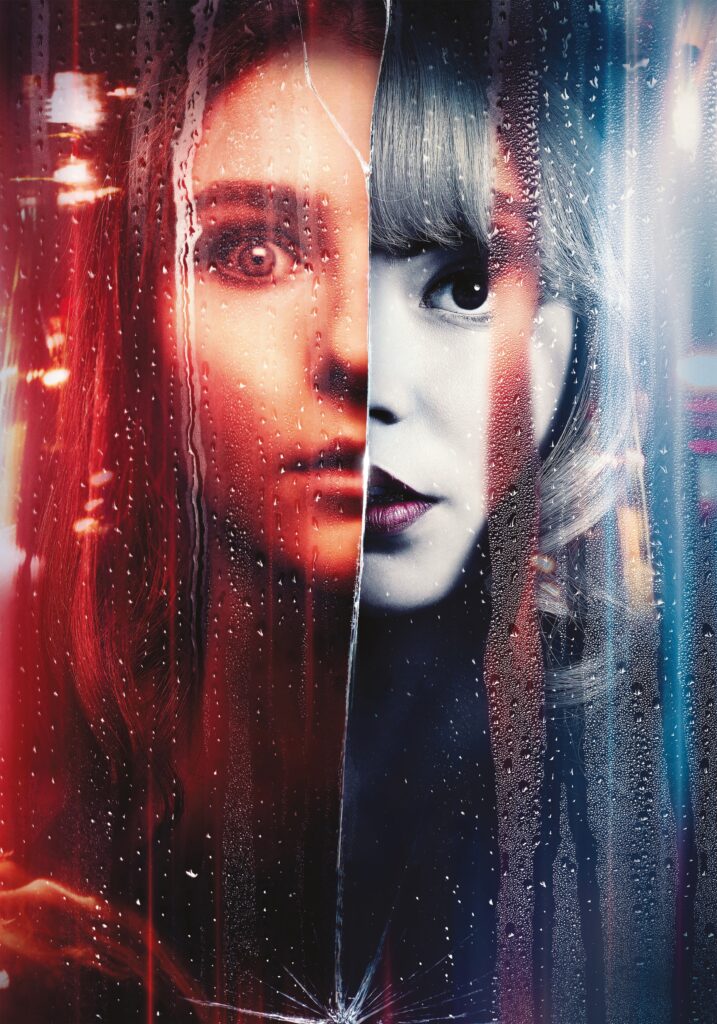
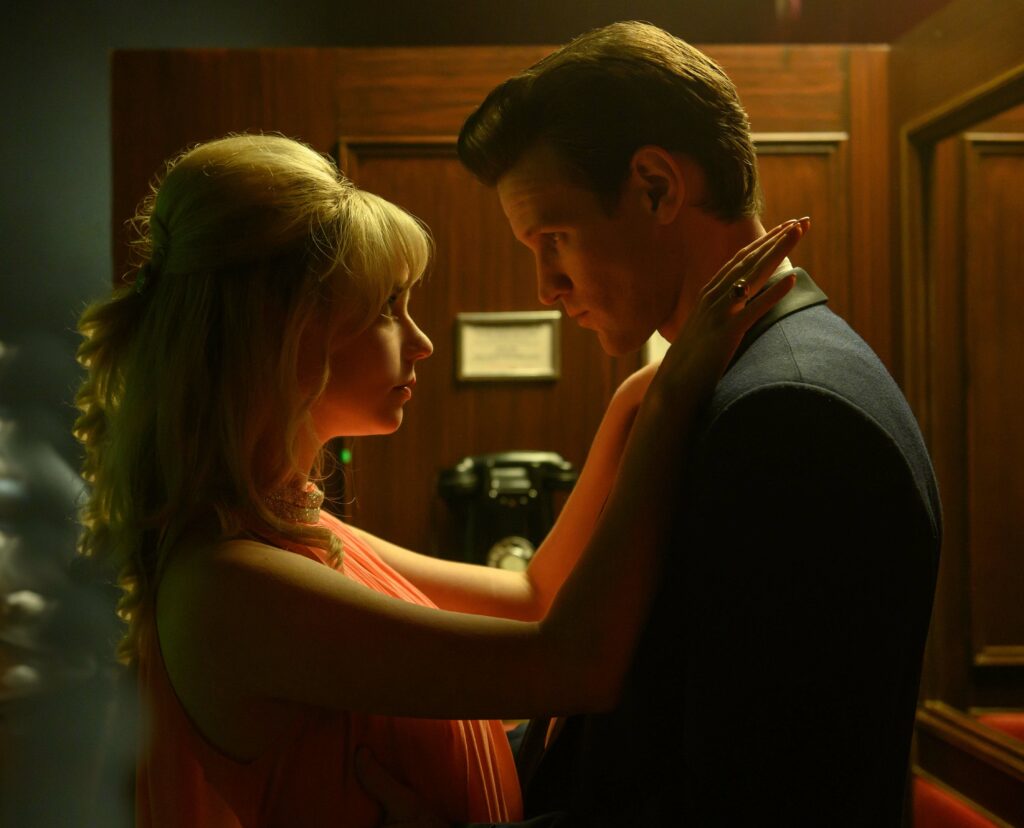
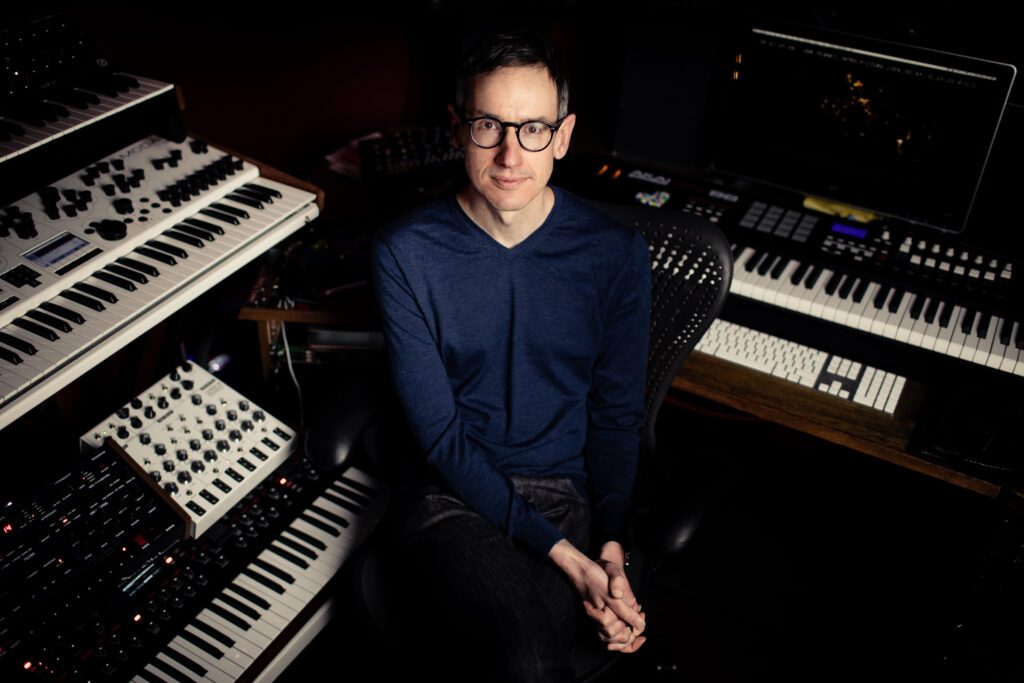
Academy Award-winning British film composer, Steven Price, has worked on major movies including Gravity, Baby Driver and, most recently, innovative director Edgar Wright’s brilliant psychological thriller-meets-horror-film-meets-Swinging-‘60s-drama, Last Night In Soho.

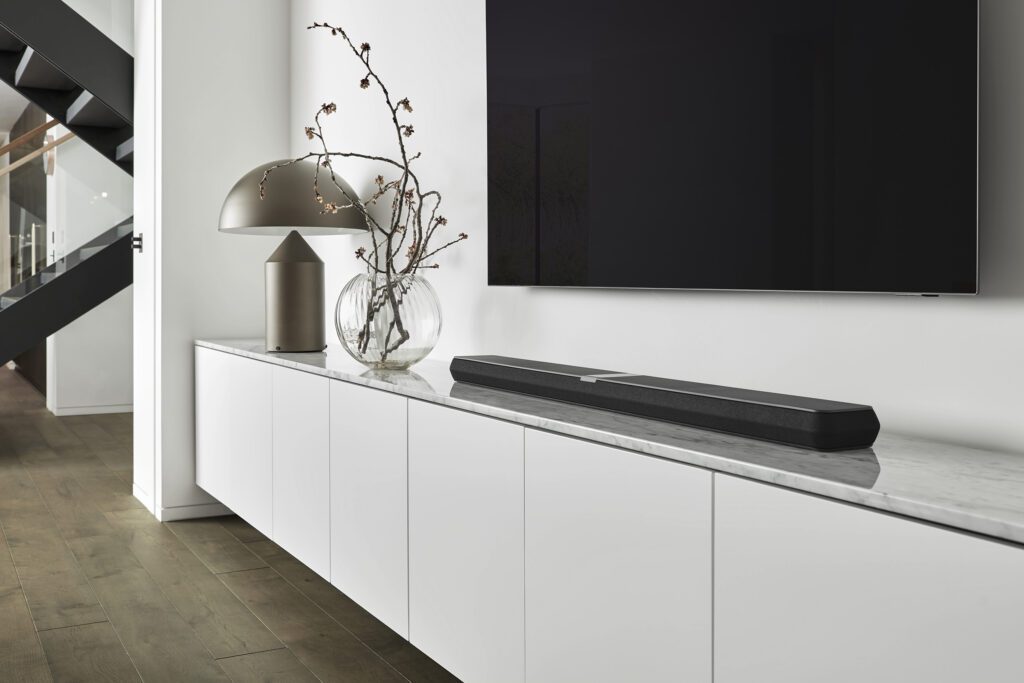
Rather fittingly, hi-fi+ caught up with him in Soho, at the legendary Groucho Club, where he was working with Bowers & Wilkins to promote the brand’s new Dolby Atmos soundbar, Panorama 3, which launched in March, 2022.

We talked about how his music helps to tell the story of what a film director has in mind and how immersive audio technology has changed the way he works.

SH: Last Night In Soho is partly set in the ‘60s. The soundtrack has pop songs from that era on it, and also your takes on them, but some of the action occurs in a contemporary setting. How did you approach the score, as it had to work for both of those periods?

SP: That’s what’s so fun about Edgar Wright’s films. A lot of directors just use one song and that’s it, but with us the song is the starting point and we reinterpret it.

In Last Night In Soho, there are Cilla Black and Sandie Shaw songs that we ripped apart and then put back in a different order.

On one of the two versions of the soundtrack LP available, there’s an unsettling, psychedelic reinterpretation of ‘(There’s) Always Something There To Remind Me’…

It’s my ‘Revolution 9’ tribute. Everything is used as a reason for the story – I’m often playing along with it and using it to lead into the score to help whatever story Edgar is trying to tell.

With Last Night In Soho, it’s the idea of the 1960s being this glorious thing we all look back on – the good old days – but the story – the history – has leaked through into the life of a girl in the present day, so by the end of the film, it has dissolved and become a grotesque thing.

The score was a device that took some of those songs and instrumentation but made it evolve into something that was basically a nightmare – it was all intertwined.

I started writing the music early on, so it was incorporated into the edit from the start and the two of just chipped away at it, sending things back and forth.

As we go through different editorial stages, I give them music and they might change the cut, so it comes back to me. Gradually the final shape comes together.

I’ve worked with Edgar for a long time, so I was on the set and I was writing suites just off the basis of the script.

I also went to the studio a few times to work with [actress] Anya [Taylor-Joy], who sings on the score. She’s amazing and her character’s siren song is being sung through the ages.

What were your influences for the soundtrack? I’m guessing your brief was ‘60s pop: Petula Clark, Sandie Shaw, Dusty Springfield?

Yes, but also film scores. I listened to a lot of John Barry and Ennio Morricone. We also talked about John Carpenter very early on. There were a lot of references.

Edgar’s very good – you always know his influences and what’s he watching at the time. You put all these things together and gradually it becomes something else – it evolves.

Your score for Last Night In Soho is often minimalist, but some of the tracks have dramatic strings and brass. It’s an interesting mix of styles, which makes it a great soundtrack. It doesn’t sound like a ‘60s pastiche, which could’ve been quite easy to do…

The whole film is about the idea of memory and how the ‘60s wasn’t that great – it’s a distorted memory, so any ‘60s references I made in the music had to be broken up.

There were loads of things based on the concept of tape loops because the film is a time loop – the music incorporates all these elements of dialogue, and, as the loop degrades, it becomes distorted and messy. There were lots of taking things and melting them.

There are some great moments in the film, musically and visually, like when one of the central female characters, Eloise, first steps into ‘60s London and sees the West End, or when we first see the Café de Paris…

The first 20 minutes of the film are all in mono, but when the character goes into the ‘60s and everything opens up, we opened up the whole sound field, to the extent that I went to Abbey Road and recorded the strings and brass for ‘You’re My World’ all over again, so we could take it from being a record to a live experience.

It’s immersive sound – you go into the Café de Paris and it’s as if the band are in the room next door.

You mentioned immersive sound. How has audio technology like Dolby Atmos changed how you work?

I think it’s one of the great unexplored areas of filmmaking. There are lots of films that surround you with sound, but there aren’t a lot that use it for story reasons.

In Gravity, the sound was a massive ‘character’ in the film and the music moved around you – I was proud of that.

Surround sound is the future – it’s a whole story based around sound, which is why I think products like soundbars are worth supporting.

It gives people a taste of what we’re doing – you can hear the detail we’re putting into soundtracks that are designed for a theatre, in the home, in a way that you won’t get from a PC or a phone.

Where did you record the Last Night In Soho soundtrack? Was it all done at Abbey Road?

The majority of it, including the orchestral parts, was recorded at Abbey Road, but we also did some bits at British Grove, in Chiswick (West London), and the vocals were done at my studio, in Surrey.

It was all done over a long period of time and we were interrupted by COVID – the whole thing got delayed by six months, which was great, actually, because we got to come back to it with fresh eyes.

Was Last Night In Soho fun to work on?

All of Edgar’s film are. It was exciting and it makes you wonder what the hell he might do next. There are moments of cinema in Last Night In Soho that are wonderful. It’s a departure for him, but you can see him in it – he has a real voice.

On a film like Last Night In Soho, or Baby Driver, your score has to complement a playlist of other songs…

It’s connective tissue, but hopefully you’re doing an emotional job – that’s the way I think of it. The whole soundtrack has to feel like it’s rolling on and when we get it right, it feels like a momentum that’s taking you from each scene to each scene – sometimes we have to chip away at it for a long time to get that.

Edgar’s films are fascinating because he has such an interest in music and you know that it’s going to be heard.

In the ‘90s and the early noughties, film soundtracks were often dominated by lots of contemporary songs – the actual score felt less important. Do you think we’re seeing a return to those classic film soundtrack scores of the ‘60s and the ‘70s?

When scores could be unique? Yes – it’s an exciting time. People are embracing things that are different. Filmmakers and directors are really keen to have something that feels unique to their film.

When I first met Alfonso Cuarón, who directed Gravity, his first words to me were: ‘I don’t really like film music, so what are we going to do about that, then?’

I had to work out what we wanted to feel – anything that felt like film music wasn’t going to fly.

A lot of my scores involve original sounds that I make – I create my own instruments and play those. That’s the fun bit for me – how you can make a film sound unlike any other film. That’s my aim.

The soundtrack album for Last Night In Soho is available now on Mondo/Back Lot Music.
https://mondoshop.com/

Bowers & Wilkins’s new Panorama 3 Dolby Atmos soundbar is available from the brand’s website and select retailers.
bowerswilkins.com/new-panorama3

Back to Music

The post Music Interview: Steven Price appeared first on Hi-Fi+.

Minoru Nojima (1945–2022)

The great pianist Minoru Nojima has died. Nojima was a child prodigy and studied in his early years with Lev Oborin in Moscow and Constance Keene and Abram Chasins in New York. He  came to international attention initially as the second prize winner in the 1969 Van Cliburn Competition.

He earned much admiration from his fellow pianists in his subsequent career. (I recall how, at the end of one of Nojima’s recitals at UCLA’s Royce Hall, Leonid Hambro ran down the aisle towards the stage shouting to everyone, “This is it; this is it. This is what piano playing is all about.”) But his public fame in the U.S. was, to begin with, inhibited by his reluctance to record, apparently through dissatisfaction with the sound available on commercial recordings. Then in the  mid-1980s, with approval from Reference Recordings founder Tam Henderson, I gave Nojima a pack of Reference Recordings records after one of his concerts, with a note asking him  please  to listen to see if the sound met with his approval and saying that, if it did, RR would be interested in making a recording with him.  In a fairytale ending, he took the records home to Japan, listened, and then called his U.S. agent, saying that he did not know who these people were but whoever they were he wanted to record with them. And thus, soon after, there came to be the Reference Recordings Nojima Plays Liszt and later Nojima Plays Ravel.

These were exceptionally well received musically and in audio terms, as well.  Regrettably, further recordings never quite came to pass, though interest remained on both sides. Nonetheless, these two recordings remain as treasured records of the artistry of one of the supreme pianists of our time—and even of all time.  Minoru Nojima will be much missed.

The post Minoru Nojima (1945–2022) appeared first on The Absolute Sound.

Florence Price: Scenes in Tin Can Alley

Florence Price is having a moment. Call it round two; this native of Arkansas moved to Chicago in 1927, at the age of 30, to escape the endemic racism of the American south. There she became the first African-American woman to have a work premiered by a major American orchestra when her Symphony No. 1 was played in 1933 by the Chicago Symphony Orchestra. The current renaissance of her music centers around her superbly constructed symphonic output, which has been favorably compared to the style of Dvorˇák. But she wrote in many formats, including solo piano. This collection consists of miniatures, penned between 1928 and 1941. They draw from a variety of influences, including rag, musical theater, spirituals, and generous dashes of Chopin and Debussy. All but a set of five Preludes are descriptive works, presented in a concisely theatrical manner as scenes, sketches, and portraits. Price was not an innovator in any technical way, and her emotional range is somewhat limited, but her elegantly formed music radiates an easy sense of joy and human dignity. That’s a winning formula in my book. American pianist John Tatsuo Cullen presents this material with panache and palpable affection.

The post Florence Price: Scenes in Tin Can Alley appeared first on The Absolute Sound.

Matiegka: Six Sonatas, Opus 31

Wenzeslaus (or Wenceslas, or Wenzel) Matiegka (1773–1830) was born in Bohemia and studied music and law, working in both fields even after his move to Vienna in 1800, at least for a few years. Thanks to the work of Mauro Giuliani and others, the guitar was popular in his new Austrian home, and Matiegka learned the instrument and began teaching it. He wrote his first guitar pieces for students, but he soon started publishing solos and chamber music. These six sonatas are from the early to mid-1810s and are charming and interesting. They are all light classical in style and pretty good-humored, but Matiegka makes sure to throw some curveballs now and then. The third movement of Sonata No. 2, variations on an old French tune, conjures up Schubertian melancholy and ends with a disturbingly quiet minor chord. This is David Starobin’s final album (he retired from performing in 2018), and the Sixth Sonata lets him go out on a high note with its playful phrasing, flavorful counterpoint, unexpected accents, and outbursts of enthusiastic strumming. Starobin’s clarity and lyricism will be missed, but we can be thankful for souvenirs like this.

The post Matiegka: Six Sonatas, Opus 31 appeared first on The Absolute Sound.