Tag Archives: Floorstanding Loudspeaker

EgglestonWorks Emma Evo

Earlier this 12 months, in subject 205, I reviewed the EgglestonWorks Nico Evo stand-mount loudspeaker. It’s the one stand-mounter within the present EgglestonWorks lineup and at £6,500, together with stands, the least costly mannequin they make. But lots of their sellers apparently view the £7,900 Emma Evo because the entry degree EgglestonWorks mannequin. I bought to questioning about this; is the Nico Evo the odd-man-out? Does the Emma Evo sound by some means extra ‘EgglestonWorks’ than the Nico? Is there a presumption that EgglestonWorks clients aren’t actually stand-mount folks? Only one approach to discover out, actually…

The Emma Evos duly arrived, completed neatly in a silver-grey automotive gloss end that may in all probability mix into a variety of décor kinds. Visually, they draw very a lot on the Nico Evo, a tapering higher cupboard, tiny prime plate with a ‘fastback’ downward-sloping rear, and the acquainted backward-leaning EgglestonWorks stance. The metallic entrance plate now homes a second bass/mid unit to the Nico’s one, however the precise tweeter and bass/mid drivers are the identical for Nico and for Emma. Forever in the past, it appears now, I commented that the equipped stand did the Nico Evo few favours, so it’s going to be fascinating to see how the floorstander shapes up.

EgglestonWorks Emma Eco

EgglestonWorks have now had stand-mount designs of their vary for nearly a decade, the Nico Evo being descended from the unique Nico, however drawing on classes realized from the rather more costly Viginti. The Emma Evo took many design parts from the Nico Evo, notably by way of cupboard building, using the slotted reflex port, and crossover know-how. So if we’re in search of a lineage right here, Emma is a much bigger Nico, slightly than Nico being a stand-mount Emma.

It’s not a very giant loudspeaker, it’s the smallest floorstander EgglestonWorks gives, however neither is it the form of mannequin you’ll be able to unobtrusively drop right into a small room with no second’s thought. Clever design means it hides its bulk properly, but it surely’s taller and deeper than you respect at first look, and a great deal heavier than a few of its friends on the worth. It’s sufficiently big that you’re entitled to anticipate a little bit of helpful heft in its efficiency, but it surely’s not the form of bruiser that wants some room round it if it isn’t to dominate the area. In brief, it exhibits each signal of being doubtlessly in that Goldilocks zone for a great vary of UK-sized rooms. After my constructive expertise with its smaller sibling, I had excessive hopes for this one.

Of infants and bathwater

So many manufacturers of extremely regarded stand-mount loudspeakers appear to stumble when creating a floorstander. There’s a magic one thing that so usually will get misplaced within the transition from small and agile, with pinpoint imaging, to scale, weight and beneficiant dynamics. It occurs so usually, it’s simple to assume these are mutually unique traits and the most effective you are able to do is attain a suitable compromise, that you simply’re at all times going to throw out the ‘disappearing loudspeaker’ child within the ’scale and dynamics’ bathwater. Partly, maybe, the challenges of cupboard design are simpler to resolve in a smaller enclosure; possibly a full vary design exposes the inexpensive drivers you will get away with in a bandwidth-limited mini monitor. Or simply presumably, what we’re listening to so usually is the designer’s journey on the large loudspeaker studying curve.

Compromise, what compromise?

Whatever the explanation, the Emma Evo doesn’t endure from this malaise. The child has been bathed, and stays intact. Similar drive models are used additional up the EgglestonWorks meals chain, and the port design and crossover know-how derives from that used within the £46,000 Viginti. There are tradeoffs, clearly you’ll be able to’t make an £8,000 loudspeaker the way in which you make a £46,000 loudspeaker. But EgglestonWorks inform me numerous that they realized when creating the cupboard for the Viginti has discovered its manner, through the Nico Evo, into the Emma Evo. So I believe that, worth apart, it’s not notably useful to consider the Emma as an entry-level mannequin, and on the worth they face some stiff competitors so let’s simply assess them on their very own phrases. That’s consistent with EgglestonWorks’ personal expressed philosophy, to let every mannequin be the most effective it may be, and to not obsess over becoming it into a variety at a worth level.

EgglestonWorks Emma Eco

As anticipated, the Emma Evo fills in additional of the underside octave than the Nico Evo, it brings scale and weight commensurate with the larger cupboard and driver floor space; gratifyingly, although, it concedes little or no to the Nico by way of that disappearing act that small cupboard loudspeakers can obtain.

Lucid

If single-word opinions ever develop into modern, my alternative for the EgglestonWorks Emma Evo could be ‘lucid’. But as long as our esteemed editor sees match to fee an extra 1999 phrases, I’m comfortable to oblige. What I imply by ‘lucid’ is that the loudspeaker reveals insights deep into the music. There’s readability and articulation to the presentation; a delicate vagueness has been disposed of, nearly as if a lightweight properly has been minimize into the soundstage, the higher to light up these denser, innermost areas. To use one other visible analogy, it’s as if the loudspeakers discovered a depth of subject you didn’t realise was obtainable.

Take Freddy Kempf, enjoying Prokofiev’s Second Piano Concerto with the Bergen Philharmonic [BIS, SACD]: I was struck by how rather more clearly I may observe the internal workings of the orchestra. When you attend a dwell efficiency, the orchestra is arrayed earlier than you and it’s simple sufficient to observe an instrumental line, or a phrase, just about at will. Whereas even superb hi-fi usually dissolves right into a extra impressionistic view, you expertise the orchestra as an entity, with solely the extra outstanding strains being obtainable for inspection. The Emmas approached this side of the dwell expertise extra intently than something I can recall at this worth, with textures and tunefulness properly past the norm.

EgglestonWorks Emma Evo

And all of it works on smaller-scale music, too. Antonio Forcione Live [Naim] and ‘Tarantella’ gave me textures and timbres, intimacy and ebullience; it was very clear how necessary each member of this small ensemble was to the entire of the musical occasion right here. It does assist flip music again into an occasion – that sense of efficiency, of a bunch of individuals with a typical goal, that may usually be missed, sadly, by techniques which don’t resolve in addition to the Emmas can. Timing is basically necessary right here, too. ‘Maurizio’s Party’ from the identical album: bass notes from the cello have been tight and tuneful, solidly underpinning the music; the percussion is quick, but in addition fully-textured, the shapes of the notes have time to completely develop, they aren’t minimize off within the pursuits of tempo or dynamics. Olafur Arnalds ‘This place was a shelter’ from For now I’m Winter [Mercury Classics] was stuffed with fine-boned element, splendidly contrasting the sonorous piano and ethereal electronica with tight, sinewy enjoying from the string quartet. This loudspeaker appears to enjoy bringing out the total, lush element and color in a efficiency, however not candy-coated – there’s a agency grip on actuality right here, in all its multi-layered complexity.

For so long as I can bear in mind, I’ve been an advocate of straightforward, first order crossovers, and the significance of preserving the part relationships to the advantage of timing, and imaging. Yet right here I’m, marvelling at a loudspeaker so generously endowed with strengths in so lots of the areas I worth, and it has a <checks notes> fourth-order crossover. Umm. The crossover know-how has trickled down from the a lot greater, rather more costly Viginti, so clearly some very helpful classes have been realized.

Along got here a spider

If I had a criticism, I might be aware that the decrease treble can now and again draw consideration to itself. It’s not likely vivid – this can be a cloth dome tweeter in any case– however every so often there’s a slight fizz on the prime of the midrange. I observed it first on Elbow’s ‘One day like this’ from The Seldom Seen Kid [Geffen] when Guy Garvey’s vocals exhibited greater than his customary degree of softly silken sibilance, and the occasional barely acid edge to a be aware right here and there. But right here’s the factor: I’d take off each the magnetic grilles and a three-pronged metallic ‘spider’ that protects the tweeter. I’d additionally toed the audio system in a lot as I normally do. Refitting the spider and adjusting the speaker placement to kind of straight down the room handled numerous this higher midrange artefact. Resting the speaker spikes on AcouPlex discs rather than the metallic cups that have been offered additionally paid dividends by way of the sense of movement and musicality. This is clearly a loudspeaker that rewards a little bit experimentation in placement and setup. Oh, and I additionally found I used to be usually listening fairly unfeasibly loud, maybe 3 or 4 dB louder than my customary degree. I in all probability owe my neighbours a bottle of one thing good.

This in some respects displays simply how clear these loudspeakers are, as aside from that barely ‘sizzling’ higher midrange, the form of distortion artefacts that usually give cues as to loudness have been largely absent. EgglestonWorks don’t make any suggestions as to energy dealing with, the drivers are ‘sturdy’ and can deal with just about something you throw at them, apparently, and as I discovered with the Nico Evo, I do assume the Emma Evos respect a great dollop of high quality energy. Stanley Clarke’s ‘Bass Folk Song No. 5’ from The Stanley Clarke Band [Heads Up] didn’t have fairly the final word diploma of ‘push’ within the funky bit and there’s maybe a temptation to show it up a little bit extra to compensate. Perhaps that is the place the compromise is discovered. If so, it’s a reasonably well-chosen one.

EgglestonWorks Emma Evo

The EgglestonWorks Emma Evo has maybe essentially the most lucid, limpid and insightful presentation of any loudspeaker at its worth that I’ve but heard. Time and once more I discovered myself marvelling on the sheer depth of subject this loudspeaker may reproduce. Take Jacques Loussier, ‘Pastorale in C Minor’ from Plays Bach [Telarc]: there’s beneficiant spatial separation between the trio, with strong, secure and convincing photographs of the gamers. Instrumental color is vivid, and constant, timing tight and exact. There’s an oddity in the way in which André Arpino performs percussion on this observe, constantly simply behind the beat for complete sections of the music. It’s fairly disconcerting, however clearly intentional; the Emma Evo exhibits the percussion to be set properly again within the soundstage, however that’s not why he’s a little bit late, he’s very clearly doing this on goal as a result of he locks-in to different sections of the identical observe. It’s these kinds of insights that elevate the Emmas above the competitors.

So the place the Nico Evo exemplified the most effective in a smallish, standmounting loudspeaker – coherence, velocity, imaging, invisibility – the Emma Evo takes these qualities and provides scale, weight and one other layer of color and texture. You nonetheless get all of the tempo, coherence and readability, the limpid, lucid imaginative and prescient into the guts of the music, however you additionally get a bit extra of that coronary heart. It’s fairly clear that if there’s a ‘home sound,’ each the Emma and the Nico Evos conform to it. The Emma Evo isn’t a big loudspeaker, although neither is it small, however due to the sheer ranges of perception and element there’s no actual sense that you simply’re being short-changed on large-scale performances, and small-scale stuff simply invitations you proper in to share within the intimate, immersive music-making expertise. They reply to a little bit tweaking, they usually’ll reward high quality within the upstream parts of your system, they’re simply so very communicative of what’s occurring. They are proof that in shifting from stand-mount to floorstander you don’t should compromise on the strengths of a superlative small loudspeaker, you’ll be able to simply add different qualities on prime in case you do it proper.

Technical specs

  • Type Two-way floorstanding, reflex-loaded loudspeaker with rearward-facing slotted port
  • Driver complement 1× 1” cloth dome tweeter, 2× 6” poly composite mid/woofer
  • Power dealing with no higher restrict specified
  • Crossover frequency 2.1kHz
  • Crossover kind Single-wired, low go and excessive go crossover 4th order Linkwitz Riley Acoustic slope through a 2nd order electrical circuit
  • Frequency response (in-room, typical) 30Hz-24kHz +/-3dB
  • Impedance 6 Ohms nominal, 4.1 Ohms minimal at 150Hz
  • Sensitivity 88dB for 1 Watt at 1 Metre
  • Dimensions (H×W×D) 1090 × 190 × 400mm
  • Weight 31 Kg every
  • Finishes white, silver or black excessive gloss end. Any automotive paint color by association (additional value possibility)
  • Price £7,900/pair

Manufacturer

EgglestonWorks

www.egglestonworks.com

UK Distributor

Auden Distribution

www.audendistribution.co.uk

Back to Reviews

The put up EgglestonWorks Emma Evo appeared first on Hi-Fi+.
Vivid Audio Giya G1 Spirit

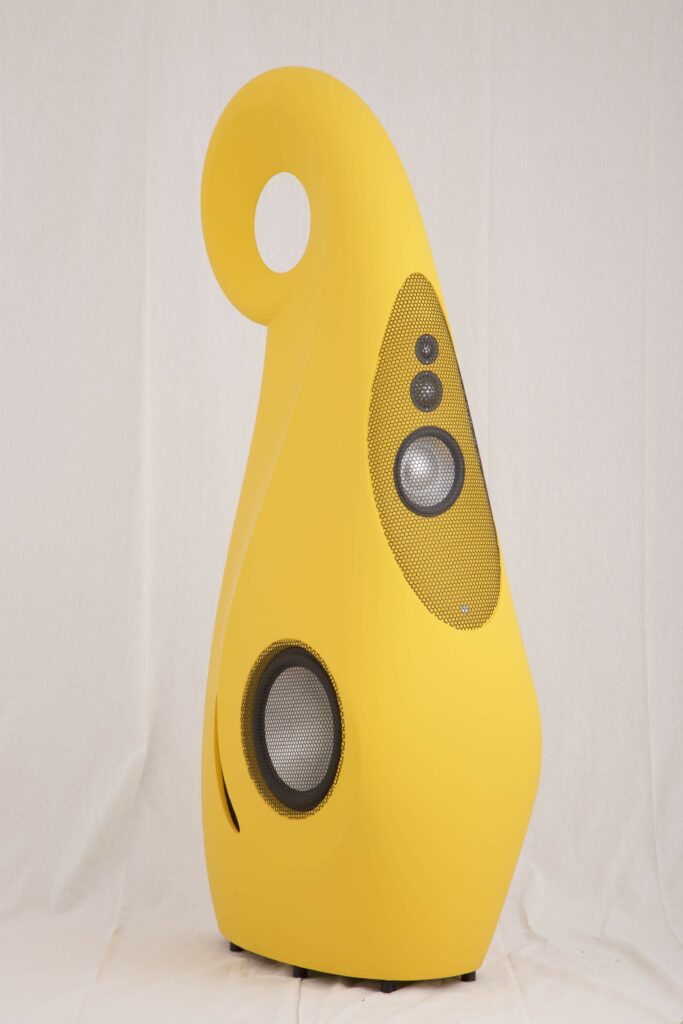
I managed to get away to Greece in late July final 12 months, simply because it was reaching Greek temperatures within the UK, and loved two weeks of correct ‘scorchio’ climate. I seen how a lot hotter the cities had been (even within the shade) than the much less densely populated areas, particularly these with out buildings. This is essentially as a result of the roads and buildings absorb warmth after which slowly launch it over the day. This is what high-mass cupboards do, albeit at a unique frequency; they retailer the power that comes from the drive models and launch it over time, fairly extra time than it takes for the sign to be produced by the drivers. The heavier the loudspeaker cupboard, the extra excessive this may get even when heavy audio system do have a solidity within the bass that fairly interesting for a similar cause.

With most wood cupboards the power is instantly radiated by the panels of the field to some extent, the higher the bracing the decrease the radiation seems to be the rule. Vivid takes an entirely totally different strategy to controlling radiation by making the cupboard as stiff and light-weight as attainable. The Giya G1 Spirit is a big speaker that stands simply over 5 foot excessive and has a quantity of 180 litres however it weighs lower than 70 kilos. A Bowers & Wilkins 802, by comparability, is greater than a foot shorter and weighs practically 90 kilos.

Two skins

The Vivid Giya cupboards are produced from two skins of vacuum-infused glass-reinforced composite, a complicated variant on fibre glass, with finish grain balsa between the 2 skins to offer stiffness. A few producers make bass drivers in a sandwich association like this however they use foam because the filling; a speaker cupboard wants one thing a bit extra stable. The distinctive form of Giya just isn’t a whim of the Vivid styling division however a real occasion of type following perform. The tubular ring on the prime represents the top of the inverted horn that absorbs power from the 2 bass drivers on both facet of the cupboard. This is similar to the tapered tube idea that Vivid designer Laurence Dickie created for Bowers & Wilkins within the authentic Nautilus loudspeaker, which has subsequently discovered its method into the 800 collection fashions.

Vivid Audio Giya G1 Spirit

In Vivid loudspeakers, this tapered tube system is used with all of the drivers. You can see the place these for the tweeter, upper- and lower-midrange drivers terminate on the again of the cupboard the place small hex bolts are seen. The bass drivers which produce essentially the most power and are thus most certainly to vibrate the cupboard, should not fastened to it within the standard method. Instead they’re bodily braced in opposition to each other and held in place with a compliant mounting the place the chassis meets the cupboard, that is an strategy present in a few of the higher subwoofers, and I notice, an idea speaker that Monitor Audio confirmed in Munich High-End 2022, and signifies that the bass system is solidly anchored with minimal danger of transmitting power into the ‘field’.

This continues to be a reflex-loaded loudspeaker nevertheless; it’s simply that just like the bass drivers there are two reflex ports that look a bit like gills and sit reverse each other both facet of the cupboard behind the bass drivers. This association is used in an effort to stability the ports and let the bass system breathe evenly.

Breaking up the chain

Vivid develops and makes its personal drive unts. This is the one method that Dickie may use domes that aren’t typical hemispheres, as a substitute they’ve a catenary form which is the form a sequence kinds when it’s hung between two posts. This form was chosen as a result of its break up level is notably larger than an everyday dome even earlier than you add the carbon fibre reinforcing ring to its perimeter. If Vivid’s measurements are to be believed, and Dickie is a first-rate engineer, the catenary form has such clear benefits over common domes that one wonders why nobody else makes use of them, maybe there’s a patent at work right here.

The decrease midrange is probably essentially the most uncommon driver on the Giya G1 Spirit, it has a big oblate sphere (doughnut formed) central dome and really steep cone sides. The massive central dome signifies that this 125mm driver has a 75mm voice coil, which is a uncommon ratio. Like the domes above it this driver has a carbon fibre reinforcement ring on the base of the dome, an association not seen on every other driver together with these within the Vivid vary.

Vivid Audio Giya G1 Spirit

The G1 Spirit is accessible with a standard onboard crossover or a separate outboard one. The latter is available in a comparatively typical rectilinear case fabricated from the identical materials because the speaker, so it’s good and glossy with chamfered corners. Connection to the loudspeaker is by way of an umbilical that fixes proper beneath the speaker, with the onboard crossover the cable terminals are additionally beneath the speaker. This makes for a really neat look however requires that the speaker be laid on its facet in an effort to make the connections, which is true in each onboard and outboard crossovers. The benefit of the latter is straightforward speaker cable connection and fewer vibration for the crossover parts to deal with, nevertheless it was initially conceived to permit the G1 Spirit to be actively pushed, and this has been finished with electronics from Linn, Devialet and Trinnov prior to now.

Clean dwelling

The sonic character of this loudspeaker may be very distinct, inasmuch because it seems to have just about none of its personal. And but as a result of that is a lot extra clearly the case than with most different loudspeakers it actually stands out. The very first thing that hits you is that nothing hits you besides the music, that’s there aren’t any sharp edges, no sense of grain or distortion. Dickie disagrees with that final phrase and prefers the time period ‘coloration’ as a result of that’s the appropriate time period, nevertheless the Giya G1 Spirit doesn’t simply sound as if it has an excellent tonal response, it sounds as if it doesn’t have the sharp edges discovered with the overwhelming majority of loudspeakers. If something it is rather very like an electrostatic, it has the identical smoothness and ease as the very best examples of the style however that is mixed with the low finish energy and dynamics of a reflex design.

It’s a speaker that warrants top quality and effectively matched amplification, I used to be capable of provide this to an extent however not the complete extent so suspect that even with the unbelievable outcomes I obtained there’s extra to be heard from these extraordinary loudspeakers. Nonetheless having them within the system proved to be a completely revelatory expertise the like of which I’ve not often had the pleasure of. There is an effective number of very open sounding loudspeakers available on the market right this moment, the extra superior designers consider the truth that you’ll be able to’t get an excellent response in a traditional room except the sound that hits the facet partitions, ground and ceiling has the identical stability because the direct sound from drivers to your ears. This huge dispersion strategy requires nice driver design and a cupboard that doesn’t hinder power coming off these drivers in all instructions, the Giya G1 Spirit cupboard is devoid of sharp edges so the sign has nothing to replicate off because it exits the speaker. This reduces sensitivity to an extent but additionally reduces coloration to a a lot larger extent, this speaker’s sensitivity is definitely fairly excessive at 92dB (2.83 VRMS at 1m) and its nominal impedance a comparatively simple six Ohms. So Vivid has managed to maintain coloration down with out sacrificing ease of drive which is a uncommon achievement in itself.

Wide Dispersion

The huge dispersion is presumably one cause why this speaker sounds so relaxed, not the first cause however an element. It’s additionally why the picture scale modifications with every bit of music performed, actually all the things about each recording performed by way of the Giya G1 Spirit appears to be revealed. Give them a very good acoustic recording similar to Chasing the Dragon’s Mendelsohnn Octets and the sense of being there’s greater than palpable, it’s completely convincing. You get the openness of the excessive ceiling on the Henry Wood Hall the place the recording was made and also you get the timbre of the eight devices layered and dare I say it, vivid, in entrance of you. What additionally struck me about this and lots of different items of music is how effectively the Vivids monitor stage, that’s the quantity stage of particular person voices and devices relative to 1 one other in a given combine. Described as micro dynamics that is an space the place the extremely low noise (as a result of there’s so little cupboard vibration) of those audio system places them into one other league. It permits the listener to comply with and admire totally different performers inside a bunch and to listen to the best way that totally different components of a mixture have been handled.


If that every one sounds fairly dry what it boils all the way down to is a level of transparency that’s distinctive, and that signifies that extra of the musical sign will get into the room with out being coloured or distorted. With Mari Samuelsen’s first solo album Mari [DG] it signifies that a big group of musicians seems within the room come what may of magic, the diploma of realism is positively uncanny. This is a spectacular recording however simply how spectacular grew to become lots clearer with the massive Vivids, I’ve by no means heard string tone that’s so pure nor had a way of the dimensions and nature of a studio acoustic that was so effectively reproduced. It makes the music she creates that rather more highly effective and transferring, and it makes me realise that the Rega P10 turntable is even higher than I believed it was, and I used to be fairly impressed within the first place.

With much less pure recordings within the type of Frank Zappa’s stay You Can’t Do That On Stage Anymore [Zappa Music] releases, you’ll be able to hear how he has constructed up these tracks utilizing snippets from totally different performances, a guitar break right here, a voice there. You can hear the joins however this doesn’t get in the best way of having fun with the brilliance of the music, Zappa had requirements that not even his extremely rehearsed bands may all the time stay as much as and through the use of the very best bits spliced collectively he was capable of assemble the close to as attainable good concert events for these of us unable to attend the actual factor. Having a loudspeaker that’s able to delivering that music at an acceptable quantity with none sense of effort and the entire bandwidth required is a really particular expertise that will get you as shut as you’ll be able to to being there.

Not a cartoon

The bass on the G1 Spirit just isn’t apparent, that’s like the remainder of the bandwidth it doesn’t have sharpened main edges that outline it a bit like a cartoon. Rather the bass is three dimensional, it’s obtained depth and weight and strikes with easy velocity. Essentially it’s extraordinarily pure, and simply as prolonged and highly effective because the sign calls for, so if that sign emanates from a synth or electrical bass it may be very muscular certainly. But if it’s a piano or double bass there’s extra texture and depth of tone, extra selection and color. Whatever the supply it’s very juicy and interesting and all the time bang on time.

Vivid Audio Giya G1 Spirit

The Vivid Giya G1 Spirit is an distinctive loudspeaker, because of the best way that its drivers and cupboard have been executed it doesn’t have the issues related to 99.9% of dynamic loudspeakers. Instead you get sound that’s as thrilling, highly effective and delightful because the recording permits, and lots of of them allow an terrible lot of all three. It’s a speaker that I may all too simply stay with proper as much as the purpose the place enthusiasm wanted to be summoned for one more loudspeaker assessment. It’s not a speaker for reviewers, it’s a speaker for music lovers who don’t need to make comparisons.

Technical specs

  • Type 4-way, five-driver, reflex loaded floorstanding speaker
  • Driver complement One 26mm steel dome tweeter with Tapered Tube loading; one 50mm steel dome midrange driver with Tapered Tube loading; one 125mm alloy/carbon diaphragm lower-mid driver with 75mm voice coil, two 225mm alloy diaphragm bass drivers with 100mm voice coil in 45mm hole
  • Crossover frequencies 220Hz, 880Hz, 3.5kHz
  • Frequency response + / -2dB 29–33,000 Hz
  • Impedance 6 Ohms nominal, 3 Ohms minimal at 20 okHz
  • Sensitivity 92dB @ 2.83 VRMS at 1 m on axis
  • Dimensions (H×W×D) 1600 × 440 × 820mm
  • Weight 67.4kg/every
  • Finishes Piano black, Pearl white, Oyster matte plus premium colors
  • Price £82,500/pair

Manufacturer

Vivid Audio

www.vividaudio.com

Distributor

Vivid Audio UK LTD

www.vividaudio.com

Tel +44(0) 1403 713 125

Back to Reviews

The publish Vivid Audio Giya G1 Spirit appeared first on Hi-Fi+.

Audiovector QR 7 floorstanding loudspeaker

Audiovector is a intelligent firm. It has two most important loudspeaker manufacturers. The R-Series is its basic, upgradable premium vary that runs from a small however excellent two-way stand-mount known as the R1 as much as the tremendous high-end R11 floorstanding tower of energy. Alongside this are the ever-growing QR-Series, of which the QR 7 is the newest, biggest, and definitely the biggest of all of them.

Audiovector QR 7

Now comprising a stand-mount, three floorstanders, a centre channel, a subwoofer and wall mounts for house cinema use, the QR collection is the entry-level vary for Audiovector. However, that doesn’t imply ‘constructed half a world away’; the audio system are constructed alongside the R fashions in Denmark on the firm’s Copenhagen facility. Like all of the fashions in Audiovector’s vary (and virtually all loudspeaker designs around the globe), the cupboards are sourced externally, and your entire QR vary (besides the sub) options an Air Motion Transformer ‘Gold Leaf’ planar magnetic tweeter rather than the extra commonplace material or metallic dome designs.

Higher than you suppose

The use of an Air Motion Transformer tweeter is an improve for conventional Audiovector designs. It doesn’t come as customary with the Signature fashions however is a function of the Avantgarde and Arreté designs. However, this isn’t the identical tweeter as utilized in these ‘higher’ and ‘greatest’ variants of the corporate’s prime line, nevertheless it’s a really shut relative. The tweeter features a mesh known as an S-Stop Filter by the corporate. This is there to eradicate sibilants, a little bit like a pop filter in a recording studio.

The midrange and bass items are of an aluminium sandwich building, comprising two layers of aluminium with a filling of mystery-damping materials… however no lettuce or mayo. This is a building approach comparatively new to Audiovector that solely seems throughout the QR-Series. Previous cones in R-Series designs are extra conventional. These are additionally ‘Pure Piston’ cones, which implies they don’t have the identical break-up modes as different metal-cone drivers. There’s a similarity between this driver design and people used each by ELAC and Monitor Audio.

Audiovector QR 7

The cupboard is intelligent, too. Internally, it has a sealed midrange enclosure inside the principle physique of the loudspeaker. This cabinet-within-a-cabinet can be uneven to cut back considerably any inside standing wave issues.

The QR 7 additionally makes use of a ‘Q-Port’ design. This is a downward firing port on the entrance of the bottom of the cupboard that sends bass into the loudspeaker’s plinth. This makes the audio system comparatively straightforward to tough/first-fit set up, though they profit drastically from a variety of fine-tuning. The front-ish down-firing port does make the QR 7 rather less delicate to the space to the wall.

Big is gorgeous

The cupboard is a giant ‘un. Standing some 114cm tall and 40cm deep and weighing in at a ‘frisky’ 36.2kg per speaker, it is a bodily massive speaker from what’s in any other case a variety of very metropolitan-chummy designs. It’s completely proportioned (the 25cm entrance baffle and 2x 203mm bass items look completely ‘proper’ in context), nevertheless it’s large… and requires a giant room too. Where the opposite fashions within the QR-Series are much less delicate to room dimensions and positioning, these twin eight-inch drivers transfer a variety of air in a small-to-medium room that may sound too highly effective and set that room off.

I don’t need to overstate this room measurement demand, however neither ought to it’s brushed below the carpet. The QR 7 doesn’t put a lot power within the room that string quartets sound like Deadmau5 has remixed them, however the QR 7s are lots happier in a room 5x6m or higher, ideally with no less than 2.5m excessive ceilings.

I feel this sizing level is a feather within the QR 7’s cap. Often, these attempting to fill a giant room are a little bit caught, which is the well mannered means of claiming ‘fully screwed’. You see, reasonably priced audiophile-grade loudspeakers usually anticipate comparatively small room dimensions. Those with larger areas to fill are both pointed towards far larger and WAY dearer loudspeaker designs, force-extolled the virtues of bass lightness, or dismissed out of hand. The QR 7 fills a giant room nicely, with all of the audiophile credentials you want, however with out being both too fussy about music (or partnering tools) or ending up costing a King’s Ransom.

Audiovector QR 7

I’ve to place my hand as much as being simply as responsible as everybody else on this, considering that if somebody has a room 4x5m or bigger, they’ve a willingness and skill to make use of £30,000 price of loudspeakers to deliver it to life. QR 7 exhibits there may be another.

Mads in Munich

Like most, our first expertise of the QR 7 was in Munich. Audiovector CEO Mads Klifoth was an exceptionally completely happy man on the present; his spouse had simply given delivery to their second little one, and he had a success on his fingers with the QR 7. He knew he had a success within the QR 7 as a result of show-goers stored coming again to the room, and so they stayed within the room longer than ordinary. Given the room was one of many glass-roofed ones on the highest ground of the MOC in sweltering (for May) warmth, individuals actively spending time within the room and coming again again and again marked the QR 7 out as one thing particular. I used to be a kind of common returnees and positioned our order for a overview pattern.

Little did we all know on the time that the entire world was doing the identical factor! The QR 7 turned the new product of the present; everybody on the planet needed a pair, distributors and sellers have been virtually keen to interact in conflict crimes to get a pair, and our “yeah, we must always be capable to ship a pair to you in a few weeks” bought a variety of pushback. And whenever you see them within the flesh, it’s not exhausting to see why. They are extraordinarily well-proportioned loudspeakers that (in context) don’t look as bodily imposing as different equally sized designs. The end (ours got here in White Silk) is superb; the entire package deal feels reassuringly weighty and well-balanced, each bodily and aesthetically.

Partnering is comparatively straightforward. The QR 7 is a benign six-ohm load with a 90.5dB sensitivity that means you don’t want a behemoth amp to drive them. And, though they profit from some high quality audio upstream, the QR 7 has sufficient of the QR DNA to make it sound good when intelligently – reasonably than ‘expensively’ – amplified. Careful set up and paying particular consideration to toe-in, speaker levelling, and specifically, listener top relative to the tweeters yields far larger outcomes when it comes to efficiency upgrades.

Running in

The loudspeakers additionally profit from a number of dozen hours of breaking in. They don’t change considerably tonally, however you would possibly need to revisit the set-up after some bedding in and loosening as much as see if the positioning has modified barely.

All that is definitely worth the effort, although, as a result of the sound you get out of the QR 7s is past wonderful… and past expectations. Of course, it’s the bass that calls loudest first; the QR 7 has a robust but exact bass that doesn’t have any undue emphasis down into the low registers. There’s a fragile stability right here between audiophile sensitivities (who’re unwilling to place up with an excessive amount of bass) and people of the mainstream (who’re unlikely to face too little). I feel Audiovector treads the precise path. It’s deep sufficient to make King Tubby records rattle fillings and loosen bowels however not so overpowered that it’s going to do the identical on the first scrape of a cello.

What occurs within the bass is echoed up the frequency response, and the QR 7 is a eager and dynamic-sounding loudspeaker. And I imply correct balls-to-the-wall dynamics, the type of factor that makes you need to play ‘The Dreary Falls’ from Blackwater Path by Opeth [Music for Nations] at neighbour-scaring ranges, having fun with the smooth acoustic guitar moments lower with a variety of graunch and prog-metal pomp and a few advantageous growling too. It’s a ahead, dynamic and extremely detailed file that may be a excellent match for related qualities within the QR 7.

One of the normal issues with utilizing two very several types of loudspeakers for mid/woofers and tweeters is the danger of lack of coherence or perhaps a discontinuity between the 2. Fortunately, Audiovector has spent a very long time coping with AMT drivers, and that step change from cone to the planar driver is dealt with nicely. It helps that the pace of the bass and midrange can sustain with the AMT unit, making for an virtually preternaturally quick loudspeaker that is aware of its means round a drum package. I’m all about Ringo Reputation Rehabilitation, and much from ‘not even being the very best drummer within the Beatles’ his swampy wander across the drum package on ‘Come Together’ [Abbey Road, Apple] is completely rendered, which takes a loudspeaker quick sufficient to course of his speedy hi-hat hits, deep sufficient to play these kick drum hits and precisely play these backward tom-tom triplets by means of the midband. Get it flawed, and it seems like two drummers or only a right-handed drummer enjoying the tom-toms; the QR 7 makes it abundantly clear he’s a left-handed drummer. It’s these little issues that mount up and make for a great-sounding loudspeaker.

Audiovector QR 7

Although I’ve been primarily discussing rock music, the QR 7 doesn’t differentiate. It’s simply as adept at enjoying jazz, folks, world or classical music. And all the standard acid checks of musical replay are handled extraordinarily nicely right here; whether or not it’s Joyce DiDonato’s highly effective voice, deep electronica notes, or a fragile Bach invention, the stability is similar; barely ahead, exact, tonally correct, dynamic and with an prolonged frequency vary.

Imaging is nice too. I take advantage of Audiovector’s R1 Arreté loudspeakers as part of my arsenal – which, in comparison with the QR 7, commerce bass depth for a holographic soundstage – however there may be nonetheless a powerful sense of three-dimensionality to the sound. Images are broad of the audio system (once more calling on a giant room, as they want facet wall house) with a mix of a great sense of house round particular person devices and a advantageous and rooted sense of solidity to these devices and the musicians behind them. You get a sense of actual people enjoying music with the QR 7.

Easy and advert hoc

There are a few straightforward, advert hoc methods of figuring out the standard of a loudspeaker; would you be completely happy recommending it to a detailed pal or relative (or no less than a relative you want)? The reply here’s a resounding ‘sure’! How way more would it’s important to pay for one more loudspeaker and the remainder of the system to enhance? And right here, the reply is ‘heaps’; you’d be a high-end speaker system and a few actually ‘spendy’ electronics to get near what the QR 7 can do in a giant room.

The Audiovector QR 7 fills one thing of a gaping gap within the loudspeaker market; the nice, large speaker with no nice large price ticket. We metropolitan sorts usually neglect that many are lucky to have large rooms to fill with sound, however not all have large cash to spend to take action. Sure, it’s comparatively straightforward to seek out one thing that’s compromised in a technique or one other however discovering a loudspeaker that doesn’t compromise on this setting is a real pleasure.

Technical specs

  • Type: 3-way, four-driver, floorstanding speaker with AMT tweeter
  • Drivers: One AMT ribbon tweeter; one 6in. Pure Piston midrange driver; two 8in. Pure Piston bass drivers
  • Crossover frequencies: 425Hz, 3kHz
  • Frequency response: 28Hz–52kHz
  • Impedance: 6 Ohms
  • Sensitivity: 90.5dB/W/m
  • Dimensions (H×W×D): 1140 × 25 × 40cm
  • Weight: 36.2kg/every
  • Finishes: Black piano, darkish walnut veneer, white silks.
  • Price: £ 4,950/pair

Manufacturer

Audiovector

www.audiovector.com

UK Distributor

Renaissance Audio

www.renaissanceaudio.co.uk 

+44(0)131 555 3922

Back to Reviews

The submit Audiovector QR 7 floorstanding loudspeaker appeared first on Hi-Fi+.

Audiovector QR 7 floorstanding loudspeaker

Audiovector is a intelligent firm. It has two essential loudspeaker manufacturers. The R-Series is its basic, upgradable premium vary that runs from a small however very good two-way stand-mount referred to as the R1 as much as the tremendous high-end R11 floorstanding tower of energy. Alongside this are the ever-growing QR-Series, of which the QR 7 is the newest, best, and positively the biggest of all of them.

Audiovector QR 7

Now comprising a stand-mount, three floorstanders, a centre channel, a subwoofer and wall mounts for house cinema use, the QR sequence is the entry-level vary for Audiovector. However, that doesn’t imply ‘constructed half a world away’; the audio system are constructed alongside the R fashions in Denmark on the firm’s Copenhagen facility. Like all of the fashions in Audiovector’s vary (and nearly all loudspeaker designs around the globe), the cupboards are sourced externally, and all the QR vary (besides the sub) options an Air Motion Transformer ‘Gold Leaf’ planar magnetic tweeter rather than the extra commonplace cloth or metallic dome designs.

Higher than you assume

The use of an Air Motion Transformer tweeter is an improve for conventional Audiovector designs. It doesn’t come as normal with the Signature fashions however is a function of the Avantgarde and Arreté designs. However, this isn’t the identical tweeter as utilized in these ‘higher’ and ‘finest’ variants of the corporate’s prime line, but it surely’s a really shut relative. The tweeter features a mesh referred to as an S-Stop Filter by the corporate. This is there to eradicate sibilants, a bit of like a pop filter in a recording studio.

The midrange and bass models are of an aluminium sandwich building, comprising two layers of aluminium with a filling of mystery-damping materials… however no lettuce or mayo. This is a building approach comparatively new to Audiovector that solely seems throughout the QR-Series. Previous cones in R-Series designs are extra conventional. These are additionally ‘Pure Piston’ cones, which implies they don’t have the identical break-up modes as different metal-cone drivers. There’s a similarity between this driver design and people used each by ELAC and Monitor Audio.

Audiovector QR 7

The cupboard is intelligent, too. Internally, it has a sealed midrange enclosure inside the primary physique of the loudspeaker. This cabinet-within-a-cabinet can be uneven to scale back considerably any inner standing wave issues.

The QR 7 additionally makes use of a ‘Q-Port’ design. This is a downward firing port on the entrance of the bottom of the cupboard that sends bass into the loudspeaker’s plinth. This makes the audio system comparatively straightforward to tough/first-fit set up, though they profit enormously from loads of fine-tuning. The front-ish down-firing port does make the QR 7 rather less delicate to the space to the wall.

Big is gorgeous

The cupboard is a giant ‘un. Standing some 114cm tall and 40cm deep and weighing in at a ‘frisky’ 36.2kg per speaker, it is a bodily giant speaker from what’s in any other case a variety of very metropolitan-chummy designs. It’s completely proportioned (the 25cm entrance baffle and 2x 203mm bass models look completely ‘proper’ in context), but it surely’s huge… and requires a giant room too. Where the opposite fashions within the QR-Series are much less delicate to room dimensions and positioning, these twin eight-inch drivers transfer loads of air in a small-to-medium room that may sound too highly effective and set that room off.

I don’t wish to overstate this room dimension demand, however neither ought to it’s brushed below the carpet. The QR 7 doesn’t put a lot vitality within the room that string quartets sound like Deadmau5 has remixed them, however the QR 7s are lots happier in a room 5x6m or larger, ideally with a minimum of 2.5m excessive ceilings.

I believe this sizing level is a feather within the QR 7’s cap. Often, these attempting to fill a giant room are a bit of caught, which is the well mannered manner of claiming ‘fully screwed’. You see, reasonably priced audiophile-grade loudspeakers usually count on comparatively small room dimensions. Those with greater areas to fill are both pointed towards far greater and WAY costlier loudspeaker designs, force-extolled the virtues of bass lightness, or dismissed out of hand. The QR 7 fills a giant room nicely, with all of the audiophile credentials you want, however with out being both too fussy about music (or partnering gear) or ending up costing a King’s Ransom.

Audiovector QR 7

I’ve to place my hand as much as being simply as responsible as everybody else on this, pondering that if somebody has a room 4x5m or bigger, they’ve a willingness and talent to make use of £30,000 value of loudspeakers to convey it to life. QR 7 exhibits there’s an alternate.

Mads in Munich

Like most, our first expertise of the QR 7 was in Munich. Audiovector CEO Mads Klifoth was an exceptionally completely satisfied man on the present; his spouse had simply given start to their second youngster, and he had successful on his fingers with the QR 7. He knew he had successful within the QR 7 as a result of show-goers stored coming again to the room, and so they stayed within the room longer than standard. Given the room was one of many glass-roofed ones on the highest ground of the MOC in sweltering (for May) warmth, folks actively spending time within the room and coming again again and again marked the QR 7 out as one thing particular. I used to be a kind of common returnees and positioned our order for a evaluate pattern.

Little did we all know on the time that the entire world was doing the identical factor! The QR 7 turned the recent product of the present; everybody on the planet wished a pair, distributors and sellers have been nearly keen to have interaction in struggle crimes to get a pair, and our “yeah, we must always be capable to ship a pair to you in a few weeks” bought loads of pushback. And while you see them within the flesh, it’s not exhausting to see why. They are extraordinarily well-proportioned loudspeakers that (in context) don’t look as bodily imposing as different equally sized designs. The end (ours got here in White Silk) is superb; the entire package deal feels reassuringly weighty and well-balanced, each bodily and aesthetically.

Partnering is comparatively straightforward. The QR 7 is a benign six-ohm load with a 90.5dB sensitivity which means you don’t want a behemoth amp to drive them. And, though they profit from some high quality audio upstream, the QR 7 has sufficient of the QR DNA to make it sound good when intelligently – slightly than ‘expensively’ – amplified. Careful set up and paying particular consideration to toe-in, speaker levelling, and particularly, listener peak relative to the tweeters yields far greater outcomes by way of efficiency upgrades.

Running in

The loudspeakers additionally profit from a number of dozen hours of breaking in. They don’t change considerably tonally, however you may wish to revisit the set-up after some bedding in and loosening as much as see if the positioning has modified barely.

All that is well worth the effort, although, as a result of the sound you get out of the QR 7s is past glorious… and past expectations. Of course, it’s the bass that calls loudest first; the QR 7 has a strong but exact bass that doesn’t have any undue emphasis down into the low registers. There’s a fragile steadiness right here between audiophile sensitivities (who’re unwilling to place up with an excessive amount of bass) and people of the mainstream (who’re unlikely to face too little). I believe Audiovector treads the fitting path. It’s deep sufficient to make King Tubby records rattle fillings and loosen bowels however not so overpowered that it’s going to do the identical on the first scrape of a cello.

What occurs within the bass is echoed up the frequency response, and the QR 7 is a eager and dynamic-sounding loudspeaker. And I imply correct balls-to-the-wall dynamics, the form of factor that makes you wish to play ‘The Dreary Falls’ from Blackwater Path by Opeth [Music for Nations] at neighbour-scaring ranges, having fun with the smooth acoustic guitar moments reduce with loads of graunch and prog-metal pomp and a few tremendous growling too. It’s a ahead, dynamic and extremely detailed report that may be a good match for related qualities within the QR 7.

One of the standard issues with utilizing two very several types of loudspeakers for mid/woofers and tweeters is the danger of lack of coherence or perhaps a discontinuity between the 2. Fortunately, Audiovector has spent a very long time coping with AMT drivers, and that step change from cone to the planar driver is dealt with nicely. It helps that the pace of the bass and midrange can sustain with the AMT unit, making for an nearly preternaturally quick loudspeaker that is aware of its manner round a drum package. I’m all about Ringo Reputation Rehabilitation, and much from ‘not even being the most effective drummer within the Beatles’ his swampy wander across the drum package on ‘Come Together’ [Abbey Road, Apple] is completely rendered, which takes a loudspeaker quick sufficient to course of his speedy hi-hat hits, deep sufficient to play these kick drum hits and precisely play these backward tom-tom triplets via the midband. Get it mistaken, and it appears like two drummers or only a right-handed drummer taking part in the tom-toms; the QR 7 makes it abundantly clear he’s a left-handed drummer. It’s these little issues that mount up and make for a great-sounding loudspeaker.

Audiovector QR 7

Although I’ve been primarily discussing rock music, the QR 7 doesn’t differentiate. It’s simply as adept at taking part in jazz, folks, world or classical music. And all the same old acid exams of musical replay are handled extraordinarily nicely right here; whether or not it’s Joyce DiDonato’s highly effective voice, deep electronica notes, or a fragile Bach invention, the steadiness is similar; barely ahead, exact, tonally correct, dynamic and with an prolonged frequency vary.

Imaging is sweet too. I exploit Audiovector’s R1 Arreté loudspeakers as part of my arsenal – which, in comparison with the QR 7, commerce bass depth for a holographic soundstage – however there’s nonetheless a powerful sense of three-dimensionality to the sound. Images are large of the audio system (once more calling on a giant room, as they want facet wall house) with a mixture of an excellent sense of house round particular person devices and a tremendous and rooted sense of solidity to these devices and the musicians behind them. You get a sense of actual people taking part in music with the QR 7.

Easy and advert hoc

There are a few straightforward, advert hoc methods of figuring out the standard of a loudspeaker; would you be completely satisfied recommending it to a detailed good friend or relative (or a minimum of a relative you want)? The reply here’s a resounding ‘sure’! How way more would it’s important to pay for an additional loudspeaker and the remainder of the system to enhance? And right here, the reply is ‘tons’; you’d be taking a look at a high-end speaker system and a few actually ‘spendy’ electronics to get near what the QR 7 can do in a giant room.

The Audiovector QR 7 fills one thing of a gaping gap within the loudspeaker market; the great, huge speaker with out a nice huge price ticket. We metropolitan sorts usually overlook that many are lucky to have huge rooms to fill with sound, however not all have huge cash to spend to take action. Sure, it’s comparatively straightforward to seek out one thing that’s compromised in a technique or one other however discovering a loudspeaker that doesn’t compromise on this setting is a real pleasure.

Technical specs

  • Type: 3-way, four-driver, floorstanding speaker with AMT tweeter
  • Drivers: One AMT ribbon tweeter; one 6in. Pure Piston midrange driver; two 8in. Pure Piston bass drivers
  • Crossover frequencies: 425Hz, 3kHz
  • Frequency response: 28Hz–52kHz
  • Impedance: 6 Ohms
  • Sensitivity: 90.5dB/W/m
  • Dimensions (H×W×D): 1140 × 25 × 40cm
  • Weight: 36.2kg/every
  • Finishes: Black piano, darkish walnut veneer, white silks.
  • Price: £ 4,950/pair

Manufacturer

Audiovector

www.audiovector.com

UK Distributor

Renaissance Audio

www.renaissanceaudio.co.uk 

+44(0)131 555 3922

Back to Reviews

The submit Audiovector QR 7 floorstanding loudspeaker appeared first on Hi-Fi+.

Linn 360 preview

Linn pitches the brand new 360 loudspeakers as ‘audibly invisible; visually outstanding’, and the corporate has a degree. This is Linn’s girthy flagship – roughly the dimensions of the outgoing Klimax 350, the previous head of the clan. It’s accessible in passive kind with ‘Aktiv’ bass or Exakt digital lively to fit in a Linn DSM system. We regarded on the latter in an unique preview.

The Linn 360 is an effective mix of the standard and the modern. It retains a number of vital styling cues of earlier high-end Linn audio system. But look nearer, and also you’ll discover the complexity of the cupboard. Look even nearer; you’ll see that new Beryllium tweeter with a Linn brand safety cowl. You would possibly even see the trim items with concentric arcs minimize into them. These remind listeners of Linn’s place within the turntable hierarchy with its everlasting LP12. But intelligent curves and stylish grooves should not sufficient.

An Exakt Science

Core to the event of the 360, the motive force array is a daring departure for Linn. The tweeter is a brand new 19mm Beryllium dome. The midrange is a thin-ply woven carbon fibre used on NASA’s Mars Rover. And the aluminium-magnesium alloy bass models permit double the tour of their predecessors. The loudspeaker driver array is met by Linn’s new ‘Power DAC’. This Exakt system retains the music sign within the digital area till simply earlier than the bass driver cones. It additionally options what Linn calls ‘Adaptive Bias Control’ amplification for mid and treble. This adapts to the speaker’s calls for, utilizing real-time correction. Think of it as an engine administration system… for loudspeakers.

Linn 360 loudspeaker

Used with an applicable Linn digital entrance finish just like the Klimax DSM, 360 takes benefit of a collection of bonuses. The most notable is Space Optimisation+, designed to dial the consequences of the room out of the music.

Few will get simply how important the modifications are to the cupboard design. At face worth, the 360 seems like another boat-backed, barely back-swept design. A more in-depth examination of the entrance baffle reveals advanced curves, with formed radii matched to every driver. This lets every drive unit stay its greatest life in dispersion phrases, every driver in its supreme baffle.

No biggie

So, Linn solely modified the cupboard, the drivers and the electronics within the 360; no huge deal! But then there are the finishes. As properly as basic Piano Black and Alpine White, there are three ‘Glasgow Collection’ finishes. The nearly pearlescent gray of ‘Clyde Built’ is harking back to Glasgow’s shipbuilding heritage. The darkish ‘Linn Heritage’ is a luxurious, nearly candy-apple end. And ‘Single Malt’ remembers a heritage in whisky distilling, saved alive by distilleries like Auchentoshan, the place I left my liver.

The sound…

This is merely a preview. The full assessment follows in hi-fi+ difficulty 220. But right here’s somewhat style of what’s to come back. I’ve recognized Linn loudspeakers for many years; I even used to promote them within the late Eighties. And they’ve come a good distance because the days of the Kan, Sara, and Isobarik. They retained the sense of enjoyable of these early fashions. But they turned extra correct and detailed with every technology. But there was at all times one factor lacking… imaging. Even the highest Klimax 350 was at most ‘pretty good’ in presenting soundstage.

Linn 360

It was as if Linn by no means thought of soundstaging a precedence in sonic efficiency. Each technology of Linn loudspeaker would get successively extra detailed, extra refined, and extra succesful in so some ways. But not stereo imaging. The 360 modifications all that. It has glorious imaging. Better nonetheless, it has glorious imaging for a couple of listener. The mixture of large dispersion and Space Optimisation+ room cancellation work properly collectively. They create the type of stereo soundstage extra generally related to omnidirectional designs.

The loudspeaker nonetheless has that basic Linn ‘dry’ sound; dry like a Martini, not a desert. But with it now comes the flexibility to select devices in a sonic hologram. It may also go loud, deep and dynamic too. I performed tracks on the type of volumes that prompted my Apple Watch to fret about my listening to. And my ears and the room folded earlier than the loudspeakers did.

Get out of the way in which!

The loudspeakers are versatile sufficient to play any form of music and easily get out of the music’s means. And in its Exakt guise, it’s an awfully versatile design. This is a big loudspeaker, every weighing 70kg, or nearly as a lot as a middleweight boxer. And but, it’s versatile sufficient for use in rooms typically out of bounds for giant loudspeakers. It can work in huge rooms too.

The firm’s pithy ‘audibly invisible’ tagline lives as much as the hype. The Linn 360 is a giant step ahead for the corporate. Many Klimax 350 house owners seeking to improve may also discover {that a} huge step up in worth. But that is Linn becoming a member of the high-end with a product that deserves to be taken significantly.

But for extra on that, you’ll simply have to attend for the assessment…

Technical specs

  • Type: Four-way floorstanding totally built-in Aktiv loudspeaker
  • Drivers: 19mm Beryllium dome tweeter, 64mm thin-ply woven carbon fibre dome midrange, 190mm aluminium/magnesium higher bass, 2x 220mm long-throw aluminium decrease bass
  • 360 Array: Class AB amps with Adaptive Bias Control
  • Bass System: Power DAC
  • Cabinet quantity: 60l
  • Dimensions (HxWxD, with stand): 114.1×41.1×48.4cm
  • Weight 70kg

Manufacturer

Linn

www.linn.co.uk


Back to Reviews

The submit Linn 360 preview appeared first on Hi-Fi+.

Fyne Audio F704

Perhaps probably the most bewildering factor about Fyne Audio is the sheer profusion of merchandise that spring from the Scottish firm. If there’s an organization that defines the notion of getting a piece ethic, it’s Fyne Audio; ten completely different collection of loudspeakers totalling 45 separate merchandise. The F700 is the most important of its typical dual-concentric ranges and the F704 is the most important mannequin in that group of two stand-mounts and three floorstanders.

And what a hulking nice beastie the F704 is simply too. Not solely is it a mash-up (in all the appropriate methods) of applied sciences used within the firm’s distinctly high-end F1 collection, but additionally sporting its personal 300mm ‘IsoFlare’ level supply driver and an identical multi-fibre 300mm bass driver, it’s able to some severe in-head redecoration.

Not simply brute power

It’s additionally tempting to color this as merely a brute as a result of with that a lot driver floor space on show in a cupboard that stands almost 135cm tall and weighs in at a formidable 67.7kg, the temptation to go a bit shouty is irresistible. But below the floor there’s additionally a loudspeaker of some severe grace and subtlety.

Fyne Audio F704

It’s additionally laborious to keep away from the again story of this Scottish phoenix model, however Fyne hasn’t fallen into the entice of turning into ‘Coatbridge 2.0’ and easily rehashing what went earlier than. And whereas the lower-slung minds of our trade did simply see Fyne Audio as ‘Rebel’ Tannoy after the Music Tribe takeover of the 96 12 months outdated model, most shortly realised that wasn’t the case in any respect. Instead, Fyne Audio has turn out to be what Tannoy ought to have been, had the corporate not merely rested on its laurels. It takes among the primary ideas of what made the older model so widespread and re-imagine them in mild of twenty first Century supplies science and engineering tolerances.

Of course, once you go from an organization mass producing most of its fashions right down to a value to a smaller, precision engineering model constructing most of its fashions by hand in Scotland, the merchandise can get just a little ‘spendy’. But it stays cash properly spent, and this F704 massive behemoth takes on some impressively-priced challengers.

Let’s not dance round this; on the subject of the F704, it’s meme time: “I’m in awe on the dimension of this lad. Absolute unit”. Weighing in at slightly below 68kg per loudspeaker (that’s virtually 150lb or roughly half an expert tighthead rugby prop) and standing virtually 134cm tall, the F704 sits someplace between ‘typical home loudspeaker’ and ‘audiophile assertion piece’. And but, whereas nothing hides its bodily presence, this isn’t too imposing in room, thanks partially to a curved cupboard and the floating stand system.

Of course, that each one ends with the entrance baffle, as a result of the F704 has two 300mm drive items per speaker staring again on the listener. The uppermost of those two drivers is Fyne Audio’s distinctive IsoFlare driver, with a 300mm midrange-woofer fabricated from a multi-fibre paper cone and a 75mm titanium-dome compression tweeter that makes use of a ferrite magnet and sits within the acoustic centre of the mid-woofer. This tweeter sits towards the rear of the mid-woofer’s motor housing, in contrast to most point-source drivers however in a fashion like a bespoke model of a ‘well-known coaxial driver’ design. Personally, I’m extra within the Dr Mills of Fyne Audio ‘taking one thing good and making it higher’ camp right here, however ‘the apple doesn’t fall removed from the tree’ (within the much less cynical studying) works too.

Fyne Audio F704

Both 300mm drive items are designed in home and have ridged ‘FyneFlute’ surrounds, which Fyne Audio suggests lowers coloration. The two-and-a-half approach loudspeaker makes use of a twin-cavity tuned cupboard and the corporate’s intelligent BassTrax low-frequency diffuser built-in into the down-firing port. Fyne Audio labored out one of many issues with all down-firing ports with a quite simple answer; the port response will change if it fires into thick carpet, a picket ground, or perhaps a tiled or marbled ground. To get rid of this inconsistency, the F704 has a twin-level plinth with an flared horn form. The down-firing port hits the identical decrease plinth no matter dwelling decor or floor. It’s additionally a predictable dimension and form. As I stated, easy, but intelligent within the ‘bloody apparent, actually’ faculty.

Two audio system in a single

Listening to the F704s is an fascinating expertise, however due to your response to the loudspeakers. Anyone who has been workers to a home cat will perceive the in-head F704 dichotomy; periodically, cats have a case of the ‘zoomies’ the place they instantly bolt round the home at random till they abruptly cease, make this unusual look as if to say “what am I doing, I’m a cat. I’m speculated to be cool and aloof.” Listening to the F704 permits the listener to have a case of the musical zoomies. One minute you might be listening to a pleasant aria or some elegant Mozart, solely to find that was 20 minutes in the past and also you’ve been wigging out to Infected Mushroom and The Prodigy at ‘silly’ o’clock on the amount dial with a idiotic grin in your face. That’s the enjoyment of the Fyne Audio F704; you could be as effete and as well mannered as you need, however each time you might want to unleash your inside nut-case, it’s there for you too.

It’s uncommon for a celebration speaker to have audiophile credentials. It’s uncommon for an audiophile starlet to have a secret penchant for Death Metal. The F704 is that uncommon loudspeaker with ft in each camps. The mixture of excessive effectivity, an untroubled impedance plot, a capability to deal with some hefty present swings and a most SPL that wouldn’t look misplaced in a small PA is often the stuff of uncouth and shouty audio system, however the F704 is filled with couth, too.

The issue in describing the F704 is just not overstating this ‘by no means boring’ sound making it learn just like the loudspeaker is a little bit of a thug. It’s actually not; positive it’s a muscular and ahead sound, however inside that there’s deep refinement. I did plenty of listening via Tidal, taking part in Scarlatti’s Keyboard Sonata in F Minor [Fasil Say, Warner] and the piano was projected vividly into the room, however all the time with the refinement required of baroque keyboard work, and on this case glorious solidity and air across the instrument.

Similarly, when shifting over to ‘Sophisticated Lady’ from This One’s For Blanton [Duke Ellington, Ray Brown, APO/Pablo] the F704 had an excellent sense of dimensionality and instrument solidity. Much of that dimensionality was ahead of the loudspeakers and the directness of the sound was ever-present (however by no means overstated). The stereo staging was large, the element pin-sharp exact and the devices have been rooted in place, making a fantastic presentation general.

Fyne Audio F704

However, even right here (a wonderful recording, however one which begins with a sluggish bass line) the F704 couldn’t assist however carry out the exuberance and pleasure within the recording. The beauty of the F704 is they’ll carry out the very best in any recording, and if that recording is sweet it’ll sound superb. However, that may be a double-edged sword; taking part in one thing like ‘I See A Darkness’ from the album of the identical identify Bonny ‘Prince’ Billy [Drag City], you don’t need upbeat and superb. Fortunately, the dynamic shading of the F704 means you might be left as you need to be after listening to this monitor; feeling hollowed out.

I’m aware of not making the F704 sound like a one-trick pony; it’s an in depth and dynamic performer, able to taking part in all types of music with the form of filigree inside element and far of the microdynamic shading audio fans crave. But there’s that inside drive and power too, and it’s all the time there, begging to be unlocked with loads of deep, wealthy bass on faucet.

Not an Absolute Unit?

Earlier, I described the F704 as an ‘absolute unit’, however that isn’t strictly true. Sure, it’s an enormous and heavy loudspeaker (particularly for one made within the UK), however there’s no flab or extra weight to the sound. Bass is clear, deep and forceful, with a great lick of velocity to it. It even passes the Trentemøller check, with quick, deep synth bass notes not choking up the down-firing port; a positive signal of some actually clever loudspeaker design.

Practically everybody who has written about Fyne Audio’s merchandise has used this wordplay, however the F704 is a ‘fantastic’ loudspeaker. It’s the antithesis of ‘boring however worthy’ loudspeakers but could be extraordinarily civilised and refined. Music is an upfront, vibrant and visceral expertise when performed via the Fyne Audio F704, and there’s nothing improper with that in any respect. Sometimes we wish a loudspeaker that hums alongside within the background, then we’d like a loudspeaker than can enthral and entertain, and typically we simply have to celebration laborious. The F704 is all these issues!

Technical specs

  • Type 2 ½ approach, downwards firing port, with BassTrax Tractrix diffuser, twin cavity loading system
  • Drive unit complement 1 × 300mm IsoFlare level supply driver, multi-fibre bass / midrange cone, FyneFlute encompass with 75mm titanium dome compression tweeter, ferrite magnet system. 1 × 300mm bass driver with multi-fibre cone, FyneFlute encompass.
  • Frequency response (-6dB typical in room) 24Hz–26kHz
  • Sensitivity (2.83 Volt @ 1m) 96dB
  • Nominal Impedance 8Ω
  • Continuous energy dealing with 150W rms
  • Peak energy dealing with 600W
  • Finish Piano Gloss Walnut, Black or White
  • Dimensions (H×W×D) 133.9 × 54 × 56.1cm
  • Weight 67.7kg every speaker
  • Price £13,999.98 per pair

Manufacturer

Fyne Audio

www.fyneaudio.com

+44(0) 141 428-4008

The submit Fyne Audio F704 appeared first on Hi-Fi+.
Magico A5

Magico’s A5 floorstanding loudspeaker sits in a potentially difficult spot both in Magico’s own catalogue, and in a wider context. The largest and most expensive of the company’s entry-point A-Series range it not only has to compete with designs from Magico’s own S-Series and see off a lot of healthy competition from the flagship designs from some of the best-known names outside the high-end. Where the more cost-no-object Magico designs exist in a more rarefied environment where there is relatively limited competition, the A5 must fight its way through a bigger field; and, boy, does it come out sluggin’!

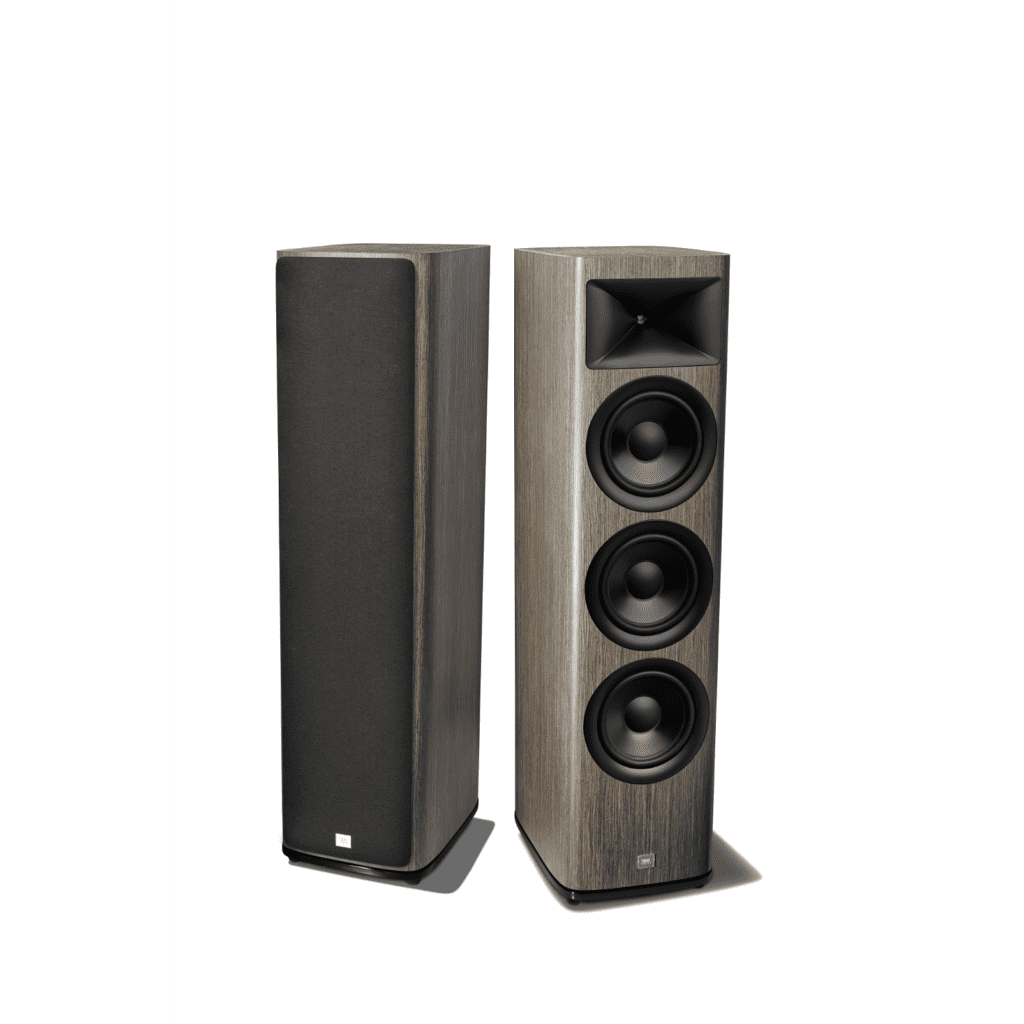
Like all models in Magico’s portfolio, the sealed-box A-Series uses a lot of aluminium. The entire cabinet is made from thick plates of brushed and black anodised 6061‑T6 aircraft-grade aluminium, in fact. And like all models in Magico’s line-up, that cabinet is internally braced with aluminium, too. However, where the more aspirational Magico models have essentially an internal aluminium space frame, the A-Series uses a complex internal bracing panel array alongside damping panels drawn from research used to create the mighty M-Series. In fact, there’s a lot of ‘trickle-down’ technology in the A5, with concepts pulled from the S- and M-Series models, but there are also a few unique elements that the A-Series introduces that will doubtless trickle ‘up’ throughout Magico’s product ranges.

Let’s get physical

As mentioned earlier, the A5 is the largest model in Magico’s A-Series. A three-way, five-driver featuring a trio of nine-inch Graphene Nano-Tec bass drivers – coupled with an all-new five-inch Graphene Nano-Tec midrange and a 28mm beryllium dome tweeter – means the A5 is a very ‘physical’ loudspeaker. However, it’s deceptively room-chummy too, making it physically and sonically sit comfortably in both large listening spaces and in the smaller rooms that define city-dweller listening.

A5_drivers5862

That midrange is a big deal. It’s the company’s first five‑inch pure midrange driver. Naturally, it leveraged all the technology Magico has been putting into its drive units for the last fifteen years, including a Graphene/carbon-fibre sandwich cone and a new cone surround foam designed to create an optimum cone-to-surround integration, which itself should spell lower distortion and faster settling time after excursion. If the latter sounds like a bus ride to the seaside, think that the quicker the cone returns to its resting position after its pistonic effect of moving in or out, the more accurate the loudspeaker’s transient response will be by definition. Even small improvements to that surround will have significant impact on the speed and transparency of the all-important midrange.

From here, the midrange unit features an all-new motor system with a pure titanium voice coil and a pure copper pole cap. This helps reduce eddy currents and makes for an extremely stable magnetic field across the coil’s travel. In other words, in making its first five-inch midrange, Magico has attempted to render all other midrange units of similar standing obsolete. While there will be a number of midrange makers who would disagree, Magico claims this is a paradigm shift in measured performance from a midrange unit. Regardless of the claim, the driver itself sits in its own sub-enclosure so any back-wave produced from a trio of bass drivers doesn’t interact or interfere with the midrange performance.

The back-wave is no small consideration. The trio of 9” bass drivers are all capable of half an inch of linear excursion… that’s a lot of pressure inside a sealed box! In the A5, these bass units feature a newly enhanced version of Magico’s Graphene Nano-Tech cones and like the midrange sport a titanium voice-coil. However, in this case that voice coil is the size of the midrange driver! Like all Magico drivers, every aspect of the unit is subject to extensive computer simulation and prototyping and a lot of measurement. This makes the cone itself achieve an excellent stiffness-to-weight ratio, while the frame itself is both optimally stiff and damped, with claimed “minimal acoustical contribution and maximised airflow.”

While the tweeter itself is an old friend to those used to the A-Series, that doesn’t make it outmoded. It’s a 28mm dome using a pure beryllium diaphragm. Magico encases the customized neodymium motor system in an engineered back chamber with advanced damping materials. This, claims the company, “enables ultra-low distortion, high power handling, massive dynamic capabilities and extended linear voice coil movement.” We’ve experienced this tweeter in the A1 and A3 before, and Magico’s claims for the HF unit do stand up to sonic scrutiny.

Magico A5 crossover

The A5 is also the first product in the world to use Mundorf’s new M-Resist Ultra foil resistors in its crossovers. The new resistors –the product of years of work between the two companies, apparently – are said to deliver “greater power handling, transparency and liquidity”. These are incorporated into Magico’s proprietary Elliptical Symmetry Crossover topology; a three-way network features a 24 dB per octave Linkwitz-Riley filter designed to maximise frequency bandwidth while preserving phase linearity and limiting potential intermodulation distortion problems.

Any colour you like

In a way, the Magico harks back to past classics in the range, thanks to its Henry Ford approach to colour schemes. Where a hitherto unheard of riot of a dozen colour finishes can be applied to the S-Series that sits above this range, the A5 is finished in an elegant brushed black anodised aluminium, in a manner akin to the mighty Q7 and previous Magico models. While this ‘none more black’ approach does create a monolithic look, in fact, the deep matt metal finish alongside its squared off cabinet give the Magico A5 a sort of ‘null’ aesthetic in the home. Curiously, because it makes no concessions to wood finishes and the rest it blends equally with everything. Those who either find five drivers staring back at them or who have kids or critters that would find such drivers an irresistible challenge can get grilles available separately as an option.

To many listeners, space is a premium and the Magico A5 takes that to heart; the combination of sealed box design and a virtually ‘immovable object’ enclosure means rear and side-wall radiation aren’t an issue, and you could fit the A5 into surprisingly tight spaces without sacrificing sound quality. This is a boon as many of its contemporaries demand a large listening space as standard and the resultant sound in more metropolitan living arrangements is a sound that is more akin to giant, overblown headphones; something the A5 never does even in very small rooms.

Of course, that doesn’t mean you can be slapdash in installation, but hopefully no-one in their right mind is ever going to be ‘slapdash’ with a loudspeaker costing over £30,000. Installation and partnership is important in getting the best from the A5, but – like the rest of the A-Series – it’s ‘important’ without being ‘vital’. This isn’t a starter speaker in load terms, but neither is it an amp-crusher. That being said, given that so many distributors and dealers around the world are likely to be stockists of both makes this an easy recommendation, but an amplifier like the Krell K-300i integrated is clean, powerful and an ideal partner for the Magico A5. And with 115dB in room potentially on tap, the Magico A5 will play loud as well as it plays soft.

Sideburns and loon pants

There is a school of thought in audio that loudspeakers achieved an acme of fidelity about half a century ago and most things that followed are variations on a theme of distortion, however benign that distortion might be. However, we’ve come a long way since sideburns and loon pants were a thing, and the Magico A5 shows what you can do when you stay true to the path of honest neutrality while striving to lower distortion in driver, crossover and cabinet. Especially when such a design is built to truly uncompromising levels.

The A5 has a remarkable sense of poise; the perfect balance between transparency and coherence, detail and dynamism, rhythm and melody. But more than that, it’s what you don’t discuss on the listening notes that is telling; you find yourself unable to discuss the A5’s tonal character because it does a very good job at trying not to have one! This is something that’s not the easiest thing to describe because you are talking about the absence of a thing instead of describing its characteristics, but it’s as if the studio hefts its physical presence into your room and you are met by the most honest sound you can imagine. Yes, the A5 isn’t alone in acting as a pure transducer and there are other models that do as well or even better than the Magico, but those that do what the A5 can do (or do it better) cost as much as the A5… and an Audi A5. And usually they have a Magico badge on the front.

Magico A5 interior

It’s incredibly difficult to convey this neutrality without cliché. It has a holographic soundstage, but when you hear it, you realise it’s not Trekker hyperbole. It has powerful dynamics; and until you are shocked out of your seat by Rachmaninov played through the A5, that phrase seems trite. The loudspeaker is sensationally detailed, and until you listen to just what that means, you might equate it with a clean and bright sound or even ‘worth, but dull’ audio; here, that detail extends right across the frequency range and makes you wonder how good recordings were made without this level of insight. You get ‘see the tonsils’ vocal articulation and not simply with female vocals; a quick, rich blast of ‘Hen Wlad Fy Nhadau’ from a male voice choir through the A5 and my Welsh roots start bubbling up!

Hit hardest

Any speaker sound is not without its observations; some view those observations as a potential launch pad for polemic, and Magico seems to get hit with this harder than most. So, what should be seen as an extraordinarily neutral transducer is viewed as somehow ‘too honest’ or ‘too neutral’; the A5’s ability to act as an open window on frequency response is seen as ‘lacking coherence’. Perhaps the most insane of these is the A5’s ability to deal with dynamic range, which appears to be simultaneously too dynamic and not dynamic enough.

Magico A5

Most of this criticism is derived from the sheer neutrality of the A5. Almost despite the name, this is not a loudspeaker for those who think loudspeakers should add ‘magic’ to the sound; the magical part of Magico in general comes from music increasingly unattenuated by cabinet, crossover, or drivers… and that’s a heady brew in and of itself. But there remain those fixed to the idea that a loudspeaker should be a euphonic musical instrument. In part, that’s because if you are having to trade compromises in sound, then going for compromises that sound ‘excitingly incorrect’ is better than ones that fall into the ‘accurate, but dull’ category. However, Magico’s A5 shows we have passed that trade-off and you can have a loudspeaker that sounds both ‘accurate’ and ‘exciting’. Sadly, some haven’t got the memo and prefer loudspeakers that might sound overly good in one aspect of performance but – when compared to the A5 – sound almost unhinged in others.

What’s often forgotten here is that going for fewer compromises across the board is a better option than making huge compromises in one aspect of performance to make significant gains in another. Because where such loudspeakers can sound incredible in some aspects, they can also sound uneven by definition. The A5 and its honesty never does that. Instead, the Magico approach is one of balance; I’ve said that earlier in the text, but it’s so fundamental to the core of what the speaker does, it’s worth saying more than once.

A point of inflexion

The Magico A5 isn’t just another Magico loudspeaker and isn’t even just another high-end loudspeaker; it’s a point of inflexion. It’s the tipping point where real high-end happens, and its flexible enough to let high-end happen in a wider range of home than usual. The combination of being capable of being driven by a good integrated amplifier and the way it integrates into smaller rooms than you might expect all lend the A5 a gravitas that sets it apart from its peers. It’s the gateway to a higher-end world, but not simply a stepping-stone that leaves you wanting more. And for many this will be their first experience of what Magico can sound like and that’s a big step for many. For some, it will be the only step they ever need to make, for others, it will be the first step in a wholly new journey.

Technical specifications

  • Type three-way, five driver sealed floorstanding loudspeaker
  • Driver complement 28mm beryllium-dome tweeter (×1), 128mm Gen 8 Nano-Tec cone midrange (×1) with graphene/carbon-fibre inner and outer layers, 229mm Gen 8 Nano‑Tec cone woofer (×3) with graphene/carbon-fibre inner and outer layers
  • Sensitivity 88dB
  • Impedance 4 ohms
  • Frequency response 24Hz–50kHz
  • Recommended amplifier power 50–1000 watts
  • Dimensions (W×H×D) 26.7 × 113.7 × 38cm
  • Weight 81.65kg each
  • Price £35,998 per pair


Manufacturer

Magico LLC

magicoaudio.com

UK Distributor

Absolute Sounds

absolutesounds.com

+44(0)208 971 3909

Back to reviews

The post Magico A5 appeared first on Hi-Fi+.

JBL HDI-3800

It’s not unusual to get a glimpse of the difference between the US and European markets for loudspeakers but if there’s anything in the pictures to give a sense of scale you will realise that these JBLs are more than a mere glimpse, they are the full Sherman tank. In the likely event that there are no clues to their scale I’ll mention that the HDI-3800s are 1.1m high and weigh 38 kilos. In the high end this is nothing unusual but at £4,000 these speakers are aimed at a broader market and presumably one that is as interested in watching movies as listening to music. To put it more bluntly, it’s a lot of speaker for the money and there aren’t many other respected brands that can compete when it comes to kilos per pound sterling.

They clearly come from a place where space is more affordable and high SPLs are very popular, but they also come from a brand with an impressive heritage that goes way back to the days when big was the only game in town where speakers were concerned. JBL has been releasing a lot of retro style speakers of late, often with lovely orange foam grilles, but the HDI-3800 is a more up to date beast that requires no stand and packs a lot of drive units into its substantial form.

JBL HDI 3800

Let’s not underplay that ‘substantial’ nature of the loudspeaker. Although this isn’t as physically demanding a loudspeaker as the eight-foot tall, one-ton behemoths that dominate the top end of high-end audio (as well as the imposing girth of JBL’s own large horn designs), this is one heck of a lot of loudspeaker, and a heck of a lot of loudspeaker for the money, too. We shouldn’t be impressed simply by the size and weight of a loudspeaker design, but the HDI-3800’s physical characteristics directly contribute to an equally-impressive sub-40Hz in room response.

Despite the three big lower drivers, this is a two-and-a-half-way, reflex-loaded loudspeaker so the two lower drivers are bass units and the one above covers both mid and bass frequencies. They are eight-inch units with cast aluminium chassis and aluminium cones controlled by a substantial magnet assembly which incorporates a flux stabilisation ring, a vented pole piece and copper shorting ring. Features that are well regarded methods for reducing distortion and increasing linearity. The cabinet itself is very solid and loaded with two reflex ports on the rear, meaning they will need a reasonable amount of space behind them in most rooms if the bass is to remain controlled. The high frequency unit is a compression driver which is why there is a horn in front of it; this is a genuine horn system as opposed to the shallow horns or waveguides found on a number of speakers that have conventional dome tweeters providing treble.

Good compression

Compression drivers are a JBL speciality and come from the world of pro audio where high sound pressures are an absolute necessity, you can’t entertain a crowd of thousands with conventional tweeters unless you have an awful lot of them spread around the auditorium. Compression drivers are able to do this because the diaphragm is larger than the throat or compression cavity that sits between it and the horn, this arrangement increases resistance to radiation which rather counter intuitively also increases efficiency. The reason is that the driver is better matched to the volume of air it is driving than is the case with a dome fixed to a flat speaker baffle. This makes them significantly more sensitive but does bring the challenge of getting an even response from a horn. Compression drivers are generally aluminium but in the 2410H-2 used in the HDI-3800 JBL have used a thermoplastic polymer called Teonex, which has the correct rigidity and is better damped than metal alternatives. It is also an annular diaphragm, that is it is O shaped rather than being a full dome, with fixings at inner and outer edges and nothing conventional in the way of suspension, the polymer itself is flexible enough to be used thus.

JBL HDI compression driver

The overall sensitivity of this JBL is higher than average at 92dB but that’s for a four Ohm load so it will need a bit of muscle to achieve its potential, JBL recommend anything from 25 to 300 Watts and I used a Moor Amps Angel 6 which sits near the middle of this range with 150 Watts on tap. Perhaps inspired by their cinematic inclinations the first track that dropped on the streamer was the title theme from Blade Runner which includes speech that came through with considerable clarity before Vangelis’ gorgeous wall of synth took centre stage. The low end on this was lovely, it had an ease and extension that you only get with higher sensitivity designs. You get a strong sense of mass, a substantial presence that can only really be achieved with big or multiple drivers in big boxes.

The sound is more cuddly than you might imagine given the fire power on offer, the treble and mid are appealingly smooth and reflect the balance of whatever you play without any sense of effort. The bass could be faster, the voicing is distinctly cinematic in this regard with the emphasis on scale and depth rather than immediacy, but I tried something which helped notably in this regard. I reviewed a set of Franc equipment support feet around the same time and tried the Slim model under the rubber feet of the JBLs (spikes are supplied for the masochists). These raise the speakers by 25mm and increase the sense of pace and openness rather nicely, they don’t appear to reduce bass power one bit and allow track’s like Rymden’s ‘The Lugubrious Youth of Lucky Luke Live’ to become quietly captivating. The piano in particular was superb but the harsher sounds became more obvious and on balance I preferred the balance with the JBLs on the floor. I suspect that this is a height thing related to the horn as much as the isolating abilities of the feet.

Temporary measures

I really enjoyed a Bonnie Raitt album, Taking My Time, on vinyl, here the HDI-3800 showed the age of the recording alongside the high calibre of the performance. They also revealed the benefits of not leaving the phono stage on a network switch (a temporary measure I assure you) by delivering better imaging with it back on the rack. This is a revealing speaker of that I have no doubt. I tried the JBLs on a much lower powered Enleum AMP-23R integrated amp (issue 202) that had bowled me over with its charm through my regular speakers. Here it continued to shine with, surprisingly, some of the best sounding dub I have enjoyed at home courtesy of Burnt Friedman. I think it was partly a success because the Enleum doesn’t really plumb the low frequency depths but emphasises the tune emphasising harmonics rather than very low bass. This album is often overpowering in this respect, and by making the low end a little leaner it was able to deliver a more enjoyable result.

JBL_HDI_3800

However, the more music I played through the JBLs the better it seemed to get, the focus on ‘music’ rather ‘sound’ was notable and I enjoyed a variety of albums both old and new. I gave Joni Mitchell and James Taylor’s live performance from 1970 a spin on Qobuz and while it’s not the greatest sounding recording it was easy to enjoy the natural simplicity of Mitchell’s high voice and the way it contrasted with the dark texture of Taylor’s. Playing this  with the Angel 6 amplifier I enjoyed an easier and more sumptuous sound and one that continued to impress when it came to voices; on Nick Cave’s ‘Jesus Alone’ for instance the bass is very low and weighty but the voice is in a distinct spotlight. The speaker controlling the bass and allowing the mid and treble to shine through with no sense of overlap or blur. It builds a powerful, torquey sound that’s bursting with electricity and feels as though it could lash out at any moment. Ambience is well served by this depth as well, the speaker picking up on the echoes and reverb that build up the picture of a live recording. Tracks with reverb and delay applied ‘in the box’ are just as effective, Kendrick Lamarr’s ‘How Much a Dollar Cost’ being a good example of track that’s been carefully constructed to sound edgy but which is also remarkably clear and solid in its three dimensionality. It sounds as if it could have been mastered on a speaker like this.

Conclusion

I suspect that these JBLs had not been given much of a run-in prior to delivery because the results they produced improved markedly over the weeks that they were in the system. I played a lot of music through a variety of sources and amplifiers and came to the conclusion that they are really rather good, their high sensitivity is a definite bonus but ultimately the HDI-3800s are a lot more sophisticated than they look. This combined with their competitive pricing makes them look like rather good value if you have the space.

Technical specifications

  • Type 2.5-way, four-driver, reflex loaded floorstanding speaker with horn loaded tweeter.
  • Driver complement One 25mm Teonex compression driver; three 200mm black Advanced Aluminium Matrix cone, cast frame woofers
  • Crossover frequencies 800Hz, 1800Hz
  • Frequency response 37Hz–30kHz
  • Impedance 4 Ohms
  • Sensitivity 92dB (2.83V @ 1m)
  • Dimensions (H×W×D) 1100.5 × 300 × 417.8mm
  • Weight 38kg/each
  • Finishes High gloss black, satin walnut, grey oak
  • Price £3,999/pair

Manufacturer

JBL

Tel: +44(0)1223 203200

URL: jbl.com/specialty-audio

Back to Reviews

The post JBL HDI-3800 appeared first on Hi-Fi+.

PMC fact fenestria

Most loudspeakers have characteristics that tell you that you are listening to a loudspeaker. Even with your eyes closed, it’s not too difficult to discern that there isn’t a grand piano in the room but instead a pair of loudspeakers attempting to reproduce the sound of that instrument. This, it would seem, is due in no small part to the noise introduced by vibration from the cabinet. A wooden loudspeaker is a bit like a musical instrument; most of the sound comes from the drivers but a high proportion emanates from vibrations in the box itself. At certain frequencies, the proportion changes and the panels contribute more. Designers have used a wide variety of techniques to combat the cabinet’s contribution because it muddies and colours the sound, smearing the notes produced by the lowest distortion drivers. A large proportion of loudspeakers in the high-end use mass and there have been some notable successes with this idea. However, PMC has taken a more sophisticated approach to minimising vibration in its fact fenestria flagship, one that has not been seen elsewhere and yet is extremely effective.

PMC fact fenestria

The panels that flank this tall, elegant loudspeaker might look like they are there for aesthetic reasons but in fact they provide a means to negate noise coming from the sides of the cabinet. The four panels act as tuned mass dampers, which is a technology that is hard to understand without visuals but is regularly employed on top of tall buildings to negate the effect of earthquakes and strong winds. Put a flexibly mounted weight on top of a skyscraper and it will move in the opposite direction of any movement in the building and counteract that movement. In the fact fenestria, each panel is mounted on 12 pins, which are mounted in rubber and foam to allow a small amount of movement; this cancels vibrations coming from the side walls of the two bass cabinets. PMC established the best places to put these pins by measuring movement in the sidewalls with accelerometers; an old but precise way of detecting small movements.

Ollie’s Army

PMC’s engineering team – led by Ollie Thomas – did not stop there in the quest to eliminate vibration. Virtually every element on the fact fenestria is isolated from the rest in order to stop vibration travelling through the cabinet, distorting the output of the drivers and undermining performance. This is most apparent in the so‑called nest, the machined aluminium element that supports the mid and treble drivers in the centre. Neither driver is fixed directly to the metalwork but has an anti-vibration mounting to stop energy getting in or out. The whole nest itself is floating on silicone mounts top and bottom, further reducing the likelihood of energy in the bass cabinets getting to the drivers.

PMC fact fenestria tweeter

This is a tall loudspeaker, more than five foot high, and moving its 80kg bulk any distance would be difficult if it were not assembled on site. A pair of fact fenestrias arrive in ten boxes and each speaker is made up of eight parts starting with the plinth. This substantial MDF base houses an equally substantial fourth-order crossover where component placement and orientation has been optimised for minimum interference between them. They are high quality components too, naturally.

Six silver-plated custom terminals are provided on the back of the plinth but these are supplied with jumpers so tri-wiring is not essential. Either side of this block are adjusters for high and low frequency output, which allow cuts or boosts at either extreme in order to help with integration into different rooms. The plinth has inserts for four chunky, machined stainless spikes of the ‘not to be messed with’ variety that are supplied along with the tools and fixings used to construct the speakers. The isolation starts where the lower bass cabinet fixes to the plinth in order to protect the crossover from vibration. This part is bolted on and the electrical connection is made by six-pin connectors built into either part. The same connections are made when you install the nest and the result is no cables on the back of the box, which is a nice touch.

Locking nest

The second bass cabinet locks into the first, then the nest slots in between them and is fixed above and below. Then comes the fun bit of finding the best spot relative to the wall; I used hard plastic furniture cups under the spikes to slide them around and found that a gap of around 50cm to the rear gave the best tonal balance.

PMC fact fenestria bass unit

Most of the drive units on the fenestria were created specifically for this project but the most radical is the bass driver. This is based on an existing chassis but has far greater excursion than previous models and thus needed to be very light and extremely stiff. Ollie chose a sandwich of carbon fibre skins with a Rohacell foam core for this purpose and is even thinner than the flat drivers seen on some of PMC’s pro models. The midrange is based on the company’s 75mm dome but here they have bored a hole through the pole-piece so that rearward pressure is released into the bullet-shaped chamber that you can see behind this driver; a move that reduces distortion that little bit more. The tweeter is a ring radiator type with a 19mm central dome in a 36mm surround, it takes over from the mid at a high 3.8kHz and like the midrange has an isolating mount.

PMC fact fenestria midrange

The nature of the nest means that both mid and treble are on an open baffle. This means that sensitivity is reduced but dispersion is very good and there is no woodwork that can vibrate along with their output. The bass system has PMC’s preferred transmission line loading with Laminair fins at the line vents to kill any turbulence; there are of course two of these lines on the fenestria and this means that the system drives the room much like a line array. It makes for the most effortless and articulate bass I have had the pleasure of hearing at home, and it is uncannily good at finding low frequency content in all sorts of music; frequently on tracks that didn’t seem to have any real bass on at all. This despite using fairly substantial loudspeakers as a reference for many years. The other characteristic of the bass and in fact the whole loudspeaker is the ease with which it delivers whatever is in the recording. This was something that everyone who came to hear them noticed without prompting.

Power is everything

They do like power, however. I started out using a Bryston 4B3 power amplifier which is good for 300 Watts (8 Ohms) but managed to get hold of a pair of 7B3 monoblocks (600W) for some of the listening and that proved to be a fine combination. Although this speaker isn’t particularly ‘deaf’ at 86dB sensitivity, it really stretches out with this much power behind it. With the 4B3 things were pretty special however, especially when vinyl was brought into the equation. I put an old and well played copy of Astral Weeks on the Rega Planar 10; this is one of the best albums ever made but it’s not the most refined of recordings… or at least most speakers don’t give that impression. With the fenestria the usual coarseness and forwardness of the vocal seemed to be missing and Van, while clearly pushing things into the red, sounded sublime. It was also interesting to note how precisely the various instruments were placed in the soundstage; the jazz arrangements mean that they often blur into one another but here it was easy to pick each one out. On the much more contemporary Dark Days Exit, Felix Laband uses vinyl crackle to emulate an analogue sound and this adds atmosphere and texture to his collages of synthesised and sampled sounds. I love the crunch of the bass line on ‘Crooked Breath’ and here it goes down much further and in more articulate fashion than usual.

King Crimson’s ‘Easy Money’ is a superb track that I’ve heard many a time, yet never has the way that the image suddenly expands at around the halfway point been made so clear; these speakers are clearly more sensitive to every nuance of the signal than most. And by ‘most’ I mean nearly all of them; you might get this degree of finesse with some high sensitivity designs but such speakers can’t match the bandwidth nor the tonal evenness on offer here. Even mono recordings sound lifelike in their hands; Muddy Waters’ Folk Singer has ferocious dynamics but rarely does the man appear in the room so comprehensively as he does with these PMCs. An early Sonny Rollins album on Blue Note (A Night At The Village Vanguard) is also mono and you can hear this in the lack of scale (a mono switch would help here) but the tone of his sax is incredible and made me re-evaluate him as an artist.

PMC fact fenestria

I don’t play music at particularly high levels as a rule because most speakers/rooms start to become uncomfortable when you do; the reflections and distortions of the speakers themselves are made more obvious by volume. But this didn’t happen with the fenestrias; with a good recording there is a strong inclination to turn it up because the usual sense of loudness does not appear. Instead you get more music, more engaging, inspiring and fully immersive music at that. This indicates that PMC have created a loudspeaker with incredibly low distortion, one that does more justice to the signal than the vast majority. And that makes for highly addictive listening, especially with a live recording of John Martyn playing ‘Head and Heart’ at Glastonbury in 1986 (BBC Radio 1 Live in Concert) where you get a real sense of being transported to the event and standing in the (least muddy) sweetspot in front of the desk. On Jon Hopkins’ ‘Deep In The Glowing Heart’ the depth and clarity of the bass is a real luxury, one you can almost bathe in, while the drums and bass of Arab Strap’s ‘Packs of Three’ is explicit in its raw realism. The shockwave that Massive Attack produce on ‘Angel’ is truly palpable, those guys probably weren’t audiophiles in the traditional sense but they sure knew how to capture all the key facets of the sound they were making.

Precision and nimbleness

The fenestria tell you all about everything that they play; the open baffle of the nest gives them a small speaker precision and nimbleness, while the speed and lack of cabinet vibration in the bass system matches this in the lower registers. This is a phenomenal loudspeaker system of that there is no doubt but more than that is the way it leaves no trace of character on the music being reproduced. I could not hear coloration or distortion of any kind and that’s very rare, what I could hear were new characteristics in virtually everything that got played, and a lot of music passed through the system in the few weeks that these speakers were in the room. Aretha Franklin’s ‘I Never Loved A Man (The Way I Love You)’ is a killer track and the sheer power of her voice pushes the microphone very hard, only the tape compression stops things getting too much. Its emotional power is what hits you the hardest and while the Bryston 7B3 are not the most touchy feely amps around, they let this through loud and clear.

The PMC fact fenestria is a remarkable achievement for any loudspeaker company let alone a relatively small independent one. It conclusively proves that the transmission line or even the advanced transmission line (ATL) is a very serious contender for the best way to load a loudspeaker and makes one wonder why so few designers use it. This is an expensive loudspeaker for sure and it needs good quality and quantity of power for best results but it’s not extreme by high end standards, you will find several dozen more expensive designs at the High End show. But few of them can compete with the sheer transparency to the signal that the fact fenestrias offer, it will be a long time before I come to terms with real world loudspeakers when they are gone.

TECHNICAL SPECIFICATIONS

  • Type: Three-way, six-driver, floorstanding speaker with PMC ATL (Advanced Transmission Line) enclosure
  • Driver complement: One 19mm SONOMEX soft dome, ferro‑fluid cooled tweeter with 36mm surround; one PMC 75mm soft dome, rear chambered midrange driver; four PMC 6.5inch transverse‑weave, carbon‑fibre, multicellular-core piston driver
  • Crossover frequencies: 380Hz, 3.8kHz
  • Frequency response: 23Hz–25kHz
  • Impedance: 4 Ohms
  • Sensitivity: 86dB/W/m
  • Dimensions (H×W×D):
    1700 × 370 × 623mm including terminals
  • Weight: 80kg/each
  • Finishes: White Silk, Rich Walnut, Tiger Ebony
  • Price: Tested at £56,995/pair

Manufacturer: The Professional Monitor Company

Tel: +44 (0)1767 686300

URL: pmc-speakers.com

Back to Reviews

The post PMC fact fenestria appeared first on Hi-Fi+.

Vivid Audio Kaya S12

The big brain behind Vivid Audio and the Kaya S12 – Lawrence’ Dic’ Dickie – once shared an anecdote with me some years back. When Vivid Audio first launched its distinctive, unique-looking loudspeakers at a hi-fi show, the first reaction from the first member of the public to walk into the room was, “Oh no, not again!” Presumably, he comes from a long line of people who had seen it all before, tutting at everything from the wheel (“It’s just a square with the edges knocked off!”) to the Apollo space program (“We’ve had fireworks for years… what’s the big deal?”).

However, one of Vivid Audio’s real-world issues is that people like the idea of genuinely distinctive-looking loudspeakers and buy boring boxes ‘to play it safe’. The Kaya line is partly a way of addressing the need to make a loudspeaker cabinet that doesn’t ‘play it safe’ for sound (and sonic) reasons while creating a more universally acceptable design. As a result, the Kaya S12 stand-mount loudspeaker is the smallest and most domestically chummy of the whole range.

Organic Shape

There’s something very organic to the shape of the Vivid Audio Kaya S12, especially on its dedicated three-point stand. That 12-litre RIMcast polyurethane resin cabinet looks less like a loudspeaker and more like a flower or a large seedpod. This design is so clever because three-footed speakers have traditionally either looked like truncated Ikea living room lighting systems or something out of The War of the Worlds but with fewer death rays. Giving those three legs a gentle concave makes them look like the speaker grows out of them.

Vivid Audio Kaya S12 floorstanding loudspeaker

The injection-moulded enclosure shape of the Kaya S12 is not just there to creep out fans of The Invasion of the Body Snatchers. The front baffle gives the tweeter a gentle horn-loading, and the overall shape creates the ideal rear chamber size for both treble and mid-bass units, aided by the tapered tube reflex first used in Vivid Audio’s behemoth Giya G1. The design also reduces internal cabinet resonance from the outset, making it an ideal platform for the drive units to do their stuff unimpeded by the box itself.

Unlike most loudspeaker ‘builders’, Vivid Audio is one of the few who make their drive units. In the case of the Kaya S12, the company uses the same 26mm D26 Tapered Tube-loaded carbon-reinforced catenary dome tweeter throughout the line. In contrast, the long-throw 100mm C100L alloy dome/cone driver is explicitly designed for the Kaya S12. Of course, the cabinet making virtually no impact on the loudspeaker’s sound means more of the heavy sonic lifting is on the character of the drive units. If they have a ‘character’, it will be thrown into sharp highlight because the cabinet leaves few places to hide.

Everything under scrutiny

Every aspect of what goes into making a drive unit comes under Dic’s scrutiny. Those long-standing ‘well, we’ve always done it that way’ facets of loudspeaker driver engineering are stress-tested and – if found wanting – he seeks a better way of doing things. For example, the internal architecture of the enclosure features a unique tapered absorber that surrounds the rear of the mid-bass driver. Absorbent material fills the radial slots formed by the deep ribs in this absorber; each absorbs a different frequency and prevents interference with the action of the cone. TL;DR version; the enclosure is deader than Elvis.

This scrutiny even looks to the slightest changes; Vivid Audio uses flat wire instead of conventionally drawn round wire for winding voice coils. It means the loudspeakers’ sound doesn’t require hundreds of hours or run in and doesn’t take an hour or so of playing to ‘come on song’ in a listening session. Of course, it also benefits a loudspeaker at its incursion extremes, meaning you can bass play louder for longer too!

However, don’t take its ease of running in to mean the loudspeaker is a pushover; it demands careful installation and partnership. The Kaya S12 needs a little ‘breathing space’ between it and the rear wall, but not so much that it leaves the listener in a small room using the speakers as headphones.

Head vs Heart

In most loudspeakers, there seems to be a ‘head vs heart’ trade-off; you either get a loudspeaker that sounds remarkably detailed and analytical, with outstanding imagery and shimmering ‘micro-dynamics’ or one that is consummately musical, entertaining and rhythmically ‘in the pocket’. The Vivid Audio Kaya S12 is not like most loudspeakers. It blends rhythmic drive and energy with the transparency that makes you think of electrostatic loudspeakers. That applies universally; from ‘To Be Loved’ from Adele’s therapy session album 30[Columbia/Melted Stone], through the lo-fi brilliance of The Clash’s ‘White Riot’ [The Clash, CBS], to Arvo Pärt’s chillingly atmospheric ‘Speigel im Speigel’ [Alina, Spivakov et al., ECM]. In every case, the musical insight comes from the detail and the underlying depth of performance. You get that elusive combination of insight into the recording and that sense of a musical performance.

However, the big thing from this little speaker is the relative absence of distortion. It’s a paradox that while we strive to reduce distortion in electronics, loudspeakers frequently have more significant deviations from accuracy. However, when you hear one of those rare loudspeakers like the Kaya S12 that doesn’t have the same degree of distortion found in other speakers, you hear music as even more of a cohesive whole than usual. It’s beguiling in the extreme.

This transparency is not easy to pin down, as it’s a bit of a group effort on the part of the Kaya S12. The quieting effect of that cabinet and the absorber did not introduce sing-along sessions to hold back the drive units. It’s the drive units themselves. It’s even the stand, which seems capable of doing its job while adding or subtracting nothing. Put all those elements together, and you have a sound just so damn lifelike that you want to hear more.


Vivid Audio Kaya S12

My days of guitar wrangling are largely behind me, but a well-turned Telecaster can still make me think of playing again. Amateur musicians listening to masters of that instrument will play music on the Kaya S12 like a masterclass because the clean and detailed loudspeaker gets you in the spaces between the notes. Playing ‘Soft Winds’ from Ed Bickert’s Out of the Past CD [Sackville] is a perfect example; it can sound like drab dinner jazz, but the playing is masterful. Here, Bickert’s masterful ‘grips’ (impossible jazz chords) almost seem attainable and understandable, and there is so little between you and the late Canadian jazzer. It’s like being in a session with the guy.

Do (more) than one thing well

We’ve often had snippets of this before, often on loudspeakers that do one thing well at the expense of the whole. I remember hearing a loudspeaker playing Dylan’s harmonica like it was in the room but making almost every other instrument sound like Dylan’s harmonica. Here, you get that stunning ‘unencumbered by artifice’ presentation, but it cuts across all instruments. Again, I could rattle off a list of recordings ­– both commonly used ones like Joyce DiDonato and Trentemøller and more ‘for personal use’ albums like Grinderman and Heavy are the Head – but it applies universally. The Kaya S12 is like having less loudspeaker and more studio or concert hall in your room.

No, it’s not the only product that delivers that degree of musical insight, but it’s one of the few that can get even close to the degree of detail and precision you get from top-end audio trailblazers at a fraction of the price and size.

It’s hard to avoid discussing the size of the loudspeaker because the Vivid Audio Kaya S12 highlights the difference between regular humans and homo audiophilius. Asked to sit in front of what we consider ‘reasonable’ sized loudspeakers, ordinary people are intimidated by the physical dimensions of the big boxes in front of them. The Kaya S12 doesn’t have the same physical presence, so rank-and-file humans look at them in terms of their aesthetics… and often find them a pleasing shape. Meanwhile, audiophiles look at a loudspeaker like the Kaya S12, proclaim it ‘too dinky’, then are astonished at the scale of the sound it produces… and find it a pleasing shape sounds like a win-win to me.

The size of the loudspeaker is both its greatest strength and its lone weakness. Being so ‘dinky’, the Kaya S12 acts almost as a ‘point source’, meaning its stereo and detail reproduction are outstanding. Stereo soundstaging is staggeringly good as the loudspeaker effectively removes itself from the room, leaving the instruments each occupying their place within a three-dimensional space. Even if that is the impression of dimensionality created by delay and panning, you feel enveloped in a sound-field that is physically and emotionally ‘there’ in the room with you. This spatial excellence has a degree of detail and precision that is almost impossible to replicate at anything close to the Kaya S12’s price and size.

Plumbing the depths?

The lone weakness described above is bass depth. The Kaya S12 does a remarkable job at plumbing the depths given the constraints of size and drive-unit acreage, and it rolls off cleanly, so you get the impression of those deep bass notes even if you don’t get quite the same gut-punching intensity. Although it gets surprisingly close irrespective of room size. In a small room, however (which, let’s face it, is where the Kaya S12 will likely spend its days), this clean roll-off is almost ideal as it doesn’t trigger standing wave resonances where the room ‘joins in’ with the music. The nearly preternatural bass speed and effortless, bouncy, infectious sense of rhythm baked into the Kaya S12 make partnering it with a subwoofer very difficult. A good sub will anchor the sound in space, but the Kaya S12 speed will take that ‘anchor’ concept and take it to mean ‘holding everything back’.

Discussing a subwoofer almost misses the Vivid Audio Kaya S12’s point. More than just a ‘good’ loudspeaker, the Kaya S12 is also an ‘important’ one. It’s important because it reflects the increasing understanding that ‘metropolitan’ listeners exist and do more than listen on headphones. It’s a source of some personal frustration that high-enders with a profound love of music but who live in large cities with small rooms are left out in the cold by most audio. The ‘oh well, compromises must be made’ stance is as wrong as ‘let’s shoe-horn a vast system into a small room’. The Kaya S12 is a legitimately high-end loudspeaker for such rooms. That it isn’t a full-range design is an advantage in spaces so small that anything below 60Hz has its in-wall accompaniment. But the uncompromised performance, from that taut bass to the upper limits of hearing, makes it something special. That Vivid audio no-distortion, super clear, and, it has to be said, ‘vivid’ sound is in full effect here, scaled down – but not shrunken – to work in a broader range of rooms than you’d expect.

‘Impressed’ doesn’t even describe my feelings toward the Vivid Audio Kaya S12. The Kaya S12 takes the ‘loudspeaker for small rooms’ concept to new heights. Its combination of stereo focus, detail and clean bass makes the Kaya S12 a cerebral performer; the tremendous sense of musical performance and excellent beat give it some heart, too. While it might not be the first choice for dub reggae or church organ fanatics, I’d happily trade bass weight for bass precision, especially as trying to get both in the same box requires a more significant investment in loudspeakers in a larger room. Those of us living in The Big City – where space is at a considerable premium – have just got a new champion to fight our corner.

TECHNICAL SPECIFICATIONS

  • Type: Reflex-loaded two-way stand‑mount loudspeaker
  • Drive units: Tweeter – 26mm alloy dome with tapered tube loading, Mid/bass – 100mm long throw alloy cone
  • Nominal frequency response: -6dB 45–25,000 Hz
  • Nominal impedance: 8 Ohms
  • Crossover frequency: 3kHz
  • Connectors: single wire binding posts
  • Sensitivity: 87dB 1w/1m
  • Finishes: gloss piano black, gloss Pearl white, custom colours, matte Oyster grey
  • Dimensions H×W×D: 480 × 237 × 254mm
  • Weight: 6kg
  • Price: from £6,000 (stand £1,500)

Manufacturer: Vivid Audio

URL: vividaudio.com

Tel: +44(0)7515 127049

Back to Reviews

The post Vivid Audio Kaya S12 appeared first on Hi-Fi+.