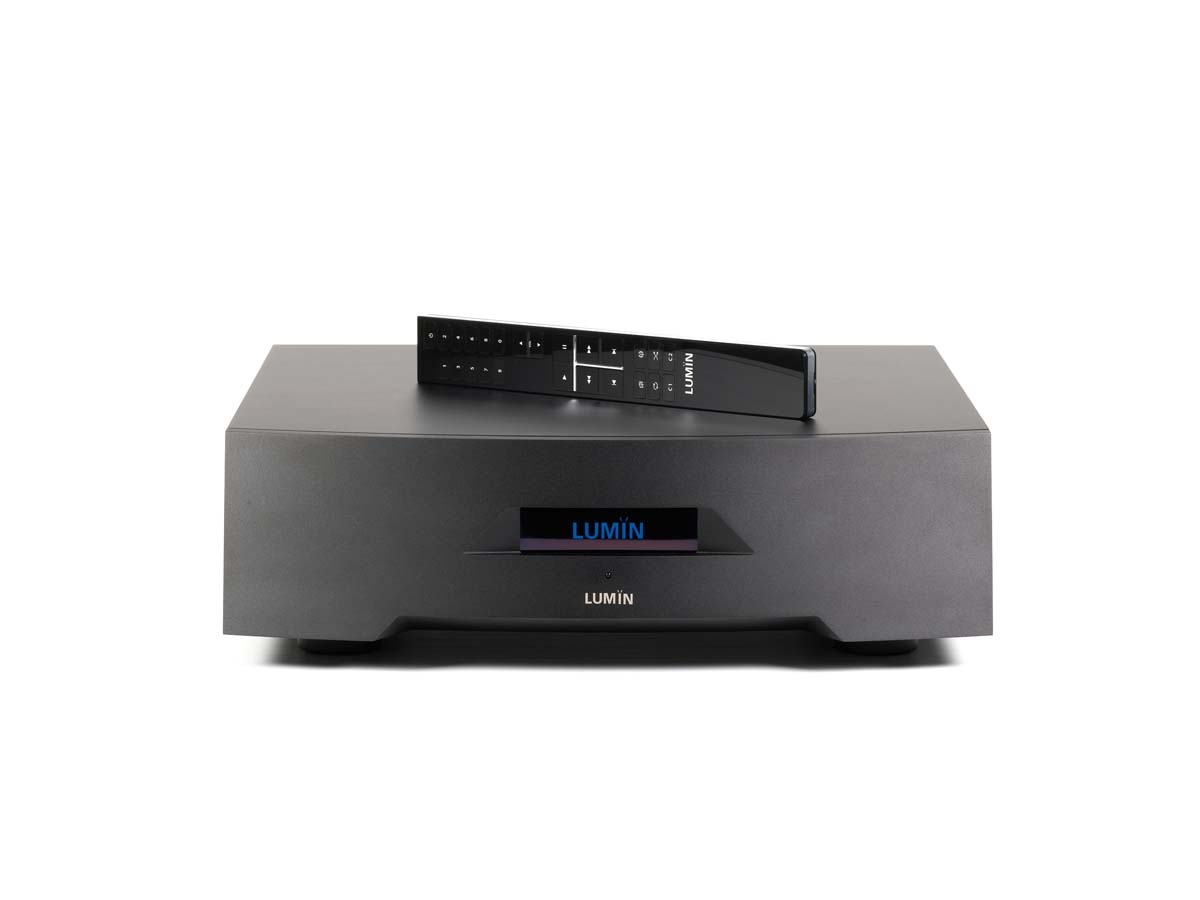
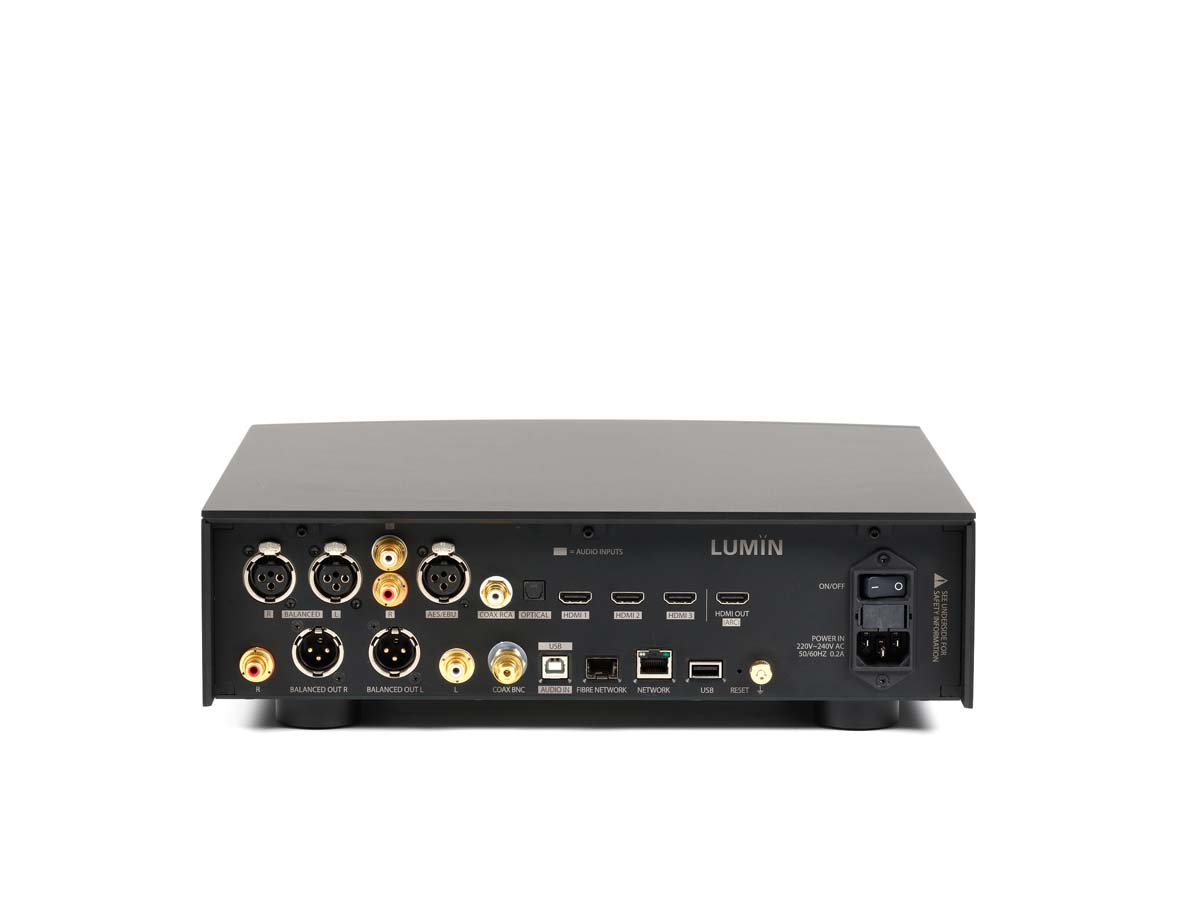
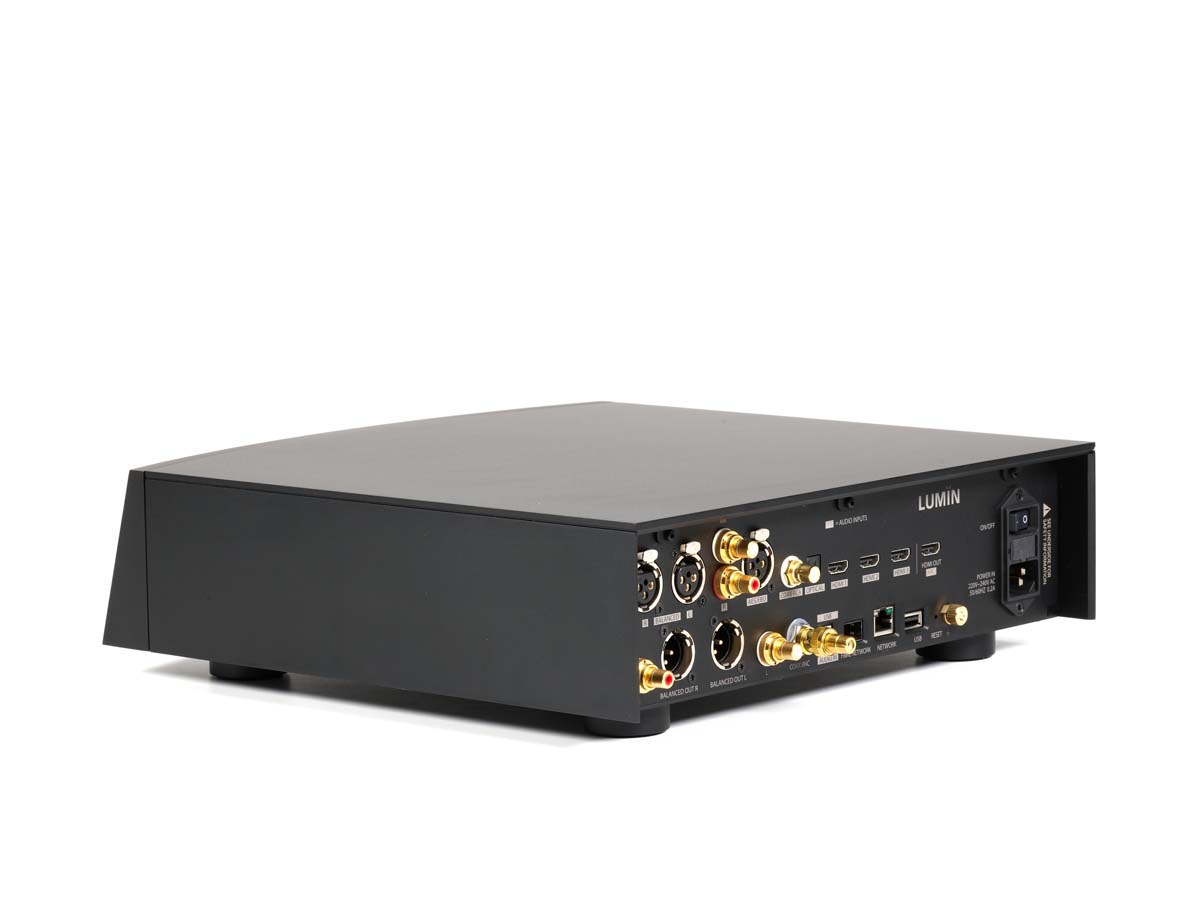
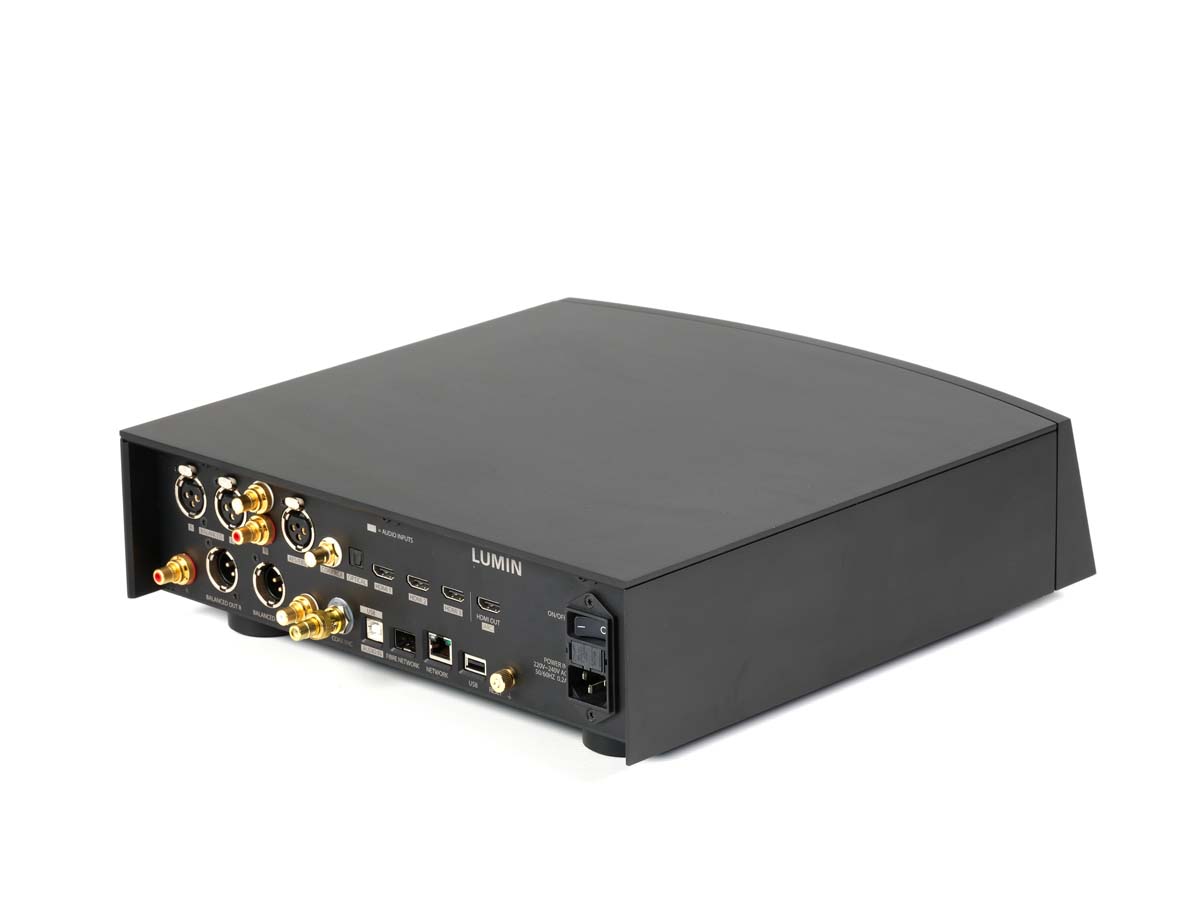
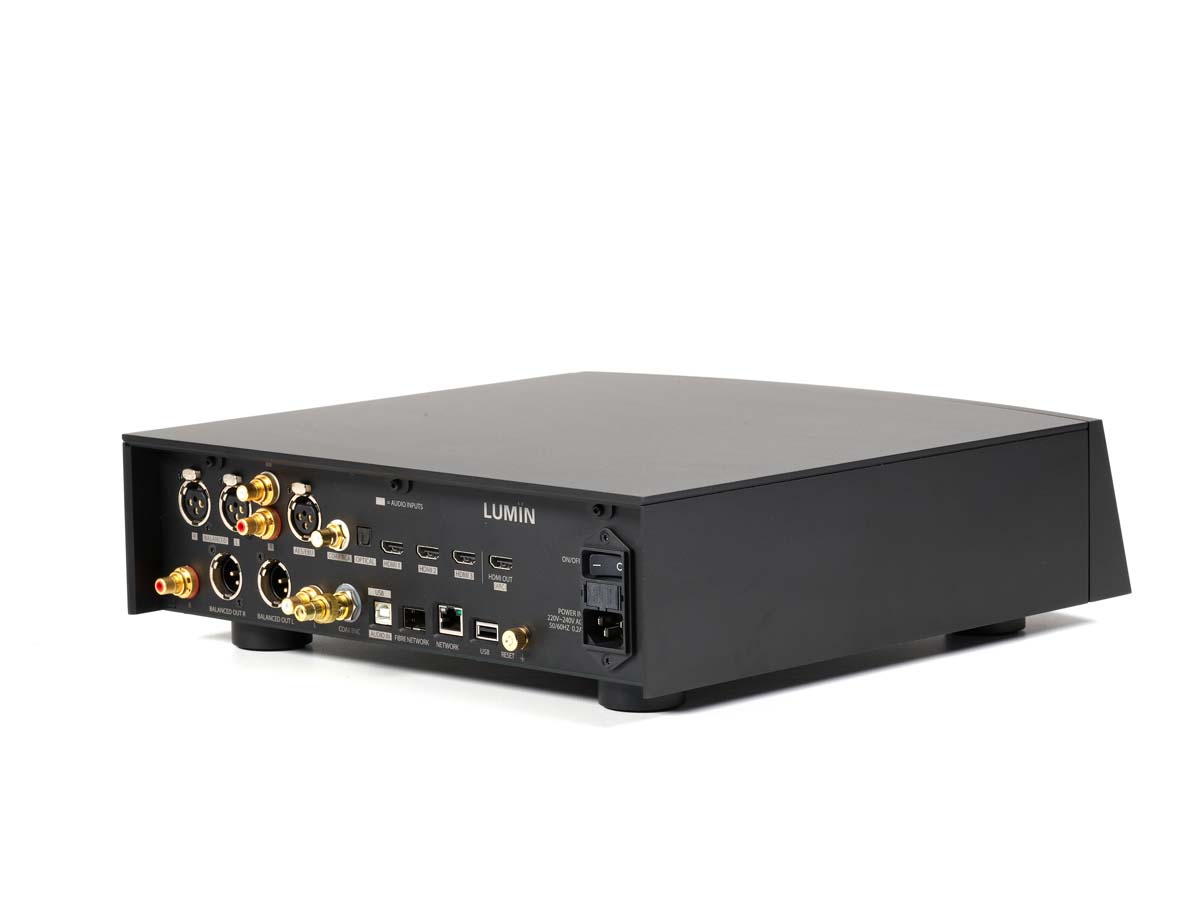
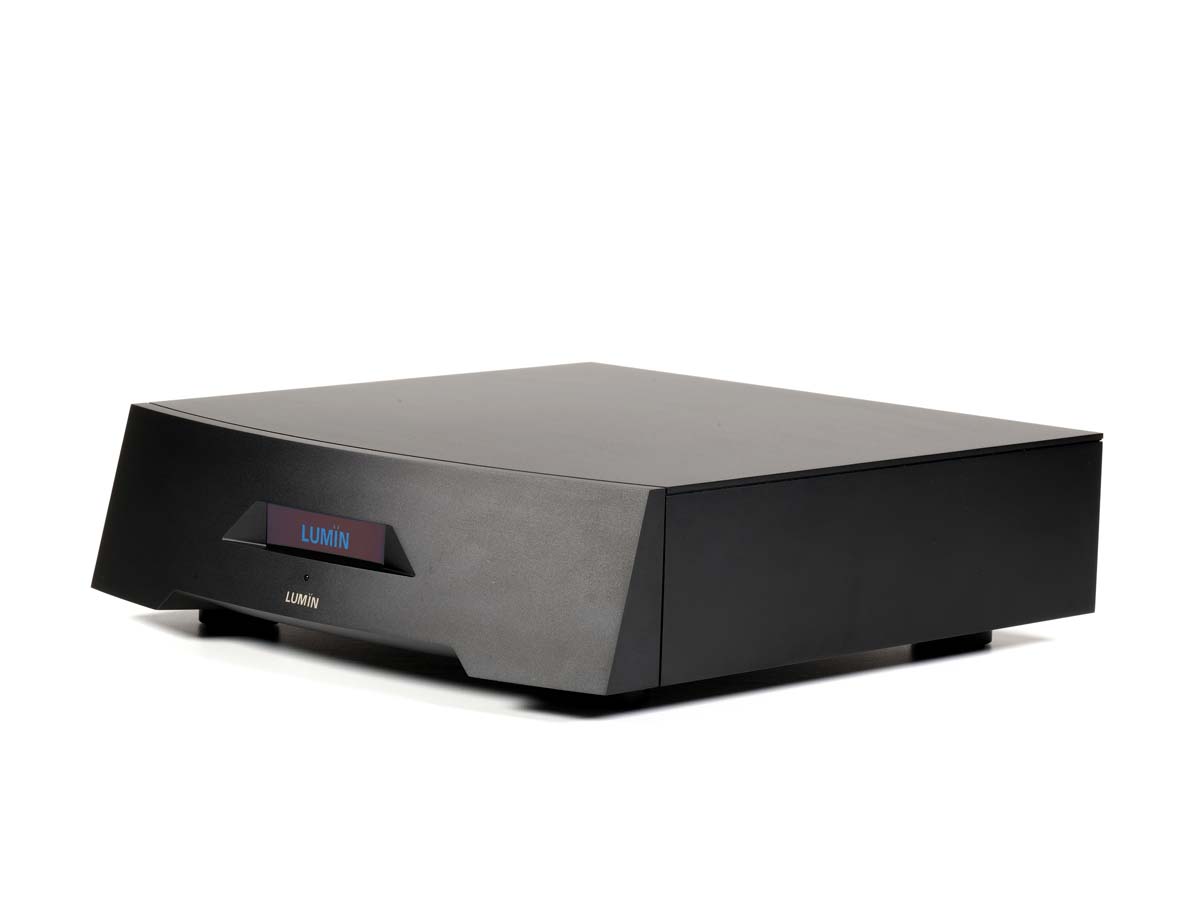
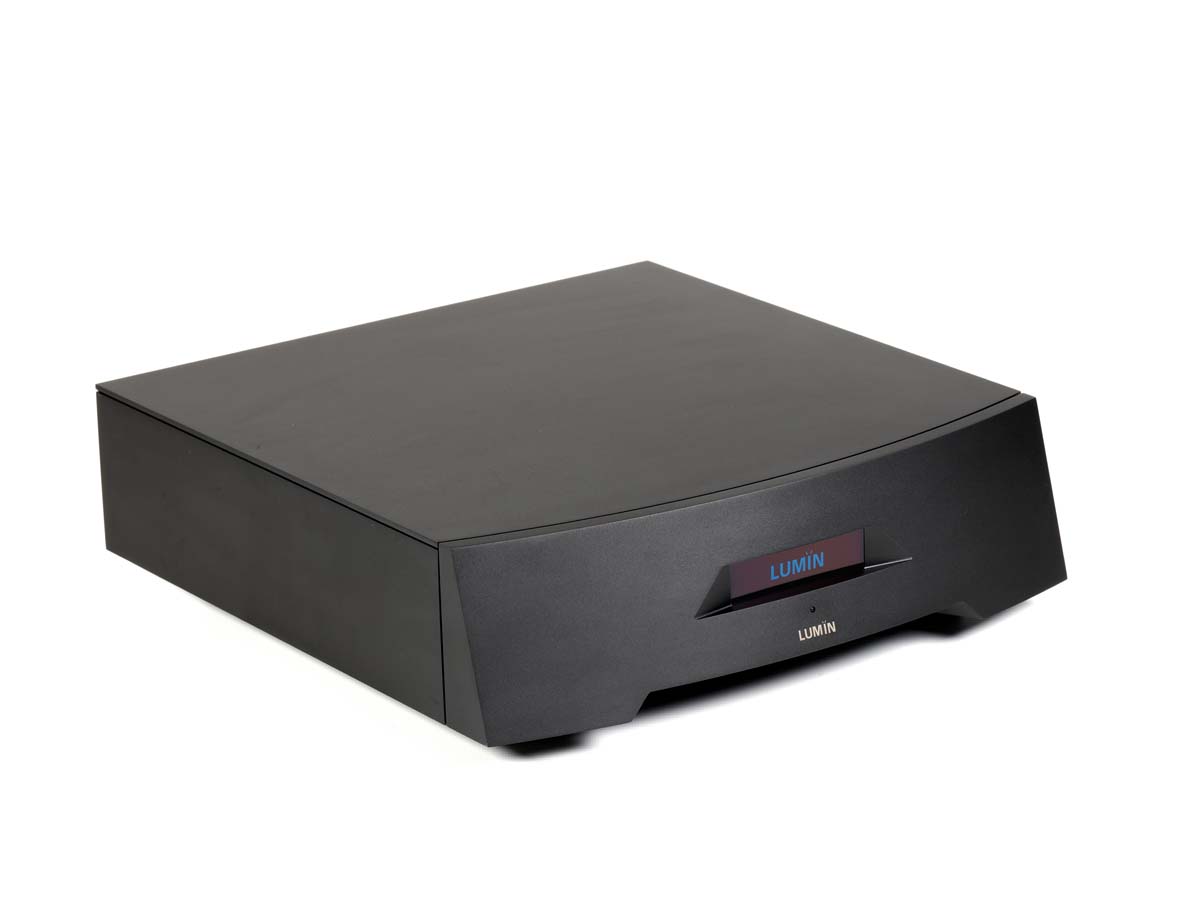
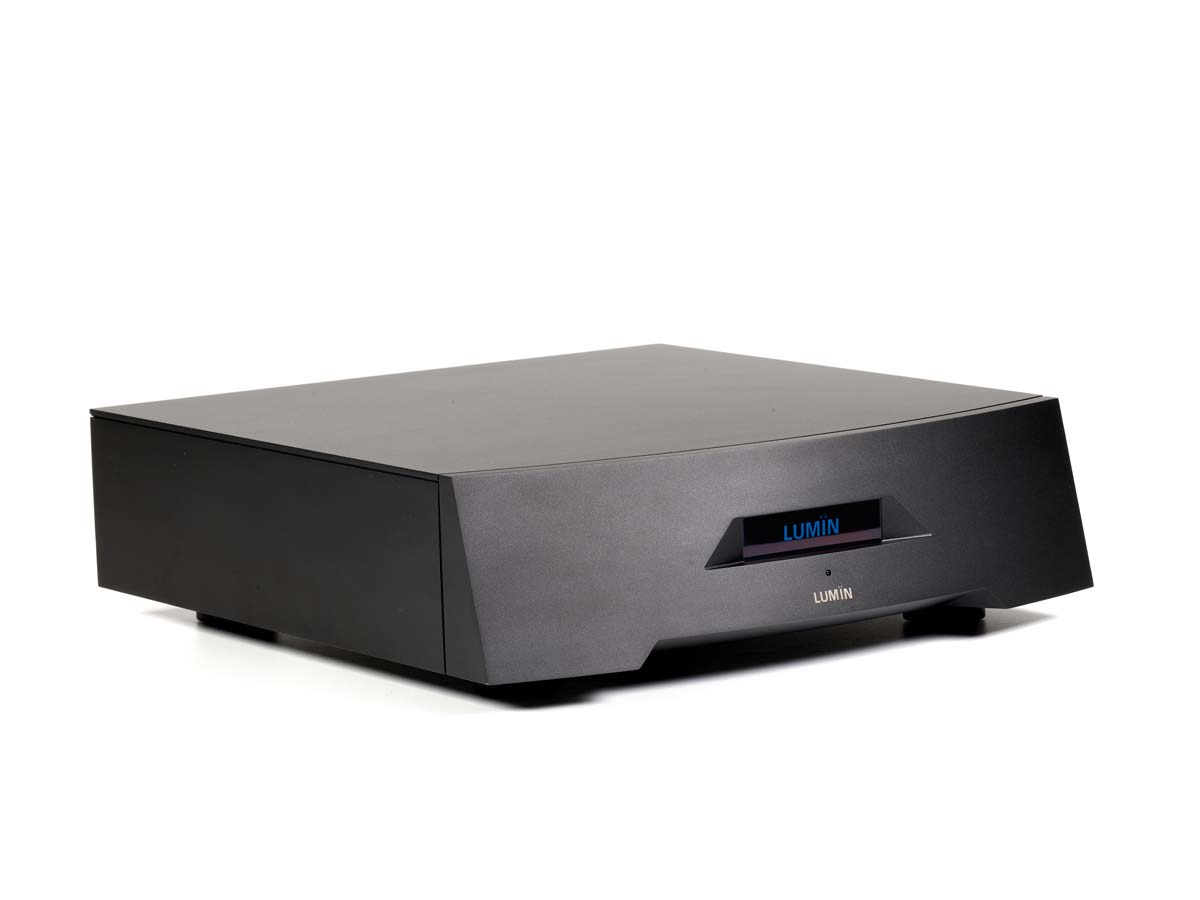
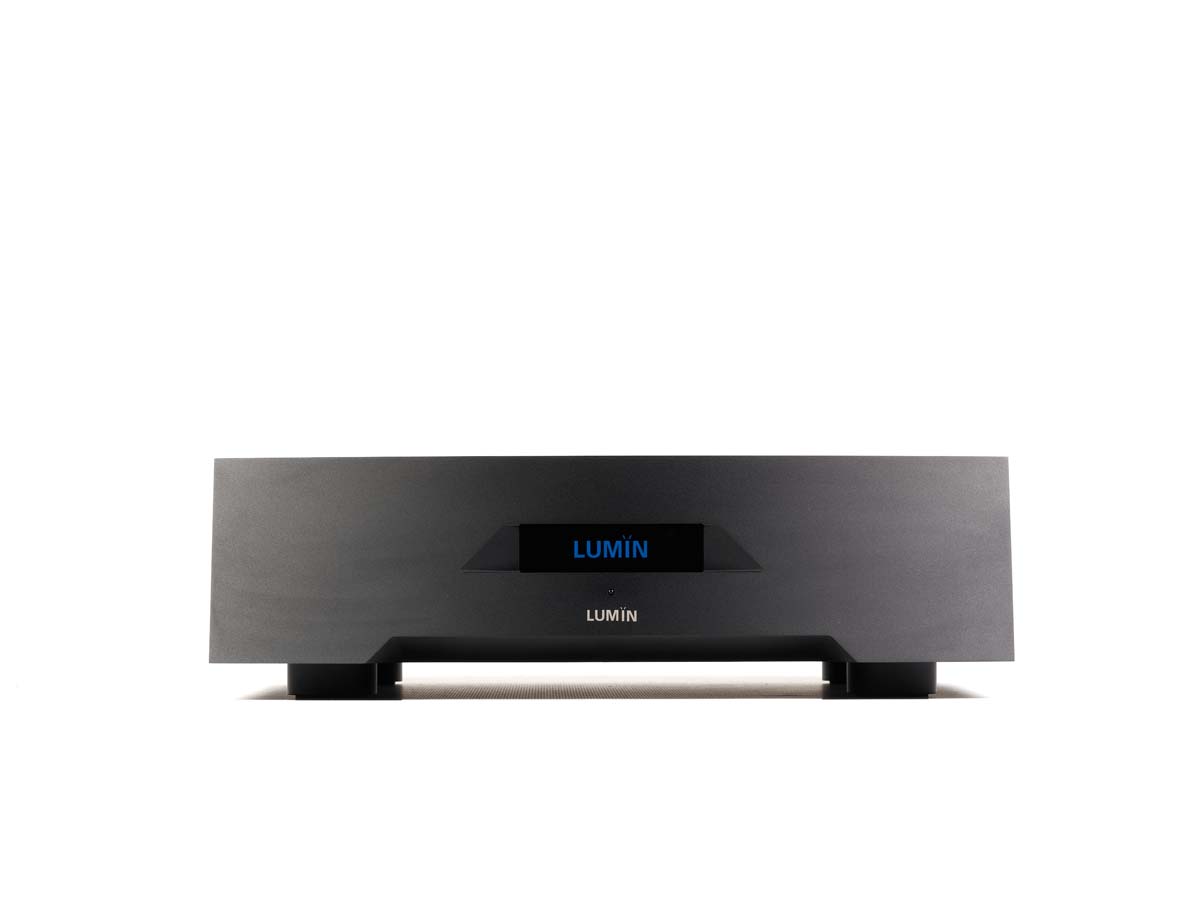
If you want an example of how far music servers have advanced in the last ten years, look no further than Lumin’s new P1 network player. The P1 offers a feature set precisely tailored to today’s music systems, blurring the lines between traditional component categories. The product combines a network streamer and DAC along with extensive preamplifier functions, including ten digital and analog inputs, source switching, and volume control. It even has three HDMI inputs with 4k passthrough and ARC (Audio Return Channel) along with an HDMI output—important features if you use the P1 as part of a multimedia system. Add full MQA decoding and Roon Ready operation along with a sophisticated fully balanced DAC, and you have the makings of a serious product. The P1 doesn’t include integral music storage, but you can add Lumin’s L1, a small outboard hard-disk drive with either 2TB or 5TB of storage. The icing on the cake is the beautiful build-quality and elegant casework. Although not a budget product at $10,000, the P1 offers features and performance that many more expensive servers fail to deliver.
The Achilles’ heel of DAC/preamplifiers has been the digital-domain volume control. These controls adjust the volume by performing mathematical computation on the audio samples, resulting in a loss of fidelity, particularly when the volume is decreased by more than a few dB. Lumin has overcome this shortcoming by licensing a novel digital-domain signal-processing algorithm and volume control that introduces no distortion or loss of resolution. Called Leedh, the technology was first used in the $72,000 Soulution 760 DAC enthusiastically reviewed by Jonathan Valin in Issue 311. I’ve broken out an explanation of Leedh in the sidebar.
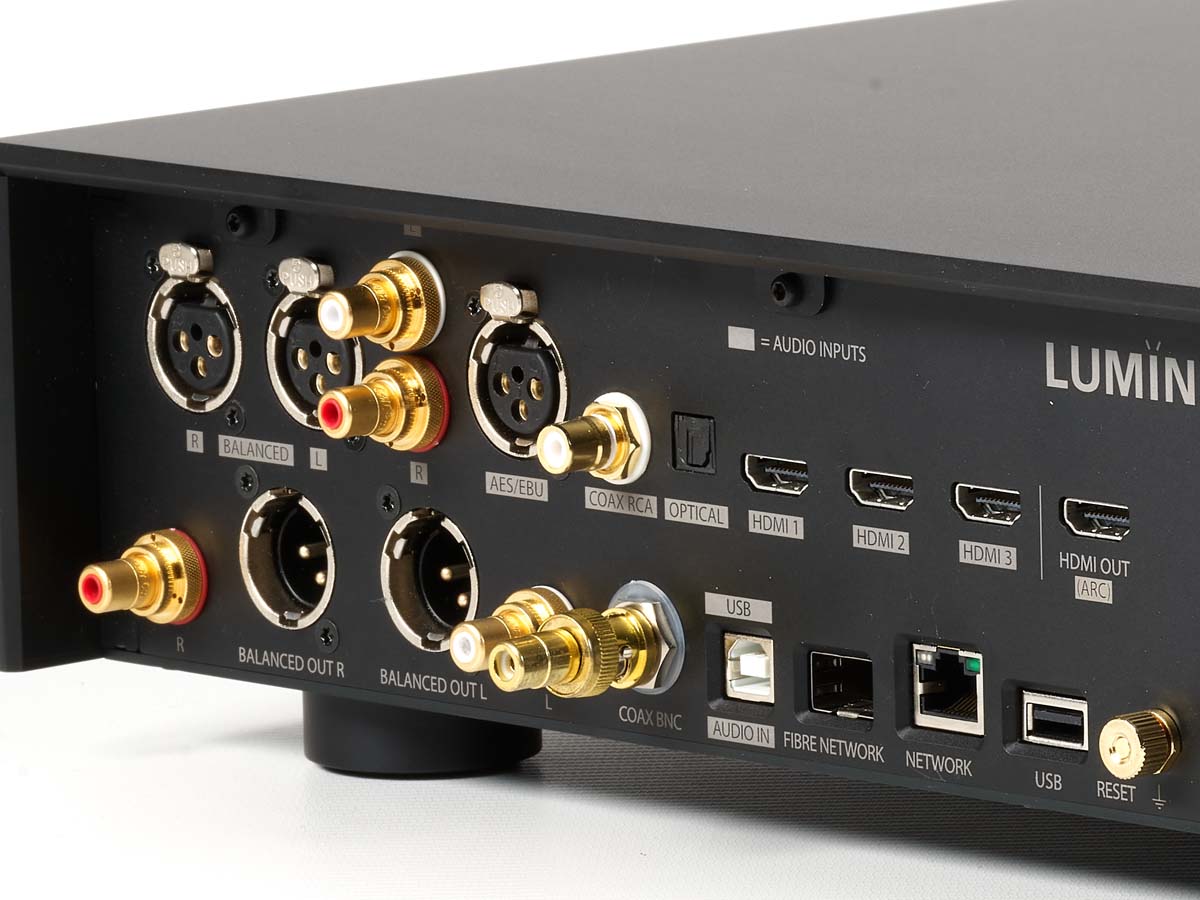
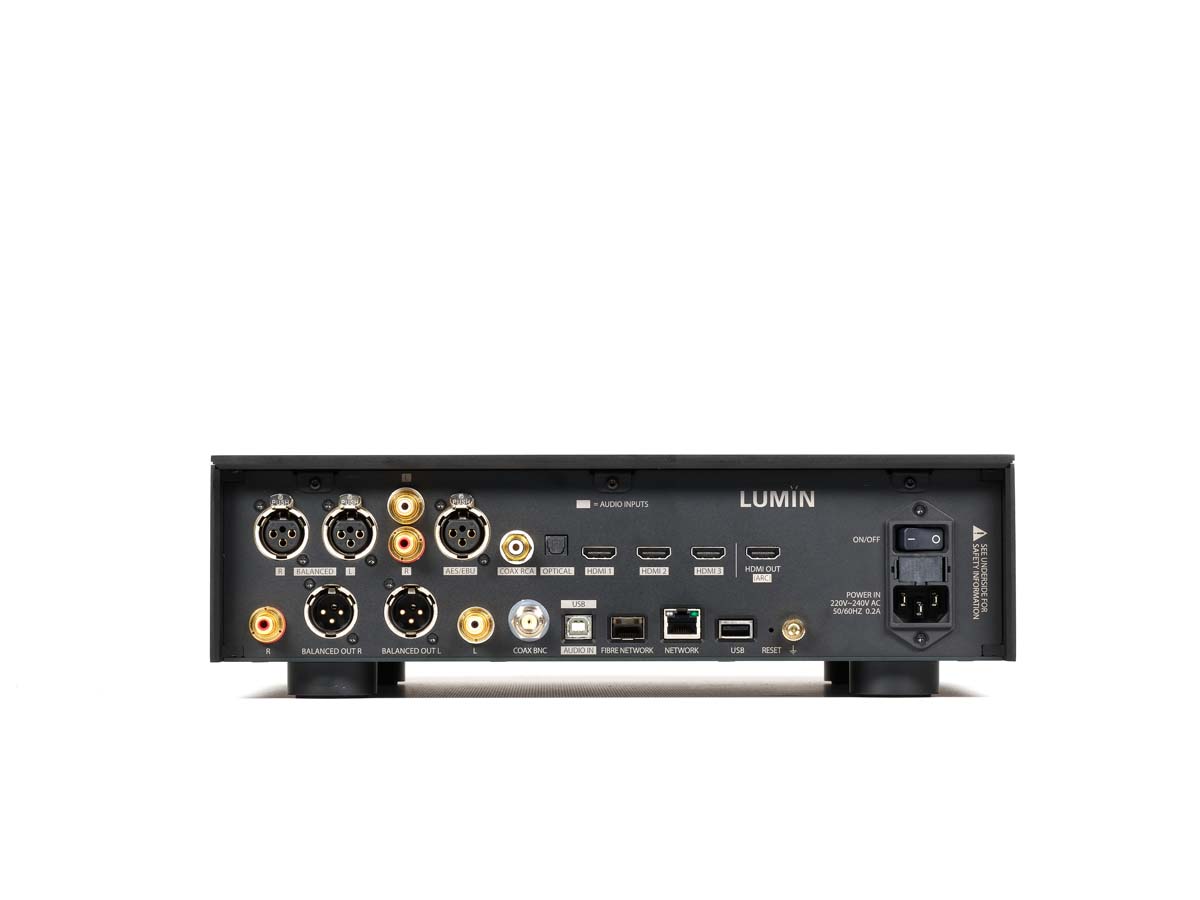
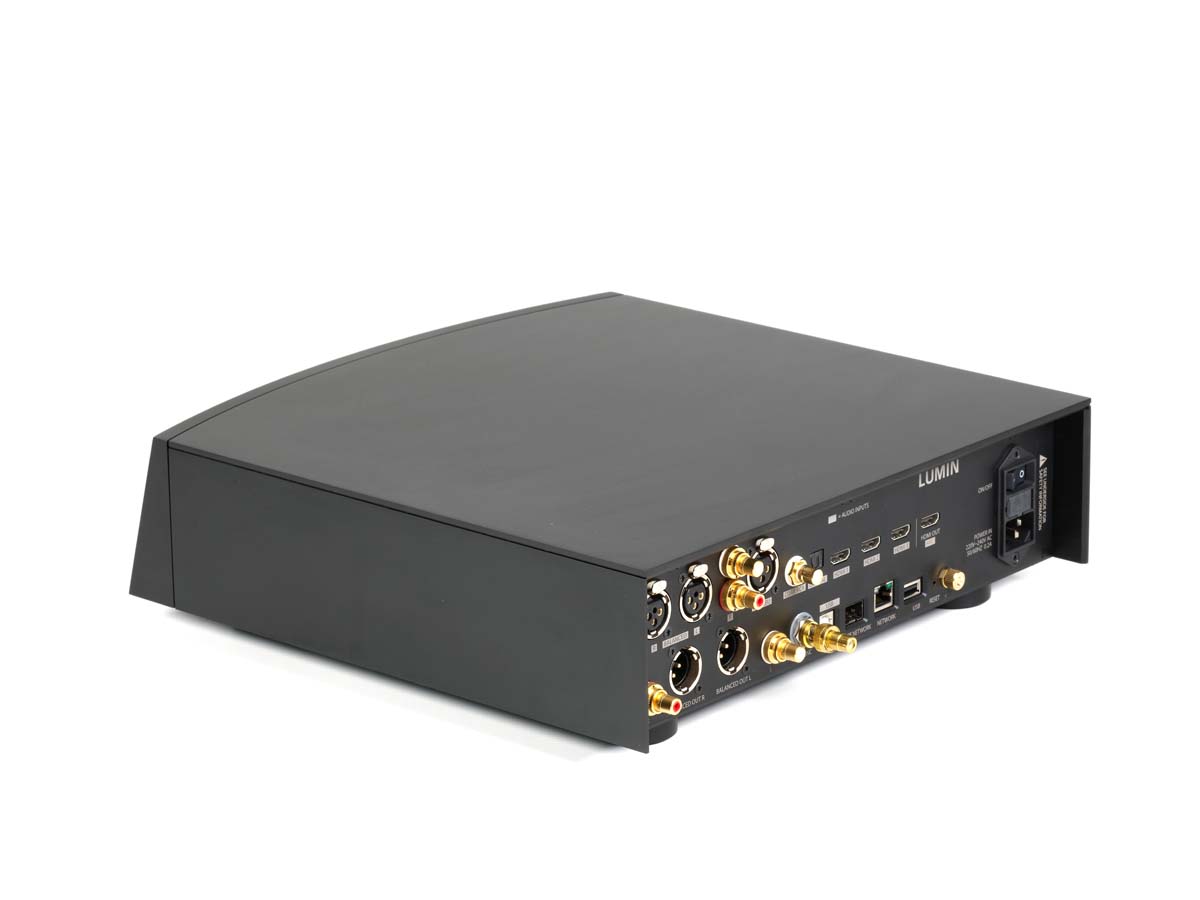
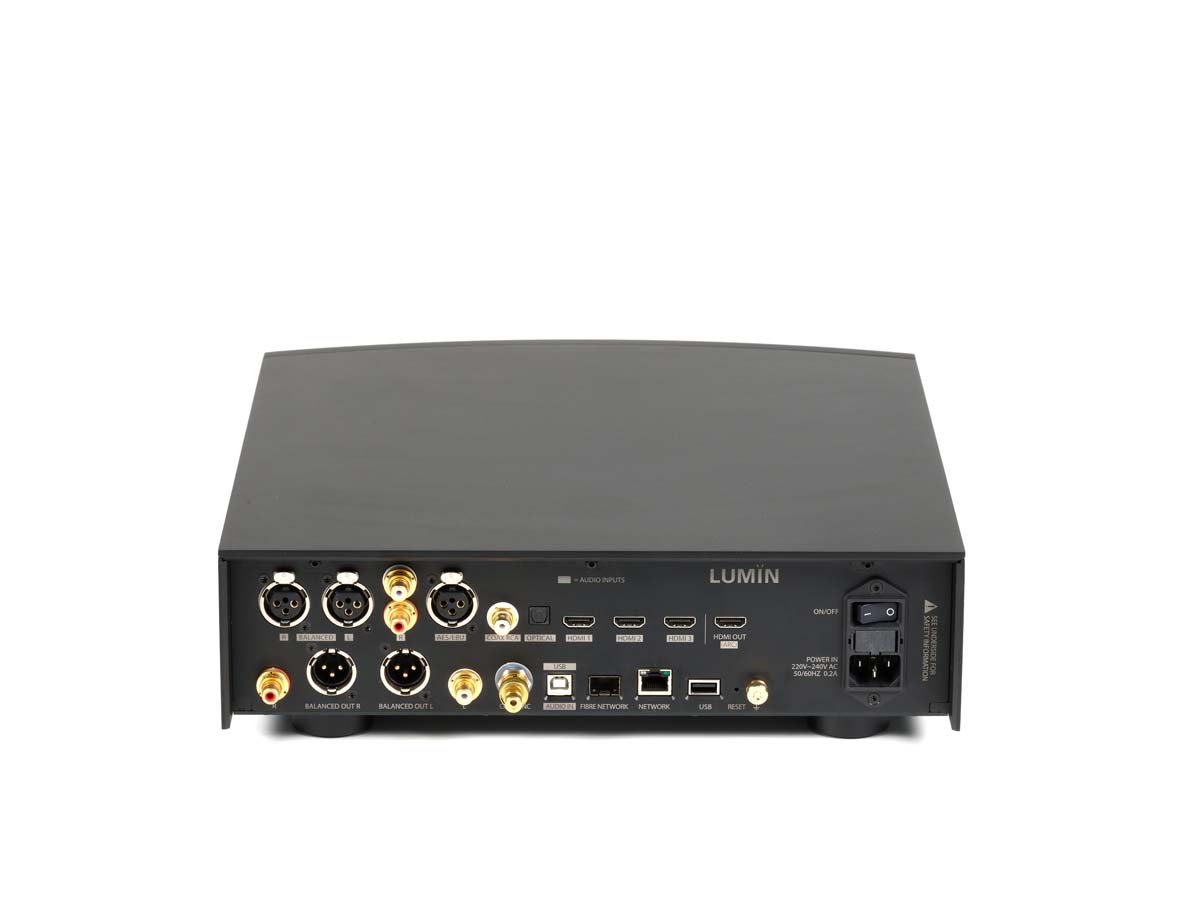
The P1 has a full complement of digital inputs (see Specs & Pricing) along with one unbalanced analog input on RCA jacks and one balanced input on XLR jacks. Because the P1’s volume control operates in the digital domain, analog input signals at one of the two analog inputs are digitized and then converted back to analog. The analog inputs can work in “theater pass-through” mode simply by setting the volume control as fixed rather than variable, or with the volume setting at 100. This sets the P1’s gain at a fixed level so that your AV receiver or multichannel controller sets the volume of each channel in the multichannel system. Without this feature you’d need to adjust the P1’s volume every time you changed the volume on the AVR or multichannel controller to maintain correct balance between the left/right channels and the other speakers in a multichannel speaker array. If you use only your stereo speakers to reproduce TV sound (no multichannel controller or multichannel speakers), the P1 has you covered. With three HDMI inputs and one HDMI output (all 4k-compatible), you simply connect all your video sources (Blu-ray player, streaming box such as Roku, cable box, etc.) to the P1 and run an HDMI cable from the P1’s HDMI output to your TV.
The P1’s analog output can be connected directly to a power amplifier via the unbalanced RCA jacks or the balanced XLR output connectors. Because the P1’s DAC and output stage are truly balanced circuits, a balanced connection to your power amplifier is recommended if your amp has balanced inputs.
An unusual feature is a fiber-optic network input that’s included in addition to the conventional RJ45 Ethernet jack. This optical input allows you to use an outboard switch that has a fiber-optic output to connect the P1 to the network, isolating the P1 from noise on the Ethernet line. I bought a TP-Link MC 220L Ethernet-to-fiber-optic converter and TP-Link TL-SM5520 fiber-optical cable to try this feature of the P1. The pair cost $40.97 with tax. This is my first experience with fiber-optic networking, which some listeners find to be an improvement over copper-wired Ethernet because of the galvanic isolation of the server from the Ethernet line.
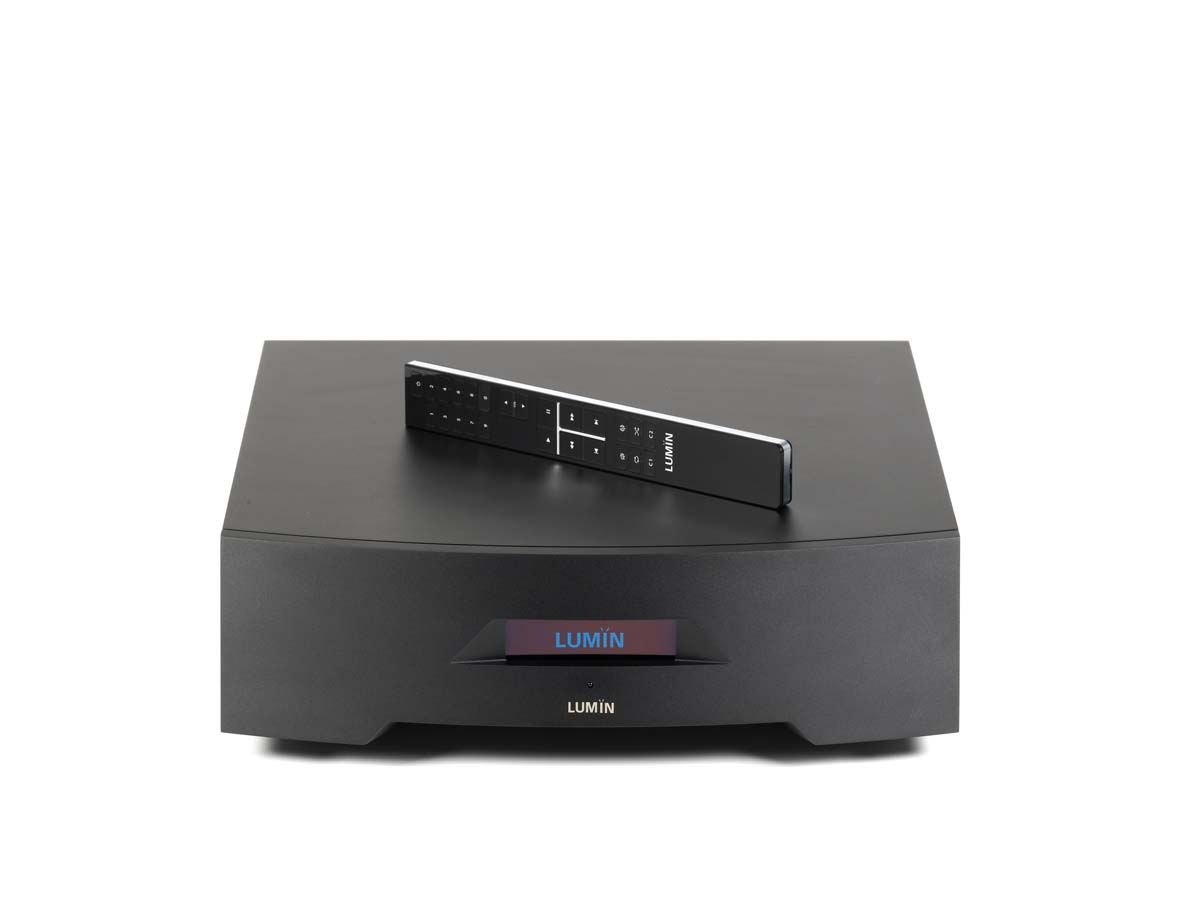
The P1 can be controlled by the free Lumin app or by Roon, the subscription-based music-management software. The Lumin app combines control features specific to Lumin products, such as source switching and volume control along with full music-management with integration of streaming services (Spotify, Tidal, Qobuz, TuneIn) and music stored on a NAS (network-attached storage) drive. A beautifully made remote control fashioned from zinc and acrylic is included for those who prefer a hand-held wand to a phone or tablet.
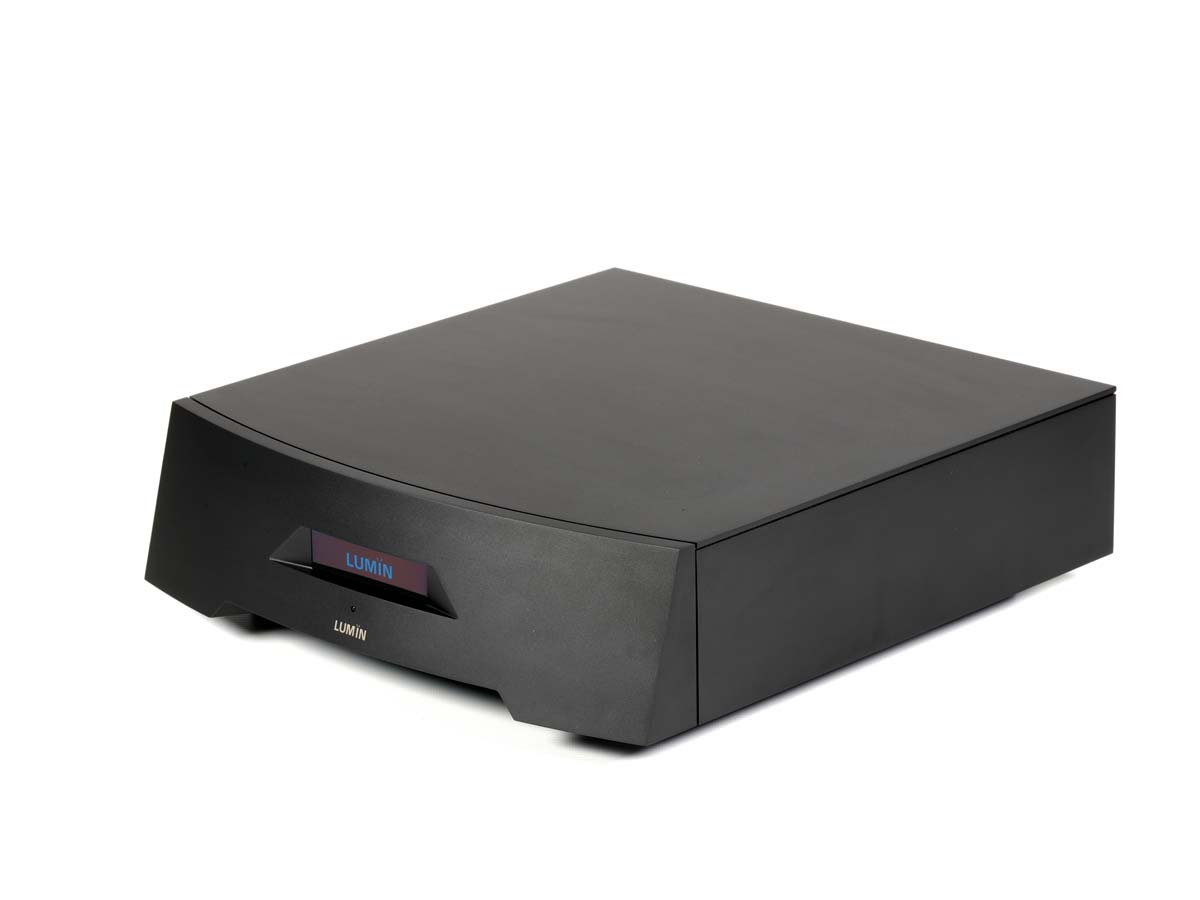
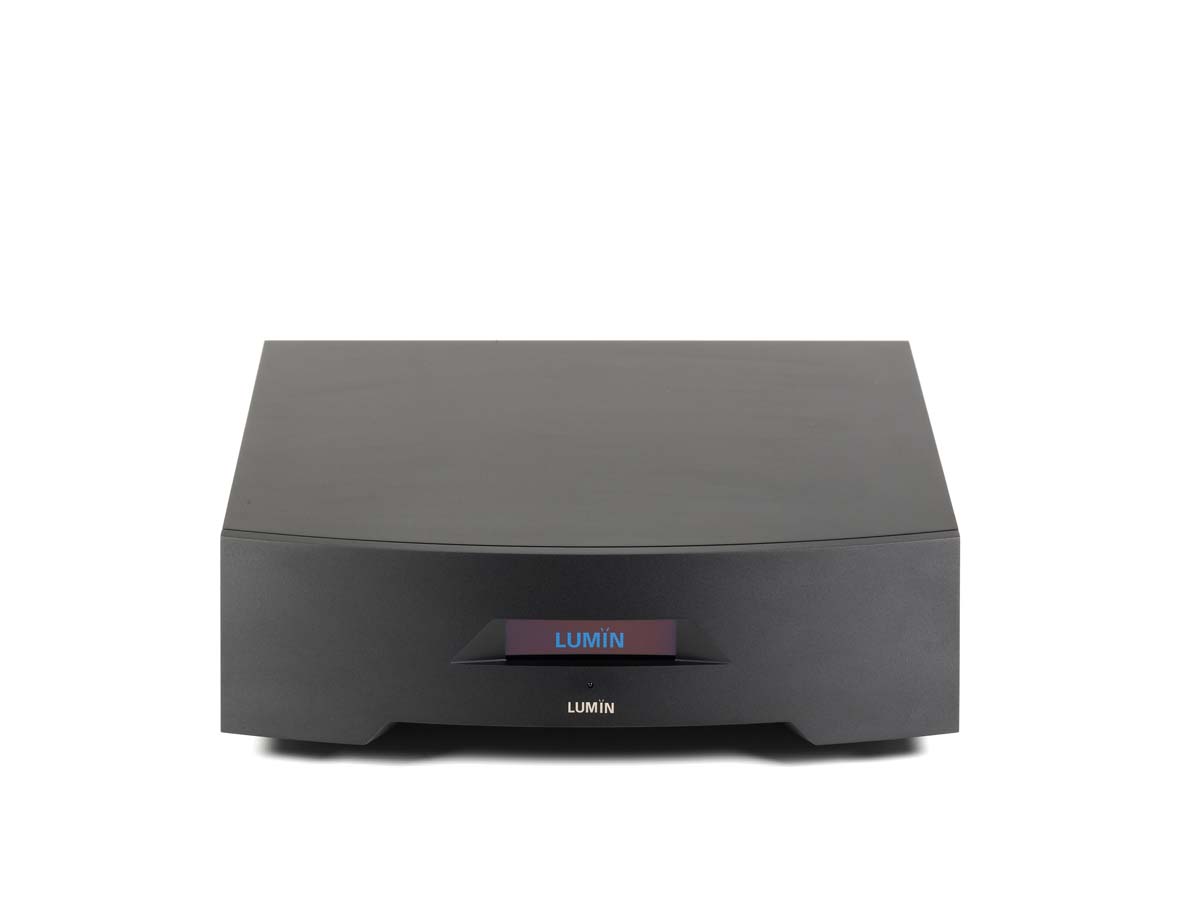
The chassis work and build-quality merit special mention, particularly in a product of this price. The curved and swept-back front panel is machined from aluminum billet, and the way the front panel attaches to the case gives the impression of a monolithic block. The display is deeply inset into the front panel, again conferring a sense of heft and solidity. It’s no coincidence that Lumin is part of a large electronics company, Pixel Magic in Hong Kong, that builds set-top boxes and professional broadcast products; the company brings to the table a high level of in-house industrial design and manufacturing expertise.
As previously mentioned, the P1 has no integral music storage. For that, you’ll need the L1, an outboard hard-disk drive in an aluminum chassis. Lumin believes that including a hard-disk drive within the same chassis as the server and DAC circuits compromises sound quality, which is why it offers storage only in outboard drives. Plus, the P1’s cost is kept lower for those users who stream music exclusively. The L1 is available in two capacities, 2TB ($1200) and 5TB ($1700). Although the L1 is more expensive than buying your own generic drive, the L1 incorporates a bit of software that makes it much easier to set up and configure than an off-the-shelf generic drive. In addition, buying the L1 gets you the customer support from your dealer and Lumin. I simply connected the L1 to my PC via a USB cable, dragged some music files to it, disconnected it from the computer, and attached it to the network. My music library immediately appeared in the Lumin app. I’ve never had an easier experience setting up a music server. Note, however, that music files on the L1 won’t appear on Roon because Roon doesn’t support UPnP devices.
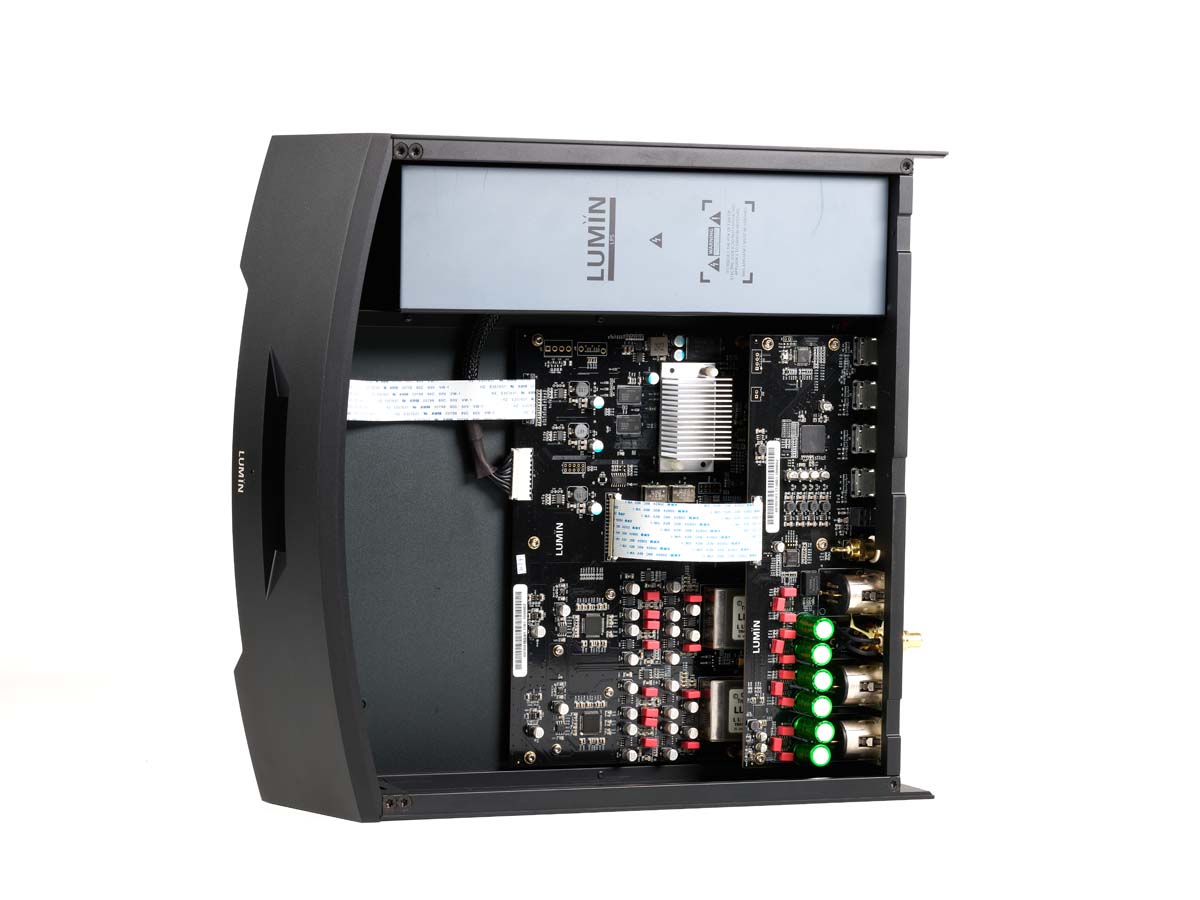
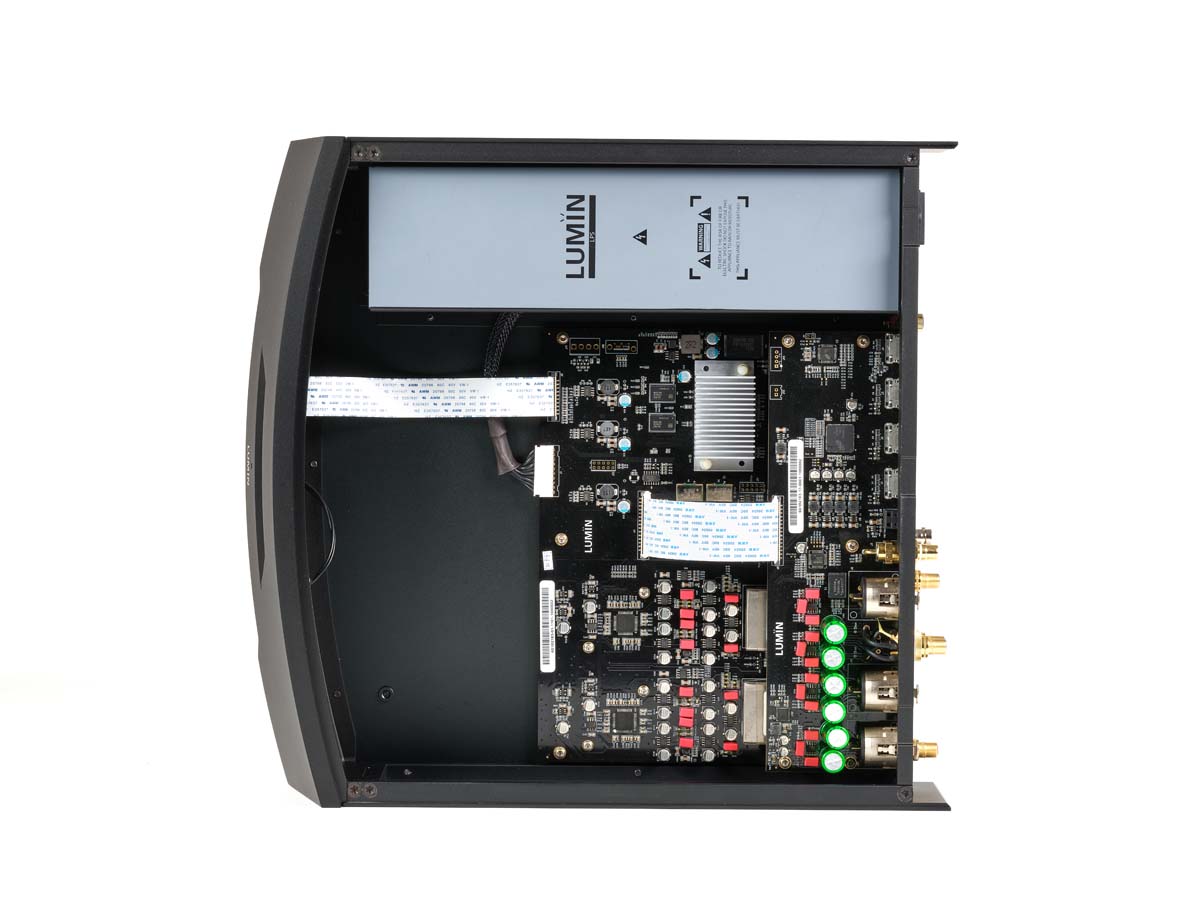
The closer you look at the P1 the more impressive its design appears. The power supply features dual toroidal transformers housed in an isolated chamber within the chassis. The P1’s clock is the same as that developed for Lumin’s flagship X1 streamer. It is based on dual “Femto” oscillators and uses an FPGA (field-programmable gate array) to distribute the clock. The DAC section is truly balanced, with one DAC per phase of the balanced signal. This method is far better—and more expensive—than creating a “balanced” output signal with a phase splitter after an unbalanced single-DAC stage. High-quality ESS ES9028PRO SABRE DAC chips perform the conversion to analog. The balanced DAC output is buffered with dual Lundahl output transformers. Lundahl has been making a wide variety of transformers for professional and consumer audio since 1958. These expensive devices are found in the world’s finest microphones and other pro-audio products. The P1’s output stage is identical to that in the company’s X1 flagship, but the P1 is built around the ESS ES9028PRO DAC rather than the X1’s higher-grade ES9038PRO DAC. Overall, the power supply design, clocking, balanced DAC section, and transformer-coupled output stage suggest that sound quality was a paramount consideration in the design, not an afterthought.
The Lumin app offers a wide range of customization options including how the music-management system displays music, whether a single tap or double tap starts a track playing, and the graphic presentation of music and playlists, for just a few examples. It also provides access to a wealth of features including upsampling options, polarity inversion, DSD-to-PCM and PCM-to-DSD conversion, and a channel-balance control. The app is not as graphically compelling as Roon, nor is it as easy to navigate and manage a music library. That could be, however, simply familiarity: I used the Lumin app for just a few weeks during the review, but I’ve been using Roon nearly daily for years. Unlike Roon, the Lumin app doesn’t auto-fill the artist’s name when searching. When an artist does appear after a search, the app offers you the choice of the artist in general, a playlist by that artist, or a single track. If you want the artist’s discography, you have to tap the “Artist” icon, and then tap it again to select the discography rather than albums on which the artist played or collaborated with another musician. I found this process more time consuming than Roon’s direct approach. Tapping a circle in the top right corner brings up a volume control, with the number inside the circle indicating the volume level. I like that the app shows the digital format including sample frequency, bit depth, and data rate. This information is also displayed on the P1’s front panel along with artist and track names.
Listening
As I mentioned, setting up the P1/L1 was extremely simple and glitch-free. After letting the unit settle in for a few days, I began experimenting to find the P1’s optimum settings, explore Leedh processing, and evaluate the Lumin app with a sonic comparison to Roon. I wanted to find the optimum configuration before critical listening sessions. It is easy to turn Leedh on and off in the app to compare it to a conventional digital-domain volume control, as well as to no volume control. When the volume is set at “100” or the output level is set to “fixed,” both Leedh and the conventional volume controls are bypassed.
When I applied 30dB of attenuation with the conventional volume control, an entire level of low-level detail was shaved off. There was simply less musical information there, from quiet sounds at the back of the mix to the inner detail of instrumental timbre. Percussion instruments sounded like nothing more than transient clicks, the mechanism by which the sound was created was lost. On Norah Jones’ debut album, her voice was harder and a bit coarse with the conventional volume control, and was overlaid with a roughness and stridency, particularly on louder passage in the higher end of her register. When I switched to the same amount of attenuation with Leedh, the sound became more liquid and refined overall, with the low-level detail restored. The bite on the leading edge of the guitar was gone, replaced by a more natural rendering of the instrument’s attacks and dynamics. With Leedh, Jones’ voice became more immediate and palpable, with a human quality missing from the mechanical rendering I heard with conventional digital-domain attenuation. Finally, unlike the conventional volume control that flattened the soundstage and reduced the sense of air, Leedh maintained the presentation’s three-dimensionality and bloom.
I then compared 30dB of Leedh attenuation with no attenuation by making up the volume difference with the CH Precision L10 preamplifier. To my surprise, I heard no degradation with Leedh; the two presentations sounded identical (the L10 was in the signal path for both presentations). It was clearly obvious that this amount of attenuation in a conventional digital volume control was a non-starter sonically, and that Leedh is sonically “lossless,” as the company claims. This is, to say the least, a significant achievement.
Next, I compared the sound quality of Roon to the Lumin app. Much to my surprise, the Lumin app sounded better. Bass reproduction through the Lumin app was tauter, punchier, and better resolved. I could more easily hear the starts and stops of each note, as well as pitch definition. This greater resolution of dynamics, as well as the leaner and tighter rendering, gave music a more propulsive and upbeat quality compared with Roon. The Lumin app also had a more open and transparent top end with a greater sense of air and bloom. I was surprised by this result because I’ve used Roon with several other music servers, including the absolute state of the art, the Wadax Reference Server and Reference DAC. That said, however, Roon has a much better interface and features, and Roon’s powerful tools for discovering new artists and music are unparalleled. I wouldn’t draw any blanket conclusions from this single example.
I auditioned the P1 with its output feeding the CH Precision L10 four-chassis linestage, and with the P1 connected directly to the CH Precision M10 amplifiers without the linestage in the signal path. Considering the P1’s extensive preamp capabilities, I suspect that most users will drive a power amplifier directly. Fortunately, this turned out to be the best-sounding configuration, even though I typically applied 40–60dB of attenuation to realize a normal range of listening levels. When listening to a balanced analog source through the P1’s analog input and no preamplifier, my system required a whopping 60–70dB of attenuation in the P1. Despite this large amount of attenuation, I heard no sonic degradation.
My last setup comparison was to try the fiber-optic network connection in place of wired Ethernet. Again, this made an improvement—the sound was more present, alive, and palpable; the soundstage was deeper with greater dimensionality; and interestingly, the bass was fuller and richer. Lumin cautioned me that the fiber-optic input needs a long time—many hundreds of hours—to break in and sound its best.
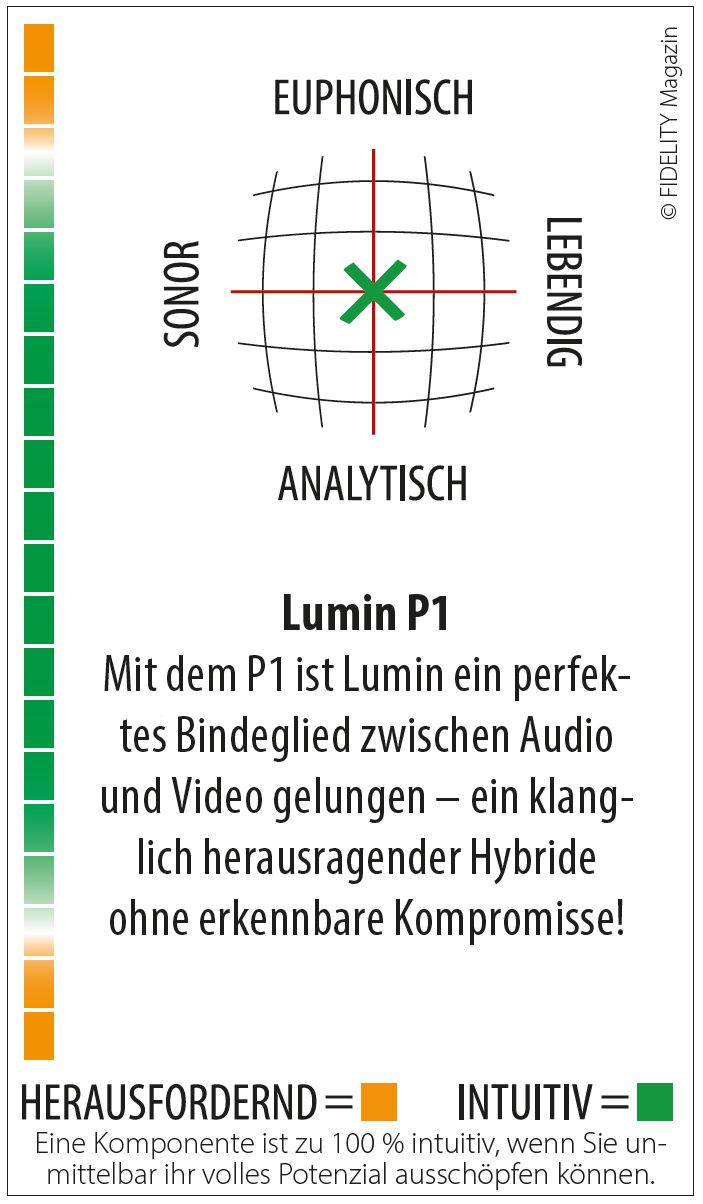
Finally, after much experimentation to find the P1’s best configuration, I was confident that I was getting the best performance possible from the P1. That work paid off, because I discovered that the P1 is an absolutely wonderful sounding and highly musical server. Even under the microscope of reference-level CH Precision electronics, Wilson Chronosonic XVX loudspeakers, and top-of-the-line cables and power conditioning, the P1 proved itself where it matters—communicating the music. The P1 had a refined and sophisticated sound that was more in line with DACs and servers costing much more. Many products at this price have a bit of hardness in their rendering of timbre, a metallic sheen over the treble, a loss of low-level detail, and a flattening of the soundstage into something less than a convincing illusion of three-dimensional space. But the P1 had a surprisingly liquid and engaging reproduction of instrumental texture and tone color. Dexter Gordon’s wonderfully recorded (and beautifully played) tenor on the ballad “I Guess I’ll Hang My Tears Out to Dry” [192/24 Qobuz] had a roundness, liquidity, and warmth that movingly conveyed his powerful and rich tone while also communicating Gordon’s delicate and expressive phrasing. I also heard a halo of ambience around his horn, a halo that expanded with the dynamics of each note—a phenomenon Jonathan Valin has dubbed “action.” Incidentally, I usually listen to this record (Go) as a 45rpm Music Matters release played on a $127k Basis Transcendence turntable—a tough act to follow. Nonetheless, the P1 had the warmth, richness of tone color, freedom from grain, and three-dimensionality of a much more expensive product.
I heard this liquidity of timbre and lack of hardness across a wide range of vocals as well; they had a distinct sense of presence without sounding forward. I really enjoyed the relaxed and natural quality to vocals that encouraged higher playback levels and “leaning in” to the performance rather than tightening up from feeling assaulted. The P1 rendered the human voice in a remarkably natural way rather than sounding slightly synthetic or artificial. A few nights ago, I was making dinner with the nearby listening-room door open and Diana Krall’s outstanding album Live in Paris playing inside the room. Even from another space, listening as background, I could hear the P1’s utter naturalness on her vocals—a decidedly human quality—that few components of any price get right. I had to revisit this album later that night if only to hear, with my full attention, her definitive interpretation of Joni Mitchell’s “A Case of You.” If you judge a component by how powerfully it communicates the expression of the lyrics and the singer, then the P1 is outstanding by any measure. I attribute this reaction to the P1’s lack of glare and grain in the midrange, its treble smoothness, and overall sophisticated and refined sound that emphasizes musical values rather than hi-fi fireworks.
Although this sounds like it could be a recipe for bland politeness, the P1 is one of the more dynamically thrilling and rhythmically propulsive DACs I’ve heard. Lots of DACs have dynamic punch and transient speed, but the difference is that the P1’s leading-edge transients aren’t accompanied by etch and hardness. The P1 has fabulous snap and speed, but not in a way that makes you wince. The pop of a snare drum was much more nuanced and textured than what I usually hear from digital; rather than sounding like a burst of white noise, the lower-frequency components of the drum that gives the instrument body and weight were also thrillingly conveyed. I also heard this same sense of body on acoustic guitar; the rich resonance of the instrument wasn’t overlaid by an overly aggressive and steely attack of the strings. As a result of the P1’s speed and dynamic prowess, coupled with a relaxed and intimate character, I found myself quickly immersed in the music in every listening session. This isn’t to say that the P1 blunts high-frequency transients or sounds closed-in through the upper octaves. The P1 had a full measure of treble energy, life, and top-octave air, but that energy had a pristine clarity free from grain and grunge.
Soundstage depth and three-dimensionality were similarly impressive. The Eric Clapton/B.B. King album Riding with the King [Tidal MQA] sounds like it was recorded live in the studio, with lots of leakage between microphones that almost give the album the feel of a live performance. Steve Gadd’s drum kit was centered way in the back, with palpable air between him and the lead performers. When Clapton’s voice enters, it was startling in its immediacy and palpable location within the recorded acoustic. I heard the P1’s ability to present an expansive and realistic sense of space on Pictures at an Exhibition on Reference Recordings, particularly the way the lead tuba part on “Bydlo,” which is set back in the soundstage, illuminates the hall’s acoustics.
The P1’s bass was well defined and had plenty of weight and heft in the bottom octave. The presentation was firmly anchored, tonally and rhythmically. The bass was nicely textured as well, with a warmth and density of tone color.
Some audio components have a kind of ineffable magic that transcends “good sound” and enters the realm of communicating the music in a more powerful and involving way. This quality is hard to pin down to any one sonic criterion, or even combination of sonic attributes, but it’s unmistakable when you hear it. It is likely the result of an absence of sonic artifacts; your brain’s processing power is devoted to fully experiencing the musical expression rather than to mentally correcting the sonic flaws. The catch-all term “musicality” is perhaps the best descriptor of this elusive aspect of music reproduction. Whatever you want to call it, the P1 possesses this quality, delivering an experience that is musically authentic and immersive.
Conclusion
The Lumin P1 network player is a standout in so many ways. Its feature set, which combines network streaming, a high-quality DAC, and a multi-input preamplifier, is perfectly suited to today’s music systems. With full MQA decoding and Roon-Ready status, the P1 leaves no important item off the table.
Beyond these capabilities, however, the P1 solves a fundamental problem with digital-domain preamplifiers—the distortion introduced by their volume controls. By incorporating the sophisticated Leedh volume-control processing in the P1, Lumin has overcome this previously intractable limitation. It’s important to note that the P1 delivered the musical performance I’ve described when I was driving the power amplifiers directly via Leedh with typically 35–50dB of attenuation—a remarkable result that would be impossible with a conventional digital volume control.
But the real star of the show is the sound quality of the P1’s DAC. When ideally configured, the P1 is not just capable of good sound, but also of a powerful and immersive musical experience. This is a great-sounding DAC, and one that would have received my enthusiastic recommendation if it were simply a bare-bones $10k DAC. The P1 is so good that it will benefit greatly from clean AC power, high-quality cables, using the fiber-optic input, and driving a power amplifier directly.
Audio products that combine many capabilities into a single component in the pursuit of low cost or convenience often do so at the expense of sound quality—a case of “jack of all trades, master of none.” But the Lumin P1 defies that stereotype—I’ll call it a “master of all trades.”
Specs & Pricing
Type: Network music server and preamplifier
Digital inputs: 1x coaxial on RCA, 1x AES/EBU, 1x TosLink optical, 3x HDMI, 1x USB, 1x Gigabit Ethernet (RJ45), 1x fiber network, 1x non-audio USB (for firmware upgrades)
Digital outputs: 1x HDMI passthrough, 1x coaxial on BNC jack, 1x USB audio
Analog inputs: 1x unbalanced on RCA, 1x balanced on XLR; theater pass-through option
Analog outputs: 1x unbalanced on RCA, 1x balanced on XLR
Formats supported: Up to 192kHz/24 bit and DoP to DSD64 on AES/EBU and coaxial; up to DSD512 and PCM 384/32 on USB
Digital processing: Leedh
Features: Full MQA decoding, Roon Ready
Dimensions: 350mm x 380mm x 107mm
Weight:
Price: $10,000
SOURCE SYSTEMS LTD. (U.S. Distributor)
San Clemente, CA 92672-6000
(949) 369-7729
[email protected]
sourcesystemsltd.com
Associated Equipment
Loudspeakers: Wilson Audio Chronosonic XVX, Wilson Audio SubSonic subwoofers (x2), Wilson Audio ActivXO crossover
Analog source: Basis Audio A.J. Conti Transcendence turntable with SuperArm 12.5 tonearm; Air Tight Opus cartridge; CH Precision P1 phonostage with X1 power supply; DS Audio ST-50 stylus cleaner, Levin record brush, Degritter ultrasonic LP cleaner
Amplification: CH Precision L10 Dual Monaural linestage; CH Precision M10 Dual Monaural power amplifiers
AC Power: Shunyata Everest 8000 conditioner, Omega and Sigma NR V2 power cords; Shunyata AC outlets, five dedicated 20A lines wired with identical length 10AWG
Support: Critical Mass Systems Olympus equipment racks and Olympus amplifier stands; CenterStage2 isolation, Arya Audio RevOpods isolation, Wilson Audio Pedestal
Cables: AudioQuest Dragon balanced interconnects, AudioQuest Dragon Zero and Dragon Bass loudspeaker cables
Accessories: The Chord Company GroundARAY noise reduction
Acoustics: Acoustic Geometry Pro Room Pack 12, ASC 16″ Round Tube Traps
Room: Purpose-built; Acoustic Sciences Corporation Iso-Wall System
The post Lumin P1 Network Player/Preamplifier appeared first on The Absolute Sound.