Tag Archives: Rock

Music Interview: Paul Draper

Paul Draper’s new record, Cult Leader Tactics, is a darkly funny and edgy concept album that’s a satire on the genre of self-help manuals – in fact, the former frontman of ‘90s indie‑art-rockers Mansun has even written one to accompany it.

The four-CD deluxe version includes a 60-page hardback book that’s a guide to getting ahead in work, life and love by acting in a Machiavellian manner and employing dirty tricks and cult leader tactics to do so – it’s a set of rules on how to be become a complete cult in the music industry.

From the ‘70s heavy rock riffing of the album’s title track, which opens the record, to the ‘80s, Tears For Fears-style synth-pop of ‘Dirty Trix’, the anthemic, Mansun-like earworm, You’ve Got No Life Skills, Baby!’, the robotic Human League-down-the-disco of ‘Everyone Becomes A Problem Eventually’, the Beatlesy ‘Annie’, and the epic closer, ‘Lyin Bout Who U Sleep With’, which features a choir of almost 300 fans, Cult Leader Tactics is a brave, adventurous and always interesting record.

Co-produced by Paul ‘P-Dub’ Walton (Massive Attack, The Cure, Björk), it even includes a collaboration with prog-popper, Steven Wilson – the moody, Depeche Mode-meets-Duran-Duran electro-pop song is called ‘Omega Man’, was inspired by lockdown, and is named after the post-apocalyptic 1971 film in which Charlton Heston plays a survivor of a biological plague that has wiped out most of humanity.

Draper is no stranger to cults – Mansun, who split up in 2003, were named after infamous convicted murderer and cult leader Charles Manson and were also known for their obsessive fans.

“We’ve still got them!” he says, speaking to me from his home studio, The Kitchen.

“We toured a lot and we put out a lot of EPs. Although we weren’t a top radio band or we didn’t sell ten million albums, we did sell millions of records and built up a hardcore fanbase. Apart from the ones who’ve died, a lot of them are still there – they have conventions and fan groups.

“Every now and then, one of them will turn up and tie a horse to your front gate! You get all sorts of stuff… There’s a lot of people out there who love that band – our first album sold a million copies.”

SH: This is your first solo album in just under five years. Did COVID hold this record up? How did the pandemic affect it?

PD: The last one, Spooky Action, came out in August 2017 – when I put that record out, I wasn’t going to do any gigs, but it went into the Top 20 in the UK, and sold pretty well abroad, in places where Mansun had a fanbase, like the States, China, Japan, and Continental Europe.

So, I got on the road and toured North America with Steven Wilson, and played in Europe, China and Japan – we did three UK and Ireland tours and sold out a lot of shows. I’d written a lot of songs on the road, so I got in the studio and blitzed it – I got nine songs done towards the end of 2019, but I was a track short. Then COVID kicked in.

It was pretty much a rock album, but I started working remotely, went back and scrapped one song, then worked on three others – ‘Everyone Becomes a Problem Eventually’, ‘Dirty Trix’ and ‘Omega Man’, which is a collaboration with Steven Wilson – in my home production room. I used all my keyboards and drum machines. The whole thing went back 18 months.

I finished the album off during 2000, for a January release in 2022, and now I’m doing a 21-date UK tour. I just want to get out and have a normal life – I’m a jobbing musician. Without that, I don’t have a purpose in life. It’s been tough, but I’ve got there.

So, Cult Leader Tactics turned out a very different record than it was first intended? It’s got some rock songs on it, but it’s also very electronic at times…

Yeah – I was originally going to make a rock record. The first two songs – ‘Cult Leader Tactics’ and ‘Internationalle’ – are both straight-ahead rock songs, but with a few blips and synth bits – that was how I envisaged the album unfolding.

But what happened was that lockdown came and I couldn’t work with my band – we had one session to do, for three or four tracks… I was stuck at home, so, out of necessity, I recorded some electronic tracks. The album does jump from rock tracks to just me on my own, playing synths.

On ‘You’ve Got No Life Skills, Baby!,’ my drummer, John Barnett, plays on it, but I did everything else over it – it’s a hybrid.

I had a look at the video for it on YouTube – I thought the song sounded like something from the ‘80s, but people had commented that it sounded like Mansun’s ‘Stripper Vicar.’ I thought, ‘oh yeah – I’ve just repeated myself again…’

You’ve only so much brain capacity and ideas…’ I just be myself.

“‘Omega Man’ was a remote collaboration between me and Steven Wilson – we were both stuck in our studios, so we decided to do a track about what was going on.

I sent it to P-Dub, who has a home studio called The Loft – it’s in his garden.

Paul Draper
Images by Tina Korhonen

I picked the best songs from the pre-COVID sessions – I went back and changed some of the lyrics, like on ‘Internationalle’, so they were a bit more COVID-related. I added some little touches. That song was about Boris Johnson using Brexit as a career move, but then it morphed and became more about COVID.

Finally, I sent some tracks to Gam [Gamaliel Traynor], who plays keyboards with me live, and is in a band from Peckham, called Sweat, and asked him to add some strings.

He recorded them and sent them back – P-Dub mixed them in. Gam also did a medley of the melodies and the root chords of the songs, so we dropped that onto the album. What started out as a straight-ahead rock record became quite an eclectic one sonically, skewed by the whole COVID experience.

Let’s talk about some of the songs in more detail. The title track, which opens the album, has a real ‘70s rock guitar riff – it sounds like Led Zeppelin…

On the demo, I had this riff that was generic rock-sounding, but when we recorded it with the band, my guitarist, Ben [Sink] played it through a 1970s Fender Bassman amp and it immediately sounded like Led Zeppelin or Deep Purple. I wasn’t keen on it – I thought it was too ‘70s rock…but it just happened. It evolved.

On ‘Dirty Trix’ and ‘Everyone Becomes A Problem Eventually’ you use vintage synths and drum machines. Do you collect old electronic gear?

Yeah. I’ve just bought a couple of things off eBay – an old Ensoniq Mirage sampling keyboard, which sounds amazing, and a Boss Dr. Rhythm drum machine. I’m always buying odd bits – I have Moogs and Oberheims.

P-Dub collects Italian synthesizers, like Siel, so there’s a lot of those on the album. He had an Italian wife once, so there must be some connection there.

The main drum machine I used on the album was a Sequential Circuits Drumtraks – I’ve always used drum machines.

Mansun was an odd band – we were a synth-pop rock outfit, but our record company wanted us to sound like a Britpop band. We were lumped in with all that. We were a guitar band from that era, but we always had lots of keyboards on the records, so we weren’t that fashionable. I’ve not been in fashion – then or now – so I’ve just kept in my own bubble and made a living from it. I still do it because I enjoy it.

When I was in Mansun, I was a gear head – I used to make lists of things I wanted to use, like specific reverbs and delays. I tried to make something sound like a David Bowie drum kit from 1972 – I like sonics, studios and recording, as well as putting the songs together. I can get involved with the mixing, the mastering and production, as well as playing.

In the box set, we’ve done a 5.1 stereo surround mix of the new album, on a DVD, with the Hi-Res audio files. I love doing that – if you’ve got the gear, the time and the inclination, it’s amazing.

I’m a huge fan of immersive audio. In the past, it never took off, but you had to have a lot of money for it – a hundred grand minimum to wire-in a stereo surround sound home cinema experience in your basement. It was the preserve of the rich, but now, throw up a few Bluetooth speakers around the lounge, have the TV as your main thing, and you’re in business.

When we’re doing our surround sound mixes and you sit in the middle, it’s phenomenal.

My co-producer, engineer and mixer, P-Dub, mixed the entire Björk catalogue into immersive sound, which took him a couple of years. It’s off the scale.

How did the cult leader concept for the album and the book come about?

On Spooky Action, I’d exorcised my demons of coming out of my rock band, so I thought I’d then go back to the start and do what I did on Mansun’s Attack of the Grey Lantern [debut album] which was a satirical, Monty Pythonesque dark comedy on my life experiences.

Whereas Attack of the Grey Lantern was my life experiences as a young person, Cult Leader Tactics is my adult life. It’s a fictitious, satirical dark look at a self-help manual – how to get on in life by being a massive cult!

It gets really sinister, but at the end of album, it says that if you live by those rules, it will be a disaster for everyone, so just go with peace and love, man – it’s the only way.

The last song on the album [‘Lyin Bout Who U Sleep With’] is the epilogue.

I wrote the book – some of it wasn’t publishable… When my manager and my record company read it, they said, ‘You can’t put that out as it is – you need to put a disclaimer in it.’ So, it says it’s satirical and isn’t intended to be taken seriously.

Cult Leader Tactics is a satirical play on the idea of a concept album – it’s a parody.

I’ve come out the other side of the COVID lockdown with a record that’s my all-encompassing story of what happened to me – it’s about getting screwed over and if you try and play it straight in this world, you’ll end up nowhere. But, at the end of the day, I say it’s better to be an idiot, meek or a fool than a Machiavellian sociopath in your chosen field or in society in general. Let there be love.

You’ve always had a thing for cult leaders, haven’t you? Mansun were named after Charles Manson…

Yeah – and we did songs about L. Ron Hubbard, although some people would argue about whether he’s a cult leader…

I was looking at Jim Jones [the Jonestown Massacre]. What he did wasn’t nice, but he looked pretty snappy, in black, with a pair of shades on, so in the video I did for ‘You’ve Got No Life Skills, Baby!’, I wore some sunglasses – I went on eBay and Googled ‘Jim Jones sunglasses’ – but when the video went live, some people said I looked like George Michael…

Maybe Mansun were a bit Jim Jones/George Michael. I should’ve stopped trying to be Johnny Rotten and embraced my inner Jim Michael… or maybe George Jones… I’ve always thought of myself as a bit of an indie George Michael – careful what you wish for.

Who’s the biggest cult in the music industry?

I’ve met a few, but they’d probably all say the same about me.

Paul Draper’s Cult Leader Tactics is out now on Kscope.

pauldraperofficial.com

Back to Music

The post Music Interview: Paul Draper appeared first on Hi-Fi+.
Topping the Charts Without Even Trying

The title of Kate Bush’s 2018 book of lyrics, How to Be Invisible, suggests a faded pop star who lacks cache in the modern music world. It’s true that Bush avoids the limelight, but this retiring figure has a way of staying in the public eye. Last year her 1980 single “Babooshka” went viral on TikTok, with thousands of homemade videos featuring that song; apparently Bush’s mystical aura and cloaked appearances in the 40-year-old official music video appealed to that subset of TikTok known as WitchTok. All that was small potatoes, however, compared to more recent events. This summer the reclusive British singer, songwriter, keyboardist, dancer, performance artist, video creator, producer, and feminist icon stepped back into the limelight when her 1985 hit “Running Up That Hill (A Deal with God)” climbed pop charts worldwide, topping the UK rock chart and peaking at No. 4 on the Billboard Hot 100. In early June, it became the No. 1 song on Spotify’s daily global chart with 8.42 million streams; as of July, TikTok videos featuring the song have been viewed more than 895 million times.

The sudden ubiquity of “Running Up That Hill” can be traced to its prominent placement in the fourth season of Stranger Things, the popular Netflix sci-fi fantasy series set in the 1980s. “I think it’s struck a chord for so many people because it really touches on the alienation and emotional struggle that so many of us go through at one point or another in life, especially as teenagers,” the show’s music supervisor Nora Felder told the Washington Post. “Music gives us validation and strength, especially when we aren’t feeling supported or understood by others.”

Bush’s poetic, cinematic, and often dreamlike songs are filled with Jungian imagery, Celtic mysticism, sensuality, nature, death and deception, role reversals, feminism, and literary references. Some of her biggest fans include fellow musicians. “When Kate had her first hit with ‘Wuthering Heights,’ I felt as if we—the British public—had got an old soul back,” Mike Scott of the Waterboys told The Guardian UK recently. “It was like an old strain of English magic had returned in her persona, and so it has been.” The now-64-year-old’s esoteric art-rock has also been a huge influence on a new generation of female artists. Her adventurous vocal style, theatricality, independent spirit, and fearless experimentalism have also inspired Lorde, Tori Amos, Lana Del Rey, Björk, Joanna Newsom, Fiona Apple, PJ Harvey, St. Vincent, Mitski, Jenny Haval, Sharon Van Etten, Perfume Genius, the Cocteau Twins, and Enya, to name a few, During her career, Bush has garnered numerous awards: She is a three-time Grammy nominee, a three-time inductee into the Rock and Roll Hall of Fame, a 13-time nominee (and one-time winner) of a BRIT Award, a two-time recipient of an Ivor Novello Award for Outstanding Contribution to British Music, and a Prog magazine Prog Goddess nominee. In 2013, Queen Elizabeth II awarded Bush the status of Commander of the Order of the British Empire (CBE) in recognition of her work in the nation’s music industry.

These days, Bush is thrilled, though a bit surprised, to be back on top. “[Stranger Things] is such a great series—I thought that the track would get some attention,” she told Emma Barnett of Woman’s Hour on BBC Radio 4. “But I just never imagined that it would be anything like this. It’s so exciting. It’s quite shocking really, isn’t it? I mean, the whole world’s gone mad.”

When an artist has a large body of work—Bush’s discography includes 10 studio albums, two live albums, compilations, live sets, EPs, and singles—it’s natural to seek out compilations. One recommendation would be Kate Bush: The Whole Story that EMI released in 1986 and then reissued in 2015. The album, which is available in CD, vinyl, and streaming formats, was her first collection of career highlights and included a remixed version of “Wuthering Heights.” The concise 12-song set features material from her first five albums, and yes, “Running up that Hill” is on this compilation. The album offers a good cross-section of early Kate Bush material, but since then Bush has released five more studio albums—so The Whole Story should be looked at as a good starting point.

A good cross-section of her later work appears in a 29-song live set released in 2016. Bush performed a 22-date run at London’s Apollo Hammersmith in 2014. Two years later, Concord released Before the Dawn, three-CD and four-LP recordings of those concerts that featured a bonus track (“Never Be Mine”) and Bush’s son, Albert McIntosh, singing on “Tawny Moon.” Before the Dawn bypasses material from Bush’s first four albums, and it includes adventurous song-suites from 1985’s Hounds of Love and 2005’s Aerial. It speaks volumes that, so late in her career, Bush avoided sticking solely to “the hits,” instead concentrating on longer pieces that took the audience on a musical journey whose visual and theatrical elements will hopefully appear some day on DVD.

Fans hoping for a broader overview might look into Rhino’s Kate Bush Remastered, which offers all of her studio albums along with 34 rarities. Supervised by Bush and skillfully remastered by James Guthrie (Beatles, Pink Floyd), the series includes Bush’s debut, The Kick Inside, featuring the breakthrough single “Wuthering Heights,” which was co-produced by David Gilmour (1978); Lionheart (1978); Never for Ever, which included “Babooshka” and took a darker turn, introducing theatrical prog-rock elements (1980); The Dreaming, her first entirely self-produced album and one that also found her exploring new musical territory (1982); Hounds Of Love, recorded on piano and Fairlight CMI synthesizer in the 48-track studio she built in her barn—it spawned “Running Up That Hill” and the hit “Cloudbusting” (1985); The Sensual World, which featured the Bulgarian vocal ensemble Trio Bulgarka and the single “This Woman’s Work,” used a year earlier in the John Hughes film She’s Having a Baby (1986); The Red Shoes, inspired by the Hans Christian Andersen tale with appearances by Prince, Eric Clapton, and Jeff Beck (1994); Aerial, her first double album, which featured her brother Paddy and marked her return after a 12-year hiatus (2005); Director’s Cut, released on Bush’s Fish People label and featuring remixed and restructured songs from The Sensual World and The Red Shoes (2011); and 50 Words for Snow, seven piano ballads set against the theme of falling snow, including a duet with Elton John (2011).

The remasters quickly shot up the UK charts, and Bush became the only female artist to have eight albums in the UK Top 40 in the same week, rivaling similar feats by the Beatles and Elvis Presley. Individual albums from the series are available on 180-gram vinyl, CD, 24-bit/44.1kHz downloads, and lossless streaming.

The post Topping the Charts Without Even Trying appeared first on The Absolute Sound.

Andrew Bird: Inside Problems

Andrew Bird has forged a distinctive path for himself in his 25-plus year career. Renowned for his unique whistling accompaniment, tongue-twisting lyrics, and heady chamber pop, Bird delivers an understated prize with Inside Problems. The opener, “Underlands,” ushers in Bird’s pizzicato violin and layered whistle solo amidst an anxious, late-night reverie of consternation at the world. “I mean, listen/What if the world/Goes splitting off its axis/And what if the moon/Begins to wane before it waxes,” Bird sings—and we’re off, ever mindful of Bird’s witty aphorisms and moody melodies. With a literary bent and an insistent chorus in “Lone Didion,” he imagines the late author, Joan Didion, escaping her late-life, widowed loneliness with a road trip out west. “Make a Picture” builds in intensity with the record’s most enthralling hook, and the band’s reckless sweep juices the song with contagious abandon. Possibly in homage, several songs, “The Night Before Your Birthday” and “Never Fall Apart” among them, strongly evoke the Velvet Underground’s influence with the spare dynamics, vocals, and slow crescendos. The latter song, which specifically calls to mind the Velvet’s “Heroin,” resolves Inside Problems with a ravishing coda.

The post Andrew Bird: Inside Problems appeared first on The Absolute Sound.

Posted in Uncategorized  |  Tagged ,

A Tribe Called Quest: The Low End Theory

Widely regarded as a masterpiece from the progenitors of jazz-inflected hip-hop, A Tribe Called Quest’s sophomore album The Low End Theory gets its well-deserved place in the Vinyl Me, Please “Essentials” category. A 2-LP pressing at 45rpm, the sonic quality is about equal to that of this reviewer’s no-frills 33rpm 2-LP reissue from 1996: clear, very little surface noise, a preservation of the punchy rhythms and bass heftiness that famed sound engineer Bob Power is credited with capturing. But the VMP packaging is superior, with its colorful gatefold interior photos of Tribe, a booklet of liner notes written by VMP’s hip-hop director Marcus J. Moore, and a sturdy black and white art print by photographer Joe Grant. Listening to this is a gratifying experience that underscores what a feat of production and artistry the album truly is, its disparate samples pieced together so cleanly under a smooth flow of rhymes from Tip, Phife, and members of the extended Native Tongues crew. Three decades later, The Low End Theory has proven to be a body of work that remains on point, all the time. Fill the gap in your collection with this reissue if you can.

The post A Tribe Called Quest: The Low End Theory appeared first on The Absolute Sound.

Posted in Uncategorized  |  Tagged ,

Interview: The Boo Radleys

The last time I spoke to Simon ‘Sice’ Rowbottom, frontman/guitarist with The Boo Radleys, was almost 25 years ago – before a gig in Portsmouth, Hampshire.

“Oh my God – that’s mad!” he exclaims, talking to me over Zoom from his home in Oxfordshire, in late November 2021.

Since our initial meeting, in 1997, the ‘90s shoegazers-turned-experimental-pop-pioneers, who were signed to Alan McGee’s Creation Records, have disbanded – they split up in 1999 – and got back together, albeit without chief songwriter, Martin Carr.

Last year, the three remaining members, Rowbottom, bassist Tim Brown and drummer Rob Cieka, announced they were reforming and put out a single, ‘A Full Syringe And Memories Of You’ – the breeziest and catchiest song about euthanasia that you’ll ever hear.

They followed it up with ‘I’ve Had Enough I’m Out’ – another infectious guitar pop tune, with soaring strings and harmonies, which tackled organised religion, and the melancholy, synth-led, New Order-esque ‘You And Me.’

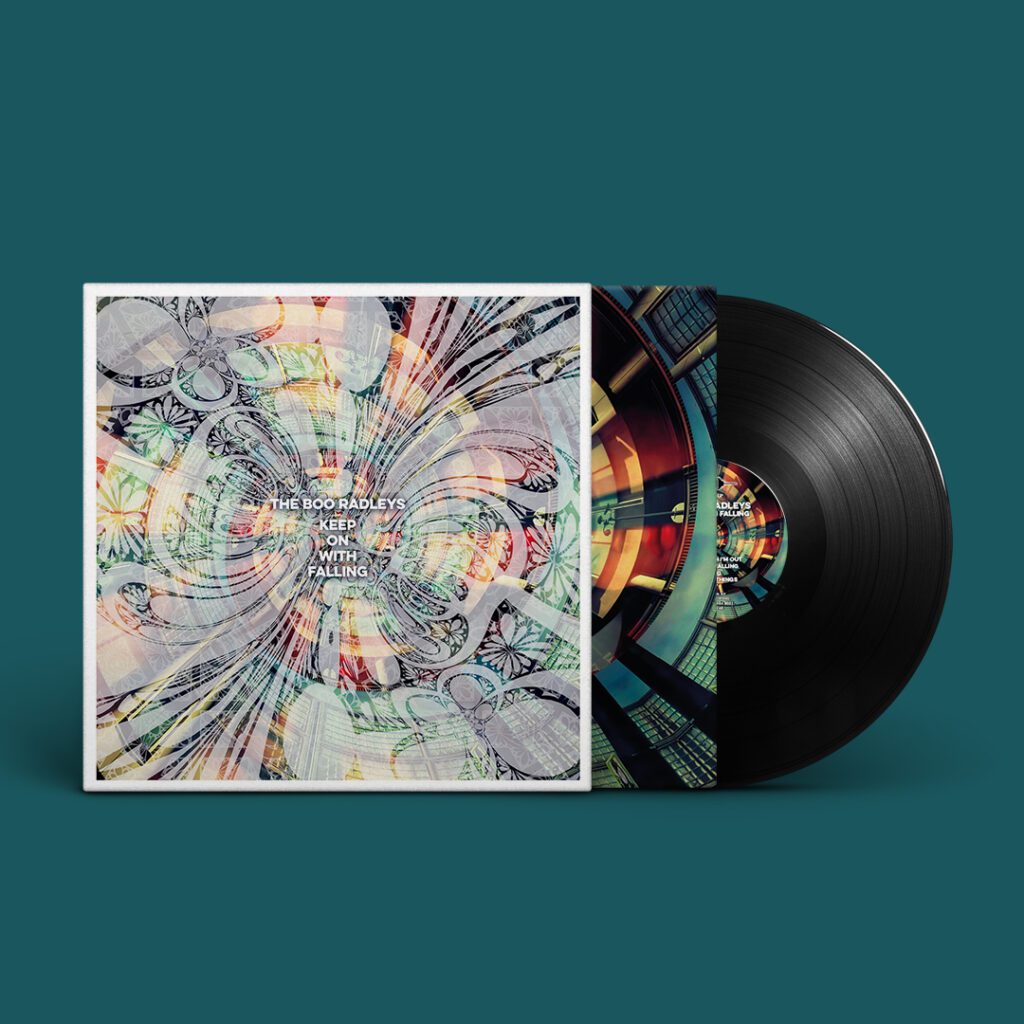
All three songs feature on their new album, Keep On With Falling, which is out in March.

It’s a strong record – full of great melodies, cinematic arrangements and nods to ‘80s pop, like Duran Duran and The Human League, as well as some of the slightly more offbeat Boo Radleys influences of old, like dub, although it isn’t as out there as some of their previous material.

During our interview, Rowbottom hints that their more adventurous side may come out further down the line, as there are at least two more albums planned after this one…

SH: Why did you decide to reform?

SR: It started a couple of years ago, with me and Tim talking about it. He came to my fiftieth birthday party, and we started chatting. Our kids were getting older and going to university, which meant we were finding time to do more music again. We were both writing, so we swapped stuff – that’s how it started. I was also doing some gigs – I’d always said no to it for ages, but I got the bug again. I was going out with an acoustic guitar and playing some of my Eggman [solo project] stuff – Tim came to see one of those gigs and that kicked it off. Then we got Rob in on drums.

You’ve played some comeback gigs. How were they?

They were unbelievable – absolutely fantastic. They were very much a celebration – it was really lovely. We played new and old stuff. It was nice to go out and play to people. There were some people who’d got into us after we’d split up – they never thought they would get the chance to see us.

How is it being back in the band and making music without Martin?

That was kind of an afterthought… Tim’s a really good guitarist – he essentially taught Martin how to play guitar – so, he did some of the guitars and also left on some of the guitar stuff that I’d done. We ended up with the record being pretty finished, so then we were like: ‘What are we going to do with it?’

For a while we toyed with it being released as my solo stuff, but then I did a gig which was advertised as ‘Sice doing The Boo Radleys’ which it shouldn’t have been. Martin got in touch and said: ‘Don’t call yourself that – just call yourself The Boo Radleys.’

So, he gave you his blessing?

Yes, but blessing is a strange word… He’s resigned to it, but I don’t think he was particularly happy about it.

The problem is that it wasn’t the way The Boo Radleys used to work – Martin used to write all the songs, we would work out our parts and then we could come together in the studio. So, when I went to him and said, ‘Look – we’ve done this – do you want to be a part of it?’, I think that’s why he said no.

In his mind, if we were going to do a different way of working, it wouldn’t have been the same. He’s been a solo artist for 20 years – he’s so used to doing his own thing. Stepping out of that, back into a collaborative thing, probably wasn’t his bag, really.

Let’s talk about the new album, Keep On With Falling. Did Covid impact on you making it? How did it affect the record?

It slowed it down, and pushed back the live stuff, but in some ways, it didn’t make a lot of difference with the conception and the recording of the album.

The fact we were able to do it digitally [and remotely] made it all possible – Tim lives in Northern Ireland and Rob lives in Manchester.

If we’d have had to get together physically it wouldn’t have happened – most of the stuff, apart from a couple of days doing live drums and vocals, was done by sending files back and forth. It’s an incredible way to make music.

And very different from how you made the previous Boo Radleys albums…

The whole process of being in a studio was expensive and soul-destroying – we used to get knackered.

We had six weeks or two months and it was a very unproductive way of working.

You had to get it done and then it had to be mixed, but you couldn’t change anything – now, it’s brilliant. You can sit and listen to tracks, leave them for a while and come back to them. You can think of a brilliant harmony or a brilliant guitar line and then add it.

We produced the album ourselves. All three of us are involved in the songwriting process, but it usually starts off with a lyric or a melody from me or Tim. He is far more musical and capable on the production side, so when I get his stuff it’s usually a lot further along. I give him and Rob carte blanche with the stuff I’ve recorded.

Tim uses Logic [music software] – he’s a music technology teacher. I do stuff with GarageBand and send him WAV files – he’s got a hell of a lot of insight and equipment.

How do you write songs?

I write on piano and acoustic guitar – I’m not one of those people who has the song and then has to go and find the backing. I feel my way through a song as I’m going – lyrically as well as musically.

I love the fact that you’ve reunited as a band after more than 20 years apart and the first song on the new record is called ‘I’ve Had Enough I’m Out…’

[Laughs].

It’s a song about organised religion, isn’t it?

Yeah – it’s my ‘growing up as a Catholic’ song and recognising the power and the sway that it has. I’ve become very anti-religious the older I’ve got. I was brought up a Catholic – I was really indoctrinated with it, and I was an altar boy.

The song is about looking back at that and seeing how much of an influence it has on a young mind and the way it controls how you see the world and how you conceptualise everything. It took a long time for me to come out of that.

The song isn’t just about Catholicism – it’s about what I see as the downside of religion.

I love the melody and the string arrangement…

When I wrote the song it was originally very sparse – almost like something off Nick Drake’s Pink Moon – but Tim got hold of it and ran with it. When it came back, I thought, ‘wow – this works brilliantly.’

A lot of the songs on the album are poppy and melodic – there are strings, horns, synths and harmonies – but with a dark, melancholy undercurrent. That’s always been a Boo Radleys trademark, hasn’t it? Even your biggest hit, ‘Wake Up Boo!’ had an element of sadness to it…

I think that’s our personalities. We’ve always been like that – we had sadness, depression and melancholy, but we also had elements to our personalities where we were quite fun-loving and party animals – we would, and still do, laugh a lot.

We love melody and harmonies so much, but you run the risk of being over-saccharine, so we’re always looking for that counterbalance. I’ve always been drawn to that – when you hear a song like ‘Eleanor Rigby’, with a dark side, it really hits home.

The title track is another great pop song, with some lovely Beach Boys-style harmonies on it…

That’s one of my songs – it’s about continuing to fail and making mistakes as part of the learning process. It started out as a piano-drone thing – almost a chant – but Tim built it up, with loads of harmonies. Tim’s quite big on The Beach Boys, but they’ve always been a bit saccharine for me.

That surprises me. I would have thought you were more ‘Beatles’ than ‘The Beach Boys’ in terms of influences?

Definitely, but we went through a huge period of discovering The Beach Boys and Brian Wilson…

I thought if you were signed to Creation, it was written into your contract that you had to like The Beach Boys, as well as Big Star, The Byrds and Neil Young…

[Laughs]. Yeah – it was in the welcome pack.

As well as the downside of religion, other themes in the new songs include euthanasia and alcoholism. You haven’t approached this comeback lightly, have you?

[Laughs].

The new album is less experimental than some of your other records. Was Martin the one who brought the weirder side to the band?

I think so – that’s a fair summation. Martin always liked novelty – he always wanted something new.

His tastes are very eclectic – I’m more in love with classic songs than he is. He was a great filter – he’d bring stuff to the band that we hadn’t heard and say, ‘you’ve got to listen to this.’

I’d think, ‘yeah – that’s absolutely brilliant, but it’s not us’, whereas Martin would want us to incorporate it.

The three of us would have to work out how it would happen – that was our task.

We haven’t got that adventurous yet – we’re still a little tentative about it, so we’re coming back with what we know, which is songs. It’s a fine balance – sometimes Martin’s adventurousness didn’t do him any favours. It’s knowing when to rein it in.

There’s a slight dub feel to a couple of the new songs – ‘I Say A Lot Of Things’ and ‘Here She Comes Again’ – while ‘Call Your Name’ is very cinematic…

‘Call Your Name’ is one of Tim’s – it feels a bit Duran Duran to me. When I listen to the album, I think it has a lot of ‘80s pop sensibilities, like The Human League, New Order and Duran Duran. That’s what we grew up with.

I can hear that. ‘You And Me’ reminds me of early New Order…

Yeah – Tim’s a huge New Order fan. One of the first covers we did was ‘True Faith’ – it was for a Peel session and we called it Boo! Faith. I love that song.

So, are you pleased with the new album?

Boo Radleys album

Yeah, but weirdly I’m more pleased about what’s coming after it.

Since we’ve started doing it again, we’ve banged out 30 songs – we’ve got another album and one after that’s already halfway there.

It’s one of the difficult things with bands –we’ve lived with the new album for so long, we’re almost past it and we’re thinking about the next stuff, but it’s a really good record.

There was always a narrative that Martin was the ‘genius’ behind The Boo Radleys. It never bothered me, but it always felt very unfair on Tim and Rob because they were a huge part of the band.

Not to take anything away from Martin, but we needed to redress the balance and say ‘Actually – that narrative wasn’t quite correct.’ If that comes out, then great.

Keep On With Falling is out now on Boostr Records.

thebooradleys.com

Back to Music

The post Interview: The Boo Radleys appeared first on Hi-Fi+.

Karen Dalton: In My Own Time

Karen Dalton was unique. No one before and few after have been able to integrate jazz inflections into a roots context so completely. Her vocals possess a trumpet-like timbre that remind me of Chet Baker’s solos. Her phrasing, sometimes behind and sometimes ahead of the beat, adds musical tension to her performances. But anyone who’s heard the original version of In My Own Time knows all this. Limited to only 2000 copies, Light in the Attic’s “super deluxe” package contains the original album cut at 45rpm on 180-gram vinyl and spread onto three sides, with outtakes on the fourth. The deluxe edition also has a 20-page booklet, two bonus 7-inch singles, the 12-inch 45rpm EP Live at the Montreux Golden Rose Pop Festival 1971, a replica playbill from Montreux, a CD of all tracks, and two posters. The album and outtake tracks are also available via Qobuz and Tidal. If you are a completist and a fan you will undoubtably want a copy of this deluxe edition, which stands as the ultimate representation of Dalton’s best work. A labor of love, Light in the Attic Record’s lavish production makes a strong case for just how serendipitously special In My Own Time was.

The post Karen Dalton: In My Own Time appeared first on The Absolute Sound.

Posted in Uncategorized  |  Tagged ,

Norah Jones: Come Away with Me: 20th Anniversary Super Deluxe Edition

One of the best-selling debut albums of all time, Come Away with Me launched singer, songwriter, pianist Norah Jones into rarified air. The album picked up five Grammy Awards, including Album of the Year and Best Engineered Album (non-classical); the single “Don’t Know Why” earned three of those awards and has become a go-to reference track for audiophiles. This hardbound multi-disc set—also available on vinyl and digital formats—includes extensive liner notes by Jones, the remastered original 14-track album, 17 demos and outtakes (including previously unreleased tracks), and 13 alternate takes and mixes (12 of which are previously unreleased). Two decades after its release, Come Away with Me is still fresh and continues to charm hi-fi enthusiasts; shortly before this release, a Reddit forum found dozens of audiophiles arguing passionately about the best edition (Analogue Productions’ 2013 SACD version got high praise). This new redbook anniversary edition holds its own soundwise, and the cryptic lyrics to “Don’t Know Why,” breathy vocal, and intimate production are as seductive as ever. But the 13 alternate tracks collected on “The Allaire Sessions” disc are the real gem, playing to Jones’ unfettered café jazz and country-music inclinations.

The post Norah Jones: Come Away with Me: 20th Anniversary Super Deluxe Edition appeared first on The Absolute Sound.

Posted in Uncategorized  |  Tagged ,

Florence + The Machine: Dance Fever

Written during Covid-19 lockdown, Dance Fever has been described as a fairytale in 14 songs; it’s also a deeply personal story about one anxious artist. In the first act (“King”), Florence declares she’s not a bride nor a mother, but a King; in the last act (“Morning Elvis”) she promises to show what it means to be spared—that is, if she makes it to the morning. In between, she stampedes with breathtaking speed through a long list of her dilemmas as a performer and a woman. “Sometimes I wonder if I should be medicated,” she marvels while dancing herself to ecstasy to break free from her torments. Dance Fever is coproduced by Florence Welch and Jack Antonoff (Lorde, St. Vincent, and Lana Del Rey). Compositions and arrangements are maximalist church high, Florence’s vocals lush and expressive as she delivers her fiercely emotional cry of vulnerability. The songs evoke a feeling of chasing and being chased, bringing Kate Bush and her “Hounds of Love” to my mind and sending similar goose bumps to my spine. “She’s freaky” proclaimed my friend as we chatted about the new F+TM music—and freakishly good, I add. 

The post Florence + The Machine: Dance Fever appeared first on The Absolute Sound.

Posted in Uncategorized  |  Tagged ,

Music Interview: Zac Starkey

Rock drummer Zak Starkey has an impressive CV that includes stints with The Who, Oasis, Johnny Marr and The Healers, The Lightning Seeds and The Icicle Works, but his latest collaboration seems him doing something altogether different from his Britrock roots.

The 56-year-old son of Ringo Starr and his first wife, Maureen Starkey, has teamed up with audio brand Meters Music to launch a pair of premium headphones inspired by his love of reggae.

Limited to only 500 pairs, and retailing for around £329, the flagship OV-1-B-Connect Jamaica Soundsystem noise-cancelling cans – Starkey has his own Grammy award-winning record label, Trojan Jamaica – are said to deliver a rich, warm sound and great bass performance.

The Jamaica Soundsystem production team is the result of a tie-up with Starkey and his partner, musician/producer, Sharna “Sshh” Liguz. I spoke to Starkey about his reggae leanings and the new headphones and got him to share some of his rock ‘n’ roll stories.

SH: How and why have teamed up with Meters to launch your new headphones?

ZS: It was via John Entwistle from The Who – I’ve been in The Who for 25 years. Mark [Gooday – who founded Meters Music and its sister company, bass amp manufacturer Ashdown Engineering, after leaving amplification giant Trace Elliot] has been around for ever.

I was in Jamaica, recording with Sly & Robbie – we’ve made five records together. Mark was in Jamaica, and he gave us a demo of some [Meters] headphones – he had six pairs. I felt sick – I had to lie down, because it rocked my world – in a good way. Robbie checked them out and took all six pairs – you wouldn’t argue with him!

Meters OV-1-B Zac Starkey special edition

The new headphones [the OV-1-B-Connect] are fantastic and they make music really great fun – the bass is tight, and the timing is very good. You can feel the throb of it all – they’re very powerful. They’ve been in development since 2018. Meters also has some great studio headphones – our engineers are the fussiest f***ers I know, and they think they’re good for mixing with. They’re really impressed.

Tell me about the record label, Trojan Jamaica, which you’ve founded with your partner Sharna “Sshh” Liguz, who you also record with, as the duo SSHH…

We lived in Jamaica for three years – we were invited there in 2016 to play at the opening of the Peter Tosh Museum in Kingston, because the curator had seen a video we made for ‘Get Up Stand Up.’ We played there again in 2017, shipped our gear out there and built a studio.

We recorded seven records while we were there – we have a reggae label. We are also co-producing with Sly & Robbie – they’ll cut some tracks, give them to us and we’ll finish them. We’ve got two U-Roy singles coming out – we’re working on his last recordings, which he made a month before he died – plus Sly & Robbie Presents Jesse Royal, Big Youth (Jah Youth) and a second volume of a blues-reggae compilation.

Me and Sshh had a band [SSHH] – it was an electro-punk kind of thing. We put a few singles out and then we did a record [the Issues album] for Teenage Cancer Trust. I met Sshh at an MC5 gig in Australia 17 years ago and we’ve been together ever since – we have a baby together.

How did you get so into reggae?

Through my mum, who played me a Bob Marley live record. My dad gave me a copy of Man In The Hills by Burning Spear and then I got into punk, which told me about reggae. John Lydon was always talking about dub in interviews – it was a really great introduction. I got into glam, then The Who and The Small Faces and then punk. The Pistols taught me how to play slowly – it sounds fast, but it’s not.

You’re known for your Mod /Britrock heritage – playing with The Who, Oasis and Johnny Marr. Are people surprised when they find out you’re a big reggae fan?

In Jamaica, I only play the guitar – I don’t play the drums. Many of the people I work with there don’t know that I’m a drummer – they just think I play the guitar. We’ve cut over 70 songs and I only played drums on one and that was because Sly was busy that day.

Your dad gave you a drumkit for your tenth birthday – it was a 1962 Ludwig four-piece Champagne Sparkle. Do you still have it?

Yes – it used to belong to Peter Sellers. He gave it to my dad.

I’ve read that your dad gave you one drum lesson and then told you to get on with it… Is that true?

Yes – he wasn’t that keen for me to do it, but I kept it up.

Why didn’t he encourage you?

Because there were a lot of drummers about and it was a bit of a hard act to follow, wasn’t it?

Keith Moon was your godfather. Was he a bigger influence on your drumming than your dad?

Completely – I was a guitarist. I saw Marc Bolan – my dad took me to see T. Rex at Wembley Pool in 1972 – and I said to him, ‘I want a guitar and a feather boa.’

I learned guitar, but when I heard The Who’s Meaty Beaty Big and Bouncy it changed my world and I switched immediately to drums – that was three years later. Keith gave me a drumkit when I was 11 – it arrived when I was 12.

It was auctioned at Sotherby’s for £12,000, wasn’t it?

I wish I’d never sold it, but, at the time, I owed some drug dealers and the taxman a lot of money.

Did Keith encourage your drumming?

We talked about it, but we never drummed together – he was really encouraging, and he used to play me lots of old records. We talked about girls and surfing, which, it turned out, he’d never actually done. That’s Keith, innit? Me and my little brother used to go and stay at his place in Malibu.

Kenney Jones [drummer – The Small Faces, The Faces, The Who] showed me a few things – more than anyone probably. He was a great friend of my mum’s, and he was at our house a lot, where I had my drumkit.

Andy Newmark [US session drummer /member of Sly and the Family Stone] also showed me a couple of things once – that was amazing. I also had a little jam with [US bassist] Willie Weeks on the same day – that was f***ing fantastic! I was about 12.

Would you have preferred to have been a guitarist rather than a drummer?

I’d much rather be a guitarist, but I love playing drums with people I’ve got chemistry with – chemistry is hard to find. I’ve been really lucky. I had great chemistry with Johnny Marr, The Who, Oasis, Ian Broudie and The Lightning Seeds, and The Icicle Works – they were all acts I liked.

Me and Johnny started The Healers in 1996 – we toured the world in 2003 and we had the time of our lives. We were space-rock – that was our thing. We wanted to be Santana and Hawkwind mixed up. Johnny’s my best mate – it’s like we’ve known each other in previous lives. He and his wife, Angie, are godparents to our child. I would love to play with Johnny again – I’ve heard his new album and it’s absolutely f***ing brilliant!

I loved Oasis and The Who – when they phoned me up and asked me if I wanted to come and do it, it didn’t feel like a job – it was an honour.

When you were younger, you rebelled against your dad and being ‘the son of a Beatle’, didn’t you? In hindsight, did that help or hinder you?

The rebellion helped because I went and did my own thing. For a bit I rejected everything that those guys stood for. Then I realised that I was missing out on something really great. About 10 years later, I realised those guys were pretty f***ing good!

Did you listen to The Beatles as a child?

Yes – I loved them, but then I rejected them. Punk helped me to do that.

Before you played with Johnny Marr and The Who, you spent about 10 years on the circuit, playing smaller gigs, didn’t you?

I also played with The Icicle Works and Bobby Womack. I would do anything – I really enjoyed it. It was the natural way – to go slowly. I joined a band – The Next – when I was 12 and I hadn’t stopped playing since until last year. I used to love playing a place called the Bridge House in Bracknell, in 1978/1979. It was an insane biker bar – we’d play there once or twice a month. I don’t know if it’s still there.

How did you end up joining The Who?

Me and John Entwistle jammed together at a party in the early ‘80s and it was great. When I was about 17, he came to watch my band at Dingwalls, and he asked me to join his [solo] band. I said, ‘I’m sorry, I’m in this band.’ Two years later, he asked me again and I joined his band – that was in 1985 and we did an album called The Rock, but it didn’t come out until 1996. When I was 19-21, I was living at John’s for almost 14 months, Monday-Friday. That was a trip! I joined The Who when I was 31.

Were you nervous?

I’d already played with Roger [Daltrey] and John – I was nervous about playing with Pete [Townshend], but he was great. It was a baptism by fire – getting spat at and that – but, after a while, I started to duck. I loved every second of it – it’s bebop with amps! Nothing’s set in stone with that band – Pete will play ‘Won’t Get Fooled Again’ different every night ‘cos he doesn’t want to get bored, and he wants to make sure everyone’s paying f***ing attention. You have to be on the ball 150% of the time, because Pete demands that – he’s giving more than that and you have to give the same.

How did playing with Oasis differ from The Who?

There were the same amount of challenges, but in a different way – it’s about restraint. Oasis were some of the greatest musicians I’d ever met – no one really knows that. They were f***ing bang on – they knew exactly what was happening all the time. I believe that we were the best live band in the world at the time. Apart from The Sex Pistols, who are number one, The Who and Oasis are my favourite bands.

Why did you stop playing with Oasis?

I chose to do my own thing. I’m happy to be able to do anything I want and not wear a badge that says, ‘I’m in this band and I’m not allowed to do anything else.’

What kind of hi-fi set-up do you have at home?

I’m a vinyl guy and I have Naim with big Tannoy speakers.

How do you feel about streaming?

It’s a necessary evil, but I wish the artists would get given more money for it – I think it’s atrocious, but I can’t do anything about it.

Do you know any good drummer jokes?

A drummer goes into a shop and says, ‘I’d like to buy a guitar, please.’ The guy says to him, ‘You’re a drummer, aren’t you? He says: ‘How do you know that?’ The other guy says, ‘This is a fish and chip shop.’

Was your dad really the best drummer in The Beatles?

He’s the best rock ‘n’ roll drummer in the world, mate, and don’t you forget it!

The OV-1-B-Connect Jamaica Soundsystem headphones are available to pre-order from www.metersmusic.com.

www.trojanjamaica.com

Please note: since this interview was conducted, bassist Robbie Shakespeare, one half of the duo Sly & Robbie, has died. He was 68.

Back to Music

The post Music Interview: Zac Starkey appeared first on Hi-Fi+.

Posted in Uncategorized  |  Tagged

The Duke Robillard Band: They Called It Rhythm & Blues

Exactly where does one begin enumerating the many virtues of one of 2022’s most satisfying new discs? Is it in the select choice of enduring R&B evergreens from the likes of Roy Milton, Howlin’ Wolf, Joe Liggins, “Lil Son” Jackson, and others? Is it in the tasty originals offered by Duke (including a powerhouse grinder, “Outta Here,” equally notable for Duke’s gritty vocal as it is for his stinging guitar, the horn section’s robust interjections, and Bruce Bears’s rippling, bluesy organ solo) and Kim Wilson (two gems from his T-Birds days, especially the red-hot plea “Tell Me Why,” brought to a roiling boil by Wilson’s aggrieved vocal and equally piercing harp support)? Could it be the scene-stealing distaff guest vocalists Sue Foley and Michelle Wilson, the former infusing Mickey & Sylvia’s “No Good Lover” with some heated Texas blues swagger, the latter most memorably on a deep blues reading of the old chestnut “Trouble in Mind,” in which the depth of her measured, plaintive reading might well bring you to your knees? Is it the sheer joy Sugar Ray Norcia exudes vocally and furiously on harp on a Chicago-styled, horn-enriched workout on Jimmy Nolan’s “She’s My Baby”? Well, exactly where?

The post The Duke Robillard Band: They Called It Rhythm & Blues appeared first on The Absolute Sound.

Posted in Uncategorized  |  Tagged ,