Tag Archives: Rock

Tedeschi Trucks Band: I Am the Moon

Conceived and recorded during the pandemic at the Jacksonville home studio of husband-wife team Derek Trucks and Susan Tedeschi, I Am the Moon was initially released as four separate CDs, each bearing a thematic title and staggered a month apart. Vinyl configurations of individual LPs along with a 4-LP deluxe box were made available in September. It’s no coincidence that the four album titles resemble the four distinct movements of John Coltrane’s A Love Supreme (“Acknowledgement,” “Resolution,” “Pursuance,” and “Psalm”). Trane’s masterwork, as well as Jimi Hendrix’s Axis: Bold as Love and Derek and the Dominos’ Layla, served as catalysts for this epic undertaking. Tedeschi’s goosebump-intensity, gospel-tinged vocals uplift pieces like “Hear My Dear,” “So Long Savior,” and “Take Me as I Am” while her soulful R&B delivery on “Playing with My Emotions,” “Rainy Day,” and the gritty “Somehow” recalls Bonnie Raitt. Trucks’ ripping slide guitar stretches the boundaries on the horn-driven “Circles ‘Round the Sun,” the instrumental “Pasaquan,” and the raga-flavored “Hold the Line.” “Fall In” and “Gravity” both fall in The Band camp while the minor key anthem “Yes We Will” recalls B.B. King’s “The Thrill Is Gone.”

The post Tedeschi Trucks Band: I Am the Moon appeared first on The Absolute Sound.

Posted in Uncategorized  |  Tagged ,

Shaylee: Short-Sighted Security

Shaylee is Elle Archer, a singer from Portland, Oregon, and she handles nearly everything on the record—writing, production, vocals, guitars, bass, various keyboards, drums, and percussion—and does a helluva job at all of it. There’s none of the tentative playing that sometimes marks overdubbed and self-produced efforts. She creates her own soundworld (though there are reflections of greats like The Beatles, Wilco, and Neko Case) but doesn’t rely on the atmosphere to provide all the musical interest (I’m looking at you, Alabama Shakes). The melodies, chords, and structures are catchy and well thought out. The swirling synths complement the guitar work, and her dusky alto is easy on the ears, though the emphasis in her power pop is still on “power.” As the album title intimates, it’s a very personal record: Elle bares her mistakes and self-doubt without apology. The lyrics are therapeutic and sometimes morose or self-flagellating, but the music gives them universality, even to someone whose life is in a very different place. The writing tends to be matter-of-fact, but a handful of phrases find their poetic target. This one is staying in rotation out of enjoyment, not just critical duty.

The post Shaylee: Short-Sighted Security appeared first on The Absolute Sound.

Posted in Uncategorized  |  Tagged ,

Music Interview: Graham Day

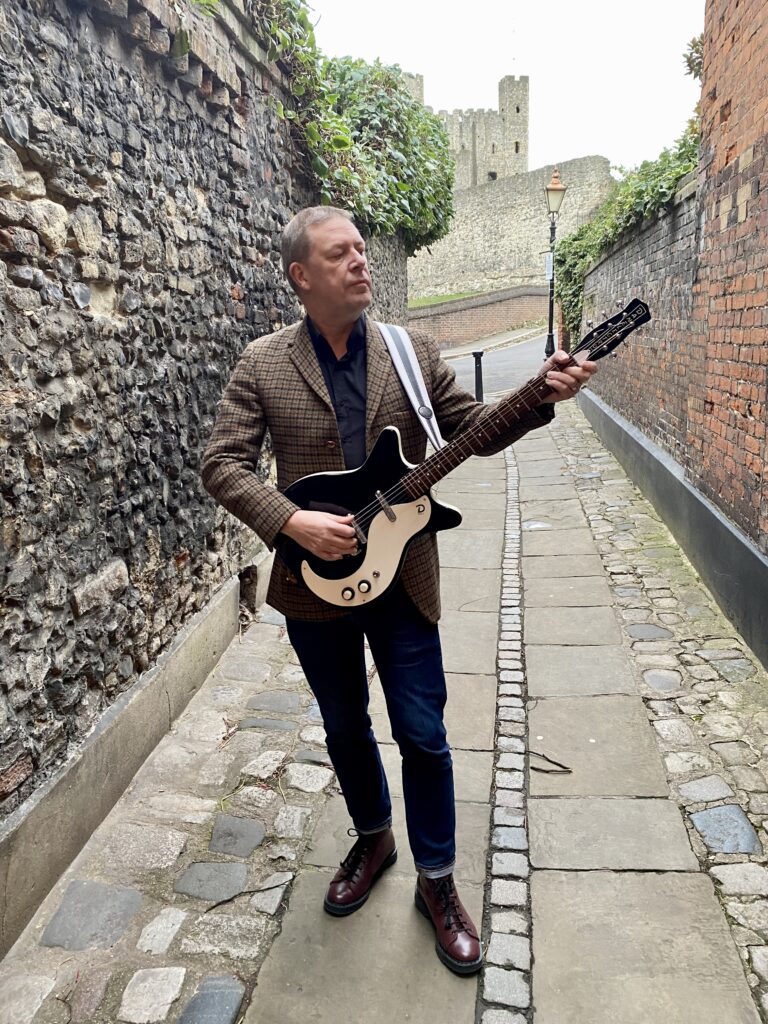
Graham Day is one of the founding fathers of British garage rock. The vocalist and guitarist was the frontman of cult ‘80s beat‑psych band The Prisoners, who were adopted by the Mod revival scene, but he’s also released albums as The Solarflares, Graham Day and The Forefathers, and his current project, The Gaolers.

Not only that, but he’s worked with fellow Kent coast-based musician, writer and artist, Billy Childish, as a producer, and briefly played drums in Childish’s group The Mighty Caesars and later bass in The Buff Medways.

For a man whose music career spans more than 40 years – Day is 58 – it’s surprising he hasn’t released a solo album… until now… and even that was a happy accident, he tells me, talking on the phone from his home in Rochester.

“It was all down to the bloody pandemic – the album was supposed to be a Graham Day and The Gaolers record, but our drummer, Dan, lives in Alabama. We were going to play gigs in Hamburg, Paris, London and Brighton – I have to make it worthwhile for him to come over – and I’d booked a studio called Ranscombe in Rochester because I’d written the album,” he explains. “That was April 2020 – it was all going to pan out nicely – but then lockdown scuppered that.”

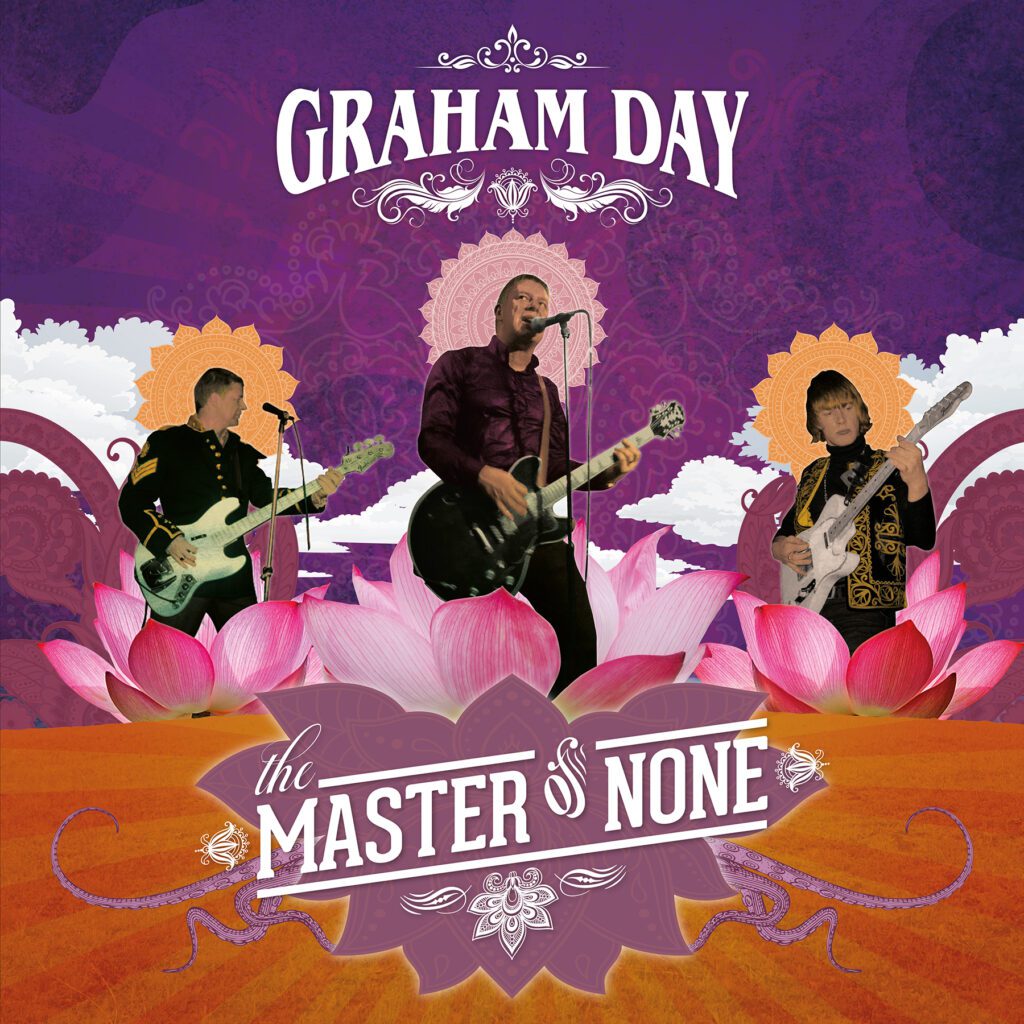
The record we’re here to talk about is The Master Of None – the title is a reference to how it was made. Not being able to meet up with his band, Day turned the Logic Pro X demos which he’d created for his drummer into a proper album. Building up each song from scratch, he added bass, Hammond organ and congas to the guitar and vocal tracks, and then, finally, the drums, which proved something of a challenge.

“I went to my mate’s printing works unit, where he has a drum kit, plugged my headphones in and stuck a microphone in front of the kit and tried to play along, but it was hideous,” he says. “I found it really difficult. I’m a loud drummer and the unit is big and echoey – the drums were so f***ing loud! I had to turn the headphones up to maximum to be able to hear what I was playing along with. I deafened myself – I couldn’t hear anything for nearly a week afterwards.”

The Master Of None is a great record that doesn’t mess around. It’s stuffed full of short, sharp, highly melodic, garage rock songs, like the dirty and fuzzy opener, ‘A Rose Thorn Sticking In Your Mind’s Eye’, the Kinksy, Brexit-themed, ‘Out Of Your Narrow Mind’, and first single, the angry ‘You Lied To Me’, which is a stinging attack on Boris Johnson and his cronies and recycles the vibrato guitar part from ‘Help You Ann’ by US garage-rockers The Lyres.

There are also some more soulful moments – with its Hammond sound, the title track recalls The Spencer Davis Group, while ‘Don’t Hide Away’, which was written about the pandemic, nods to The Four Tops, and has a melancholy organ line, and ‘A Grain of Sand (That Gets Washed Out To Sea)’ has a groovy ‘60s feel, thanks to a Danelectro electric sitar and congas.

Considering he played everything on the album, Day has managed to pull off a great trick – The Master Of None, which took a couple of months to finish, sounds like it was recorded live with a full band.

“Thanks,” he says. “In a way, the battle I had trying to play along with tracks and layering them is probably what makes it sound like it’s a band playing. It’s a little bit scrappy. I don’t like over-rehearsing anyway – I like things to sound like they’re a little bit of a struggle and we’re a bit unsure. I like that edginess.

“I get bored with songs really quickly, so I tend not to listen to anything I’ve recorded ever again – I’d rather record quickly and move on. If I don’t do that, I’ll end up not doing anything, or the songs will be lost forever. Half of this album I rewrote, and I also wrote new songs for it because I was already fed up with the songs that were going to be on the Gaolers record. It doesn’t bear much resemblance to the album we would’ve recorded back in 2020.”

SH: How do you write songs?

GD: I’m not a prolific writer because I’m quite lazy, I suppose – I need to have a goal in mind. I don’t just sit down and say, ‘I think I’ll write a song today’, just for my own benefit.

If I’m going to record an album, I can write quite quickly, and it falls into place if I know I’ve got to do it. I normally write songs when I’m walking my dog – I get a melody and I hum it into my phone. Then when I get home, I work out what the chords are.

When I was younger, I used to play a guitar, get a riff and try and put a melody over the top of it. I can’t do that anymore – there’s nowhere else for me to go with it. I have to come up with a melody and try to figure the song out around that.

I’ll be honest, I really struggle with words. I often have all the music recorded, but I sit there and say, ‘what the f*** am I going to write a song about?’ I’m 58 years old – I’m not an angry young man anymore.

You sound quite angry on the album, though. Some of the lyrics tackle social issues, injustice, politics, the environment… It’s quite a topical record…

I think that was a product of the situation – Brexit, lockdown, all of that s***. I’m sitting there thinking ‘all I want to do is go on holiday and go and play in the band’. I couldn’t do either of those things, which made me really bitter! A lot of it came from that.

Ordinarily, I’m quite a cheerful, quiet person and I’m not bothered. There’s a song on the album called ‘A Grain of Sand (That Gets Washed Out To Sea)’ where I talk about how I moan about a lot of things, but how I’m not actually an activist. I’ll quite happily sit there and grump about everything, but I’m too lazy to get off my arse and do anything about it.

That song has a Danelectro electric sitar on it…

Yes – that’s it. The original ‘60s one was called a Coral – I’ve got an exact copy of it. A few bands from the ‘60s used them. I’ve got a sitar as well, but it’s too much of a pain in the arse to sit on the floor with and tune it. I end up playing it like a guitar and all the strings snap… When I found the electric one, I thought, ‘brilliant’… It doesn’t particularly sound like a sitar, but it has a unique sound of its own, which is really nice.

That and the congas give the song a groovy ‘60s feel…

Yes – I got the congas and some other Danelectro guitars, including a baritone electric, because I’m also in an instrumental band called The Senior Service. I was getting into that ‘60s spy film thing, which I’ve always loved, like Barry Gray and John Barry.

Do you collect vintage gear?

I’ve had so much stuff over the years, but lack of money has forced me to get rid of some of it, which I really regret. I’ve still got quite a lot of guitars – some vintage ones and some more modern. I have Gretsch ones that are only 10–15 years old – some old Gretsch guitars can be a real bastard to play and quite quirky, but they look great. Some of the guitars made in Japan, 10 or 15 years ago, are pretty decent – I have two or three like that.

The song ‘Out Of Your Narrow Mind’ sounds like The Kinks…

I love The Kinks. I think influences are brilliant to have because you can’t invent anything new, unless it’s really awful. You’ve got to have influences, but you’ve got to tread a thin line between that and actually nicking stuff, so I try and go for a similar feel and hope to God that I’m not nicking something.

Often when I write a song I think ‘that sounds vaguely familiar…’ but I press on with it and then, further down the line, I think ‘oh, f***! I know what that is…’

More often than not, I’m ripping my own stuff off! My wife will say, ‘that’s on one of your other albums…’ And I go, ‘b******s!’

The title track has a soul feel. It reminds me of the Spencer Davis Group…

Oh – brilliant.

There’s also a soul influence to ‘Don’t Hide Away’, which is quite Four Tops – it’s one of my favourites on the record. I like the sad organ on it. It’s quite a melancholy song at heart, with a Northern Soul or Motown feel…

I wanted to go for a more upbeat Four Tops/ Frankie Valli kind of thing, but I started putting things on it and it changed without me intending it to. I really liked the haunting organ line – it changed the feel of the song.

The last song on the album, ‘Time Is Running Out’, deals with eco issues…

I don’t like singing about those things – getting on my high horse and all that b******s, but you’ve got to sing about something. And you can only sing about politics a couple of times. You get to a point where you think, ‘I suppose I’d better have a song about that…’

What does a 58-year-old man sing about? I can’t write about a relationship breaking down – my wife wouldn’t be too happy about that.

I think that tune is a little bit too fast, but it works because it sounds like a battle or a race to a climax. I thought I would stick it at the end of the album, and it was a battle because it was really hard to play along to.

It has backwards guitar on it…

I like that. In the old days, we used to do it properly in the studio with tape – cut the tape, turn it backwards and then stitch it back together. I can remember spending all afternoon doing it for one of The Prisoners albums. Now there’s a little button to do it on Logic – it takes minutes.

What’s your home studio set-up like?

I’ve got one microphone and I use a Vox AC30 amp. When I was recording the guitar for the album, which had to be really loud, I asked the neighbours to tell me if they were going out! They’re pretty understanding – they told me they were going for a walk, so I whacked it up and did the guitar parts. The main thing for me is that gritty guitar thing. I stuck the bass straight into the computer and did the Hammond on a MIDI keyboard.

Would you make a record on your own again? How was the experience?

I did love it. I liked the songwriting aspect of it because I’d never worked like that before – having the time to craft the songs. In the last 40 years of playing, I’ve never really bothered with that. If I get a good idea – a riff or a tune – it’s there and it’s simple. I’ve always thought that if a song takes longer than five minutes to write, it’s not worth writing, but with this album it’s a bit more crafted and layered than perhaps I’ve done in the past. I normally wouldn’t have the time or inclination to do that.

I’m really pleased with some of the songs on it.

Have The Gaolers heard the album?

They’ve heard the demos… (laughs).

The Master Of None is out now on Countdown Records. It’s available on LP, CD and across digital platforms.


Back to Music

The post Music Interview: Graham Day appeared first on Hi-Fi+.

Peter Gabriel: Live Blood

Finally, available on vinyl. Peter Gabriel and the 46-piece New Blood Orchestra, under the direction of Ben Foster, recorded this three-LP set during two days in 2011 at the Hammersmith Apollo in London. It is the soundtrack to a 3-D concert film released that year and the live counterpart to 2011’s New Blood. You won’t find grown-up versions of the bass-heavy, dance-floor hits “Steam” or “Sledgehammer” among these 22 tracks, but the prominent Gabriel songs “Biko,” “Red Rain,” “Solsbury Hill,” “Don’t Give Up,” and “San Jacinto” sit alongside such lesser-known material as “The Rhythm of the Heat” and “Blood of Eden” (there also are five covers). The tasteful symphonic arrangements by John Metcalfe complement Gabriel’s evocative vocals and those of his three guest vocalists. It’s been 20 years since Gabriel dropped an album of new solo material, so Live Blood—expertly recorded by Grammy-winning engineer Will Shapland and cut for vinyl by Matt Colton at Metropolis Mastering—is a welcome addition to the catalog of one of rock’s greatest solo artists. This half-speed master is pressed on 180-gram red vinyl and includes a code for free digital access to the album as either a 24- or 16-bit download.

The post Peter Gabriel: Live Blood appeared first on The Absolute Sound.

Posted in Uncategorized  |  Tagged ,

Heather Maloney: No Shortcuts (Live at the Academy)

During the past two-plus years there haven’t been a lot of live concert recordings released due to the death of in-person performances, but singer-songwriter Heather Maloney has bucked the trend by releasing No Shortcuts, recorded in 2019 in Northampton, MA. The 16 tracks include 15 originals songs and a cover of Joni Mitchell’s “Woodstock.” The album opens with “Enigma,” which serves as an introductory self-portrait into Maloney’s musical world. She isn’t a “political” songwriter per se, but her personally oriented subject matter often focuses on interior politics. For this record Maloney was joined by Ryan Hommel, who served as producer and musical director, created string arrangements, played guitar, and added backing vocals. Other musicians include Reed Sutherland on upright bass and vocals, Celaya Kirchner on violin and vocals, and Cynthia Tolson, Kasey Calebaugh, and Emma Hays Johnson in a string trio. Maloney’s version of “Woodstock” not only showcases Maloney’s impressive vocal range and musical dynamics. It also demonstrates how well the recording preserves both the location of her voice’s primary emanation point combined with the hall’s reverberance from the PA system as it adds an enveloping bloom and shimmer to the expansive soundstage.

The post Heather Maloney: No Shortcuts (Live at the Academy) appeared first on The Absolute Sound.

Posted in Uncategorized  |  Tagged ,

Talent is An Asset, And Sparks Appears to Have It

My introduction to Sparks came during a 1974 performance on a late-night TV program called Don Kirshner’s Rock Concert. Prior to that night I’d never heard of the band, but they quickly got my attention. One-half of the core of the group, vocalist Russell Mael acted like a hyperactive child in an adult’s body, and his falsetto voice seemed more suited for musical comedy than rock ’n’ roll. With his grim demeanor, Hitler mustache, and slicked-back hair, the other core band member, songwriter, keyboardist, and sibling Ron Mael, looked like that disgruntled office worker secretly deemed Most Likely to Go Postal. With its skillful use of feminine rhyme, one of the tunes Sparks performed that evening addressed Albert Einstein’s overprotective parents, with Russell pleading, “Talent is an asset/But where could Albert have it?” Listening to that chorus, I wondered what the Mael parents felt about their progeny. The music Sparks played that evening was odd but well-crafted—and it rocked. I was hooked.

That TV appearance occurred near the beginning of Sparks’ career (their first album was released in 1972), and by now the group has released 25 studio albums. They’re as strange as ever, and people still think they’re from the UK when they’re actually from L.A. Finally, though, the world is catching up to them. Somehow it’s fitting that a band so unconventional and quirky would enjoy a career arc without parallel in the history of rock of roll—unless you can name another group that, after staying together for five decades, suddenly became all the rage. Recently a lot has happened to “spark” a large-scale reappraisal—A Steady Drip, Drip, Drip was one of the best pop albums of 2020, Edgar Wright’s The Sparks Brothers documentary helped generate more buzz, another Sparks-connected movie (Annette) and its soundtrack garnered further attention, and their recent tour was a huge success. Not bad for a band that until recently never got its full due, and especially in its home country.

Due to this newfound appreciation, many fans have a lot of catching up to do, so BMG’s reissues of five Sparks albums from their fourth decade seems particularly well-timed. Except for the single-disc Lil Beethoven, all of the vinyl reissues are 2-LP sets. Previous vinyl editions of these records were released in limited numbers if they came out at all, and they were all out of print prior to this project. Featuring high-quality packaging and good-sounding pressings, the new vinyl reissues are available for a fraction of the price of used copies—so snag them while you can. These albums are also being reissued as compact discs, and four of the five CDs feature bonus cuts.

The five new reissues belong to the band’s fourth decade, a period that marked a new phase for Sparks. Their early music was an energetic mix of art rock, glam rock, and eccentric pop music. A collaboration with Italian producer Giorgio Moroder, 1979’s No. 1 Song in Heaven, took things in a radically different direction. Surely no one predicted that Sparks would end up playing disco, but the new style seemed to suit them well. Admirers included Ian Curtis of Joy Division, whose iconic single “Love Will Tear Us Apart” was influenced by Sparks’ new sound.

Mixing techno beats with electric guitar riffs, the earliest record in BMG’s new batch of reissues (Balls, from 2000) marked the end of an era, and it didn’t fare so well in the marketplace. Part of the blame may belong to the title track as well as the leadoff single, “More than a Sex Machine,” neither of which strike me as particularly clever, but this is one of those albums where the deep cuts outshine the singles. “Scheherazade” combines a rock-solid groove with electronic exotica while the equally energetic “Bullet Train” documents what’s lost when we whiz past everything—including a mountain (“And to the right, Fuji, Mt. Fuji, oh wow/Yes, to the right, the rarest sight, Mr. Fuji, oh wow”). The superficiality of the modern world resurfaces as a theme on “It’s a Knockoff” and “Irreplaceable,” both of which feature memorable vocal performances. Russell also shines on “The Angels,” a darkly romantic ode to a woman so stunning even angels have a hard time dealing with her beauty.

When Sparks next visited the recording studio, they turned a stylistic corner that took them through rest of the decade and set the tone for the other four albums in this grouping. For Sparks, the aughts were all about carefully crafted art rock with thick layers of quasi-classical elements that include strings and multi-tracked choral-sounding vocals. Lil Beethoven (2002) accurately describes itself as “musical overkill.” Intricate and overwrought, this is baroque pop at its fussiest, and you might compare it to a frilly gold frame housing a black velvet painting. Sometimes Sparks matches their overwrought arrangements with lyrics that are deliberately pseudo-intellectual, as when the songs solemnly address music that lacks a groove, bands that lack levity, and musicians who (try as they may) will never perform at Carnegie Hall. Lil Beethoven also matches the most trivial themes—call waiting, ugly guys with beautiful girls, suburbanites impressed with their own urbanness—with fancy arrangements.

Hello, Young Lovers (2006) is Sparks at its most ambitious, with arrangements that stretch pop music to its limits. A bitter love-gone-bad song, “The Very Next Fight” indicates that the album title might be interpreted ironically. With its elaborate arrangement, quotes from Handel’s Messiah, tympani, and church organ, “As I Sit Down to Play the Organ at the Notre Dame Cathedral” contains passages that could have been missing fragments from a Rick Wakeman album—except the lyrics don’t address the center of the earth, and I don’t think you’ll see Ron Mael wearing a gold cape any time soon.

As much as Sparks likes to flaunt their frivolity, their lyrics occasionally address political concerns, but they do so in an oblique manner. For example, “(Baby, Baby) Can I Invade Your Country” from Hello, Young Lovers is a clever sendup of Yankee imperialism. On 2008’s Exotic Creatures of the Deep, “Let the Monkey Drive” was inspired by the then-current American president. My favorite track on Exotic Creatures is “I Can’t Believe That You Would Fall for All the Crap in This Song,” in which the Maels take arm against a sea of love song cliches. Here the glam-rock side of Sparks resurfaces, and T. Rex fans should definitely give this song a listen.

Nothing fires Sparks’ imagination more than high art as a target for tomfoolery, and the prospects of imagining a visit to Hollywood by the king of art films, Swedish film director Ingmar Bergman, so inspired the Mael brothers that they devoted a 2-LP set to that narrative. In 2009’s The Seduction of Ingmar Bergman, Hollywood tries to woo the Swedish art film icon into moving across the pond and making a more commercial product, and he has a hard time evading the traps they set. While that experience may have left a bitter taste in the imaginary Bergman’s mouth, meeting the ghost of Greta Garbo may have made up for it. Seduction is one strange album, and it’s hard to accuse a band that can pull something that unpredictable out of their hat after four decades of stagnation.

Although I consider myself a Sparks fan, I don’t like everything the Mael Brothers recorded. Some songs are wittier than others, and when the lyrics falter I lose interest in the music. To these ears, some strategies would be more effective if they were used more judiciously (the repetition of lyrics, for example, or the multitracking of Russell Mael’s voice). That said, I’m convinced that Sparks recorded memorable music during every phase of their career, and the group has a talent for delivering strong pop hooks no matter how distracted they get along the way. It’s also worth noting that 2020’s A Steady Drip, Drip, Drip ranks with their best work. How many other groups could say the same while approaching the half-century mark?

The post Talent is An Asset, And Sparks Appears to Have It appeared first on The Absolute Sound.

Music Interview: Steve Harley

This year, English singer-songwriter, Steve Harley, who scored a UK number one hit single with the classic guitar pop of ‘Make Me Smile (Come Up and See Me)’ in 1975, is celebrating his 50th anniversary in the music business.

His band, Cockney Rebel, formed in 1972 – the group played one of their first-ever gigs at the Roundhouse, in Chalk Farm, London, supporting The Jeff Beck Group. Harley was 21 – he’s 71 now.

“I remember it very well,” he tells hi‑fi+, talking to us over the phone from his home in Suffolk. “It’s fascinating, isn’t it? We were just young men – lads, really. I didn’t think about the future at that age. 

“Record contracts from the ‘60s and ‘70s stated they would pay recording royalties for 25 years – all that had to change because we carried on selling records. No one expected anything to go on longer than that. 

“We signed a three-album deal with EMI, which was magic – we could really develop. They were very funny times – we were all young and had a laugh. 

“When I hear my songwriting [from then] now, it was quite dark, but, nonetheless, as a band we laughed all the time. It was hysterical to be honest – they were very funny fellas. We were friends, I thought – until they walked out on me.”

This year, you’re marking your 50th anniversary with a UK tour in December. You’re a big fan of playing live, aren’t you? You’ve never really stopped gigging, have you?

Yeah, I am. I did stop for quite a while in the ‘80s though. I had a very crazy, hedonistic ‘70s and then I got married and our firstborn came along in ’82. I have two children. 

I didn’t play for quite a few years. I needed to get grounded and be a family man for a while – I was as high as a kite for a long time. 

At the end of the ‘80s, a promoter took me to lunch for a chat. He had a German promoter who wanted me to go on tour for three weeks. 

I went, and I learnt how to do it again. I didn’t know if I could – I’d lost self-confidence. That was in ’88, and, as you’re implying, I haven’t stopped since.

Life on the road is better now than ever – I am a wandering minstrel. Two weeks at home is a stress for me. I need a ticket in my desk all the time. 

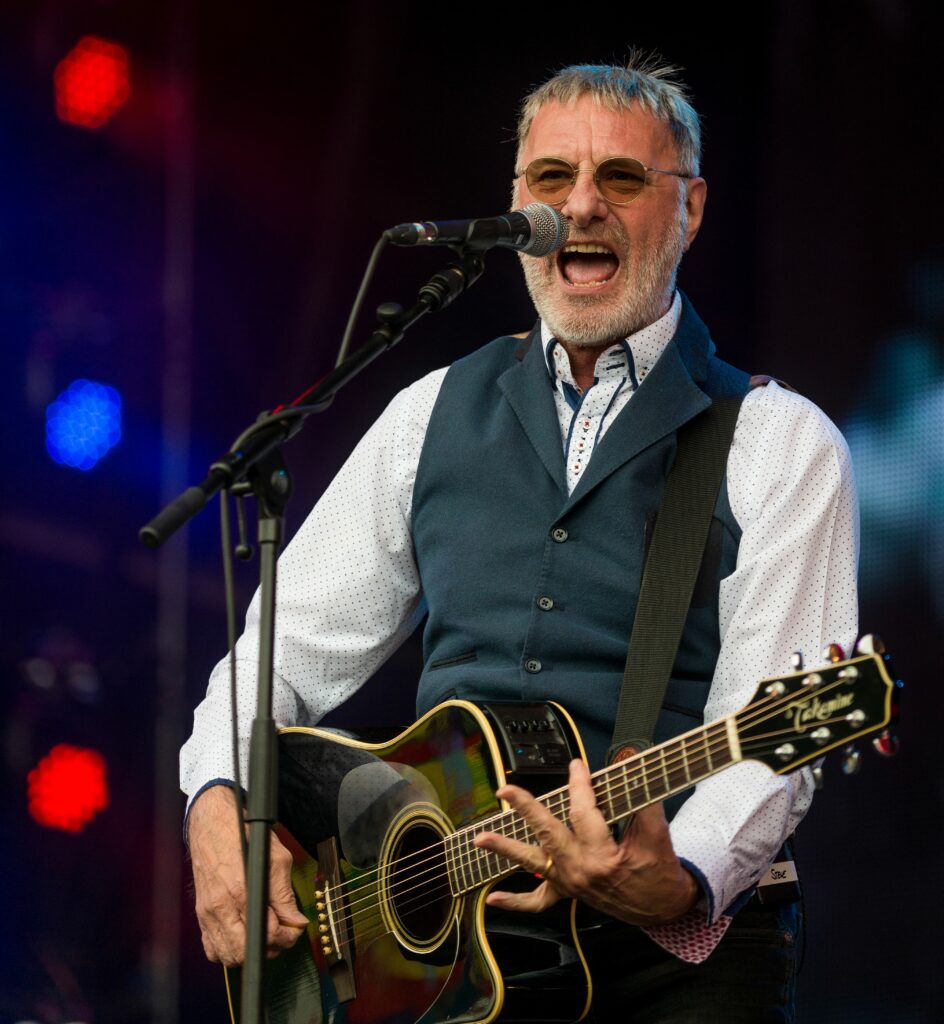
Steve Harley live
Image by Martin Bone

What can we expect from the tour? You’ve recently been playing some rarely-heard stuff, as well as the hits, haven’t you?

Yeah. I get hints from people all the time on Facebook about what they want me to dig out. I do take notice, but some of it isn’t really feasible or practical. 

For the December tour of the UK, I’m planning to have a blend – a mélange. The first hour will be the rock band and after the interval it will be an acoustic four-piece – maybe with some light drums for some numbers. 

One by one, the rock band will re-enter, until we build it up to the full eight or nine-piece again for the finale of half an hour. That’s what’s in my mind, but I can’t say that’s gospel because it changes by the day. It’s a moveable feast. 

You also have a career-spanning box set coming out next year, don’t you?

Yeah, it’s coming out in the spring. Chrysalis have discovered stuff from the EMI vaults – outtakes, bits of conversations with the engineer… Frankly, I just want people to have it, if they want it – and I hear that they do. I don’t know what they get out of it – I’ve no idea!

You have a lot of diehard fans, who’ve followed your career, but do you attract younger people to your gigs?

When the lights go up and I can see what’s going on, there are quite a lot of young people who might have got into me through mum and dad playing it at home. I like that. 

As you get older, you want some younger people coming through, because no one makes a living out of selling records, except Ed Sheeran – there are only about 10 people like that in the world, now… Life is on the road. That’s the livelihood – selling tickets and playing. I’ve sold several thousand CDs on the road this year. The people who support me still buy CDs – that’s my demographic. 

I still buy CDs…

So do I. I play them in the car or on the hi-fi in my study. Uncovered [2020 studio album of cover versions], through the distributor Absolute and us taking it on the road, has sold over 7,000 copies. 

I got my money back – it was an expensive album to make. I spared nothing – two weeks at Rockfield with top-line musicians…

Didn’t you record the string arrangements for Uncovered in Europe?

Yes – we went over to a small studio in Holland. The arranger was Thomas Tol. He’s fantastic – amazingly tender, sensitive and subtle. 

There’s no EQ on that album – it’s totally organic and completely pure. 

Matt Butler [engineer] said to me: ‘What do you want it to come out like?’ I said: ‘I want to be in their living room and in the car with them’.

One music journalist complimented me on the album – he said: ‘It’s like I was in the studio with you’. That was such a lovely thing to hear. 

When we were in Rockfield, we had the best Pro Tools money can buy and Matt had the best microphones. We went in with the best musicians – Martin Simpson [folk guitarist] for God’s sake!

He’s great.

He’s more than that – he’s way out. We had virtuoso players –Barry Wickens [violinist/guitarist], Oli Hayhurst [double bass] with handmade instruments. I had a handmade guitar and a 1974 D35 Martin [acoustic]. I said to Matt: ‘Just mic us up – no EQ’.

He said: ‘Basically, you don’t want me to engineer, do you?’

I said it was more subtle than that: ‘It’s a tough gig – you’ve got to make it sound wonderful without twiddling any knobs’. 

I didn’t want any echo, reverb or effects. That’s what you get – the only overdubs on it are the string quartet and my voice.

You used to record at Abbey Road, didn’t you?

For years. 

Do you have a home studio?

No – I’m not like that. 

You’re not a fan of home recording?

I hire studios and engineers – I’m not technically advanced. I used to write songs onto a MiniDisc – now I use an iPhone with a really classy app. 

I record in a room with very little furniture – when I write songs, it’s almost like a recording.

I play guitar all the time – you have to keep your fingers in trim. I’ve got three acoustics set up in three different rooms. 

I think I’m going to settle down and watch Match of the Day, but in the corner of the living room there’s a lovely Taylor guitar… 

When I’m alone, I just look at it and think: ‘I’ve got to pick that up…’ It’s very tactile – I start playing and hit the record button.

Are you a prolific songwriter?

I don’t finish them… Last year I transferred some stuff from my iPhone to a PC and 76 things came up – I have notes next to them about how good they are, or what I should do with them.

It’s not like people are chomping at the bit – albums are expensive to make and then you’ve got to get your money back. I won’t make a cheap, rubbish album. 

You talked about listening to CDs on your hi-fi at home. Do you have a good set-up?

Oh yeah. I have a fabulous Linn set-up with three pre-amps and a CD player – it takes no prisoners. It’s mega stuff.

What about vinyl or streaming?

I don’t stream – I wouldn’t know how to do that. 

So, you’ve spent 50 years in the business and you’re 71. Are you still a rebel? Were you ever?

I’m actually pretty conservative – I live a quiet life off the road. 

I have a couple of acres of woodland, and I feed the fish and I feed the birds. I’m not a fan of the real world and of politicians though… It’s worse than ever.

My children say I’m only slightly eccentric, but that’s because my head’s swimming with lyrics and plans.

About 10 years ago, in a monthly music magazine, someone said: ‘Steve Harley is neither a Cockney nor a rebel’.

He’s kind of half-right, but he’s half-wrong. I wrote back to him, tongue-in-cheek, and said: ‘Neil Young was neither crazy nor a horse’. 

All Images by Martin Bone

Steve Harley is touring the UK this December. For live dates, visit:
steveharley.com


Back to Music

The post Music Interview: Steve Harley appeared first on Hi-Fi+.

Mobile Fidelity’s 40th Anniversary Thriller

There probably isn’t a one of you who doesn’t own some version of Michael Jackson’s Thriller, which is, after all, the best-selling album of all time. Thirty-seven weeks at Number One on the Billboard Top LPs & Tapes chart, certified 38x platinum, a record-breaking eight Grammys including Album of the Year and Record of the Year (“Beat It”), the most Top Ten singles of any LP in history, not to mention the rocket-boost Jackson’s slick moon-walk videos gave to MTV’s popularity (and vice versa), Thriller changed things—not least, the public perception of Jackson himself, who went from a boy-band singer with boundless energy and a sweet falsetto voice to an international cultural icon. Once scorned by outfits like Rolling Stone, who feared putting Black musicians like him on its cover because “they don’t sell copies,” Jackson became the hottest thing in show biz.

In retrospect, a lot has been made about the “artistic change” in Jackson that Thriller represents. The redoubtable Stephen Erlewine of AllMusic rather captures the Zeit, writing that “although [Thriller] is an undeniably fun record, the paranoia is already creeping in, manifesting itself in the record’s two best songs: ‘Billie Jean,’ where a woman claims Michael is the father of her child, and the delirious ‘Wanna Be Startin’ Something,’ the freshest funk on the album, but the most claustrophobic, scariest track Jackson ever recorded [allmusic.com/ album/thriller-mw0000056882].”

I don’t know. Reading Michael Jackson’s psyche directly into his music strikes me as a classic instance of the biographical fallacy. Jackson was the quintessence of pop—a strange, lonely, tremendously gifted and canny artist with an unquenchable drive to be Number One and (with the help of arranger/producer Quincy Jones) an unfailing sense of what would work for him musically to achieve crossover success. In life, he may have suffered from an increasingly severe case of arrested development, but on LP it seems to me that songs like “Billie Jean” and “Wanna Be Startin’ Something” were less likely unconscious reflections of paranoia and more likely conscious attempts to comb more of the Jackson Five bubblegum out of his hair (a process that began with Off the Wall)—efforts aimed at making Jackson appear more grownup, macho, independent, and saleable, without sacrificing his boyish energy and charm. In Thriller, he got what he aimed for, and we got a uniformly delightful, irresistibly danceable album chockful of memorably catchy tunes.

Originally recorded, all-analog, by pioneering engineer Bruce Swedien at Westlake Recording Studios in Hollywood (April–November 1982) and mastered by none other than Bernie Grundman, the Epic Thriller won the Grammy for Best Engineered Recording and deserved it. Unlike so many pop albums that sound terrific on radio or TV but disappointing at home, Thriller has always sounded good on vinyl. A lot of this is owed to Swedien, who was famous for his innovative mic’ing techniques (he was, Michael Fremer told me, among the first recording engineers to use Blumlein pairs to record pop vocals and instrumentals, like those of Jackson and his musicians on this disc), some to Westlake Recording, whose studios were acoustically treated for flat frequency response and controlled reverb, some to Grundman, who has overseen the production of an extraordinary number of wonderful-sounding albums, but most to Jackson himself and to Quincy Jones, whose joint arrangements, choice of backup performers, and performances are, well, phenomenal.

For this 40th Anniversary reissue, MoFi claims to have used the original ½”/30ips mastertape, copied to DSD256, mastered at its analog console (with Tim de Paravicini electronics), and inscribed on a lacquer that is plated with a layer of metal, which, when peeled off, becomes the stamper (bypassing the lossy metal mother/father steps of conventional pressings). Belatedly, MoFi is now admitting to the DSD “digital step” in its LP-making process; indeed, the entire manufacturing sequence is now printed on a sticker attached to the front cover of Thriller—like the old SPARS code on LPs and CDs.

You can tell how MoFi’s Thriller is going to sound from the very first moments of “Beat It” on Side Two. The “ch’k” of the hi-hat is much clearer and less forward and aggressive on the MoFi than it is on the Epic LP. Indeed, every instrument and vocal on “Beat It” (on all the songs from Thriller) is clearer and cleaner and somewhat more laid-back, which is to say noise has been lowered substantially, and clarity has been raised substantially. As a result, the decipherability of lyrics, the contributions of backup musicians (like lead guitarist Eddie Van Halen and rhythm guitarist Steve Lukather), the overall neutrality of timbre and resolution of detail (such as the heightened breathiness of Jackson’s voice, which takes on a kind of see-through transparency that makes him sound quite “there”) are greatly increased.

So…a big step forward, right?

Well, yes and no. If you turn the page (or move the stylus) to the second cut on Side Two, “Billie Jean,” you’ll begin to understand the “and no” part. All the improvements in clarity, noise, resolution, and neutrality are still there, of course, but so is something else that is equally apparent on “Beat It.” Just listen to Ndugu Chancler’s big drum strikes followed by Louis Johnson’s Yamaha bass ostinato at the start of “Billie Jean.” Swedien wanted these drumbeats to stand out and went so far as to construct a plywood platform for Chancler’s kit, “ordering a custom-made bass drum cover, using everything from cinder blocks to specially designed isolation flaps, all to capture just the right imaging…‘See if you can think of any other piece of music where you can hear the first three drumbeats and know what the song is,’ Swedien [once] said. ‘That’s what I call sonic personality’ [Blender: The Ultimate Guide to Music and More, October 2005].”

On the Epic LP, that “sonic personality” is unmistakable. Putting aside the fact that “Billie Jean” (and every other cut on the album) is mastered at a much higher level on the Epic LP than it is on the MoFi reissue, the first strike of the drum hits hard enough to knock you back a bit in your seat. It’s got lifelike body, presence, and, above all, transient impact. So does Johnson’s Yamaha bass (which was especially chosen for its tone by Jackson, after Johnson demo’d every other bass guitar in his arsenal).

On the MoFi reissue, the drum and bass guitar are clearer with greater separation, detail, low-end extension, and more neutral and natural color, all right. But they are also less present and exciting. It’s almost as if some of the fun has been let out of the room. The upfront presence and thrilling power-range/midband impact of vocals and instrumental transients—and thrilling is the way the musicians, the producer, and the recording and the mastering engineers intended them to sound—are somewhat reduced.

Though I’ve been avoiding the question, I’m sure you’re wondering (as I did) whether these sonic differences are the results of the “digital step” MoFi is now taking in mastering. When it comes to this LP’s lower noise and higher resolution, they probably are; however, they are certainly also the result of the different EQ that MoFi’s engineers used on this reissue (for which, see the sidebar).

When it comes to mastering you can, I suppose, make an argument on behalf of any procedure that either: 1) makes the music sound more faithful to what is recorded on the tape; 2) more faithful to the sound of a live performance; 3) more faithful to the artists’ intentions; or 4) just more fun to listen to. This reissue rather falls into the first category, the original into the third and fourth. MoFi’s John Wood, Krieg Wunderlich, and Shawn R. Britton have taken an eminently enjoyable recording intended to be pure toe-tapping entertainment and turned it into something that demands and repays close listening—an audiophile recording rather than an exuberant, highly produced, bandwidth-limited, 80s’ dance mix.


Four Questions about Thriller for the MoFi Mastering Staff

First, who did the mastering on Thriller? Did your staff consult with Bernie Grundman, or did your engineers rely on their own judgment and experience?


John Wood: Our mastering engineer Shawn R. Britton did the ½”/30ips analog master archival transfer to DSD 256 using our customized Studer deck and digital gear at Battery Studios in NY. Krieg Wunderlich did the LP mastering/cutting in our studios in Sebastopol, CA. All sound was approved by Sony and the Michael Jackson estate.


Second, how did your mastering engineers decide on EQ for Thriller? What was the procedure (i.e., was the sound of the DSD master used as the sole “standard of comparison” for the sound of the LP, or are choices for “sweetening” made by ear, by engineering notes from the original mastering session, or by cross-comparison with Grundman’s fully EQ’d production masters or with the tonal balance of the Epic LP)?

Krieg Wunderlich: When mastering a title, we will listen to original pressings, and if the original mastering engineer’s notes are available, we will certainly take what guidance we can from that information. Often our goals can be somewhat different from those of the original mastering engineer. For example, our records are pressed on the highest-quality vinyl, so there is little need to raise the quieter passages in order to mask the noise floor of the poor-quality vinyl of the 70s and 80s. Additionally, we don’t need to concern ourselves with how our records will sound on the radio or a cheap set of loudspeakers. Our goal is to bring to our customers as much detail and nuance as possible from the original two-track master to the final product.


Third, when your LPs are pressed, does anyone check for centering? (I ask this question because the Thriller I received was miscentered; for that matter, so were the early Epic pressings I compared it to.)

Shawn R. Britton: The R.I.A.A. dimensional characteristics for 33-1/3rpm phonograph records sets a runout specification of recording grooves relative to the center hole at 0.050″ maximum deviation. We checked multiple stamper sets, and while some pressings had a detectable amount of runout (eccentricity), they are well within the RIAA specification. The definitive way of checking centering is the lock-out groove at the end of the record. If the cartridge body appears to be stable during playback, then it is fine.


Fourth, you pressed this Thriller at 33rpm. Do you have any intention of releasing a “limited-edition,” two-LP, 45rpm set in the future?

John Wood: Yes. In the future. 


Specs & Pricing

Type: 33rpm, Ultradisc One-Step LP
Pressing: UD1S 1-042 A18/B19
Price: $100


MOBILE FIDELITY SOUND LABS, INC.
811 W. Bryn Mawr Ave.
Chicago, IL 60660
mofi.com

The post Mobile Fidelity’s 40th Anniversary Thriller appeared first on The Absolute Sound.

Lyle Lovett: 12th of June

It’s inspiring to learn that after Lyle Lovett’s 10-year hiatus from recording, his quirky, distinctive style of music still entices. Supported by his longtime Large Band, Lovett revels here in his multi-genre mastery of jazz, swing, folk, and country. Vibrant big band jazz dominates the first half, followed by a shift into ballad mode. Split between seven originals and four covers, the album not only showcases his band’s virtuosic versatility but also the eclectic range of his own songwriting prowess. A paean to parenthood (Lovett became a father to twins at age 59), the acoustic title track, encapsulates Lovett’s strengths: tender lyricism shorn of sentimentality, a restrained but emotive voice, and an earned, laconic wisdom that reverberates through his best material. For all of Lyle’s solemnity, we also get a full embrace of his playful side, such as the absurdist humor of the swinging “Pants Is Overrated.” It also must be said that most country singers these days would not kick off their record with an exuberant cover of Horace Silver’s 1959 jazz instrumental “Cookin’ at the Continental,” where the Large Band melds the difference between western swing and hard bop just for starters.

The post Lyle Lovett: 12th of June appeared first on The Absolute Sound.

Posted in Uncategorized  |  Tagged ,

All Roads Lead to Avalon

Between 1972 and 1982, British Roxy Music released eight studio albums that were so influential it’s hard to imagine how pop music would have evolved without them—certainly it would have been less interesting and less colorful. Roxy’s output was consistent enough that career-spanning compilations would seem to be in order. In 2012 Virgin released The Complete Studio Recordings, a 9-CD box set that included a disc of B-sides and other ephemera. Given the resurgence of vinyl, wax was bound enter the picture, and 2015’s The Studio Albums contained eight platters that were remastered at half-speed by Miles Showell at Abbey Road Studios. A recent slate of reissues shares some provenance with The Studio Albums, but read carefully. This year half-speed masters by Miles Showell and Abbey Road Studios have again entered the marketplace—but that’s because the Abbey Road team remastered the vinyl a second time. As with the box set, these albums were cut from high-resolution digital archive files transferred directly from the original master tapes, but these aren’t carbon copies of the box set. According to Martyn James, “The new cuts are taken from the masters that Miles created for the 2014 box set, but they were brought up to date and cut on a different lathe, using new, updated software and equipment. The new lathe that Miles is now using is of a much better quality and therefore Miles was able to deliver a superior cut to the 2014 titles. Additionally, we moved all of the studio albums from GZ to Optimal for these new cuts. It is our belief that Optimal press and produce the best vinyl in Europe (if not the world).” Instead of combining all the titles in a box set, Virgin/UME is making each LP available individually. Rather than spring for a deluxe edition, then, consumers can pick and choose their favorite titles. 

Roxy’s eponymous debut album (1972) and For Your Pleasure (1973) are products from the early days of glam rock, when flamboyantly dressed musicians tried to create music as outrageous as their outfits, but even within that framework Roxy carved out a unique sound. At times Bryan Ferry sang like an off-kilter fifties rocker, an impression that was enhanced when he pounded out rock ’n’ roll chords on an acoustic piano, and a rhythm section propelled by drummer Paul Thompson offered a firm foundation. It was the layers sprinkled over top—the handiwork of Eno (synthesizer, tape effects), Andy Mackay (saxophones, oboe), and Phil Manzanera (electric guitar)—that threw a curve ball into Roxy’s sound. Some instruments seemed antiquated while Eno’s synth sounded as futuristic as it looked, and the sounds coming out of those instruments were tweaked in every which way. The front-line instruments sometimes battled for the foreground, yet it says something about the level of artistry involved that, in spite of all the chaos, the whole thing sounded very musical—and fun. Rarely is music this hip so playful.

After Eno departed, the multi-instrumentalist Eddie Jobson assumed a key role for the next three studio albums, Stranded (1973), Country Life (1974), and Siren (1975). Along with electronic keyboards, Jobson played electric violin, which, like Andy Mackay’s oboe, gave an old instrument a modern twist. Gradually the band became more polished and streamlined. In part the more straightforward sound might have been a natural progression, but Roxy also made a clear attempt to broaden their audience, especially in America, which was slow to pick up on quirkier groups from across the pond. The leadoff single from Siren, “Love is the Drug,” has radio-friendly written all over it, but at the same time it’s so Roxy Music, with lyrics so deliberately corny (“I say go/She says yes/Dim the lights/You can guess the rest”) that there’s no way Ferry could sing them with a straight face—which tells us that Roxy played the radio game on their terms.

Roxy Music was one of many veteran bands to lose their spark in the late 1970s and early 1980s. The lethargy of Manifesto (1979) and Flesh + Blood (1980) was underscored by some uninspired covers, including a version of the Byrds’ “Eight Miles High” that never leaves the ground. At times during Flesh and Blood you hear a group feeling its way toward a new sound but never putting all the pieces together. The first few bars of “More Than This,” the leadoff track for the next album, 1982’s Avalon, tells us where the music was headed. Immediately the dreamy, seductive spell is set, and that mood is sustained throughout the record. 

For reasons that quite possibly have to do with the original recordings, while listening to the half-speeds I noticed an uptick between the sonics on Roxy’s eponymous debut album and their third LP, Stranded. (I still haven’t been able to get my hands on a half-speed of For Your Pleasure.) What I’ll dub the three “middle-period albums” (Stranded, Country Life, and Siren) impressed me musically and sonically, with high marks for the level of detail emerging from inside the grooves. The new half-speed version of the best song on Siren, “Both Ends Burning,” sounded cleaner and much more open than it did on the original US pressing, and Eddie Jobson’s keyboards had a stronger presence, which in turn brought a more sinister tone to the song. And while the highs were more pronounced, the half-speed also boasted a firm, clearly defined bottom end, including John Gustafson’s aggressive bass lines. By comparison, Manifesto and Flesh + Blood sounded anemic and less open.

Finally, I was quite fond of the half-speed of Avalon. Listening to “The Space Between,” I was impressed by the full, detailed, and vivid sound leaping out of the grooves. If the same song on my Robert Ludwig-mastered original US pressing of Avalon packed slightly more of a punch, well, remember, that’s setting the bar quite high. Also, on an album that contains a thousand small details, it impressed me how minutiae like the incidental percussion on “The Space Between” came through with so much clarity on the half-speed. That attention to detail characterized the half-speeds in general and deepened my appreciation of several titles, including Avalon. I’m greedy—I want the Ludwig-mastered original of Avalon and the half-speed. For thirty bucks a pop, you can afford to be greedy too.

The post All Roads Lead to Avalon appeared first on The Absolute Sound.