Tag Archives: Solid-state preamplifiers

AURALiC ALTAIR G2.1

At the 2022 AXPONA show in Chicago AURALiC demonstrated its streaming electronics via ATC loudspeakers in two rooms, which is a fine pairing but not one you see over here too often. But you can see why a company that doesn’t make amplifiers might like an active loudspeaker specialist; it reduces the box count. Also, ATCs are excellent speakers with a similar approach to voicing, which is essentially highly neutral with minimal tweaking for added sweetness. That said, the AURALiC units allow the end-user to equalise the sound to suit the system and the room, so they aren’t exactly ‘hairshirt’. Given the potential for tweaking embedded in virtually all digital audio chips these days there aren’t many streamers that could be called hairshirt, it’s just not something the modern audiophile aspires to, he or she want everything all the time and in the ALTAIR, AURALiC makes a good fist of giving it to them.

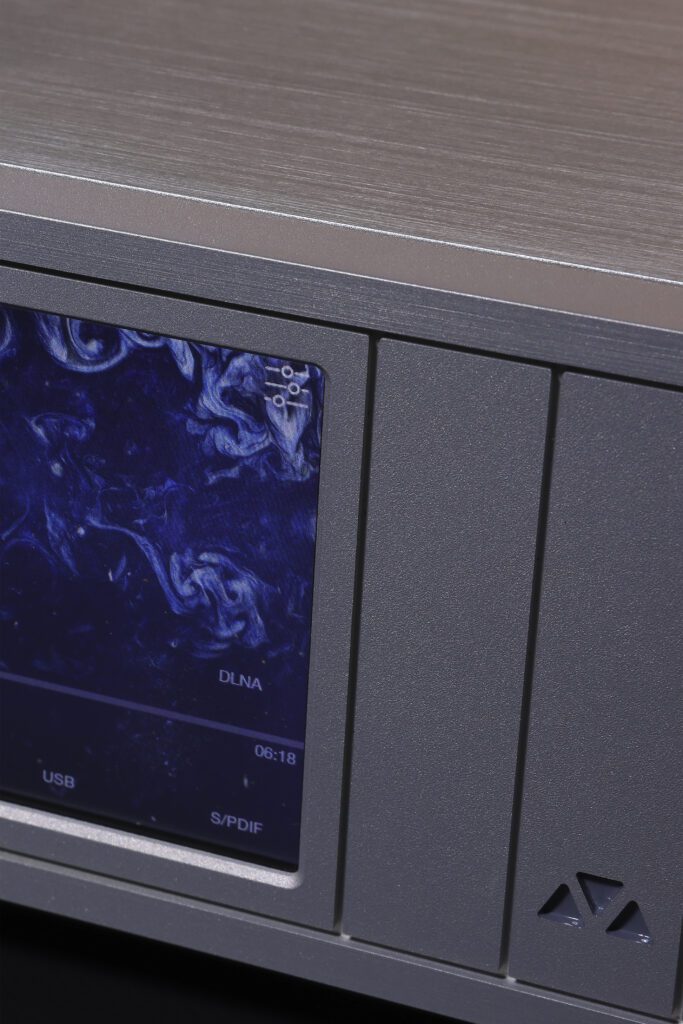
The ALTAIR G2.1 is AURALiC’s top all-in-one design. It combines a streamer, DAC and preamplifier in one solidly built unit that has the same Unity Chassis II found elsewhere in the G2.1 series. There’s also an ALTAIR G1 in the range and the main difference is in the chassis which looks similar but is a far more simple affair. G2.1 is constructed as a box within a box, the inner one being made of copper because this material shields the electronics from electro magnetic interference (EMI) far more effectively than aluminium. This is something you find in Japanese valve electronics where it’s often on show but it’s rare to see so much copper casework used in digital equipment, despite the critical role that good shielding plays. The aim with good quality digital is keeping electrical noise to a minimum regardless of how that noise is getting into the circuitry and given that EMI is a well-known source it’s perhaps surprising that more manufacturers don’t go for this approach.

Spring in the step

The casework that you do see is in machined aluminium with a very high quality of fit and finish that sits on feet that are designed to keep vibration in the supporting surface at arm’s (foot’s?) length. These feet conceal no fewer than six springs within them, three of one size and three of another; the idea being that the combination serves to keep out a broader range of vibration frequencies.

The ALTAIR G2.1 is a fully featured device that goes so far as to include a phono stage among the roster of inputs on the busy rear panel, it only has enough gain for moving magnet (MM) rather than the audiophile’s usual MC choice but you could use a step-up transformer to pair it with an MC. There’s a single line input on RCA sockets and the full gamut of digital inputs including an XLR for AES/EBU connections, and a USB input which is not something usually found on a streamer. Theoretically a streamer doesn’t need USB because this input would typically be used with a streaming device but there are always streaming services that are not available from dedicated audio devices. The obvious one is YouTube but those interested in new music might want to play Bandcamp or similar from their PC. Apart from the quality of digital to analogue conversion on offer the ALTAIR can be used to upsample the low bit rates available from such services and extract as much as possible from the stream.
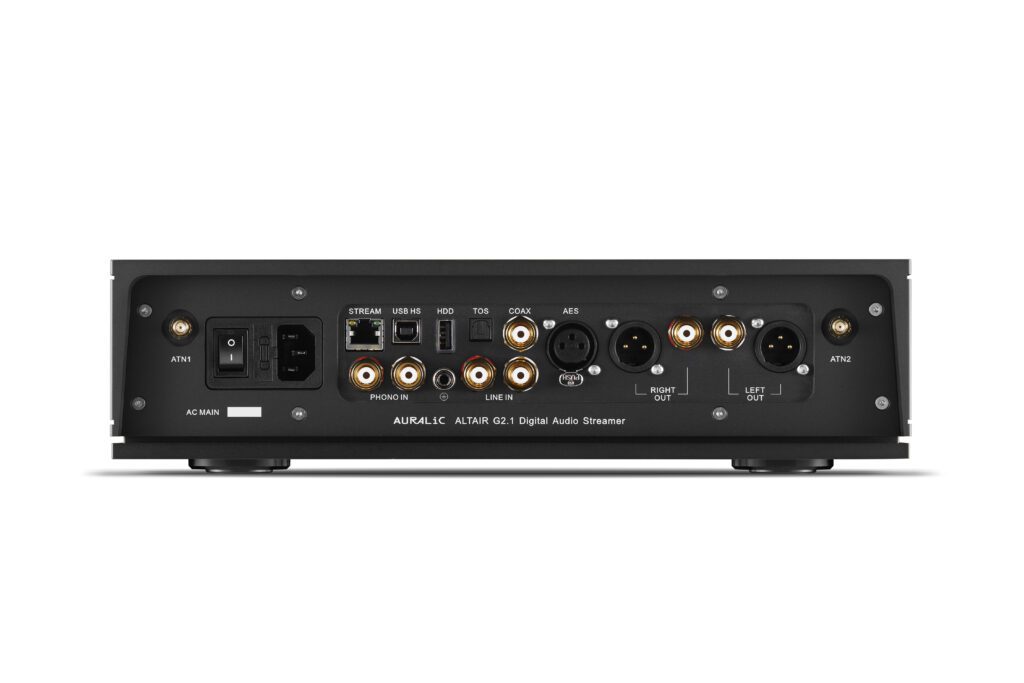
AURALiC ALTAIR G2.1 Back

It offers balanced or single-ended analogue outputs which can be fixed or volume controlled, and a headphone jack on the front panel, there are no digital outputs. AURALiC make the ARIES streamer for those looking to use a separate DAC.

There are of course the most popular lossless streaming services available in the box with Qobuz, Tidal and High Res Audio among them alongside bigger brands like Amazon Music and Spotify Connect. The only omission would appear to be Tidal Connect but that’s because this feature is hidden within the ‘Additional Operations’ area of the app. That app being AURALiC’s Lightning DS which is still limited to iOS but remains one of the best looking in the business, and the access to streaming services being as good as any. I used it primarily with a Melco music library on the network and Qobuz but it’s possible to access data stored on a USB drive where the Lightning server software comes in handy for sorting and playing the music of your choice. With larger libraries it takes a while for the Lightning server to scan all the data but once that is done it’s just a case of setting an auto scan for new material or doing so manually once a week or so.

Not hard to drive

The ALTAIR has the option to add a hard drive, HDD or SSD, so that your music can be stored onboard which saves the cost and extra box of an external drive. It also means high quality storage, the like of which would set you back a lot more than the asking price of a NAS drive, and there’s no need for a fancy ethernet cable.
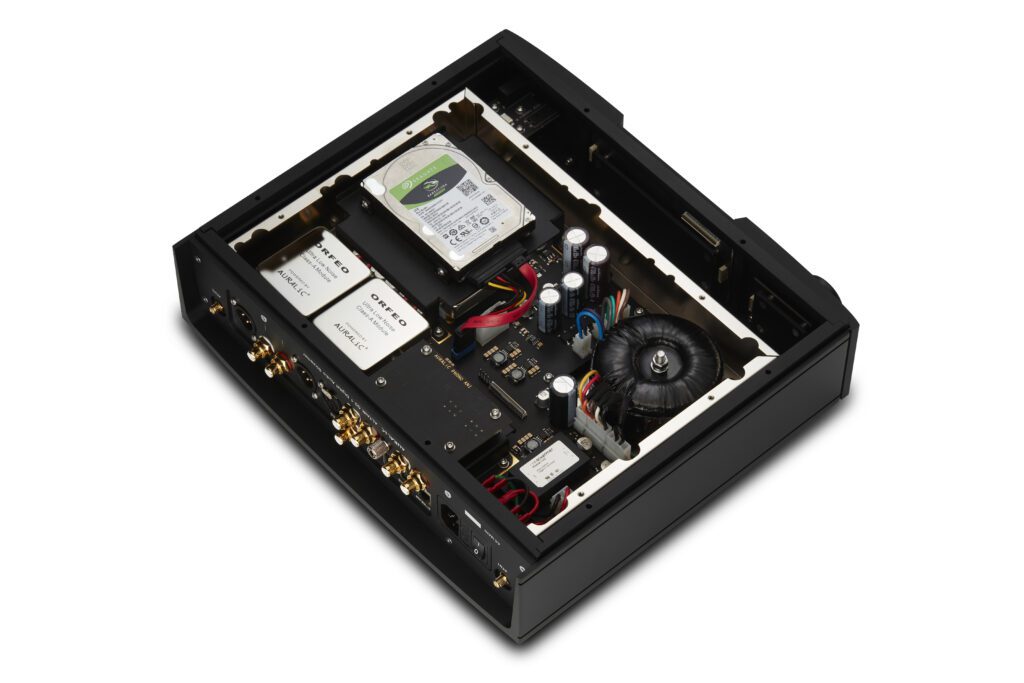
AURALiC ALTAIR G2.1 Inner (with HDD)

There’s no mention of the actual DAC chip onboard but whatever it is it’s very capable if the specs are any indication. The ALTAIR can deal with PCM at up to 32-bit, 384kHz and DSD up to DSD512 or 22.57892MHz in old money. It works with all the useful file formats and some of the less appealing ones too, needs must and all that. AURALiC make much of the passive volume control that’s based on an R2R resistor ladder network, the latter being powered only when volume is being changed so that it doesn’t emit any electrical noise into the system. You can change volume with the front panel knob or by remote control, the catch is that AURALiC don’t supply the handset. Instead you can program the ALTAIR to accept a wide range of commands using the smart IR learning system that’s accessed via the display. This required excellent eyesight to read but does allow all manner of features to be accessed from your choice of handset.

Smooth operator

A lot more features are available within the Lightning DS control app, these include the parametric equaliser, resampling configuration which allows specific source sample rates to be raised to a desired level, filter settings where four options are available (I went with ‘smooth’, obviously), speaker placement options to compensate for practical rather than sound quality set ups, and a home theatre bypass option for the line input. The various Wi-Fi inputs can be switched on and off and Roon and Tidal Connect modes likewise enabled.

It wasn’t until I had been using the ALTAIR G2.1 for some time that AURALiC mentioned that the balanced output has a lot more going for it than the single ended so a lot of my notes refer to that connection, and to be honest it made a pretty good fist of things not least in the bass which seems generally to be a strong point of this component. Because distortion in the bass is less obvious than higher up the range you can tolerate lower quality in this department so long as it has depth and weight. But when a streamer has really clean and extended bass you know all about it and this AURALiC certainly does, the low end on numerous albums came through with clarity and power, extending the sense of depth in the image (which as we know is directly related to bass) and rendering the low notes on all manner of instruments with ease and precision.

This is related to the quietness of background that AURALiC’s efforts to keep out EMI have achieved, the perceived noise floor is very low indeed and this makes room for the quieter notes and allows them to decay in a very natural fashion. Dan Berkson’s Dialogues works a treat on the ALTAIR, sounding very solid and three dimensional in the room with a ‘live in the studio’ energy. This band proves that individual players do not need to be well acquainted so long as they have good direction and know their chops, and the musicians that Berkson gathered for this set clearly do. It’s tight and the acoustic instruments have full rich tone, even the non acoustic Rhodes keyboard makes the grade here too. I was impressed at the way the ALTAIR manages to deliver a tonal balance that reflects this recording so well without recourse to valves in its output. It’s not soft or sweet but neither does it emphasise leading edges for the sake of immediacy.

The majority of my listening was done with the ALTAIR connected to a preamp with its output fixed. I did try going direct to the power amplifier on a couple of occasions but there was a loss of dynamics that discouraged this. It could be that my Moor Amps Angel 6 power amplifier is a bad fit in electrical terms and passive preamps tend to be more fussy in this regard. I used two different preamps and both single-ended and balanced outputs on the ALTAIR and preferred the external preamp every time.

One thing I noticed about this streamer was how well it worked when I wasn’t paying attention; some sources can be distracting (in a bad way) when they’re in the background and others just plain dull but this one worked really well. I suspect that this is also related to the low noise and wide dynamic range, which allows it to sound almost as good when it’s quiet as it does at more engaging levels. I tried the latter with Patti Smith’s Gone Again where the song ‘Beneath the Southern Cross’ is powerful and evocative thanks to the depth of feeling in the voice, but it’s the following ‘About a Boy’ that really grabs you. This bristles with restrained ferocity, the band does at least, the guitar and drums sound as if they are barely contained thanks to the dynamics on offer from the AURALiC. Smith’s voice is a counterpoint, it’s the darkness in the eye of the sonic storms that makes the piece that much more poignant. All of which is clear thanks to the streamer’s ability to delve right down into the mix and send it to the amp and speakers in so much fine detail. That one was with the balanced outputs and did sound better for it even with a preamp that is not truly balanced itself.

Just out of interest I put on a few DSD tracks. This is not generally my format of choice but it seems that some DACs deal with it rather better than others. Bill Evans’ Explorations swings beautifully and avoids the papery airiness that often seems to accompany DS and instead it sounded natural and relaxed which are the more appealing characteristics of the one-bit system. Another contrast was made between the USB and streaming inputs, both supplied by a Melco N10 music library/server. Here the streaming option had quieter backgrounds, fuller bass and less time smear. Which is quite an achievement given that the ethernet cable has to be about a tenth of the price of the USB that was making the connection. USB had the advantage in timing, image scale and smoothness of delivery, however, so it’s safe to say that the ALTAIR is a very capable DAC.

The most comprehensively equipped member of AURALiC’s G2.1 family does an awful lot of what matters in high-resolution streaming with consummate ease. It doesn’t offer the upgradeability of AURALiC’s separates but those looking to hear what a serious streamer is capable of will find an awful lot to like in this superbly executed piece of kit. Build quality is first class and ease of use via the Lightning app is top notch. Combine the ALTAIR G2.1 with a good pre and power amp, or perhaps a pair of those active ATC loudspeakers AURALiC used at Axpona, and you’ll have a system that’s going places.

Technical specifications

  • Type: Solid-state network streamer, DAC, preamplifier
  • Analogue Inputs: One line (via RCA jacks), one MM phono (via RCA jacks)
  • Digital Inputs: Two coaxial S/PDIF (via RCA jacks), one TOSLink, one AES/EBU, one USB B, one USB A
  • DAC Resolution/Supported Digital Formats: FLAC/WAV/MP3, etc. Sampling rate for D/A conversion: 384kHz/32 bit, DSD512
  • Music services/Wi-Fi inputs: Amazon Music Unlimited, HighResAudio, KKBOX, Qobuz Sublime+, TIDAL Connect, AirPlay, Spotify Connect, Internet Radio, RoonReady
  • Analogue Outputs: One stereo balanced (via XLR connectors), one stereo unbalanced (via RCA jacks)
  • Digital Outputs: none
  • Frequency Response: 20–20KHz, +/- 0.1dB
  • Distortion (THD + Noise): < 0.00012% (XLR);
    < 0.00015% (RCA), 20Hz–20KHz at 0dBFS
  • User Interface: display (on main unit), Lightning DS application software for iOS
  • Dimensions (H×W×D): 80 × 340 × 320mm
  • Weight: 10kg
  • Price: £5,299

Manufacturer

AURALIC

auralic.com

UK Distributor

AURALIC Europe

(+44) 7590 106105

Back to Reviews

The post AURALiC ALTAIR G2.1 appeared first on Hi-Fi+.

2022 Golden Ear: CH Precision L10 Dual Monaural Linestage Preamplifier and M10 Two-Channel Reference Power Amplifier

CH Precision L10 Dual Monaural Linestage Preamplifier and M10 Two-Channel Reference Power Amplifier

$76,000 (two-chassis L10), $132,000 (four-chassis dual monaural L10); $104,000 (stereo M10), $198,000 (per pair of M10 monoblocks)

CH Precision’s L10 preamplifier and M10 power amplifier are the highest realization of the Swiss company’s technology, build-quality, and musical aesthetic. They combine unprecedented set-up flexibility and control with simply stunning sound quality. For example, the two-chassis stereo power amplifier can be configured for stereo operation (300Wpc), or in two different monoblock configurations, or for passive bi-amplification or active bi-amplification (the latter with the addition of a plug-in board). The ability to independently adjust the amount of local and global feedback from the listening seat through CH’s control app allows the amplifiers to be precisely dialed-in for your loudspeakers. Sonically, the 10 Series has a pristine rendering and exquisite resolution of fine detail without sounding analytical. The highly detailed rendering for which CH Precision is known is there, but accompanied by body, timbral warmth, and dense tone color—a compelling combination. These electronics let you hear every nuance of musical expression and interaction between musicians in a way that is simply thrilling. A tour de force in amplification and my reference electronics.

CH Precision M10 Two-Channel Reference Power Amplifier

The post 2022 Golden Ear: CH Precision L10 Dual Monaural Linestage Preamplifier and M10 Two-Channel Reference Power Amplifier appeared first on The Absolute Sound.

Hifi History: The Classic, Tube-tastic Audio Research SP-3A Preamplifier

This week Tom Martin reviews Audio Research’s SP-3a, his pilgrimage to Transcendental Audio, and the legacy the SP-3A left in its wake as it pioneered and pushed the hi-fi boundary.

The post Hifi History: The Classic, Tube-tastic Audio Research SP-3A Preamplifier appeared first on The Absolute Sound.

Gold Note DS-10 EVO

Have you tapped into your inner musicologist and entered the world of high-quality streaming yet? Are you not yet addicted to having the world of music as your library rather than being limited to what you find in your record or CD rack? Over the past few years, the entire proposition has been getting better and better to a point where, right now, with a little careful consideration, there is some superb equipment available. These advances in musical quality and, particularly, stability have never been more evident than at the lower end of the market. If you’re still thinking about it, then I might have something of interest here.

What is it?

Gold Note is an Italian company that originally made its name with analogue equipment. The company’s DS-10 EVO is a streamer/DAC which can be supplied with or without an internal analogue preamplifier. Whatever configuration you choose, it makes a powerful case for itself by offering extensive features in a half-sized box at a very reasonable price. It has the technical and musical chops to sit at the front of some impressive music systems. The list of features starts most obviously with a remarkably bright and clear 2.8-inch TFT display. Easily read from across the room, it tells you everything you need to know. The unit I used was also equipped with the optional preamplifier section, which means that you could drive it straight into a power amplifier. If you choose this configuration, then you make it entirely viable as a streamer / DAC / preamplifier. Using it with an integrated Vitus SIA 025 amplifier meant that I was initially running it through two preamp sections, which is less than ideal, obviously. It was easy to remove the volume control electronically, thereby turning it into a straight line level output unit with the anticipated increase in sound quality quite apparent. But, from a system point of view and given its quality, the preamplifier section can make a lot of sense. We will return to the DS-10 EVO again in the future when I will look at it afresh and with its optional separate power supply (PSU-10 EVO) in an all-Gold Note system, including a power amplifier and speakers.

Gold Note DS-10 Evo

All commands run through the rotary control. You merely set the parameter you want to access and scroll through the options. It’s as simple as it sounds. It’s worth mentioning the remote control here, too, which can mimic the onboard controls. All I will say is that if only all remotes operated as well as this and from such fine angles, the audio world would be a better place.

What can it do?

The DS-10 EVO can handle all resolutions, including MQA and Gold Note offer its own control app to navigate through the world of music. It can also accept external digital inputs from other equipment through a series of various rear panel connections. All the usual streaming services are catered for, including Tidal, of course, which is the one I generally use.

The Gold Note platform is a simple design based on the M-Connect platform, but it does provide you with all the basic access you need to search for and play music. I would gently suggest, though, that the search function should be quietly incorporated into the top bar as its pop-up box looks rather clunky. I used the app throughout my time with the unit and the Tidal version. It’s well worth noting here that the Gold Note DS-10 EVO is fully updatable online as and when improvements become available, and the app, too, will no doubt undergo the same soon.

Easy to use?

This is literally a plug ’n’ play machine though I am going to slip in the usual caveat that it does like a bit of running so it can stretch its legs and clear its throat. Give it an hour or so of work to do, and it will be in full flow. Connected to a router with the streaming service account enabled, you are looking at a comprehensive streaming DAC. Unlike many similar streamers, the DS-10 Evo was up and playing in a few moments, the current resolution being displayed in the top left of the screen and the unit configuration writ large in the centre.

Interestingly enough, Gold Note included a range of settings that I haven’t seen on a streamer/DAC before. They call it Chameleon mode, and though its concept is simple, the sheer depth of its implementation possibilities is impressive. By controlling three parameters, you gain access to 192 different set-ups. This allows you to customise the DAC to suit your own music system and, of course, taste. Broadly speaking, these three control the EQ curve, and the De-emphasis curve and provide fine control options over the voltage being sent to the DAC section itself.

The individual adjustments, alongside descriptions of their effects, are listed in the detailed handbook, and they deal with everything from the tonality to the coolness or warmth of the sound. This can be done via the front panel, and there are three presets that can be selected once you have spent many happy hours running through the 192 options before locking in those combinations you wish to keep. You may, for instance, have distinct preferences when listening to certain styles of music or just trim the system tonally or work those numbers to make the system sound fit the room acoustics better.

Alternatively, you might just like to tweak. A bit overwhelming? Perhaps, but fear not, getting back to the standard set-up is as easy as pushing a button, giving you a constantly available reference point. Actually, I liked that setting the best.

But can it play music?

Let’s forget the numbers and the features and pose the question that eventually must be asked of all audio equipment. Is it musical? Such a loaded and weighty enquiry for sure! I’m going to spare you all the arguments and justifications which could go on forever before ending up back at the beginning and rephrasing it. Is it musically intriguing and enjoyable enough to actually make you want to listen to it? The answer to that is a resounding yes. In fact, it’s really the only question that has ultimately ever really made much sense to me of any audio component. This little machine has a compelling musical nature and some desirable attributes that appeal to those core audio values that I have always looked for.

Gold Note DS-10 Evo rear panel

It sounds taut and controlled but never rhythmically over-rigid. Its tonal balance is just about spot-on, and it never strays into that rather matter-of-fact sense of resolution-first music style that some streamers/DACs do. In fact, its resolving power tends to feel entirely subsidiary to its bouncing sense of tuneful exuberance most of the time. But what I really enjoy about it is the way it puts all the musical elements together to highlight a performance. The top to bottom balance and certainly how it can layer the instrumentation is compelling.

Where some systems can bombard you with needlepoint resolution yet sound rather flat and uninteresting, the Gold Note has a real and attractive view of the soundstage and the shape of the music. It is also very quiet, which helps enormously and shows you perspectives and instrumental pictures and shapes with dimension and exceptional stability. It has real depth in more ways than one.

I admit to being surprised at how musically interesting this unassuming but highly efficient little machine is. I think it’s a great little package because it is always succinct and to the point. It sounds very good indeed, and as a gateway to the world of music outside your living room, I’d say it’s a pretty solid investment for anyone wanting to take that next step.


Technical specifications

  • Type: Streamer / DAC / optional Preamplifier
  • D/A Converter: AKM PCM up to 32bit / 768kHz and DSD 512
  • Services: TIDAL, Deezer, Qobuz, Spotify, vTuner, Apple Airplay, Roon 
  • Digital Inputs:1 × RCA PCM coaxial, 2 × optical PCM, 1 × AES / EBU XLR PCM, 1 × USB-B, 1 × USB-A
  • Bluetooth Bluetooth 5 (44/16)
  • Analogue Inputs: 1 × 3.5 mm mini-jack
  • Audio Outputs: 1 × unbalanced RCA, 1 x Balanced XLR, headphone output
  • Remote: Yes
  • Dimensions: 80 × 200 × 260mm (H×W×D)
  • Weight: 5kg boxed
  • Finishes: black, silver and gold
  • Price: DAC/streamer £2,499
    Dac/streamer/preamplifier £2,999

Manufacturer

Gold Note

URL: goldnote.it

UK Distributor

Airt

URL: airtaudio.com

Back to Reviews

The post Gold Note DS-10 EVO appeared first on Hi-Fi+.
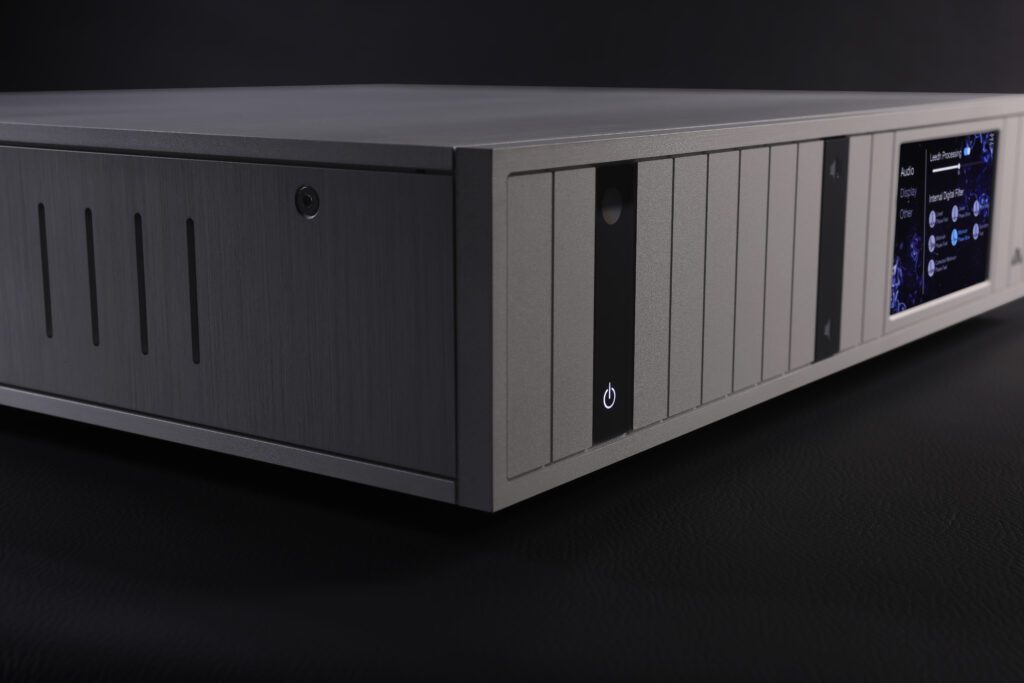
Audio Analogue Bellini Anniversary and Donizetti Anniversary

This took a long time. During the lockdowns of 2020, we got the Audio Analogue Bellini Anniversary preamp and Donizetti Anniversary stereo power amp. And during those lockdowns, it got completely overlooked, in the way you can easily overlook a stereo power amp that comes in a box that Ikea might use to flat-pack a whole kitchen. It’s a shame because these two are a fine paring.

Let’s get the rant bit out of the way first; Audio Analogue came to fame in the mid-1990s thanks to its excellent Puccini integrated amplifier. That product does not define the brand; the Italian company makes a whole range of audio electronics from half-sized digital products (the excellent AAdrive and AAdac that we tested in Issue 193) as well as phono stages, integrated amps and these fantastic separate preamp and power amplifier. And yet, when talking about this upcoming review to audio-adjacent friends, it was always, ‘ah yes… the Puccini!’ That said, being known as ‘the Puccini brand’ is better than ‘Audio who?’!

Happy 27th Birthday!

The introduction wasn’t simply to fill space; the Puccini was Audio Analogue’s first product back in 1995. Twenty years later, Audio Analogue produced a version of the Puccini to celebrate that anniversary. That formed an Anniversary line of products (all designed in Airtech’s laboratories), including the more powerful Maestro Anniversary integrated amplifier, and Bellini Anniversary preamplifier and Donizetti Anniversary power amplifier.

Like Puccini and Maestro, Bellini and Donizetti are well-known names in Audio Analogue’s history and, like the Puccini Anniversary and Maestro Anniversary, the Bellini and Donizetti Anniversary models share little more than the name with their predecessors. The Bellini Anniversary is closer to the Maestro Anniversary, as it shares the same basic preamplifier circuit. However, the Bellini Anniversary adds an inductive-capacitive filtering system to the main power supply, designed specifically for the preamp. This filter is suggested to significantly reduce ‘disturbance’ from the mains in terms of ripple and potential EM interference.

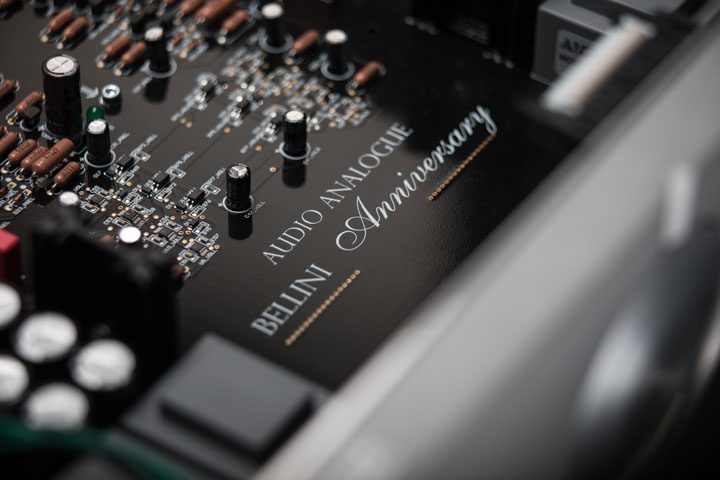
Audio Analogue Bellini Anniversary internal

The four-layer circuit board uses Audio Analogue’s own SeGeSTA (Single Gain Stage Transconductance Amplifier) circuit to keep the noise floor low. The fully-balanced, dual mono preamp has no global feedback, and the board layout is designed to minimise potential noise and crosstalk ingress by reducing crossing points between input and output and between digital control sections and analogue inputs. What’s – pleasantly – surprising about the Bellini Anniversary is the extensive use of traditional components over surface-mount designs. This allows the amplifier to specify very high-grade components and affords the Bellini Anniversary owner better long-term repair options (if a resistor needs replacing, it’s a lot easier to do so with a discrete component than it is trying to unpick and replace a surface-mounted equivalent).

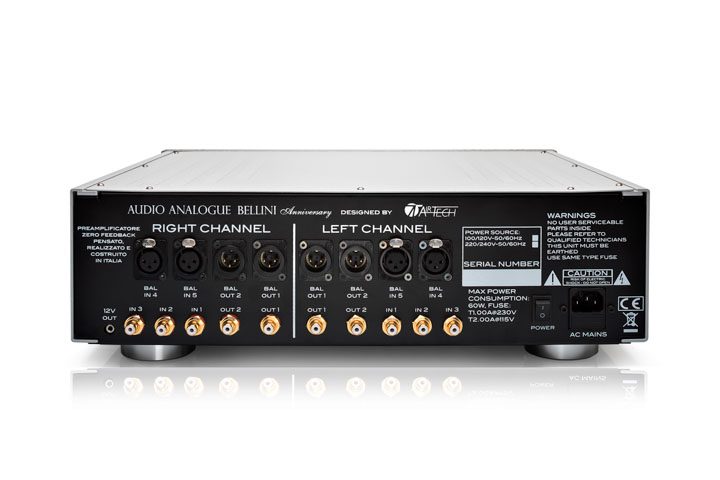
For a balanced design, there are a lot of single-ended inputs; the Bellini Anniversary has two balanced XLR and three RCA single-ended inputs, with two XLR and two RCA outputs. I think this is a good option for a domestic industry that has never fully embraced the joys of balanced inputs, but in listening, the balanced option used throughout sounds better.

The Bellini Anniversary’s basic functionality needs a bit of a run-up, as it’s perhaps not the most instantly intuitive design around. Having one control to drive standby, input selection and volume can take some time to understand, and until you get the knack of operating it… use the remote. Once you do get that knack, you’ll probably still want to use the remote because switching inputs involves pressing the button for the correct length of time and moving majestically in sequence through the inputs. Fortunately, these inputs are clearly marked with white LEDs on the front left of the preamp, while the volume is displayed through 22 white LEDs on the right-hand side. These are dimmable… from the remote.

Bring on the brute!

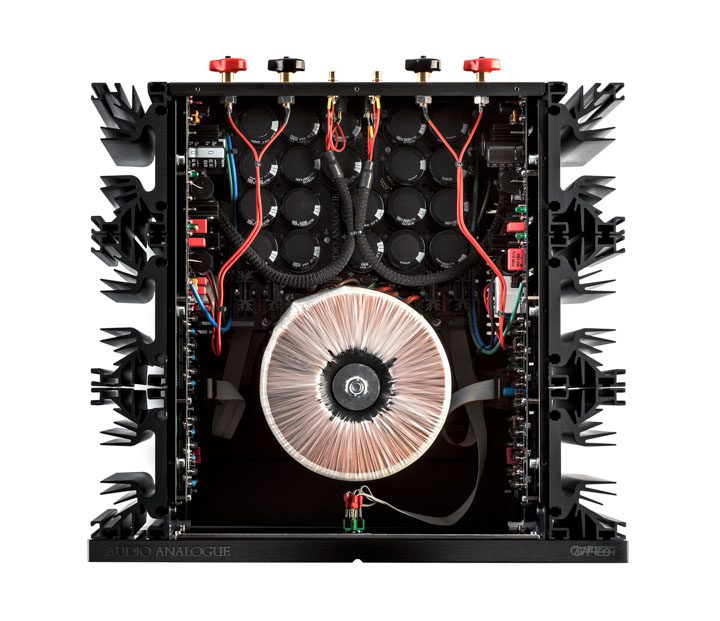
The Donizetti Anniversary (which also shares nothing but the name with its predecessor) is an absolute unit, a friendly brute of a 250W power amplifier that doubles to 500W into four ohms and 950W into two-ohm loads. There’s nothing out there in loudspeaker land that will trouble it; two beefy 1200VA transformers designed specifically for the amp help. Because the amp is a pure dual mono design, the two transformers stack one on top of the other, which gives the amp an uneven weight distribution. When coupled with some spiky heatsinks that run the length of the sides of the amp, this forward-tilted weight distribution makes the amplifier approximately 1.35 standard metric pigs to move; but once sited and the blood flow is staunched, it becomes the most docile of amplifiers unless provoked by music!

Audio Analogue Doninzetti Anniversary internal

All that heatsinking does push for an observation about the Donizetti Anniversary. It takes a while to come on song. Not just in terms of its initial conditioning phase (I can’t speak about that as it all happened long before the amplifier arrived), but in terms of starting the amp from standby. It really only comes on song when the heatsinks are warm to the touch, which can take anything up to half an hour or more. It’s worth the wait, but those who demand instant gratification from their amplifiers will not like that their first few tracks played will lack the satisfying musical integrity they will experience later in the session.

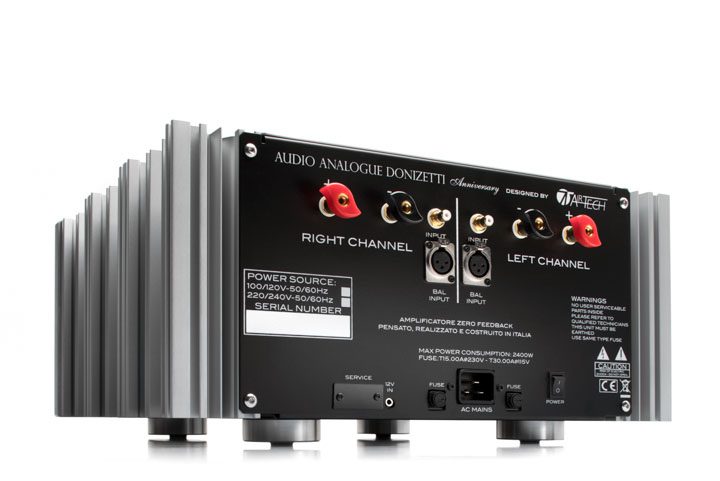
As with the Bellini Anniversary, the no-global feedback Donizetti Anniversary uses Audio Analogue’s SeGeSTA configuration, which in the Donizetti’s case is followed by a group of four transistors per side to deliver the requisite current without influencing the gain stage. It also has the same ‘minimal crossing points’ layout seen in the Bellini Anniversary, uses high-quality discrete components on four-layer boards, and sports 7N OCC copper case wiring throughout. With both balanced and single-ended inputs and high-grade speaker terminals at the rear and a single soft-start push button on the front, it’s likely all the amplifier you need. If it isn’t, there’s also an option to run two Donizetti Anniversary in dual mono… presumably if you want to use a pair of loudspeakers as a foghorn.

Sound quality

Within about 20 seconds into the listening, my notes read ‘mailed fist in a velvet glove’. It’s a cliché, but one that holds a lot of water when listening to the Audio Analogue Bellini and Donizetti Anniversary duo. The overall sound is refined and effortless… but with a lot of speaker-gripping control and sheer grunt in reserve should you decide to play it loud.

A sign of a good amp combination is that controlled power, where it doesn’t tip over into brightness or showy deep bass rumbling unless it’s called for. If that is the case, the Audio Analogue pairing is an extremely good amp combination. That first track was ‘Englishman in New York’ by Sting […Nothing Like the Sun, A&M] and it sounded extremely fine. The shape and texture of the music played had great flow and some force when called for and had plenty of grace and charm throughout. Sting’s odd diction is not the best test of vocal articulation, but I’d say it works well; perhaps the ‘refinement’ part of the sound makes him more ‘Mild Skin Irritant’ than ‘Sting’, but the combination paints the recording with all the right shades.

Audio Analogue Bellini Anniversary rear panel

Swapping from this to ‘Insomnia’ by Faithless [Reverence, Cheeky/BMG] showed the space and power this duo has in abundance. I’m frequently shocked that this classic of Progressive House music is getting on for 27 years old but played loud it sounded fresh and exciting through the Audio Analogue pairing. That famous ‘drop’ is powerful and expressive and when the drums kick back in, you are back in the clubs again. That drop needs a system that is both sophisticated (it can sound too toppy) and dynamic enough to make it seem like it’s 1995 again.

Another telling sign of the quality of the Audio Analogue pairing was how happy they were when things changed. Swap over loudspeakers and the amps change their character to suit (up to a point… it’s still the same refined, warm balance with a holographic soundstage and lots of fluid midrange detail). Swap sources and the amps react accordingly. Even changing preamp and power amplifier shows their basic refined/warm/neutral sound shines through. They are at their best when you keep the amps in the Audio Analogue family, however.

Again and again, I found myself drawn into a wide, near holographic soundstage filled with instruments that have a sublime midrange, a subtly underpinning of bass, and a refined, never once brash treble. OK, so maybe the soundstage wasn’t so pronounced when playing some 1970s pub-rock recordings [‘She Does It Right’ by Dr Feelgood, Down By The Jetty, UA] but here it’s all about managing raw charm. You get to hear Wilko Johnson ripping through a Telecaster at a ferocious pace, and loses none of ferocity of that bridge pickup and its tweeter-shattering intensity. But what the Audio Analogue duo do so well is give this recording a sense of its own place in history. You can almost smell cheap beer, cheaper aftershave, and Canvey Island’s finest whelks when playing this record through the Audio Analogue duo, so natural is the sense of space and energy.

There’s always a trade-off somewhere in audio. Here it’s between absolute fidelity and wider musical approachability. Those sublime recordings – not just test records, but the ones you use to show off a system, like ‘Babylon Sisters’ from Steely Dan’s Aja [MCA] ­ are reproduced extremely well, but lack a little of the top-end sparkle and vividness you hear through the very best audio electronics. On the other hand, records that are all-but unlistenable on top-notch audio systems – like the stupidly compressed ‘I Bet You Look Good on the Dancefloor’ from Arctic Monkeys Whatever People Say I Am, That’s What I’m Not [Domino] – sounded, well, OK. The compression was still apparent, the dynamic range of the recording paper thin, but the pace and fun of the track was retained and not so undermined by the sheer detail retrieval of the system.

Audio Analogue Donizetti rear panel

I am in two minds about that trade-off. It renders a lot more music listenable but those recordings that don’t need a helping hand are less well presented.

Conclusion

The spectre of audio’s rose-tinted view of the past should be exorcised. We sometimes prize those classic big pre/power combinations from the 1980s, but if we listened to them today on a level playing field, I suspect a few of the Anointed Ones of audio wouldn’t hold a candle to this Audio Analogue pairing. It’s gentle, refined and sophisticated touch with music – that not only rolls with the punches but can also deliver a neat haymaker when required – is extremely alluring, especially for those who do not simply choose audiophile-approved recordings. The Audio Analogue Bellini Anniversary and Donizetti Anniversary is the pre/power combo that puts a smile on your face.

Technical specifications

Bellini Anniversary line preamplifier

  • Inputs 3x RCA single-ended stereo pair, 2x XLR balanced stereo pair
  • Outputs 2x RCA single-ended stereo pair, 2x XLR balanced stereo pair
  • Input impedance 47kΩ
  • Output gain 5dB (single-ended), 11dB (balanced)
  • Frequency response (attenuation 0.5dB) 0Hz–200kHz
  • Unbalanced output noise (Band 0 Hz–8kHz) 24µV, 9µV (A-wtd)
  • Balanced output noise (Band 0 Hz–8kHz) 37µV, 14µV (A-wtd)
  • SNR(0dB/A weighted/ref. 2Vrms) -107dB (single-ended), -103dB (balanced) – unbalanced output
  • Finish Black or silver
  • Dimensions(H×W×D) 140 × 450 × 380 mm
  • Weight 12kg
  • Price £6,000

Donizetti Anniversary stereo solid-state power amplifier

  • Inputs 1x RCA single ended stereo pair, 1x XLR balanced stereo pair
  • Input impedance 47Kohm
  • Power on 8Ω load 250W (1,000W mono)
  • Power on 4Ω load 500W (1,700W mono)
  • Power on 2Ω load 950W (2,200W mono)
  • Power Amp gain 26db
  • Sensitivity (8Ω output nominal power) 2.3Vrms
  • Frequency Response 0Hz 110kHz +0dB, -3dB
  • SNR; >110dB
  • Output resistance (rated power on 8Ω at 1kHz); 0.15Ω
  • Noise reported at the input (0Hz-80kHz); 10µV, 4µV (A-Wtd)
  • Finish Black or silver
  • Dimensions(H×W×D) 221 × 450 × 428 mm
  • Weight 41.2 Kg
  • Price £11,000

Manufacturer

Audio Analogue

URL: audioanalogue.com

UK Distributor

Decent Audio

Tel: +44(0)1642 263765

URL: decentaudio.co.uk

Back to Reviews

The post Audio Analogue Bellini Anniversary and Donizetti Anniversary appeared first on Hi-Fi+.
Burson Soloist 3X GT

The personal corner of the audio market is abuzz as vendors compete to out-do each other in the measurement stakes. Some of the latest personal audio amplifiers, many from China, almost defy electro-physics with distortion artefacts that are not just inaudible, but a challenge to detect with even the most sensitive of test gear. They also defy commercial convention with prices as low as £500-£600. Yes. If we believe that measurements tell us everything we need to know about how an amplifier will sound, that really is all we need to spend.

Burson from Australia has long been the exception to that rule and its new Soloist 3X GT combined personal audio amplifier and line stage is an intriguing product because the Soloist 3X GT doesn’t exactly push the measurements envelope. And neither does it cost £500 or £600. More like £2,500.

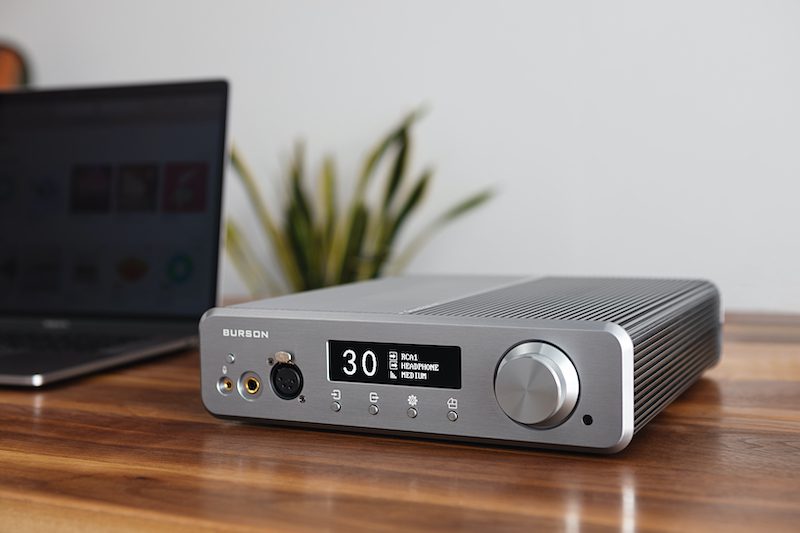
Burson Soloist 3XGT

Burson made a name for itself by designing and manufacturing op-amps for studio and OEM applications. The latest generation of Burson op-amps, such as the flagship V6 Vivid, are notable for being built with discrete components rather than being on-chip devices. Alongside, Burson has developed its own range of finished amplifiers and DACs, currently starting with the £544 Funk Class AB speaker/headphone amplifier and topping out cost-wise with the Soloist 3X GT.

Pure Class A

The Soloist 3X GT is a pure Class A design. It has a claimed +/-1 dB bandwidth of DC to 48 kHz. Burson provides no figures for channel phase balance. THD into headphones is quoted as 0.0015% and SNR as 112 dB into 16 Ohms; not class leading, but not shabby either.

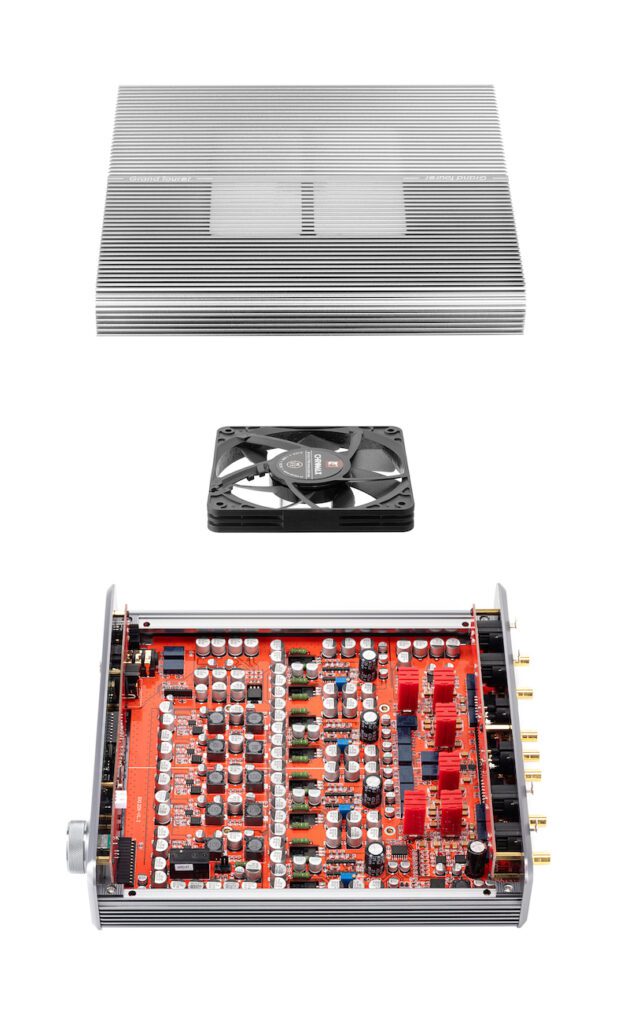
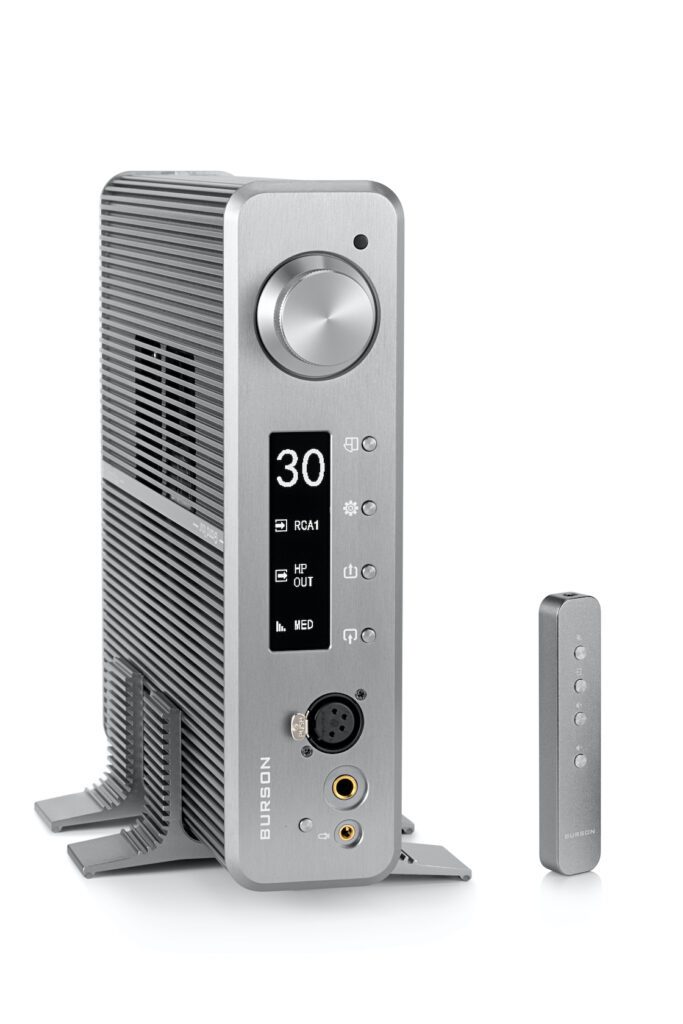
Burson’s design aesthetic is impossible to mistake for that of any other audio manufacturer. From the diminutive Funk upwards, the company’s finished products have ribbed aluminium cases with front and back plates of smooth aluminium, all electro-plated in the same light grey. The design is an efficient heat radiator in its own right, and so it tells us something that the Soloist 3X GT has an internal cooling fan. It needs one because it draws 90 Watts even when idle, and that translates into grunt, at least in headphone amplifier terms, with a capital G. The output of 10 Watts per channel into a 16 Ohm XLR load and 640 mW into 600 Ohms is more than twice that of some of its competitors. Output halves if the single-ended TRS socket is used.

Burson Soloist 3X GT

The review sample was left running for four weeks constantly. From a distance of a foot or so, the fan was audible between tracks when using an open-back headphone, but at greater distances the whirr disappeared into the nominal 31 dBA background level of the listening room. The fan is a standard low-noise computer device, widely available, so replacements should not be a problem.

The Soloist 3X GT’s internal switching power supply is fed by a wall-wart and operates at 170 kHz. Also inside the distinctive case are a pair of symmetrical mono amplifiers, each using three V6 Vivid op-amps. Gain is governed by two high-end volume control chips. On the back panel are XLR and RCA inputs, XLR and RCA outputs, plus a RCA sub-out that can be used for both headphone and line stage outputs. There are also three 12V trigger sockets and a microphone by-pass socket. On the front a dimmable white OLED display shows the gain selected by the rotary control, while buttons give access to input and output configuration, display orientation and a menu of options including line-stage balance, three levels of gain and three levels of crossfeed.

Flagship challenge

I used a LCD-5 headphone for most of the listening sessions. Audeze’s latest flagship planar model presents a load of 14 Ohms with a claimed efficiency of 90 dB. Even on its lowest gain setting the Soloist 3X GT comfortably drove the LCD-5, requiring a volume setting of 79 from a maximum of 100 to achieve more than loud enough sound pressure levels. On the highest gain setting a similar subjective volume was achieved with the control set to just 14. With no signal on the input, even on its highest setting and with the volume wound up to maximum, the review sample was silent into the Audeze LCD-5 and a Sennheiser HD650. It is safe to assume that with this level of sophistication, and an output impedance of 0.5 Ohms, it would likely be a good match for sensitive in‑ear-monitors too.

Burson’s designers have declined to just focus on stats but instead also paid attention to the key musical qualities of dynamic agility, dynamic expression, tonal density and timing. The payback for this approach is apparent within seconds of pressing the play button on the first quality recording of acoustic material. Teamed with the Audeze LCD-5, the Soloist 3X GT rendered the drum beats in the intro to the opening track of the Tingvall Trio’s 2017 album Cirklar [Skip] with a distinctly high-end and satisfying sense of texture to the skin tension and shell resonances.

Burson Soloist-3XGT-Cool-Stand

For much of the second track on the same album, double bass player Omar Rodriguez Calvo mirrors the melody that pianist Martin Tingvall plays with his left hand. In the last 12 months I’ve heard several headphone amplifiers that boasted absolutely stellar measurements… yet rendered the two layers as a homogenised, untextured and sterile sound.

In contrast, the 3X GT made it possible not only to hear each player’s subtle timing variations but also to discern the distinct tonal and percussive characters of their instruments. If we are wondering how the Burson might be worth five times the price of a £500 amplifier that measurers perfectly, then maybe there’s our answer. Or at least part of it. Because the Soloist 3X GT demonstrated too, on the same track and in the span of a handful of bars, that it is more than simply a detail machine. Several times Calvo pops out from under Tingvall’s left hand to play a dazzling fill before diving back under again to resume doubling on the main figure. Here, the Burson showed class-leading levels of both dynamic agility and dynamic expression, making listeners jump in surprise at the weight, power and texture of Calvo’s double-bass. In the intro of the same track, the Bonham-esque polyrhythmic pattern played by drummer Jürgen Spiegel was accurately nailed with speed and exemplary timing.

Philip Glass Philip Glass Glass Glass Glass Philip

The Atlanta Symphony Orchestra and Chorus under Robert Shaw playing Philip Glass’s Itaipu [Sony] is a reference recording of a towering, majestic work. Shaw makes full use of the impressive resources to hand, and the huge dynamic range and raw power of the performance poses a stern test of the entire audio chain, sometimes sending weak components into spasms of intermodulation, dynamic compression and flattened sound-staging. The Soloist 3X GT driving the Audeze LCD-5 headphone did not break a sweat.

I have to confess to being caught out. During a quiet passage and marvelling at the amplifier’s ability to throw perhaps the best sound stage available at or near the price, I was lured into winding the gain control ever upwards. So deep in concentration was I that I had temporarily lost my bearings in the piece, forgetting that a few bars on Shaw asks the orchestra and chorus for full throttle. When it came, the massive dynamic peak had me lunging in desperate self-preservation for the pause button on the CD transport, but not before registering that while the volume was painfully loud, the Burson had not lost its impressive level of composure.

Burson Soloist 3X GT

Complaints? I have but two. Why is there no way to turn off the display? Much headphone listening happens at night. Do we really want the womb-like hygge of our listening room ruined by penetrating OLED white? And why offer a balance function only on the line output? Few people have symmetrical hearing. But in every other respect the Burson Soloist 3X GT is an impressive package. Its neutral, natural, expansive and dynamically expressive abilities, coupled to that class-leading level of spatial resolution, makes it a serious contender for our money, putting it in a similar bracket to the Sparkos Labs Aries and the Benchmark HPA4, two notably high-achieving alternatives.

The Burson Soloist 3X GT is proof indeed, if proof were needed, that measurements do not always tell the whole story.

TECHNICAL SPECIFICATIONS

  • Type: Class A dual mono headphone amplifier and line stage preamplifier
  • Inputs: 2× RCA stereo pair, 2xXLR stereo pair
  • Headphone outputs: 3.5mm stereo jack, 6.3mm stereo jack, four-pin XLR balanced
  • Outputs: 1× RCA stereo pair, 1× XLR stereo pair, 1× RCA subwoofer output
  • Headphone power: 10Wpc (XLR) and 5Wpc (single‑ended)
  • Gain levels: Three, matching headphones from 60db to 108db sensitivity
  • Volume control: 2 X MUSES72320 + V6 Burson Vivid op‑amp discrete buffer
  • Features: Speaker soundstage centring, three levels of hardware-based headphone crossfeed
  • Dimensions: 25.5 × 27 × 7cm
  • Weight: 5kg
  • Price: £2,499

Manufacturer:

Burson Audio

URL: bursonaudio.com

UK Retailers

Hifonix: hifonix.co.uk

Tel: +44(0)121 382 5444

HiFiHeadphones: hifiheadphones.co.uk

Tel: +44(0)1903 768910

Back to Reviews

The post Burson Soloist 3X GT appeared first on Hi-Fi+.
Leema previews Quantum range with Audio T

Leema Quantum range to host special demonstration event

*From the Leema Acoustics news release

12th September 2022, Wales, UK: Following Leema Acoustics’ June 2022 announcement of the forthcoming Quantum range, the Welsh hi-fi manufacturer has teamed up with Audio T, Cardiff, to host a special Quantum demonstration event, ahead of the official launch later in the year.

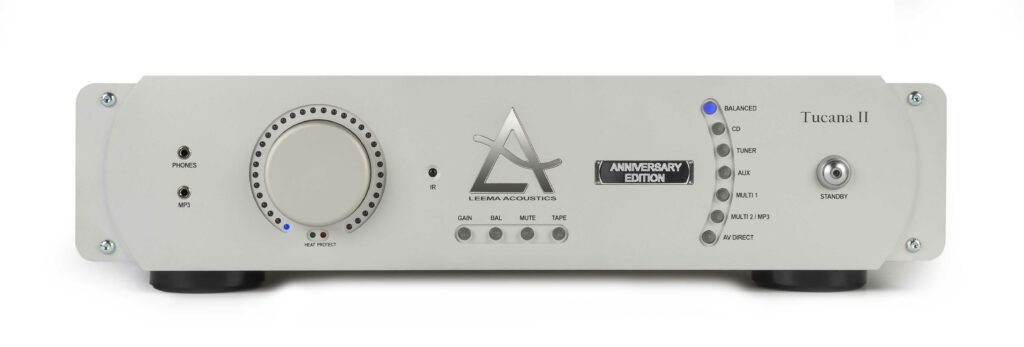
Audio T Cardiff, together with Leema Acoustics’ UK distributor MIAN Audio, will be showcasing the new Quantum range Neutron preamp and Graviton power amp with several planned demonstrations through the afternoons of Thursday 15 and Friday 16 September.

leema quantum

Hosted by Leema’s/MIAN Audio’s Andy Moore, the demos will include an introduction to the Welsh-based brand as it nears its 25th anniversary in 2023, a Quantum product demonstration and an overview of the popular Tucana II Anniversary Edition integrated amplifier.

A second demonstration room will showcase Leema Acoustics’ compact Elements CD player and Elements integrated amplifier, highlighting the sonic abilities of this shoebox-sized range.

The event will be jointly hosted and offers visitors the chance to experience models from across the product ranges, all of which are hand-made just 110 miles away in Welshpool.

Several sessions are available on each day and attendees are advised to book directly with the Cardiff store on 029 2022 8565 or email [email protected]

Back to homepage

The post Leema previews Quantum range with Audio T appeared first on Hi-Fi+.
Métronome Technologie DSC

There are few parts of the audio world as contended as computer audio. From the humble USB-powered DAC to complicated devices that take the place of half your existing system, the ‘post-physical’ digital world is manifold, complicated to implement, and at times bewildering. By the standards of the rest of the audio world, the post-CD digital world is a hotbed of activity. The Toulouse-based Métronome Technologie has long been at the digital leading edge, thanks to products like its DSC.

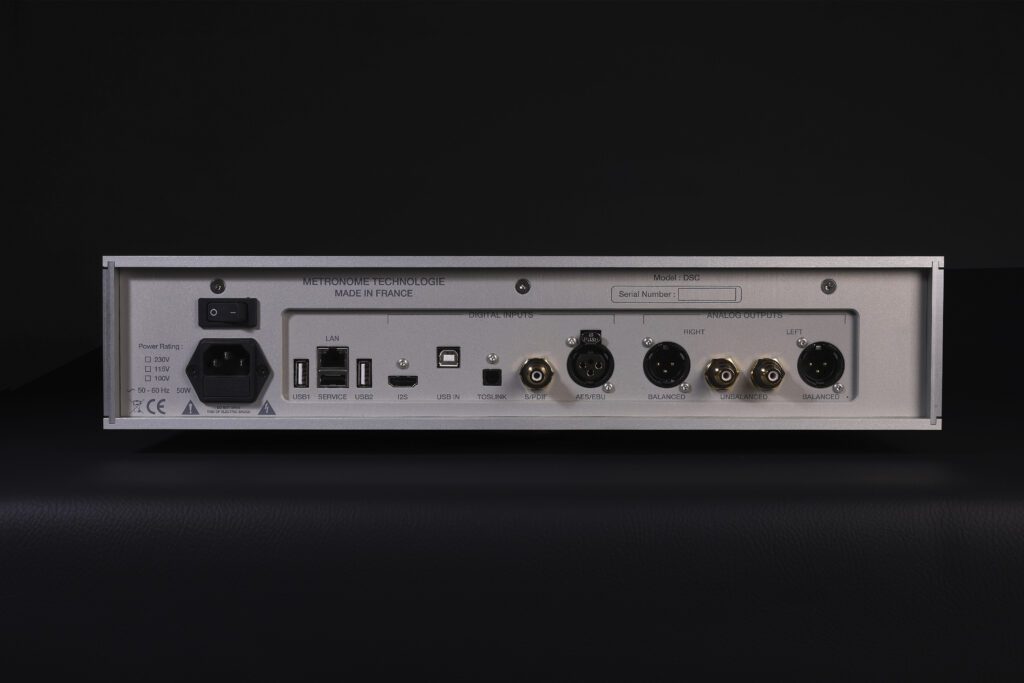
 DSC (or ‘Digital Sharing Converter’) is at the ‘flexible’ end of the modern digital audio spectrum. It’s a networked streaming preamplifier and DAC in one, allowing signals from a vast array of digital sources (basically, if you can’t find a suitable digital input out of an array spanning Ethernet, two kinds of USB – for laptop users and those with USB hard drives full of music – coaxial and Toslink S/PDIF, AES/EBU on XLR and even I2S on HDMI… then you are either trying to prove a point or are just not trying hard enough).

To the max

You could simply use it as a DAC, maxing out the volume control and pretending the network side does not exist. And in this aspect, the DSC fares well; built on an ES9038PRO Sabre DAC, the Métronome device decodes PCM to 32-bit, 384kHz, DSD to DSD512 and supports MQA. You’d be a little crazy to do this because there are other products – even other Métronome products – that do the same job, and you would be paying a healthy premium to include sub-systems that never get used in this case, but its DAC section is no slouch.

Métronome Technologie DSC

Realistically, Métronome DSC users will be looking for a single box to replace all their digital sources and preamplifier combined. This does preclude those with any analogue sources (unless they fancy a spot of digitisation first). However. it’s likely that by now, your view on analogue is either one of full embrace or total abandonment, and if the latter, the DSC ticks all your boxes for a top-end front end.

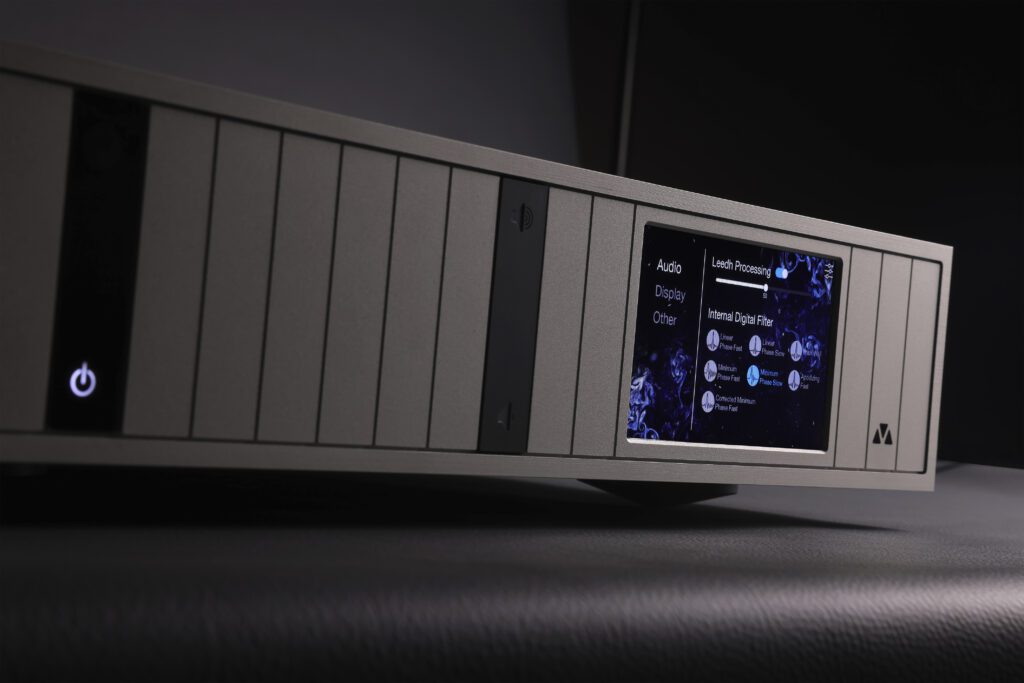
The DSC is a minimalist design with an industrial look reminiscent of some classic computer hardware architecture. You could convince someone that you’d installed a high-end blade server in your listening room, except for the absence of fan noise. However, the takeaway point from this is the solidity of the design; this is a heavily well-made product with the sort of care and attention that’s hard to find and harder to fault.

Plug & Play

Métronome also uses the term ‘Plug & Play’ in terms of its ease of use. That term was overused a few years ago and barely gets rolled out anymore. It seems appropriate here, as it is a device you insert into your system… and it’s done. This gets an order of magnitude easier if Roon is in the mix, as the DSC is Roon-ready.

Regardless of your feelings toward Roon, the DSC runs on a solid backbone of UPnP and DLNA connectivity. Wire it into your Ethernet network (you can use an aftermarket Wi-Fi dongle, but I’d argue against it on moral grounds), and if there is any kind of UPnP media server on the network, the DSC will act as its close friend, confidant and renderer. I used it with a Naim Uniti Core and the Melco D100, and in both cases, it made friends quickly.

Métronome Technologie DSC

If you aren’t going down the Roon route, Métronome provides a remote handset to accompany the touchscreen and recommends the Mconnect app. I’m conflicted by this; the app is excellent, and I’d much prefer relying on this app than an in-house app that comes pre-broken, but I also think a bespoke app is a requirement at this price and performance point.

Yes, that requirement all but goes away in the presence of Roon, making an in-house app even less of a functional and practical proposition. However, for many, the control surfaces of a streamer begin and end with the app itself and by going with a third party (no matter how good), it might not show the Métronome DSC in the light in which it should be seen.

The Equaliser

Minor niggle aside, the Métronome DSC is an excellent musical equaliser, not in the ‘graphic’ or ‘parametric’ sense. It allows the user to join hands with online subscription services like Tidal, Qobuz, Spotify and Deezer, and interwebular radio through vTuner. These blend seamlessly into your local storage on computers or network-attached storage (NAS) boxes. Granted, you must sign up for these subscription services on a computer or tablet. But I don’t have a problem with this… entering your credit card details into a five-inch touchscreen (or worse, through the remote handset) breaks the minds and thumbs of modern mankind.

In a very real way, I’ve been saving the best until last. Although very well implemented, there aren’t many things that differentiate the Métronome DSC from similar streaming preamplifiers from several well-respected companies. If Métronome didn’t have an ace up its sleeve, it would still fare well against some big hitters in this hotly contested field. But there’s Leedh to contend with, and that is Métronome’s ace up its sleeve. Leedh is a French signal processing company with plans for every aspect of digital signal processing but is currently concentrating on volume in the digital domain.

Digital volume controls have (mostly) moved on from the crude truncation systems of early 24bit attenuators on 16bit digital files, but ‘moved on’ typically means ‘truncating a dithered signal’. Dithering relies on an excellent algorithm to prevent folding quantization noise into the original signal, and not all algorithms are created equal. Leedh actively minimises the number of bits used to quantize the digital signal so that the amount of information loss is reduced at the truncation stage.

Métronome Technologie DSC

This means the attenuation doesn’t undermine the performance of the signal but comes at a trade-off of fewer fine steps to that digital volume control. Put simply, if you want 0.1dB volume changes in the digital domain, you must put up with compromised digital sound at any volume thanks to quantization noise being mixed into the digital datastream. Leedh means wider volume steps but vastly improved sound quality.

Gaining ground

Leedh is gaining ground with manufacturers, with Lumin and Soulution joining Métronome taking up the Leedh challenge (and fellow French company Vermeer Audio set to follow soon). If you think the quantization noise of conventional digital volume systems is the lesser of two evils, then you’ve probably not heard Leedh at its best. It makes a solid case to be the only volume game in town!

Finally, the analogue side of things is well-covered by the DSC, with a set of RCA plugs for single-ended systems and XLRs for balanced. It doesn’t have much in the way of digital outputs. Still, with increasingly thorough Digital Rights Management systems preventing recording, digital outputs are more useful for multiroom systems than recording. Given the Métronome’s robust Ethernet connectivity, chances are if you are using multiroom, you won’t be outputting that digital signal from the DSC anyway.

The specifications and feature list of the Métronome are exciting and promising, but it still places the DSC in the middle of many rivals. Those will look to the top-end Linn and Lumin products and wonder if the DSC is just an also-ran. It isn’t.

Right where it counts

Métronome scores highly right where it counts; in the sound quality department. The company has long made a sound that is approachable, natural, and free from a lot of that detail-first brightness commonly associated with top-notch digital audio. However, it does this without smoothing over the top end of the signal or making the treble too recessed or fattening up (and slowing down) the bass. It just makes the sound less forward and musically interrogative… in a good way.

It’s an exceptionally clear-sounding device, neither warm nor bright sounding. If that character could be summed up in a single word, it would be ‘honest’. Streaming ‘Sooth Lady Wine’ by Matt Corby [Telluric, Mercury, Tidal], it gives the track that warm, lush, modern take on a 70s rock jam, but then flipping over to ‘Crossings’ by Nils Frahm and Peter Broderick [Graz, for World Piano Day, Tidal], the sound shifted to the clean, clear, chimey sound of a closely recorded piano. This is a sign of a very good device, as it’s not introducing its character into the performance.

Looking at specific performance aspects in a streamer, it acquits itself exceptionally well. It’s a detailed and dynamic performer with an extremely good soundstage in a field that, if we are being honest, doesn’t often do too well in soundstaging. That good soundstage sits comfortably wide of the boxes and appears quite deep. However, there isn’t much height information, even on classic Decca recordings where such spatial information is very well rendered (Solti’s take on Mahler’s Eighth, for example, locally streamed from a ripped CD). Given the little better than 2D sound often heard through streaming sources, this puts the DSC into the top tier. Meanwhile, the same Mahler piece is excellent at showing how much bombast the DSC can play, and it’s a lot!

Maybe most important in the Métronome DSC’s sound is how it makes music sound effortless and authentic. In that respect, it sounds closer to a good CD or even LP than most streaming devices. It moved so effortlessly from musical genre to genre that it played some poor recordings alongside some of the best without making the former sound like a dog’s breakfast by comparison. When you start listening to ‘The Sound Of The Underground’ by Girls Aloud [Polydor, Tidal] and thoroughly enjoying it as a damn fine pop record rather than getting a little snooty about the level of compression they used some 20 years ago, you know you are on to a bit of a winner.

Do it well

The more you listen to music through the DSC, the more you want to listen to music. That’s what the DSC does so well; we get so obsessed by high quality sound and the noises it makes, we often forget that behind all that, you need to have something that sounds good, and the DSC sounds damn good.

Another way to highlight the DSC’s quality is that it stands up to comparison. The comparison that few people are making is a like-for-like with CD. As something of a Brexit-meets-COVID bonus, I’ve been able to hold onto the excellent Gryphon Ethos CD player for far longer than I expected or deserved, but it indicates just how good CD can be. It’s difficult to ‘fess up’ to, but except for a few cases, when you play a CD against a ripped and streamed version of the same recording, the CD comes out on top. Only a handful of streamers get close to being on par with a very good player, and I’d struggle to find any streamer that takes on CD’s big guns and wins.

Perhaps it’s because Métronome’s sister brand Kalista makes one of those big guns of CD, but the DSC gets closer than most to that CD ideal. Compared with most streamers, the sound of streaming is flat and uninspiring. A few streamers give CD a run for the money with a more exciting and exuberant, and the Métronome DSC joins that select list of streamers that make the grade. This might sound like a hollow victory (a 21st Century format that finally outperforms a digital format that’s about to celebrate its 40th birthday), but it’s a victory, nonetheless.

Follow the Leedh-er

Finally, there’s that extraordinary Leedh volume control. It changes the game, getting you about as close to the music as possible. The closest we get to sound this good is with a passive or an autotransformer preamplifier. You might not think about how vital volume control can be until you hear just how good the next generation will be.

Métronome Technologie DSC

The two significant elements this volume control system brings to the sound are invisibility and consistency. You realise a couple of bars into a record that the pinch-point in audio is the volume control, and the Leedh concept just takes that away. This ties into the consistency issue, as the performance doesn’t change at any volume level. While there are more characterful and more immediately impressive streamers, this one stands with the best.

Many streamers seem to follow that quote by conductor Sir Thomas Beecham about the English; “they may not like music, but they absolutely love the sound it makes.” The Métronome DSC complete streamer/DAC/preamp system is one of the rare exceptions. It’s honest, accurate, neutral and above all, enjoyable. It’s a lot of money for a digital preamp, but you also get a lot of preamp for the money.

TECHNICAL SPECIFICATIONS

  • Type: Digital Streaming Preamplifier/DAC
  • Digital inputs: 1 Ethernet connector, 2 USB connectors, HDMI I²S (PCM & DSD), S/PDIF RCA, AES/EBU XLR, Optical Toslink
  • Analogue outputs : Unbalanced adjustable gain @0dB 100 Ohms – RCA, Balanced adjustable gain @0 dB 2 kOhms – XLR
  • Resolution: 32 bits/384 kHz DSD 64 to 512 (eq. frequency of 22.4 MHz)
  • Dynamic range : -137 dB
  • Distortion + noise : -122 dB
  • Internal Processor: 32 bit
  • Frequency bandwidth: 32 to 768 kHz
  • Bandwidth: 10 Hz–20 kHz +/- 0.1 dB –
  • Dynamic range: 127 dB
  • Unbalanced adjustable gain: @0dB 100 Ohms – RCA
  • Balanced adjustable gain: @0 dB 2 kOhms – XLR
  • Dimensions (W×H×D): 430 × 105 × 430 mm
  • Weight : 17 kg
  • Price: £24,000

Manufacturer:


Métronome Technologie

metronome.audio

UK Distributor:


Airt Audio

airtaudio.com

+44(0)1354 6525666

Back to Reviews

The post Métronome Technologie DSC appeared first on Hi-Fi+.

Vermeer Audio Model TWO

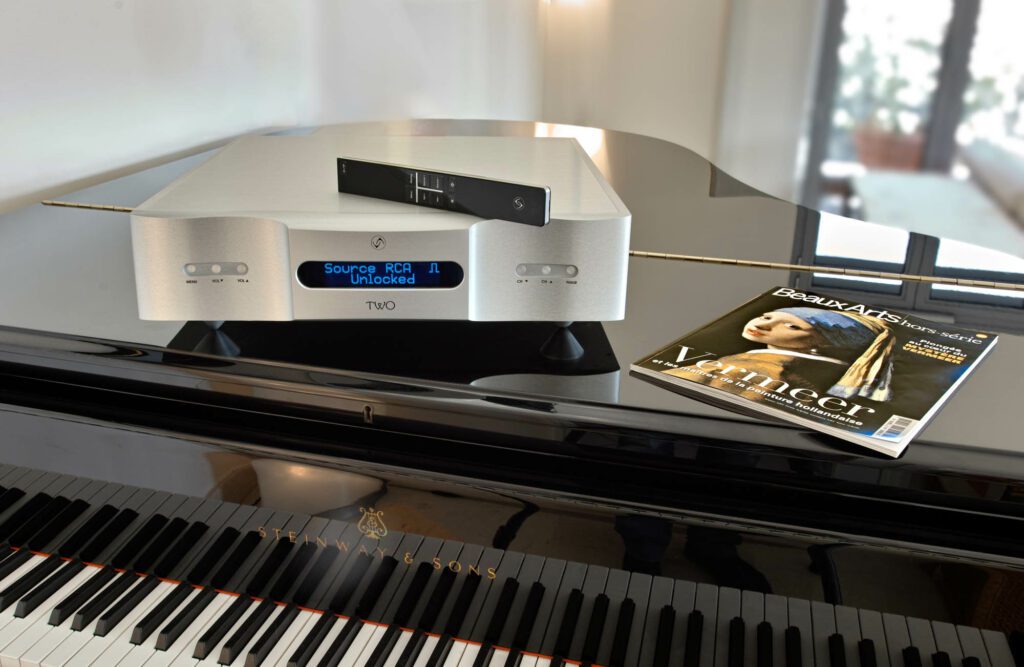
If the Vermeer Audio name seems new, the heritage is not. Audio Aero was one of the great, late, lamented French hi-fi brands of recent years. Although Audio Aero made some lovely valve and hybrid amplifiers, the company’s digital products were exceptionally well received. However, the digital products were strongly associated with spinning discs when everything was online, and the company’s excellent LaSource and LaFontaine players were casualties of the change. Those who remember the Audio Aero LaFontaine will see a lot of external family resemblance with Vermeer Audio, especially that super-thick front panel. More keen-eyed box-openers will see some shared tech between the two. Of course, things have moved on in digital tech, but at its core, what made the LaFontaine so right-sounding a decade or more ago still applies today in the Vermeer Audio Model TWO.

Vermeer Audio Model Two

Of course, simply cloning the LaFontaine wouldn’t do; time and audio formats have moved on. So, the Vermeer Model TWO supports 32bit, 384kHz PCM audio and DSD128 (on LAN, 24/192 and DSD64 on other inputs). Model TWO upsamples these signals using an improved version of the company’s ‘S.T.A.R.S. Module’ to bring signals to 32bit, 284kHz precision. MQA is not on Vermeer’s palette. While I don’t want to bog things down in the often unnecessary arms race that requires every DAC to process ultra-high-resolution files (irrespective of whether such files exist), this need to cope for the last decade or more with ever-larger files has become dominant. I applaud Vermeer Audio for taking the position of ‘what sounds good’ rather than ‘ticking spec boxes’, but I can’t help but wonder if this will hold back sales of what is, in reality, a really good ‘Universal Control Centre’.

Power supply performance

What Audio Aero also did so well that Vermeer Audio echoes is power supply performance. Vermeer Audio takes the design and implementation of power supply extremely seriously, re-engineering the switching power supplies with separate power supplies for analogue and digital stages, each with its own optimised regulation. Since Model TWO is essentially three units in one, this isolation of power feeds is vital in making a good design sound great. As is building those analogue and digital circuits appropriately. Vermeer Audio uses 70ppm copper circuit tracks with 24-carat gold-plated contacts throughout. These thick PCBs are then further isolated from the environment thanks to that solid aluminium chassis and thick front panel. The Model TWO sits on three cones. Let’s be honest; with that super-thick front panel and all-around beefy build, the Model TWO is an ‘absolute unit’ of a digital device.

Vermeer Audio Model TWO

There is a temptation to go ‘all in’ with digital front ends today, and if that is your thing, Vermeer Audio’s Model THREE has it covered. Model TWO, by way of contrast, straddles the analogue and digital domains with an RCA single-ended and XLR balanced input for analogue devices. In today’s world, that probably means ‘phono stage’, but regardless, as it’s dubbed a ‘Universal Control Centre’, it’s good that universality extends to the world of LP too.

Something old, something new…

That balance of old and new is relevant throughout. The ‘new’ is that Model TWO will stream data from a laptop via USB if you want or through its LAN board with full UPnP and DLNA compatibility. Vermeer recommends Audirvana Music Player for laptop users and either Mconnect or the Technics Music App UPnP player for tablet smartphone users. It also recommends C5 Stream DLNA for internet radio play. Once again, I applaud Vermeer Audio’s selection of third-party options rather than trying to make its own (that way lies crazy expense and a near-constant state of trying to keep up to date with OS upgrades). However, some think a bespoke app is like some badge of honour. I’d go with the more robust third-party option over waiting for a month while the coders play ‘catch up’.

Vermeer Model TWO

Meanwhile, the ‘old’ is cryogenically-treated NOS (new old stock) Thomson 6021 sub-miniature double-triode valves soldered directly to the circuit board. These act as cathode followers with Black Path and CAT coupling caps. Given that 6021s were designed as shock-resistant military communications valves able to withstand impact forces of up to 450G and had a life expectancy measured in decades of field-combat use, wiring them directly to a circuit board at once does without the sonic interaction of a valve seat, and will likely outlive the person buying the Vermeer Audio Model TWO.

The new/old mix even extends to the control surfaces. While the app can control a lot, the left side of the panel also has a set of recessed soft-touch buttons labelled ‘MENU,’ ‘VOL (down)’ and ‘VOL (up)’. On the right are buttons labelled ‘CH (down)’, ‘CH (up)’ and ‘PHASE.’  The two-deck blue LED panel allows navigation of the onboard menu system. This isn’t ‘touchscreen’ convenience but allows easy access to the essential functions of the Model TWO in set-up and operation. Meanwhile, on the rear, there’s a USB input for firmware upgrades. Finally, in its list of good things, the Model TWO has a Roon-chummy USB port.

Best sound wherever possible

This is a simple product to discuss in audio terms, as it’s clear that any decisions about the product were made specifically to get the best sound wherever possible. That doesn’t mean it’s clunky to use (far from it; the simplicity of the system makes it a stable and easy platform to use), but means where some systems think in terms of achieving abstract goals in product design, Vermeer Audio is first and foremost a music-oriented company. It shows in every recording you play through the Model TWO, whichever way you play it.

The art of a good streaming product is slightly different from that of a conventional DAC. In the days when a DAC’s main job was ‘CD-wrangling’, you had a pretty good idea of what was being fed to your converter; 16-bit, 44.1kHz uncompressed LPCM files. Today, all bets are off; one track might be a carefully massaged high-quality DSD file, and the next could be a rough MP3 feed from a radio station. A good streamer needs to get the best out of the latter without compromising the quality of the former. It’s a big ask, but one the Model TWO does with aplomb.

It’s just on neutral’s warm and encompassing side, with a sound that draws you in. Not simply for music; I was playing this in the background listening to some middle-of-the-afternoon BBC Radio Four play. It wasn’t my thing at all (something about mid-18th Century creepy supernatural bodice-ripping, but set in modern times, and I didn’t hear the name), but I became drawn into its staging and foley work… as well as how cheesy the dialogue was and how random the dialogue coach’s work seemed. For a while, something that I couldn’t be bothered about kept me captivated and diverted for its latter half. This was down to Model TWO’s work!

Intimacy and presence

In musical terms, the sound was just as beguiling and satisfying. There’s an intimacy and sense of presence to the sound, which is especially noticeable in small-set jazz; playing ‘Nuages’ from Paul Desmond’s Pure Desmond album [CTI, Tidal Masters], the interplay between Desmond’s sax and Ed Bickert’s guitar playing is sublime and subtle… and beautifully rendered. It makes you wish Canadian guitarist Bickert had been better recognised during his career. It feels like you are in a club listening to these masters at work.

My problem with the Vermeer Audio Model TWO was finding things to say about it and putting them in note form. It made music sound good and never once drew attention to itself. It didn’t put a foot wrong during my entire listening session and did everything very right indeed. But, that easy-to-listen-to nature made logging those things impossible: you try to listen out for imaging (which was excellent), and you just find yourself tapping your foot; try to zone in on the detail and find yourself taking in the fluidity and black backgrounds. And all the while, you keep playing track after track, album after album. In other words, the Vermeer Audio Model TWO ticks all the musical boxes.

TECHNICAL SPECIFICATIONS

  • Type: Streaming DAC preamplifier
  • Digital inputs: Asynchronous USB, AES/EBU (XLR), S/PDIF (optical and BNC coaxial)
  • Analogue inputs: Single-ended RCA, Balanced XLR
  • Analogue outputs: Single-ended RCA, Balanced XLR
  • Digital precision: to 32bit, 384kHz PCM (using Vermeer Audio resampling module), DSD 64/2.8Mhz
  • Output Voltage: 2, 3 or 4Vrms in fixed output mode. Up to 7Vrms in variable output mode
  • Output Impedance: 100Ω
  • Signal-to-noise ratio: 129dB
  • THD: < 0.1%
  • Dimensions (W×H×D): 450 × 130 × 440mm
  • Weight: 25kg
  • Price: £22,950

Manufacturer:

Vermeer Audio

URL: vermeeraudio.com

UK Distributor:

The Audiophile Club

URL: theac.co.uk

Tel: +44 (0) 20 8882 2822

Back to Reviews

The post Vermeer Audio Model TWO appeared first on Hi-Fi+.