Tag Archives: hardcore

Legendary Punk Producer Glenn “SPOT” Lockett, Dead at 71

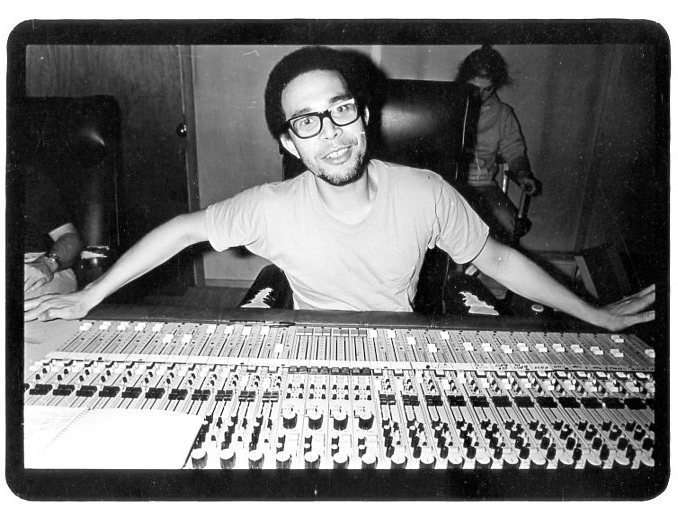
SPΘT, recording Big Boys "Fun Fun Fun" at Third Coast Studio, Austin Texas;March 14 1982. PHOTO: Photobill/Bill Daniel; used with permission.
SPOT, recording Big Boys “Fun Fun Fun” at Third Coast Studio, Austin Texas; March 14 1982. PHOTO: Photobill/Bill Daniel; used with permission.

Sheboygan, WI (March 6, 2023)—Glenn “SPOT” Lockett, who helmed most of the most-influential records popping out of California’s early punk scene, died March 4, 2023 in Sheboygan, Wisconsin. Diagnosed with fibrosis in 2021, Locket was awaiting a lung transplant when he suffered a stroke three months in the past from which he by no means correctly recovered. A documentarian of the nascent Nineteen Eighties Los Angeles punk world by way of his pictures and music manufacturing work, Lockett was answerable for capturing a number of the earliest efforts by now-revered acts like Black Flag, Hüsker Dü, Misfits, Subhumans, Redd Kross, Meat Puppets, Minutemen and others. He was 71.

Lockett was born July 1, 1951 in Los Angeles, the son of Claybourne Lockett, a former fighter pilot with the Tuskegee Airmen in World War II. Initially raised in Hollywood, the youthful Lockett realized guitar at age 12, and developed a ardour for jazz and improvisational music that led to his as soon as auditioning for Captain Beefheart. Moving to Hermosa Beach within the mid-Nineteen Seventies, Lockett thrust himself into the realm’s thriving arts scene, capturing all of it along with his music, digicam lens and, quickly, recording tape, as he took up engineering after serving to construct a facility, Media Art Recording Studio on Pier Avenue.

Crane Song Founder / Designer Dave Hill, Dead at 68

Steve Mackey, Alternative Rock Producer/Bassist, Dead at 56

While discovering his approach round a studio, Lockett started utilizing the pseudonym SPΘT—stylized in all-caps with a dot within the middle of the “O”—when he wrote freelance jazz document opinions for native weekly newspaper Easy Reader. Nonetheless, he primarily labored as a waiter in a vegetarian restaurant and it was there that he met fellow musician Greg Ginn. The two musicians usually jammed, and Lockett briefly performed bass in Ginn’s band, Panic, which might in the end evolve into Black Flag. When Ginn determined to start out his personal document label, SST Records, it was solely a matter of time earlier than Lockett turned deeply concerned as its in-house producer/engineer.

In the years that adopted, SPOT might frequently be discovered within the credit of the label’s releases as he recorded, combined and produced or co-produced most SST acts between 1980 and 1985. As a consequence, he had a hand in a number of the seminal punk releases of the period, together with Descendents’ debut album, 1982’s Milo Goes To College; Hüsker Dü’s acclaimed 1984 assortment, Zen Arcade; the primary three Meat Puppets albums; the primary two albums and an EP by Saint Vitus; and a half-dozen Black Flag releases, amongst others.

Most of these acts have been recorded at Hermosa Beach’s then-fledgling Total Access Recording Studios, nonetheless owned and operated at this time by producer/engineer Wyn Davis. Former Hüsker Dü frontman Bob Mould recalled the period in a Tweet memorializing SPOT, noting, “From 1982 to 1984, Hüsker Dü recorded 4 initiatives with SPOT. We labored at Total Access in Redondo Beach, CA, largely throughout the discounted in a single day hours. SPOT all the time inspired free expression and experimentation, at the same time as these recordings have been made as expeditiously as potential.” He added, “SPOT was an exquisite soul who cherished making music, documenting the scene, and unconditionally supporting all of the initiatives that bear his title. Thank you, SPOT. You gave a lot to all of us.”

While initially intently related to SST, SPOT produced, engineered and/or dealt with technical duties on numerous releases on by way of the 2000s for different labels, together with Touch And Go, Rykodisc, New Alliance, Homestead, Taang! and PVC, notably co-producing 1983’s Earth A.D./Wolfs Blood, the final Misfits album to function co-founder Glenn Danzig, which was launched on the singer’s personal Plan 9 label. Ultimately, SPOT would go on to supply greater than 100 records.

Fed up with Los Angeles, SPOT moved to Austin, Texas within the mid-Nineteen Eighties, the place he launched quite a few his personal solo, lo-fi experimental recordings through the years, earlier than ultimately transferring to Sheboygan, the place he printed a pictures assortment, Sounds of Two Eyes Opening—Southern California Life: Skate/Beach/Punk 1969-1982 (2014), amassing his work documenting the Los Angeles subscultures he ran in.

Former SST co-owner Joe Carducci introduced SPOT’s passing on Facebook, praising the producer’s recording type that he felt utilized “the primacy of dwell jazz taking part in into recording bands towards prevailing makes an attempt to melt or industrialize a back-to-basics arts motion in sound.” He added that SPOT had been writing a novel in recent times, Decline and Fall of Alternative Civilization, adapting a 10-hour on-line audio drama he had produced and narrated in 2016.

Graphic Nature Audio Relocates

Will Putney’s Graphic Nature Audio recording studio is relocating to a rural property in Kinnelon, NJ.

Kinnelon, NJ (February 19, 2021)—Will Putney’s Graphic Nature Audio recording studio is relocating from its current home in Belleville, NJ to a larger, rural property about 20 miles west in Kinnelon. Putney, a metal/hardcore producer/engineer, mixer and musician has worked with bands such as Every Time I Die, Body Count, Knocked Loose, The Amity Affliction, Stray From The Path, Counterparts, Terror and Northlane

Putney has long mixed using a hybrid setup: “I would mix out into pieces of gear that I’ve collected over the years and sum everything together back into the computer. The setup ended up getting more and more complicated. Over time I was basically building a console piecemeal, with different summing mixers, and creating ways to do parallel sends and analog-style routing to get to my compressors and EQs.

Getting Heavy with Will Putney

As a result, the new facility is centered around a newly installed 32-channel SSL Origin analog in-line mixing console, acquired from Vintage King.“ I decided that if I could find something streamlined enough that would give me the routing functions that I want and without too many components, and that had a small enough footprint, I would probably be better suited to working on something like that,” he said.

Putney's new facility is centered around an SSL Origin  console.
Putney’s new facility is centered around an SSL Origin console.

The transition from his former multi-component workflow to the new setup incorporating the Origin has been seamless, he stated: “It all just feels super musical, and it’s fast and easy for me to get mixes going on. What I do in the computer doesn’t really change at all, so it’s business as usual; I still work how I always did.”

The complement of gear installed with the Origin mimics Putney’s previous setup and includes a pair of Amphion Two18 nearfield monitors, which he switched to several years ago, along with Universal Audio Apollo interfaces for tracking and overdubbing into his Logic Pro DAW. “We still use Pro Tools for editing,” he says, “or if I travel to another studio.”

The Origin desk has been installed in a room at the new location in Kinnelon, where the next stage of construction will begin in the coming months. “I’ve got two control rooms set up here. The goal for the future — we’ll start construction in the spring — is to do an updated version of my old drum tracking room but with a more traditional control room. That will be my A room where I can do everything — recording drums and mixing. I will be able to do an entire record there, start to finish, as opposed to working in the modular rooms in the other facility,” says Putney.

Graphic Nature Audio • www.graphicnatureaudio.com

Solid State Logic • www.solidstatelogic.com

Concert Livestreams Evolve Quickly During COVID-19

Trivium played its 100-minute concert livestream from Full Sail University.
Trivium performed its 100-minute concert livestream at Full Sail University.

New York, NY (July 20, 2020)—When the touring industry shut down on March 12 this year because of COVID-19, production pros and artists alike immediately felt the pain. Touring schedules were wiped out in an instant and many venues of all sizes remain empty as the pandemic continues. Even as some states attempt to reopen, partial capacity and social distancing restrictions remain in place in most regions to help prevent the spread of COVID-19, making holding a concert or event a challenge on every front, and that’s presuming that an audience—or crew—is willing to show up given the current circumstances. With that in mind, and with the need to work increasingly paramount for all involved even if there’s a reduced return, many audio vendors and artists are turning to the internet and rapidly reinventing the concert livestream.

The pandemic is an international problem, of course, which means event production companies around the globe are facing the same challenge of pivoting on short notice. “We pushed forward with the confidence that we are a healthy business and we can make it through, but we also had to confront the brutal facts that times have changed and so must we,” said Sam Dimond, director of Spotlight Sound in the UK, which offers not only audio but lighting, staging and AV as well. “We considered how we can offer our customers a way of taking their events online—something which would also enable them to reach new audiences. We looked at our current video equipment, took stock of what we had and what we needed to offer a high-quality recording and streaming service. As a result, we’ve built a new virtual studio in our warehouse to stream events online.” The new studio has been put through the paces already, hosting DJ Amy Lauren’s set for Papyrus Festival, a virtual EDM event.

DJ Amy Lauren recently livestreamed from Spotlight Sound's new streaming studio for the online EDM festival, Papyrus.
DJ Amy Lauren recently livestreamed from Spotlight Sound’s new streaming studio for the Papyrus EDM festival.

For artists who would normally be on tour right now at the height of the summer, livestreaming a concert event offers enticing possibilities, but there are endless production questions that have to be considered, all of which essentially boil down to ‘how do you make an economically viable concert livestream, so that all parties get paid and fans get a satisfying experience?’ As acts wrestle with this conundrum, the approaches are as varied as the artists themselves.

Roadrunner Records band Trivium released its ninth album, What the Dead Men Say, in late April and was all set for a summer shed run when the pandemic kicked in. “February and March, we were in your typical tour pre-production phase,” recalled Charlie Bybee, the band’s production manager. “We hired a new show designer, budgeted out purchasing scenic set carts, paid for a lighting design. We had everything in motion for a typical tour.”

Trivium on the set of its recent livestream concert.
Trivium on the set of its recent concert livestream.

Months later, with production money spent and scenic pieces now sitting in storage, Trivium and its management weighed the possibility of doing a virtual show. “We’ve seen other bands doing it; Code Orange was one of the first to put up a livestream on a Twitch channel for free,” noted Jenny Douglas from 5B Artist Management. That hardcore act grabbed the industry’s notice when it garnered more than 13,000 simultaneous views on March 14—two days after all touring shut down—as it livestreamed its unexpectedly scrapped launch show for its new album, Underneath, inside the empty 1,470-seat Roxian Theater in Pittsburgh.

“A lot of bands are seeing that and are realizing if fans pay for a ticket, they can do a bigger show and bring you the lights and cameras and better equipment all around,” said Douglas. Trivium ultimately mounted its own livestream concert in mid-July, and found a way to make it economically viable by using production facilities at Full Sail University in Winter Park, FL. The school and group were well familiar with each other, as Trivium actually recorded the new album in one of Full Sail’s studios and guitarist Corey Beaulieu is a graduate as well. “Full Sail offered us that facility for free so that the students could come in and learn, so they gained something and we gained something—which was an album,” said Douglas, who is herself a graduate of the school’s show production program. “When the band recommended Full Sail for this livestream, as management, we shopped around, but Full Sail said we’ll give you our full webcast capabilities, the room, lights, PA, a monitor system. And it’s like whoa—from a bean-counter point of view, why wouldn’t we choose Full Sail? We get this free facility with all this state-of-the-art equipment.”

How Pros Are Livestreaming During the Pandemic

The band and crew prepped for five days onsite. “We really didn’t do much different than you would do setting up a tour,” said Bybee. “We did a week of rehearsals with the band, arrangements, we built playback systems, loaded in—everything you would typically do, except just for one show.” That included bringing in Trivium’s FOH engineer Matthew Woods to mix the livestream on a Yamaha CL5 console. Bybee, who doubles as the band’s monitor engineer, mixed for the group’s Shure PSM 1000 in-ear monitors using an Avid Venue S6L desk.

The 100-minute concert livestream came off without a hitch, with more than 10,000 fans paying $9 a ticket to watch the stream live and get unlimited views for three days after the show. “From our end, it went fantastic,” said Douglas. “The stream was perfect and the band was really happy; we definitely think it was a mission accomplished.”

Underoath is performing a series of three livestreamed concerts through July.
Underoath, seen here on the set of its Underoath|Observatory concert livestream series, is presenting a series of three concerts through the end of July, all created within a custom-designed performance space. Copyright 2020. All rights reserved.

It’s likely more acts will experiment with livestreams, but the format is rapidly evolving as artists look to bring something new to the table. Underoath was supposed to spend the summer on tour with Slipknot; as the pandemic wore on and livestreams began gaining traction, the band took notice. “At first, I was not really into the idea personally,” said guitarist Tim McTague, “because I didn’t understand the model and I don’t know that anyone does. We took a month to observe and decided if we ventured into this livestream era of things, we had to do it high-quality while making sure it made sense and we didn’t try to put on an arena show and lose our houses over it.”

To make that happen, the group reteamed with creative direction house Tension Division, which had handled the release of Underoath’s last album, 2018’s Erase Me; together, they explored what they felt a livestream could become. The end result was Underoath:Observatory, a series of three concerts played throughout July with the band performing albums in their entirety while immersed within a moody circular staging concept, custom-built for the production inside a warehouse. “We wanted to create an interesting space where it wasn’t that we’re in a bar with two cameras on tripods,” laughed McTague. “We’re playing in a giant, 36-foot circle of trusses and lights, all of which will all be facing each other.” The band’s FOH engineer and other production team members were on-hand, but given Florida’s spiking cases of COVID-19 in July, some opted to stay home elsewhere in the country instead.

Speaking during a break in rehearsals before the first stream, McTague was still wrapping his head around the project even as he explained it, laughing, “In two weeks, we created a venue, a merchandise company and a ticketing platform for a business that two months ago didn’t even exist! It’s a really unique time to be creative and we’re finding it exhausting and very, very challenging. It’s the first time I’ve ever done interviews about something that’s not real yet. Normally I’m doing interviews about a record and that’s done; all of this is all theoretical. There’s no models, nothing to compare it to. I don’t know if it’s a success story, if it’s a failure story, if we’re doing it right or wrong. What I do know is we’re doing it our way.”