Tag Archives: Paris

MIX SIDEBAR: Take Me to the Rink—Mixing Talking Heads Live

Photo credit: Lindsay Gauthier
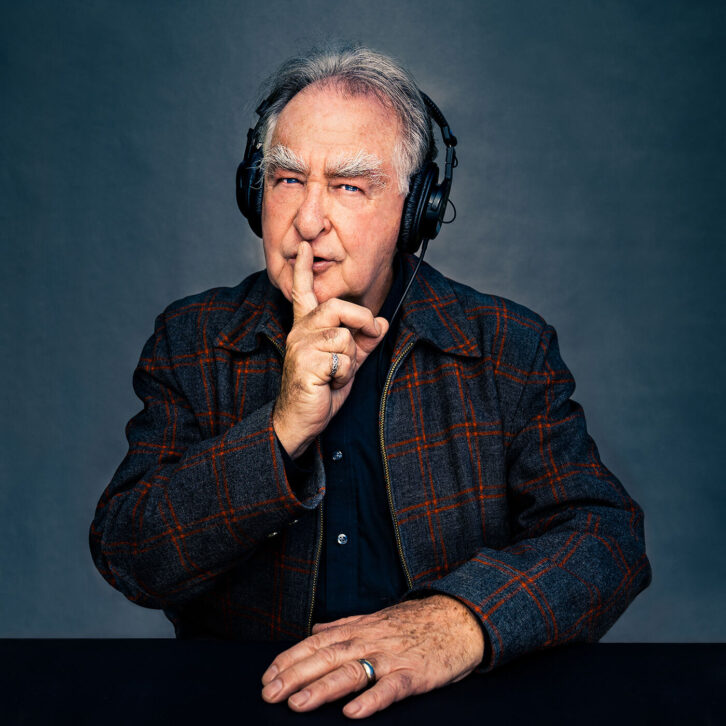
FOH pro and ‘Soundman Confidential‘ podcast host Frank Gallagher. Photo credit: Lindsay Gauthier.

The key to interviewing legendary FOH engineer Frank Gallagher, host of Soundman Confidential, is to not interrupt, because much like an extended guitar solo, every story is headed somewhere unexpected—like this one, which starts off in late-1970s New York City.

“Manhattan—this was my old hood here. The B-52s, Talking Heads and The Ramones had the same manager; Broadway and 57th was the office. I lived on 85th and Columbus; the Bs used to be sent out as our opening act and we did shows in Central Park at Wollman Rink. I used to skate there every day in the winter—walk to Wollman Rink and then go to the office if I needed to. We played the Wollman Rink with the B’s and the next day, the New York Times had a glowing review of Talking Heads and how it sounded.

[John Rockwell wrote in the August 18, 1979 edition, “The same sound system that had exposed the B-52’s served the Heads superbly, revealing new subtleties in their textural ideas, and providing new confirmation of their success in evolving gripping, interesting live versions of songs….”]

“Talking Heads also played there in 1980, and I will tell you as a soundman—whoa! Talking Heads were very secretive and back then, there’s no cell phones, no faxes; the word would come from the office. I got a call: ‘10 o’clock tomorrow morning, Brit Row rehearsal.’ Britannia Row, Pink Floyd’s sound company, had a warehouse out in Long Island City. I get to Brit Row and there’s Bernie Worrell from Funkadelic. There’s Busta Jones, another bass player. There’s Adrian Belew. There’s Nona Hendryx. There’s Steve Scales, the percussionist. And I walk in on that! That’s how I found out about ‘the big band!’ As artists, Talking Heads were very protective of what they were doing and their thinking was, ‘If it don’t work, we don’t want anybody knowing it didn’t work.’ But I had no idea it was coming. I thought, ‘Get on with it. I’ve got a mixer, a box of mics, we just go at it.’ The whole sound for that nine-piece band was sculpted in one day.

Frank Gallagher: ‘Soundman Confidential’ Talks Talking Heads, B-52’s

“The first show we played with the big band was Heatwave Festival—60,000 people in a field in Canada—and the second show was Central Park. I’m thinking to myself, ‘Oh my God, what are we gonna do with this,’ but you just do it. The only thing I remember was Adrian Belew saying to me—and I usually hated notes from artists—Adrian said to me, ‘Frank, just make sure that everything I play sails over Central Park,’ and that was how I mixed that show—made it sail.’ Some of it’s on the live album, The Name of This Band is Talking Heads.

“Later that year, we were in Paris, set up at the Baltard Pavilion. U2 were the support, but their van broke down in Calais. Again, no cell phones in those days; they showed up with just guitars and drumsticks, and said, ‘Where can we get gear?’ I pointed at the stage and said, ‘Right there.’ They used Talking Heads’ gear as it was and played the show. And they’ve never forgotten.

“Years later, I was in Dublin with Buddy Guy—I toured with Buddy for years—so I called up Paul McGuinness, their manager. I said, ‘Is the Edge in town?’He said, ‘He is.’I said, ‘He should come down and see Buddy.’ And McGuinness said, ‘Well, why would he do that?’ I said, ‘He’ll get a free guitar lesson!’”

Book of the Month – Temporary Pleasure – nightclub architecture, design and culture from 1960s until today

Opening with the psychedelic haunts of the 1960s New York pop art scene and closing more than half a century later with the rise of post-club happenings, Temporary Pleasure shows how nightlife spaces have evolved to meet the needs of their generation, and how each generation was seeking something a little different from the one before.

Each chapter focuses on a distinct phase and location: Italy’s politically radical clubs of the ’60s; New York City’s disco scene; Detroit and Chicago’s techno and house paradises; Ibiza’s counterculture communal retreats; Britain’s rave culture; and Berlin’s techno scene.

The clubs come to life in double-page spreads that feature specs and detailed profiles. Author John Leo Gillen offers his take on various important cultural, design, and architectural details, while numerous photographs offer their own vibey stories. The book features interviews with people who were involved in a number of the scenes included, from NYC disco mainstay DJ Justin Strauss to Ben Kelly, architect of Manchester’s legendary venue The Haçienda.

As the world emerges from its Covid-induced isolation, this celebration of crowded rooms, dance-worthy beats, and communal transcendence feel more important than ever.

About the Author

John Leo Gillen has spent his life designing, building and running club spaces. While pursuing a master’s in ephemeral architecture and temporary spaces at Elisava, Barcelona School of Design and Engineering, he spent the coronavirus lockdown archiving ephemeral club spaces on Instagram under the banner Temporary Pleasure.

That formed the basis of this book and turned into an even more ambitious project: Temporary Pleasure is now a collective of architects, event producers, and club creatives who generate new ways to remake clubs through design labs, building workshops and pop-up DIY spaces.

Published by Prestel: April 25 / 2023. Pre-order here

The post Book of the Month – Temporary Pleasure – nightclub architecture, design and culture from 1960s until today appeared first on Decoded Magazine.

Lawo Returns for France’s 14 July Celebrations

Lawo desks handled live and broadcast sound requirements for France’s Bastille Day celebrations

Rastatt, Germany (July 30, 2020)—Lawo equipment was in Paris for the sixth successive year serving both the live and broadcast sound requirements for France’s traditional Bastille Day celebrations, even as the coronavirus pandemic raged.

All of France marks the beginning of the modern French Nation each year on 14 July, with events taking place all over the country, although this year’s national holiday was quite different due to the global pandemic. But the show must go on, so Lawo mixing consoles were once again at the traditional Concert de Paris, which takes place on the Champs du Mars at the foot of the Eiffel Tower.

Canal 3 Radio Station Scores Lawo Hattrick

The FOH consoles used were a 48-fader Lawo mc²56 production console for the orchestra mix and an mc²36 all-in-one console for the soloists. A 48-fader mc²56 took over the monitor tasks in a setup with a 16-fader mc² extender that allowed social distancing between the two operators.

Radio France deployed an Optocore fiber-optic network to connect the event’s live sound mixing consoles and I/O systems. Separate preamp control for FOH and monitors and a split to the Lawo mc²66 console used for the broadcast mix in a Radio France OB vehicle enabled use of the on-air console’s own stageboxes and Dallis mic preamps.

The Concert de Paris on 14th July is one of the largest classical music events held anywhere in the world with as many as 500,000 spectators on-site — in pre-pandemic years — and is followed by a traditional firework display. This year, the show. featuring the Orchestre National de France and the Chœur de Radio France, along with internationally renowned soloists, was relayed to 2.84 million TV viewers in France and an estimated 10 million audience in Europe.

Lawo • www.lawo.com