Tag Archives: Disc players

2023 Editors’ Choice: Disc Players $2,000 – $10,000

Technics SL-G700M2-S

Technics SL-G700M2-S

$3499

Meticulously constructed with 4 separate inner compartments to accommodate the facility provide, digital and analog circuits, and the die-cast aluminum disc drive, the Technics SL-G700M2-S is designed with a watch in the direction of minimizing each digital interference and mechanical vibration. The D-to-A circuit options dual-mono structure with two AK4497 chips outputting “native” DSD as much as 11.2MHz and PCM as much as 384kHz. Ethernet, wi-fi, and Bluetooth connectivity are offered; the SL-G700M2-S can be outfitted for full MQA decoding. The participant excelled at revealing delicate dynamic gradations, appropriate scaling of devices, and picture specificity and spatiality on good recordings. AQ, 300

Marantz SA-K1 Ruby

Marantz SA-K1 Ruby

$3999

The nice audio designer Ken Ishiwata made his popularity with an exceptionally musical-sounding modification of an early Marantz CD participant. The SA-KI represents his newest, probably his final, digital part and is his most interesting work, providing one of the best SACD and CD playback from a single unit that TAS’s Paul Seydor has had in-house, and a number of the finest he’s heard wherever. Its excellent onboard DAC can be utilized with a music server to stream and play downloads in each decision generally out there, together with native DSD as much as 11.2MHz. Those in the hunt for the proverbial “final” disc-spinner want look no additional. PS, 302

Bryston BCD-3

Bryston BCD-3

$4495

Reviewer Alan Taffel started his assessment by questioning if a CD participant just like the BCD-3 was even related in right this moment’s digital world. He found, to his shock, that it was. His subsequent discovery was simply how good the BCD-3 sounds, and the way a lot of an enchancment it represented over even wonderful last-generation CD gamers. Then, the Bryston went toe-to-toe with among the finest CD gamers out there—with out embarrassing itself within the least. Lastly, he found that the BCD-3’s improve path, which consists of turning itself right into a transport to work with future or dearer DACs, actually works. Put this collectively and you actually do have what may very well be your final CD participant. “If I have been selecting a CD participant that wouldn’t break the financial institution however was unflinching in its musical and sonic generosity,” Alan concluded, “the BCD-3 could be on the high of my record.” AT, 289

McIntosh MCT500

McIntosh MCT500

$5500

The MCT500 SACD transport was launched for audiophiles who already personal a McIntosh preamp, built-in amp, or receiver outfitted with one of many firm’s proprietary DAC modules. It will deal with nearly any 4.75″ disc on the planet and, after all, hybrid SACDs. With no built-in DAC, the MCT500 permits direct entry to the DSD recordsdata on an SACD disc through a proprietary cable that may be related solely to different McIntosh merchandise with the reciprocal MCT jack. It’s thus inconceivable to talk of its sound as a result of its sound is that of the partnering McIntosh part. As auditioned by PS with the C52 and C53 preamps, its replica was nearly as good as he has skilled with every other SACD/CD gamers or DACs, bettered by none and equaled solely by a only a few. PS, 315

T+A MP 200

T+A MP 200

$5900

T+A’s MP 200 is finest regarded as a CD transport plus a Roon-compatible streamer. There’s no DAC inside, however the MP 200 does the whole lot to tee up a number of digital sources—together with HDD, SDD, and thumb drives—for a downstream DAC. When mixed with T+A’s DAC 200, the 2 act as a single unit. The MP 200 is a superb-sounding streamer, maybe as a result of it homes the identical streaming module as T+A’s high separates. Further, the in-house-built CD transport rivals one of the best on the earth. Add in a beautiful, petite kind issue plus nice worth, and also you’ve obtained a house run. AT, 335
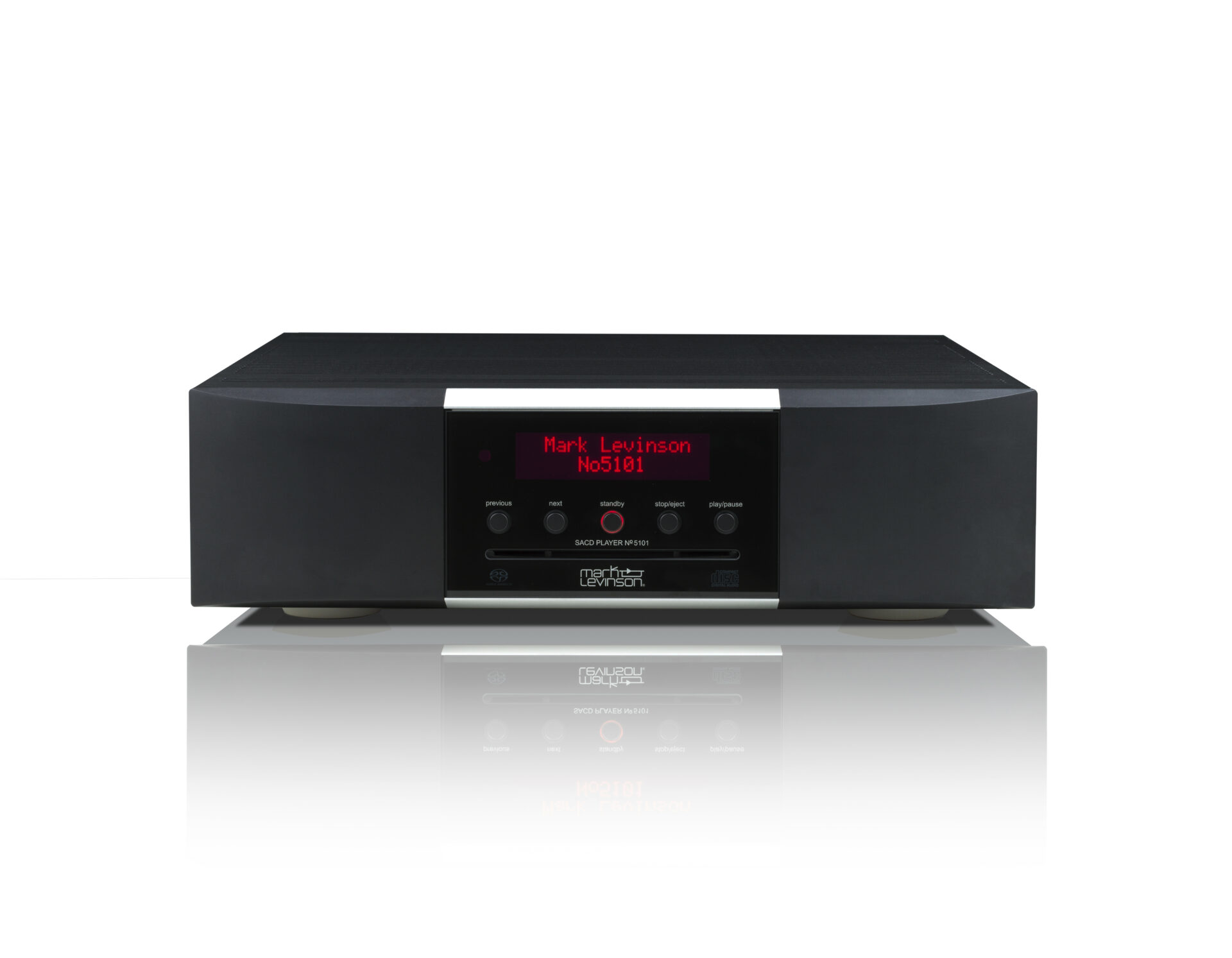
Mark Levinson No5101

Mark Levinson No5101

$6050

With a disc drive that may play CD and SACD, together with a completely outfitted streaming DAC, the Mark Levinson No5101 will deal with nearly any digital supply. The participant is suitable with PCM as much as 32-bit/384kHz, in addition to DSD as much as 4x. On the technical facet, the unit has a 32-bit ESS Sabre DAC with user-selectable digital filters and a proprietary jitter-reduction circuit. The output stage is totally discrete, direct-coupled, and twin monaural, with the sign output on RCA and XLR jacks. You can function the unit through a standard handheld distant management or through a customized app, referred to as 5Kontrol. The participant has wonderful sound high quality, notably within the transition from the higher bass to the decrease midrange, which preserves the pure heat of music with out softening it. AHC, 322

Aesthetix Romulus

Aesthetix Romulus

$9000–$10,000

Another house run for Aesthetix, the tubed Romulus combines a disc participant and DAC (USB, AES/EBU, SPDIF inputs) in a extremely practical and great-sounding part. The further $1000 from the bottom worth buys you an revolutionary quantity management that means that you can drive an influence amplifier straight. The build- and parts-quality are first-rate. Sonically, the Romulus affords an exceptionally pure sound with an excellent sense of ease and an expansive soundstage. RH, 243

MBL Cadenza C31

MBL Cadenza C31

$9600

In right this moment’s computer-driven market the C31 CD participant can simply as moderately be thought of a “DAC with transport.” Either approach, its efficiency is uncompromising. With Red Book discs the slot-drive transport will get a slight nod for its extra intimate and luxurious perspective; nevertheless, with 24-bit/96kHz materials the asynchronous USB wins fingers down. A jewel of a participant. NG, 228

T+A MP 2000 R MKII

T+A MP 2000 R MKII

$9825

Not only a glorified music pc, T+A’s R-Series MP 2000 R MkII is extra precisely a hybrid of CD transport and DAC with potent community/streaming-client functionality. Thus, it accommodates most of right this moment’s digital sources, from discs to good units, USB thumb drives, outboard storage like a NAS, plus Internet radio and music companies equivalent to Tidal. CD and community playback are unerringly very good, with naturalistic timbres and harmonics, midrange bloom, and ripe bass resonance and management. NG, 275

The put up 2023 Editors’ Choice: Disc Players $2,000 – $10,000 appeared first on The Absolute Sound.

Audiolab Omnia

Facing the facts. Responding not ignoring. Biting the bullet. Little by little, the hi-fi industry is coming to terms with the way the overwhelming majority of its prospective customers live, and the accommodations they’re prepared to make when it comes to achieving ‘proper’ sound quality. In most cases, those accommodations in no way include finding space (and mains sockets) for multiple pieces of equipment that each represent a single link in the audio chain. To quote the American poet and philanthropist Jello Biafra, “give me convenience or give me death”.

With Omnia (which sounds like a Covid variant but isn’t), Audiolab becomes the latest ‘proper’ hi-fi brand to interpret the writing on the wall. With Omnia, Audiolab crams amplification for speakers and for headphones, digital-to-analogue conversion, wireless and physical connectivity, and a CD drive into a chassis that could, in other times, have happily contained just one of these functions. With Omnia, Audiolab wants you to have your cake and eat it too (assuming ‘cake’ in this instance is actually both high-resolution sound quality and physical discretion).

Audiolab Omnia

On the inside, Omnia is 50 watts per channel of Class AB amplification, a virtuoso ESS Technology ES9038Q2M 32bit DAC, a CD drive compatible with CD-R and CD‑RW discs, and a full MQA decoder. It’s a moving-magnet phono stage, amplification for headphones, and wireless connectivity via wi-fi and Bluetooth. It’s a piece of DTS Play‑Fi technology, which means it can be part of an expansive wireless multi-room system. It can function in ‘integrated’, ‘pre-amplification’ and ‘pre/power’ modes.

Numerous inputs

On the outside, Omnia has numerous digital and physical inputs. If three line-level analogue inputs plus phono stage, two digital coaxial and two digital optical inputs (capable up to 24bit/192kHz resolution), type A and type B USB inputs (capable up to 32bit/768kHz and DSD512) and an Ethernet socket isn’t enough to support all your sources, this is not the product for you. If you find dual-band wifi and Bluetooth 5.0 (with support for SBC, AAC, aptX HD and aptX Low Latency codecs) insufficient wireless connectivity, look elsewhere. And if you can’t scrape by with a 6.3mm headphone socket and stereo pre-outs for use with a power amplifier as outputs beyond speaker binding posts, you can stop reading now.

Still with me? Good. Controlling the Omnia is straightforward – and, if you use the exemplary DTS Play-Fi app, it’s pretty painless too. Audiolab has very sensibly integrated the Omnia into the Play-Fi ecosystem – so not only can your Omnia form part of a larger multi-room system, it can be operated by a control app that’s been properly developed at considerable expense. Stable, clear and logical, the Play-Fi app is a fine example of its type.

Audiolab Omnia

Which is just as well, because the few physical controls on the Audiolab’s fascia are most charitably described as ‘leisurely’ in their response, while the full-function remote control features too many undersized buttons with indistinct labelling. At least the 4.3 LCD display screen is a) bright, b) easy to navigate and c) allows you to select virtual analogue VU meters. To my mind, at least, this option goes quite a long way towards justifying the asking price by itself.

With a Clearaudio Concept turntable attached to the moving-magnet phono stage, an iPhone X streaming via Bluetooth, a Buffalo LinkStation 200 network-attached storage device hooked to the Ethernet socket via a Virgin Media Hub 3.0 router, and a pair of Acoustic Energy AE1 Reference Series mkIII standmounters dealing with the consequences, the Audiolab is ready to go. But this is an all-in-one device – so it seems only appropriate to start testing by using the integrated disc drive.

Sound Quality

McCoy Tyner’s Asante [Blue Note] enjoyed a luxurious CD reissue in 1998 – compact disc was still the undisputed champion at this point, of course, and Blue Note’s parent company Capitol Records gave it the full 20-bit Super Bit Mapping treatment. It’s a fine-sounding disc of fine-sounding music, and the Audiolab Omnia gets to the heart of it.

It’s the Omnia’s sheer alacrity and brio that’s most immediately striking. It fairly charges ahead, but not in a hurried or forced manner – rather, it’s as spirited a listen as the source material demands. This overall attitude is helped no end by low frequencies that are properly shaped, authoritatively controlled and full of detail – and have sufficient momentum to keep things moving at a clip. Bass sounds are full of harmonic variation, and there’s more than enough overall dynamism to pack low-frequency information with expression.

There’s similar enthusiasm at the opposite end of the frequency range. Without getting in any way pushy or uncouth about it, the Omnia sinks its teeth into high-frequency sounds and delivers them with a zeal that’s bordering on the fanatical. Again, control and detail levels are impressive, and again there’s well-controlled momentum evident.

A sideways move to a vinyl copy of Promises by Floating Points, Pharoah Sanders and the London Symphony Orchestra [Luaka Bop] both doubles down on the Audiolab’s already evident powers of resolution and demonstrates an ability to express a rhythm even if that rhythm is of the glacial variety. There’s very agreeable tonal expression revealed by this recording, too – and an unequivocal endorsement of the quality of the Omnia’s phono amplification. The soundstage it can describe is big and properly organised, even when numerous musicians are contributing at the same time, and it times in the long-established and much-admired vinyl manner: smoothly and believably.

A TIDAL Masters file of Simon & Garfunkel’s The Only Living Boy in New York [Columbia] streamed via Bluetooth allows the Omnia to show off its ability to give true character and emotional potency to a vocal, and at the same time illustrates the relative shortcomings of Bluetooth as a connectivity option. That the recording is delivered in full, poised and balanced and with its painstaking production in evidence, is never in doubt. The peerless vocal performances are given full expression and – just as they are every time you hear them – the harmonies are sweet and instinctive enough to raise goosebumps. But there’s just a slight inhibition to the previously expansive soundstage the Audiolab describes, and a similarly incremental reduction in dynamic positivity. See? This is what true convenience gets you.

The comfort zone

The Audiolab Omnia has a comfort zone, though – and it turns out that rough, inexpensive and wilfully ropey recordings such as Thee Oh See’s Castlemania (In The Red Records] are outside it. Even when delivered as a fairly high-resolution file from some hard-wired network-attached storage, it’s possible to discern both the Omnia’s lack of patience with this pimply nonsense and its doomed attempts to tart it up and damp it down. Material like this doesn’t respond well to being smartened up in any way, and in the end the Audiolab just about manages to force a draw.

Audiolab Omnia

As long as you steer clear of dirt-cheap garage rock and the like, though, there are remarkably few downsides to Audiolab Omnia ownership. Its rather rustic control interface aside (and we’re not including the blameless DTS app in that, you understand), keep both the price and the extensive functionality uppermost in your mind and it’s an almost startlingly accomplished piece of equipment. Its power output may not look anything special when written down – because it isn’t – but the Omnia is resolute and deep-breathing enough to deal with any loudspeakers that can realistically be considered appropriate partners.

If you want a fine-sounding and extensive system without the whole ‘extensive’ thing getting too badly out of hand, the Omnia is more than worthy of lining up in direct competition to the likes of Cambridge Audio’s fêted (and similarly priced) Evo 75. With the Omnia, Audiolab has faced facts, bitten bullets and emerged with its reputation enhanced.

Technical specifications

Amplifier section

  • Type Class AB
  • Analogue inputs One MM phono input (via RCA jacks), three line-level inputs (via RCA jacks), one power input (via RCA jacks)
  • Digital inputs Four S/PDIF (two coaxial, two optical), one USB Type B port, one USB Type A port, one Ethernet port, wi-fi, Bluetooth
  • Analogue outputs One pre-out (via RCA jacks), one stereo speaker (via 4mm binding posts), one 6.3mm headphone socket, one 12v trigger (via RCA jacks)
  • Supported sample rates up to 32bit/768kHz and DSD512
  • Input impedance: Line level 10k
  • Output impedance (preamp) 100 Ohms
  • Power Output 2 × 50 WPC @ 8 Ohms
  • Bandwidth 20Hz–20kHz
  • Harmonic distortion (power amp) <0.003%
  • Signal to Noise Ratio >110dB (A-wtd)

Phono stage

  • Phono inputs single-ended (MM, via RCA jacks)
  • Input sensitivity @ 1kHz 3.1mV
  • Input impedance 47k + 100pF
  • Signal/noise ratio (A-wtd) >76dB
  • Frequency response 20Hz–20kHz

DAC

  • Type ESS9038Q2M
  • Digital inputs two coaxial, two optical toslink, one USB Type A, One USB Type B
  • DAC resolution 32bit/768kHz; DSD512
  • Supported sample rates (kHz) (coaxial) 32, 44.1, 48, 88.2, 96, 176.4, 192
  • Supported sample rates (kHz) (optical) 32, 44.1, 48, 88.2, 96, 176.4, 192
  • Supported sample rates (kHz) (USB Type B) 32, 44.1, 48, 88.2, 96, 176.4, 192, 384, 768
  • Supported sample rates (kHz) (USB Type A) 32, 44.1, 48
  • Signal-to-noise ratio (S/N) > 114dB (A-wtd)
  • Dimensions (HxWxD) 156 × 440 × 327mm
  • Weight 9.1kg
  • Price £1,599


Manufacturer

Audiolab

 audiolab.co.uk

+44(0)1480 452561

Back to Reviews

The post Audiolab Omnia appeared first on Hi-Fi+.

Editors’ Choice Disc Players $2000-$10000

Technics SL-G700 

$2999

Meticulously constructed with four separate internal compartments to accommodate the power supply, digital and analog circuits, and the die-cast aluminum disc drive, the Technics SL-G700 is designed with an eye towards minimizing both electronic interference and mechanical vibration. The D-to-A circuit features dual-mono architecture with two AK4497 chips outputting “native” DSD up to 11.2MHz and PCM up to 384kHz. Ethernet, wireless, and Bluetooth connectivity are provided; the SL-G700 is also equipped for full MQA decoding. The player excelled at revealing subtle dynamic gradations, correct scaling of instruments, and image specificity and spatiality on good recordings. 

Moon 260D

$3600 ($2600 for transport only Moon 260DT)

The Moon 260D continues a tradition of fine CD players from Canada’s Simaudio. However, unless you are a CD-only loyalist, you really need to consider the flexibility of adding Moon’s optional high-resolution DAC section to the 260D. With a 32-bit asynchronous converter and four rear-panel digital inputs (dual SPDIF, a TosLink, and a USB), this optional DAC effectively opens a whole new world of digital connectivity. Standard CD playback, though expectedly excellent, pales next to the level of refinement that the DAC brings to the table on high-resolution material—an added complexity of soundstage dimensionality that almost seemed to re-inflate the stage. 

Marantz SA-K1 Ruby 

$3999

The great audio designer Ken Ishiwata made his reputation with an exceptionally musical-sounding modification of an early Marantz CD player. The SA-KI represents his latest, possibly his last, digital component and is his finest work, offering the best SACD and CD playback from a single unit that TAS’s Paul Seydor has had in-house, and some of the best he’s heard anywhere. Its outstanding onboard DAC can be used with a music server to stream and play downloads in every resolution commonly available, including native DSD up to 11.2MHz. Those in search of the proverbial “last” disc-spinner need look no further. 

Bryston BCD-3

$4095

Reviewer Alan Taffel began his review by wondering if a CD player like the BCD-3 was even relevant in today’s digital world. He discovered, to his surprise, that it was. His next discovery was just how good the BCD-3 sounds, and how much of an improvement it represented over even excellent last-generation CD players. Then, the Bryston went toe-to-toe with one of the best CD players available—without embarrassing itself in the least. Lastly, he discovered that the BCD-3’s upgrade path, which consists of turning itself into a transport to work with future or more expensive DACs, really works. Put this together and you really do have what could be your last CD player. “If I were choosing a CD player that wouldn’t break the bank but was unflinching in its musical and sonic generosity,” Alan concluded, “the BCD-3 would be at the top of my list.” 

McIntosh MCT500

$5000

The MCT500 SACD transport was introduced for audiophiles who already own a McIntosh preamp, integrated amp, or receiver equipped with one of the company’s proprietary DAC modules. It will handle virtually any 4.75″ disc on the planet and, of course, hybrid SACDs. With no built-in DAC, the MCT500 allows direct access to the DSD files on an SACD disc via a proprietary cable that can be connected only to other McIntosh products with the reciprocal MCT jack. It’s thus impossible to speak of its sound because its sound is that of the partnering McIntosh component. As auditioned by PS with the C52 and C53 preamps, its reproduction was as good as he has experienced with any other SACD/CD players or DACs, bettered by none and equaled only by a very few. 

Mark Levinson No 5101

$6050

With a disc drive that will play CD and SACD, along with a fully equipped streaming DAC, the Mark Levinson No 5101 will handle just about any digital source. The player is compatible with PCM up to 32-bit/384kHz, as well as DSD up to 4x. On the technical side, the unit has a 32-bit ESS Sabre DAC with user-selectable digital filters and a proprietary jitter-reduction circuit. The output stage is fully discrete, direct-coupled, and dual monaural, with the signal output on RCA and XLR jacks. You can operate the unit via a traditional handheld remote control or via a custom app, called 5Kontrol. The player has excellent sound quality, particularly in the transition from the upper bass to the lower midrange, which preserves the natural warmth of music without softening it. 

Aesthetix Romulus

$8000–$9000 

Another home run for Aesthetix, the tubed Romulus combines a disc player and DAC (USB, AES/EBU, SPDIF inputs) in a highly functional and great-sounding component. The additional $1000 from the base price buys you an innovative volume control that allows you to drive a power amplifier directly. The build- and parts-quality are first-rate. Sonically, the Romulus offers an exceptionally natural sound with a great sense of ease and an expansive soundstage. 

T+A MP 2000 R MKII

$9000

Not just a glorified music computer, T+A’s R-Series MP 2000 R MkII is more accurately a hybrid of CD transport and DAC with potent network/streaming-client capability. Thus, it accommodates most of today’s digital sources, from discs to smart devices, USB thumb drives, outboard storage like a NAS, plus Internet radio and music services such as Tidal. CD and network playback are unerringly superb, with naturalistic timbres and harmonics, midrange bloom, and ripe bass resonance and control. 

MBL Cadenza C31

$9600

In today’s computer-driven marketplace the C31 CD player can just as reasonably be considered a “DAC with transport.” Either way, its performance is uncompromising. With Red Book discs the slot-drive transport gets a slight nod for its more intimate and lush perspective; however, with 24-bit/96kHz material the asynchronous USB wins hands down. A jewel of a player. 

The post Editors’ Choice Disc Players $2000-$10000 appeared first on The Absolute Sound.

Audio Analogue AAdrive transport and AAdac digital converter

Audio Analogue AAdrive transport and AAdac digital converter

Audio Analogue’s AAdrive CD transport and AAdac digital-to-analogue converter are the latest high-end audio components from the Italian company’s four-strong PureAA line. The Pure AA models are all half-width but robust designs, which combine the company’s twin ideals of making it sound good and look good. The price differential might suggest the AAdrive is in some way the lesser of the two devices, but that’s not the case. In reality, both represent a pinnacle of performance for the brand, and beyond that, both fit well into Audio Analogue’s ever-expanding product portfolio. Come to think of it, the biggest stumbling block …

Gryphon Audio Designs Ethos CD player

Gryphon Audio Designs Ethos CD player

There are those who say the CD is dead and streaming is the only way forward. Gryphon Audio Designs would politely counter that those people are nuts! Because, while sales of both CD players and discs are down on their 2000 acme and new top-class transport mechanisms are thin on the ground, in fact CD performance has reached something of a zenith recently. A part of the reason for this is down to chip development for streaming pushes the resolution ever higher, and making 16-bit, 44.1 PCM tracks on a CD sound good is not exactly taxing on a chip. …

Primare 15 Series electronics

Primare 15 Series electronics

If ever there was a set of audio components that best fit the maxim of ‘different paths up the same mountain’, those components are Primare’s entry-level 15 Series of products. We received four elegant and minimalist Primare boxes, knowing damn well that almost all of the actions of two of them could be slimmed down and squeezed into one of the other two. Which, at a cursory glance, makes those two boxes entirely obsolete, or at least exhibit a staggeringly high degree of redundancy. In fact, it exhibits nothing of the sort and instead highlights the sheer flexibility of the …

Measurements, Listening, and What Matters in Audio

Measurements, Listening, and What Matters in Audio

An important part of every magazine editor’s job is to choose the writers who appear in the magazine, and to decide which articles to publish and which to reject. The collective result of these judgment calls over many years is an implicit statement of the magazine’s fundamental view of the subject it covers—the magazine’s heart and soul, if you will. For example, Consumer Reports evaluates automobiles from the viewpoint that cars are nothing more than transportation appliances, while Automobile reflects a passion for fine automobiles and the joy of driving. The respective editors of each magazine would surely decline to …

Synthesis ROMA 14DC+ CD player

Synthesis ROMA 14DC+ CD player

Although I know it’s an unrealistic expectation, I always hope and pray that any new CD player I encounter will have an immediate and transforming effect on my entire silver disc collection – in much the same way a new turntable, arm, or pickup cartridge might. Alas, digital doesn’t really work like that. Of course, it reaches a high standard, but it’s difficult to get it to go past the point where the total result (sonically) is much greater than the sum of the parts. But, still – the hope remains! Such were my thoughts as I unboxed the Roma …

ATC CD2 CD player

ATC CD2 CD player

Seeing a CD player launched at this stage in the game makes me wonder what’s going on. Does it symbolise an upwelling of desire for simplicity or perhaps a yearning to engage with a physical format that saw so many of us through a quarter century of listening pleasure? For all its apparent ease-of-use and breadth of choice, digital streaming is not always as straightforward and reliable as one might hope and there is such a thing as too much choice. Universal availability is one thing, making satisfying use of it is another; there’s a lot to be said for …

Q&A with Jean Marie Clauzel of Métronome

Q&A with Jean Marie Clauzel of Métronome

Did your interest in the high end come from the music side or the electronics side Definitely from the music side. I’ve been a music lover from childhood. I can remember at the age of 5–6 in the mid-Sixties listening to 45rpm vinyl on a Radiola RA2225. For me electronics are just a tool, not an end. What gear made up your first high-end system? Actually it depends on what you call “high end.” I had my first system at 14, purchased with my summer work salary. At 20 I bought a real hi-fi set from the German brand Continental …