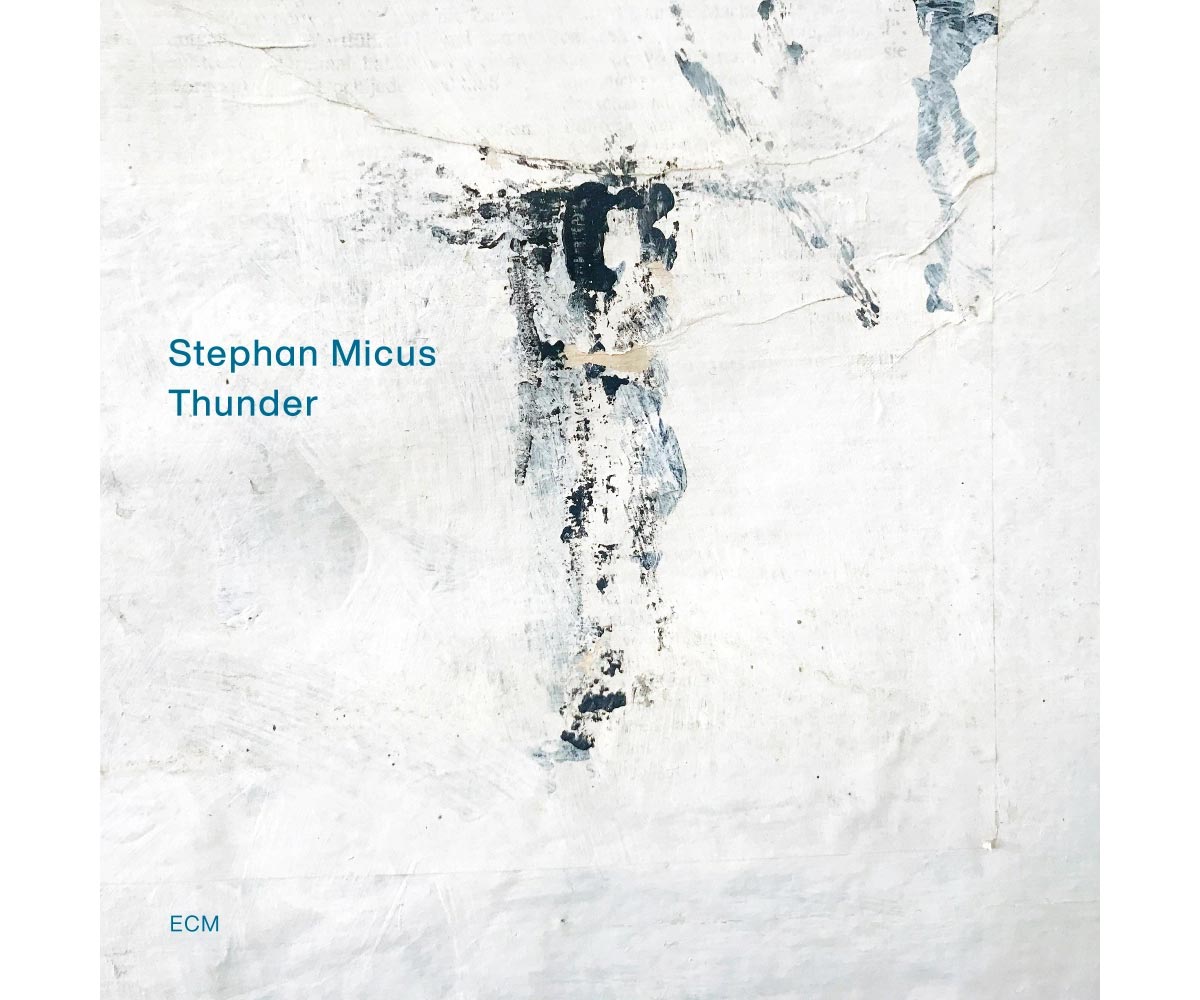
Gleich nach dem Abitur begann Stephan Micus die Welt zu bereisen, erlernte exotische Musikinstrumente, brachte sie nach Hause, hunderte verschiedene, modifizierte sie und schuf auf ihnen fantastische Klangbilder, in denen sich gegensätzliche Musikwelten, Religionen und Kontinente begegnen.
Stephan Micus kreiert klingende One-World-Visionen, eine transkulturelle Musik-Utopie. „Alle Instrumente haben ihre eigene Geschichte – wie ich sie gefunden habe oder wie sie mich finden konnten.“ Nun präsentiert der gerade 70 Jahre alt Gewordene sein 25. Soloalbum.
Es ist, wie gewohnt, über zwei, drei Jahre hinweg gewachsen – denn Micus schreibt keine Noten, sondern improvisiert seine Musik, Tonspur um Tonspur um Tonspur. Das Album Thunder besitzt eine ganz eigene, unverwechselbare Klanglichkeit, die sich der Konzentration auf etwa ein Dutzend mit Bedacht ausgewählter Instrumente verdankt. Diesmal sind das: Dung chen, eine Art Alphorn der tibetanischen Klöster, Ki un ki, eine Art Trompetenrohr aus der sibirischen Taiga, dazu japanische Bambusflöten, die schwedische Nyckelharpa (Tastenfiedel), numerous Zupfinstrumente aus drei Kontinenten, Percussion aus zweien – und natürlich Micus’ unkopierbare Stimme. Gewaltig klingt da so manches, anderes feinsinnig, vieles anrührend und erhebend. Bis zu zehn und mehr Instrumente spielt Micus in manchem Stück. Das neue Album hat er den Donnergöttern diverser Religionen gewidmet, rund um den Globus.
Yesterday I explored some fine and fascinating new music from Cuba by a group named Okuté. In my listening report I made a connection between this music which is usually categorized (at least here in the United States) under “world music” and acknowledge that it really has more in common with what many of us call “progressive” — and even “progressive rock” — music than many might consider. If you missed Part I on Okuté, please click here to catch on that story.
Many of you know by now that I don’t usually write reviews based on low resolution digital files (ie. MP3s) as I feel it presents a skewed image of what the music might (or might not) be like. Unfortunately, that is all I had been sent many months ago about a group from Africa called The Alostmen. However, as I was working on the review about Okuté I was happy to find that The Alostmen now have their album streaming on Qobuz (click here) and Tidal (click here) in CD-quality. So the time felt ripe to finally share this music with you, Dear Readers.
A paragraph from the official press release offers some insight to the music of Ghana’s The Alostmen, co founded by a musician named Stevo:
“Alostmen’s music is based around the Frafra traditions of the kologo, a stringed lute and uses purely traditional instrumentation in entirely new ways. The kologo is traditionally played a certain way but Stevo will play it at the shortest end of bridge and accentuate, almost Hendrix-style! He plays with a pedal sometimes and can keep it an octave down with a bass sound. He has evolved the instrument in his own way.”
Like Okuté, this music revolves around circular repeating patterns played on the Kologo and periodic call-and-response group chants. The rhythms are different of course than those from Cuba but still connected in some ways.
The messaging on The Alostmen’s album is often quite very powerful. “Teach Me” was the first track which really caught my ear with its series of poignant parallels. On their official video on YouTube, explains: “Lead singer Stevo Atambire tells how it is more rewarding in life to be a creator rather than just a consumer while Villy sings about acting too hastily and lacking focus in building a better world for ourselves. “
“Minus Me” could easily be transformed into a King Crimson tune (ala “Sleepless” and “Elephant Talk” ) with a bass line that reminds me of early Bohannon plus cool horn textures punctuating the pulse.
The music here is wonderful in a stripped down way using this fascinating two string instrument. It has a very specific sound quite unlike anything I’ve heard on record, at least presented in the context of a full band setting with bass and percussion. Combined with distinct song structures, this music becomes quite a compelling listen.
You can hear The Alostmen on Tidal (click here) and Qobuz (click here) streaming in 16-bit, 44.1 kHz CD quality, both of which sound very good and quite rich. The group also has a Bandcamp page so if you like this music be sure to support them any way you can. The album is available on CD and vinyl! If I can get my hands on the latter I’ll certainly do an update on this review for those of you who might be interested
I’ve posted some of The Alostmen’s videos below which are fun and at times powerful. I hope this group gets a chance to reach broader audiences and tour the world with their music.
So there you have it… Coming full circle, there is some fine and fascinating new music to check out from around the world which may well fuel your polyrhythmic passions beyond the scope of progressive rock.
Contemporary jazz has been fertile ground for cultural mashups over the last few years. Entire record labels, such as Zoho, are completely dedicated to the idea of jazz traditions being absorbed into folk music traditions and coming out on the other side all fresh and new. The Afro Yaqui Music Collective, however, seems to turn these ideas up to 11 by mixing up erhus with electric basses, pipas and saxophones, and you get the idea. It’s a music collective, after all. It’s all about multiple energies focused and directed. But what makes this album, Maroon Futures, so exciting is that it carries this diverse group of musicians through an equally diverse set of musical styles such as fusion, rock, big band jazz, hip-hop, spoken word and perhaps, most steadily, funk. Afro Yaqui Music Collective is a party, brimming with ideas and chaos, and all of it will make you wanna dance. Once you settle into the Afro Yaqui groove, the true purpose of this music starts to emerge. This bouncy survey of world music influences addresses a more serious topic of how working immigrant communities are always under attack, and how the ravages of climate change have contributed to this […]
Seeds of the Keleketla album came out of sessions at Trackside Creative in Johannesburg’s Soweto township, where Coldcut’s Matt Black (left) jammed with local musicians (l-r) Nono Nokoane, Andrew Curnow and Tubatsi Moloi, among others.
London, UK (September 21, 2020)—”We think that playing around with sound and making music is too good to restrict to ourselves. We’re here to show that non-musicians can create and have fun playing with sound,” says Matt Black, one half, along with Jon More, of pioneering U.K. DJ duo, multimedia artists and Ninja Tune label owners Coldcut.
Black is referring to Jamm Pro, a highly sophisticated iPad-based beat instrument that they have been developing and refining since the ’90s (a free version, Ninja Jamm, is available for iPhone and Android). But Black might just as easily be referring to Coldcut’s inspirational career.
As non-musicians, the duo have had remarkable success in the 33 years since they dropped their groundbreaking first U.K. record, comprised entirely of samples, “Say Kids What Time Is It?” The full list of their accomplishments is too long to list here, but their “Seven Minutes of Madness” remix of Eric B. & Rakim’s “Paid in Full,” which kickstarted hip-hop in the U.K., and their launching of Lisa Stansfield onto the world stage via “People Hold On” are just two early highlights.
Now, Black and More have released their most ambitious project to date, Keleketla. The album, released in July, features two dozen musicians, mostly African, recorded in South Africa and London, with additional contributions from the Watts Prophets and Antibalas in the U.S., and West Papuan activist Benny Wenda. It was mixed—unexpectedly, as it turns out—in China.
“Keleketla” means response, as in call-and-response, and in fact represents Coldcut’s response to an invitation from Johannesburg’s Keleketla Library and charity organization In Place of War to visit South Africa and collaborate with local musicians. A portion of the record’s proceeds will go to In Place of War, which uses creativity in places of conflict as a tool for positive change.
The seeds of the album’s songs came out of sessions at Trackside Creative in Jo’burg’s Soweto township, with musicians selected by pirate radio-turned-record label Mushroom Hour Half Hour, which also supplied the basic recording equipment and engineering support. “We set up and jammed and then did overdubs, particularly of vocals, because we needed those as clean as possible,” says More.
“I used Jamm Pro for my contributions to the backing of a couple of the tracks,” Black says, noting that the four-track loop mixer offers a balance between playing live, DJing and live production. “Ableton is also a mainstay. Combined with the Ableton Push hardware, it’s a pretty wonderful instrument and studio setup all in one.”
Speaking of gear, he adds as an aside, “Ninja Tune has released our first hardware unit, the Zen Delay. It’s a stereo valve delay unit—the only one on the market, I think. It’s being done in partnership with Ingmar Koch from [German electronic band] Air Liquide, and Erica Synths, from Latvia—one of the top modular makers.”
Trackside’s studio is essentially a storefront, but that helped the sessions, Black believes. “Looking back, I think it would have been hard for us to get such a fun, productive vibe going in a normal studio, which can be dry and sterile. This was very much like someone’s living room—a little community center with some instruments.”
Improvisational jams by regional musicians like (l-r) Gally Ngoveni and Thabang Tabane provided the jumping off points for Coldcut to rework into songs for Keleketla! back in London.
Black and More took a traditional production role, guiding the collaborators as the ideas flowed. “Jon and I realize that in some ways, we’re two white guys who got lucky with a bunch of samples. But we’ve come full circle and find that our experience DJing and putting stuff together has given us some ability to function as producers,” says Black. “We let the musicians get on with it, basically.”
Having identified the best candidate songs for the album, the pair headed back to England where they sifted through the tracks and made some reference mixes. Further overdub sessions at Denmark Street and Assault and Battery Studios in London added more than a dozen additional musicians to the tracks, including legendary Afrobeat drummer Tony Allen, who has since passed away.
Al Riley—More’s former assistant, now a studio owner working with the likes of Tricky and Jazzy B—handled editing duties, moving between Ableton and Pro Tools. “Al was a big contribution to the record; he was absolutely solid doing these quite intense sessions. You want that cool pair of hands on the faders,” says Black.
Black and More knew mixer Eric Lau from his work with Ezra Collective and other productions. But while they wanted to work with a London-based mixer for convenience, they were surprised to learn Lau had moved to China. As a result, the mix process wasn’t as easy, Black admits. “There were difficulties with not being in the same room, but it’s also good for the engineer to not have you leaning over his shoulder. And it’s good for the producer to have some space to get some objectivity.”
Riley also provided notes on the mixes, which they would pass to Lau. “To Eric’s credit, he was extremely openminded; he hadn’t worked like this before.” Indeed, says Black, “It was a new experience for all of us, but everyone was focused on getting the best results. There were no ego clashes; it was a smooth and joyful experience.”
Black reports that reviews of Keleketla! have been great, although one was somewhat puzzling. “One said it was ‘nicely underproduced.’ We didn’t mean to underproduce it,” says Black. “I guess that because we didn’t mic up Tony’s kit with 17 microphones, we did it in a minimal way.”
That was in keeping with Allen’s signature sound on his classic recordings with Fela Kuti’s band. It was also something the two DJs recognized earlier in their careers. “We realized all those records that we liked were recorded with one and a half microphones, basically, but they had that funky sound we liked,” says Black. “Sometimes less is more when it comes to getting the right sound for the drum kit, especially for breakbeat records.”
This latest album may have taken a few years to put together, but the good news is that Coldcut’s productivity is increasing. “The previous album took us 10 years to do,” says Black. “As we did this one in three years, we feel that we’re slowly speeding up.”