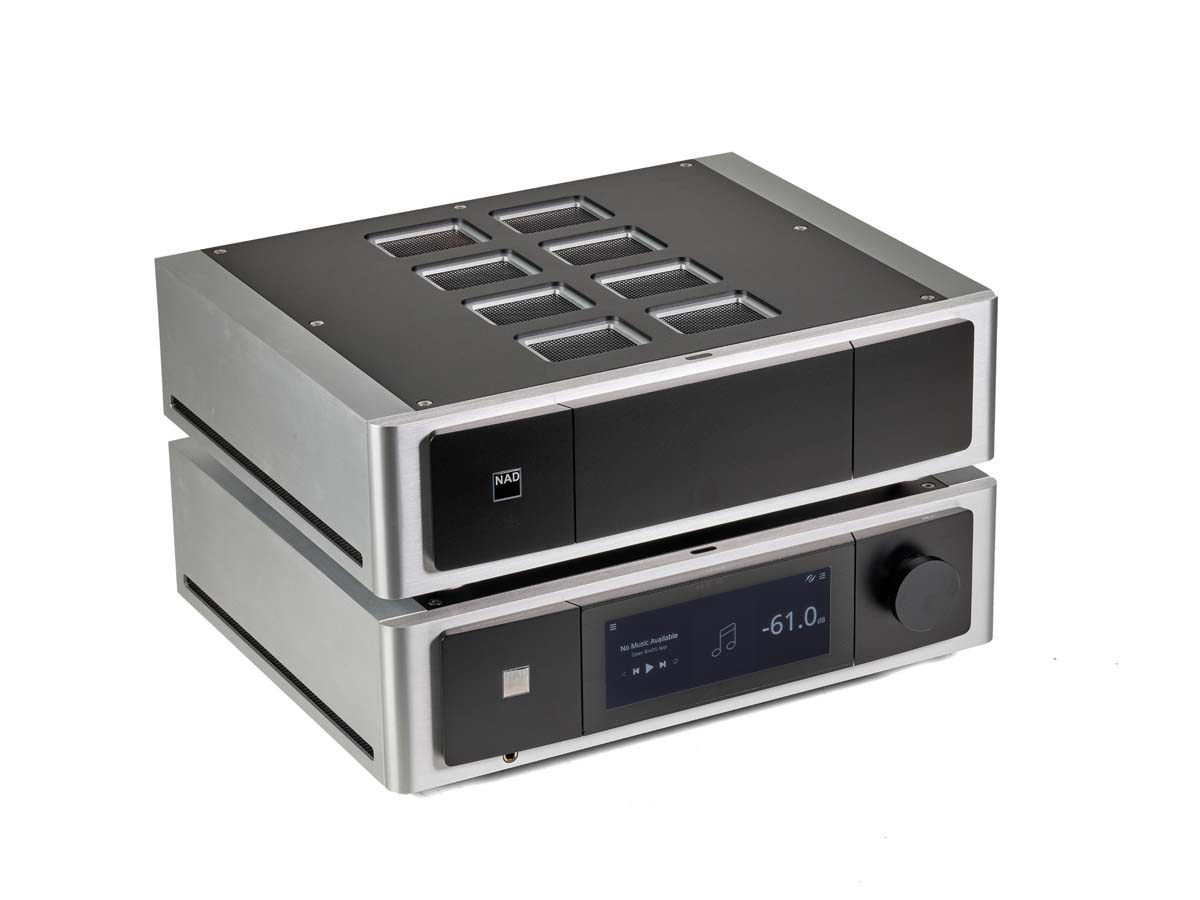
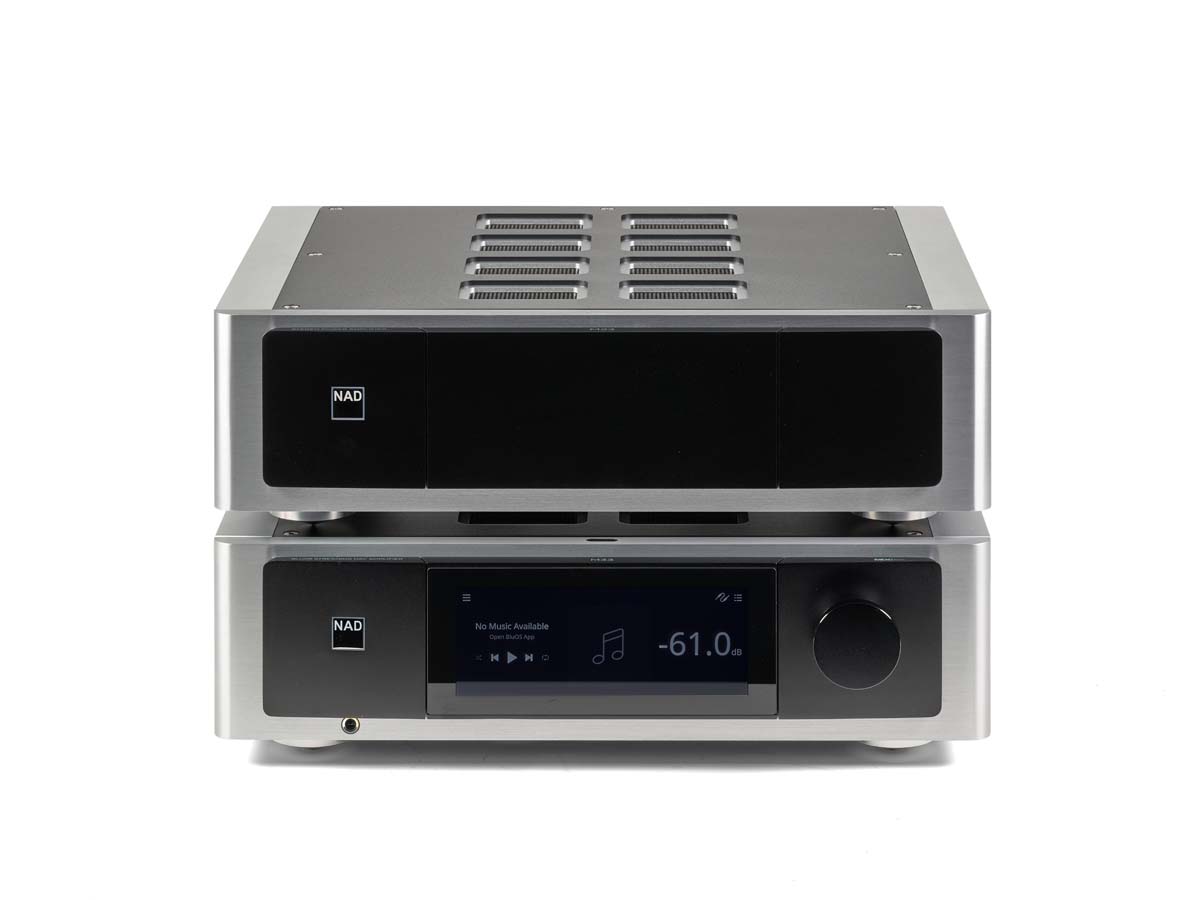
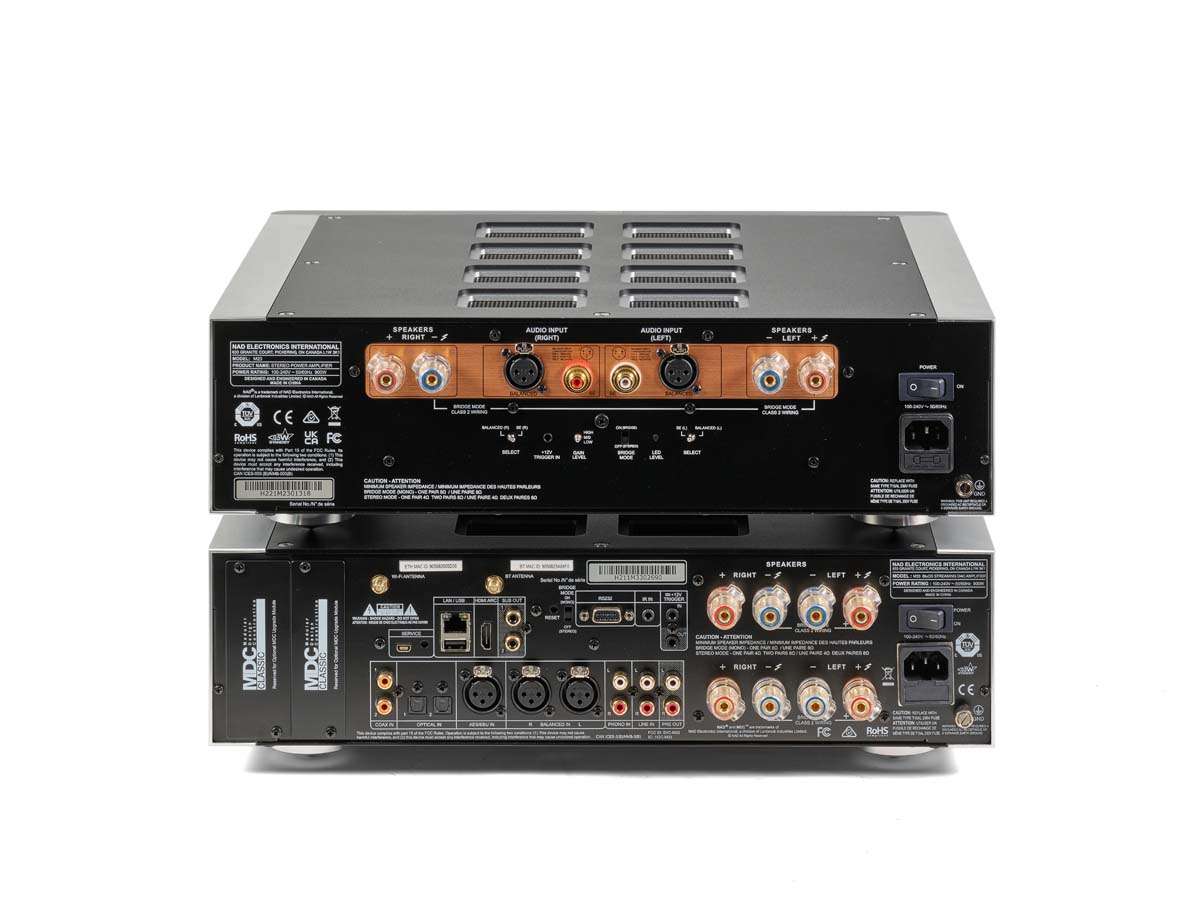
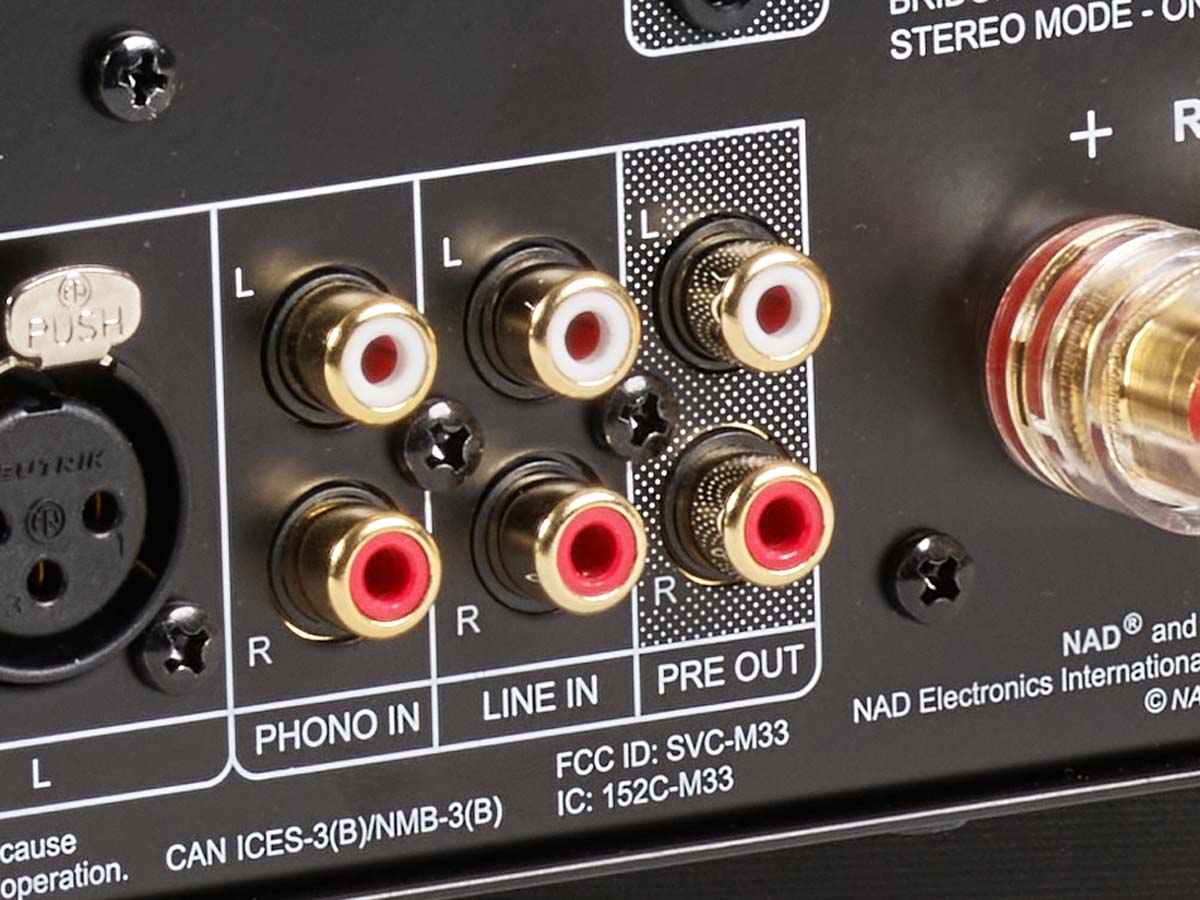
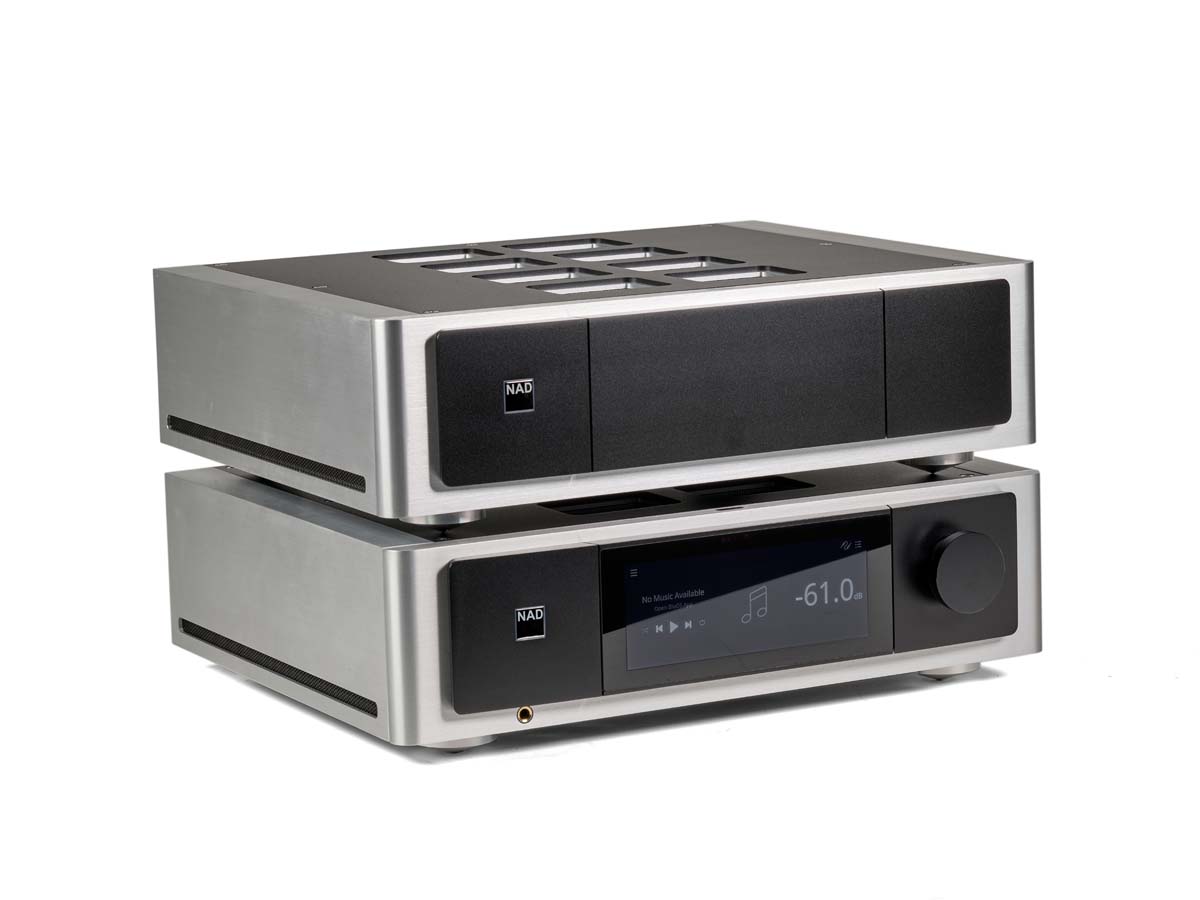
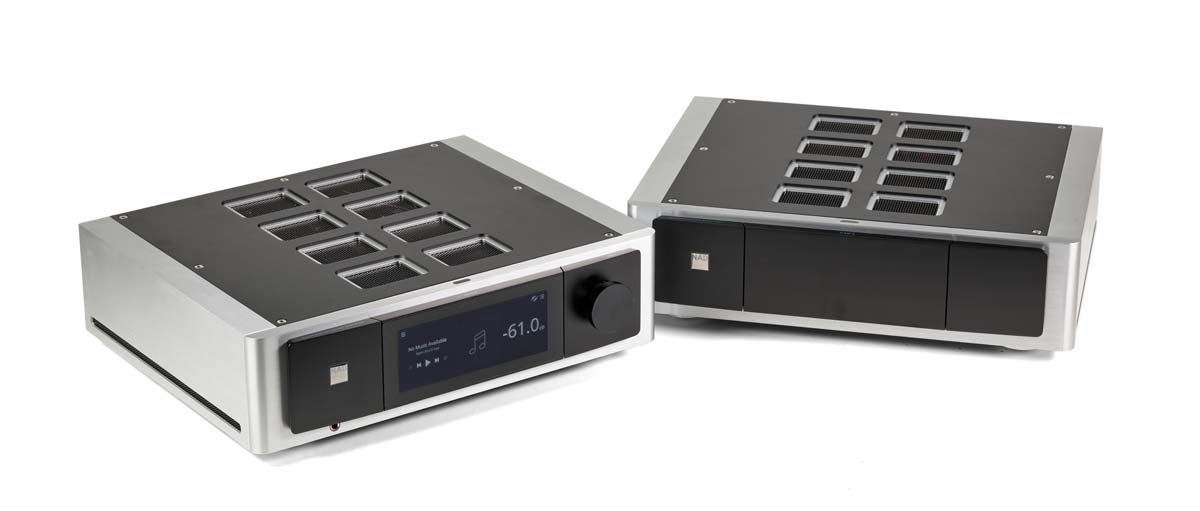
NAD’S new C399 is a streaming integrated amplifier that incorporates many functions and features and high performance into a remarkably compact component. Its preamplifier section has two line-level inputs; a moving-magnet phonostage; balance, bass, and treble controls; switching for two pairs of speaker systems; outputs for two subwoofers; a headphone jack; and a pair each of preamp-out and record-out jacks (the latter doubling for home-theatre bypass). The onboard DAC has a pair each of coaxial- and optical-in jacks and an HDMI-eARC port for accessing high-quality audio from a TV. The Bluetooth circuit (two-way apt-X HD) allows 24-bit streaming from mobile devices and a high-quality output to Bluetooth headphones; there’s also a built-in dedicated headphone amplifier that NAD claims will “drive demanding high-impedance studio monitor headphones.” (As I do not use headphones for serious listening, I did not evaluate these functions, but given the overall excellence of the C399, I see no reason to doubt the claim.) The Class D digital amplifier is rated at 180 watts per channel into four and eight ohms (250 watts peak).
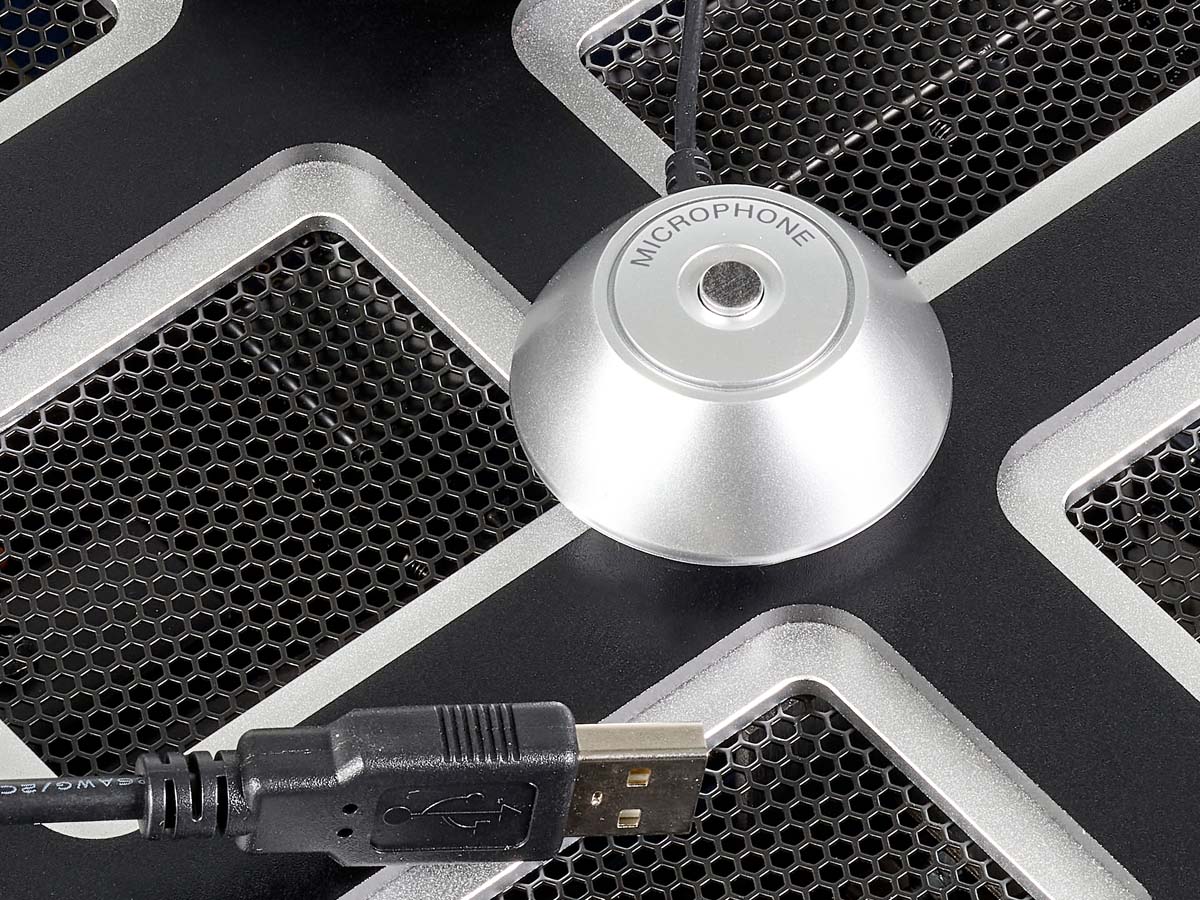
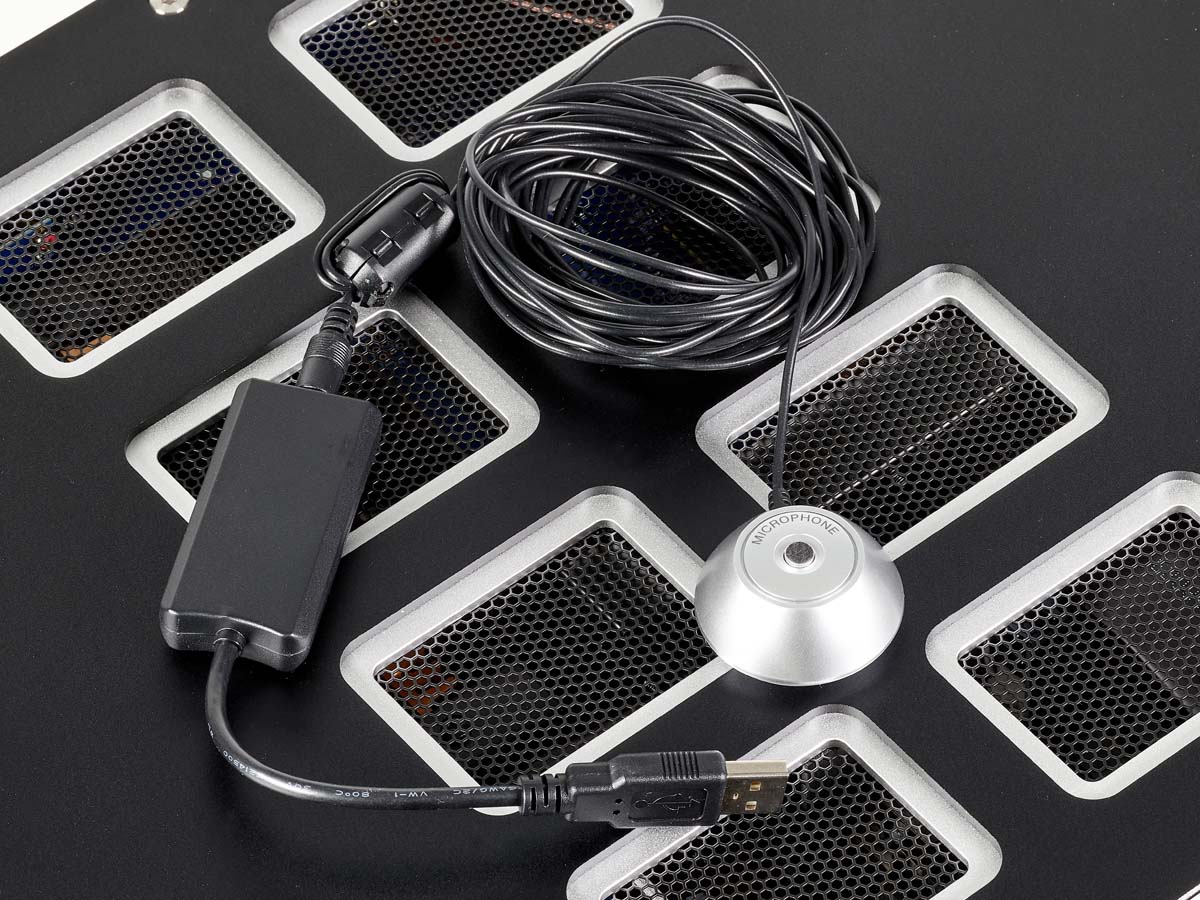
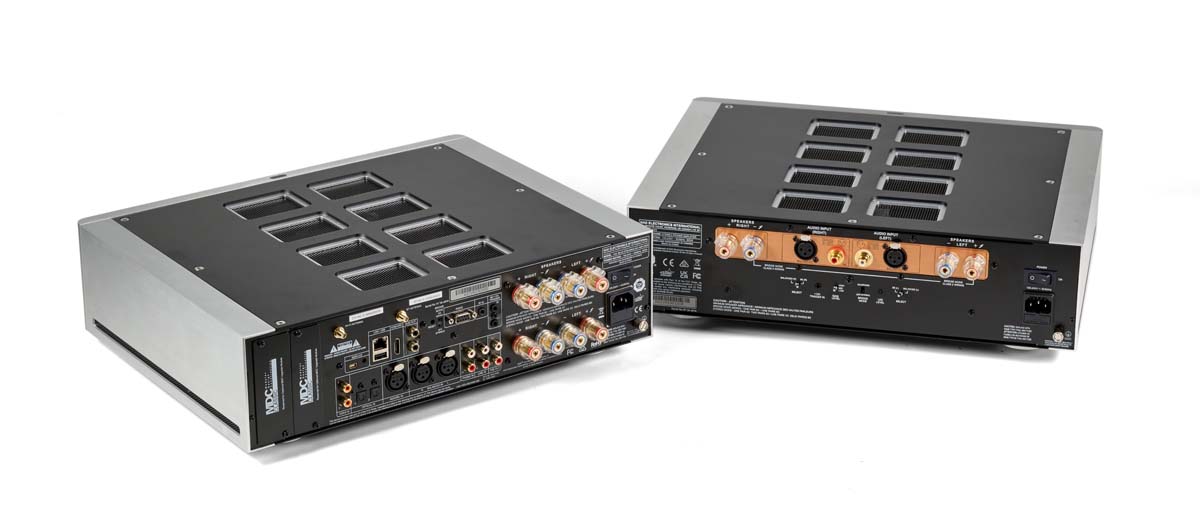
The C399’s architecture includes a new version of NAD’s Modular Design Construction, i.e., MDC 2, a pair of slots on the back panel that accept plugins for upgrades to help make the unit future-proof. The review sample came already fitted with the BluOS-D module that incorporates NAD’s Bluesound Node 2i streamer, controllable by its proprietary BluOS app, which accesses dozens of streaming services (Tidal, Qobuz. Spotify, etc.) and several radio stations, and which includes Dirac Live, a new digital-signal-processing room-correction technology that addresses frequency-response anomalies introduced by your listening room and your loudspeakers (see sidebar).
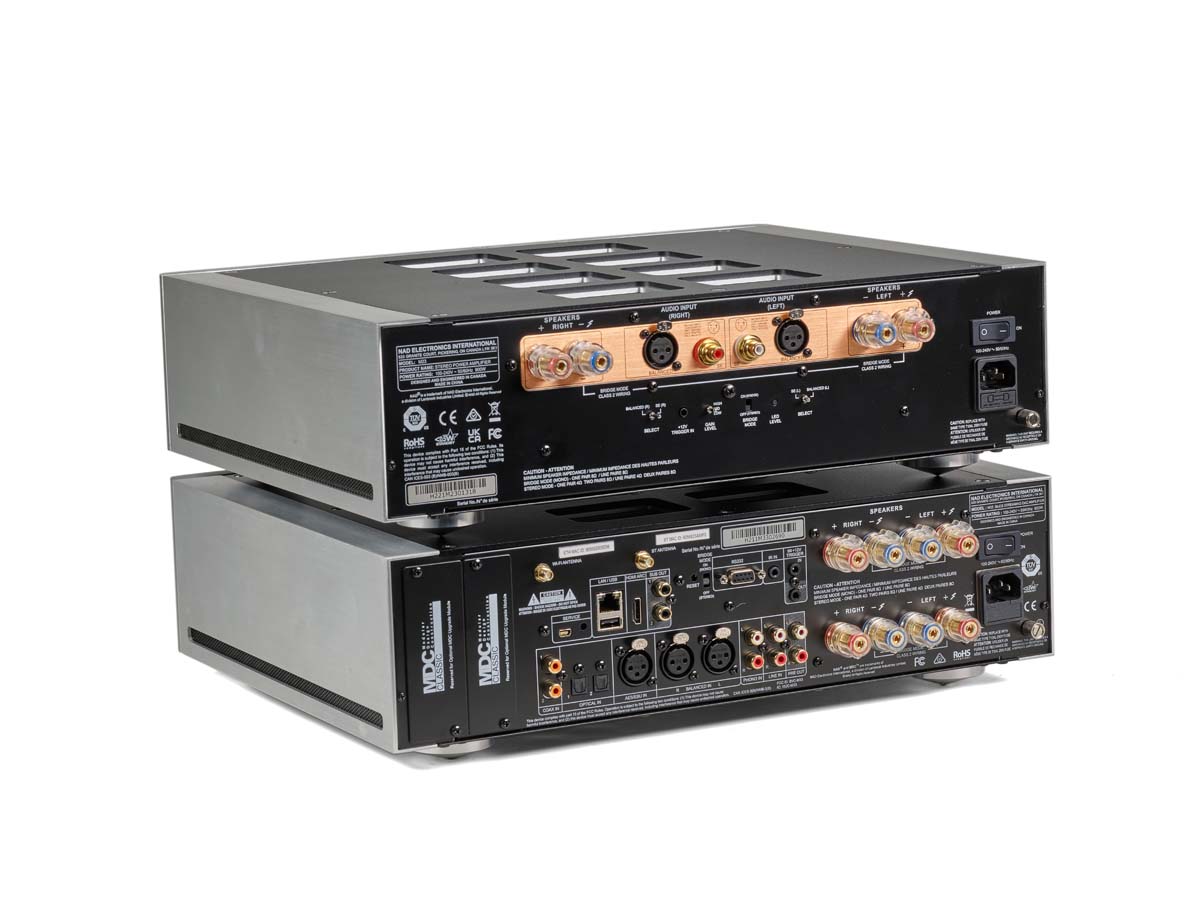
If my description together with the photograph of the C399 strikes a note of déjà vu, it’s because the fascia and chassis are the spitting image of NAD’s C658 Streaming DAC that TAS editor Robert Harley reviewed, along with the C298 power amplifier, last year (Google “Harley NAD C658 TAS”). The C399 essentially combines the C658 and the C298 into a single chassis. Together these two components retail for $4187 (including the BluOS-D module) versus $1999 for the C399 alone or $2598 when equipped with BluOS-D, as the review sample is. How is such a price differential possible for close to identical performance and features?

Trickle down, for one thing; consolidation-cum-integration for another (e.g., a single chassis instead of two, probably shared power supplies); aesthetics for a third—“utilitarian rather than lavish,” RH judged them. I’d say unobtrusive—modest, yet not without a certain restrained style all their own. One of the things I’ve always admired about NAD, quite apart from its considerable engineering expertise, innovation, and excellent performance, is that it’s always trying to democratize the accessibility of its best products. The “C” in all these products stands for “Classic,” NAD’s mid-priced series, versus its Bluesound budget line and its Masters Series flagship products. I use the word “mid-priced” advisedly, because I shouldn’t want that term to be interpreted as “mid-fi”: NAD’s Classic series components are exceptionally value-driven but about as far as you can get from what most TAS writers and readers are likely to regard as mid-fi. Robert tried his 658/298 combination in a system worth some $800k, and I used my C399 in a system priced varyingly from $54k to over $70k. We both made the same happy discovery: These are extremely high-performing electronics that can take confident and unembarrassed places in any company of stratospherically priced components you care to place them in. (Please take notice you readers who accuse us of reviewing, let alone lavishing praise upon, only super-expensive gear.)
In as much as the full list of the C399’s capabilities is too extensive to cover in a single review, I shall concentrate on three sections: the DAC, the phonostage, and the amplifier.
The DAC
The DAC in the C399 is built around the ESS Sabre 9023 jitter-free 32-bit/384kHz chip, the same used in NAD’s acclaimed Masters Series components and many other DACs, including state-of-the-art ones. In fact, according to Greg Stidsen, NAD’s Chief of Technology, compared to the C658’s DAC, the one in the C399 “uses a newer generation DAC” and is slightly “better in its BluOS processing power” (a “better” I would not lose a wink of sleep over if I were already invested in the earlier product). It supports sample rates up to 192kHz and is capable of full MQA unfolding and rendering when the C399 is fitted with the BluOS-D module. Inasmuch as the BluOS-D module costs the same $549 as the Bluesound Node 2i streamer (Google “Seydor Node 2i TAS” for my review), should consumers who already own the latter purchase the former if they buy a C399? The short answer is no, if you don’t care about the Dirac Live program that comes with the module. Since the C399’s onboard DAC is better than the Node 2i’s, simply connect the digital out from the latter to one of the digital ports on the former and voilà!—you get all the BluOS streaming capability and features, including full MQA unfolding and rendering. Then, be sure you go into the menu on the BluOS app and instruct the 2i to send the unprocessed data to the C399, so that its DAC can do the full MQA processing.
According to Stidsen, the C399’s DAC will also unfold and render MQA discs. “In theory,” he told me, any compact disc player can output an MQA-encoded source provided “the MQA instructions are sent as metadata to the MQA decoder. Here’s the rub, most CD players strip off the MQA metadata because with normal CDs there is no metadata requirement. I don’t think this is a trivial task to fix, so it needs to be designed into the CD player. As we redesign future CD players at NAD, we will include full MQA capability.” MQA aside, if your CD player is more than a few years old and is equipped with a digital out, you will almost certainly get better reproduction if you bypass its internal DAC in favor of the C399’s. I’ve long since divested myself of old CD players, but I did run the coaxial digital outputs of a Marantz Ruby KI ($4k) and a Luxman D-10X (over $16k) through the C399’s DAC with terrific results. I’m not about to tell you it improved the sound of either of these fully contemporary and much more expensive players—it didn’t—but I heard far, far more similarities than differences, and the C399 was always intrinsically excellent. Otherwise, most of my listening was done using the BluOS-D module as a streamer with results that are absolutely first class, about which more in the amplifier discussion ahead.
The Phonostage
The phonostage of every NAD integrated amplifier or preamplifier I’ve ever used or reviewed has always been very good to excellent; the one in C399 is the best ever. It is moving-magnet only, a wise decision, I think. Most people who buy this unit are likely to be far more into digital reproduction and streaming than into hard media of any kind. That being the case, and this being a value-driven component, it makes sense to include a first-rate moving-magnet phonostage instead of a “merely” very good one that also caters to low-output moving coils without raising the price. Anyhow, the best of today’s moving magnets, high-output mc’s, and moving irons are easily competitive with low-output mc’s. The evaluation period of the C399 happened to coincide with my evaluation of three versions of Denon’s classic DL103 moving-coil pickup (reviewed in Issue 328), so I did a lot of listening to them stepped up with a Quicksilver transformer.
To say I was impressed is a gross understatement. This is one of the quietest phono- stages I’ve ever heard or reviewed (including one model that retailed for $29k). With the volume turned all the way up to maximum, there is absolutely no hum—something I can say for very, very few phono preamps. As for thermal rush, with volume control set somewhat above the loudest position I would ever use for playback, there is no noise audible at the listening chair, and it was quite faint close to the tweeter. The only way I could make any noise audible in the room well away from the speakers was to advance the volume to absolute maximum, many decibels louder than it would be possible to bear if music were playing. Keep in mind that this is with a moving coil into a step-up device; with a moving magnet the noise levels are even lower. (These noise levels, by the way, were obtained with the transformer placed directly on the top of the C399 near the back, close to where the IEC cord enters the rear panel—I had no other convenient place to put it. Whatever’s going on inside the chassis and circuitry, the shielding against stray noise must be state of the art.)
This low noise is mated to equally impressive headroom (overload margin 80mV) that together translate into a startlingly wide dynamic window. The soundtrack to the new movie version of West Side Story (Issue 327) has been released on vinyl. Go immediately to the Prologue, with its distant whistles, finger snaps, and antiphonal bongos through to the crescendo leading to the first big orchestral chord, and you’ll hear it land with such force as nearly to knock you off your chair. The opening whistles are so low that, like me, you’re likely to set the volume too high. Now, set it from the perspective of that chord, cue up the beginning again, and appreciate the full measure of whisper-to-roar dynamic range, which will also make you appreciate the high degree of transparency, definition, and detail on offer. Check out the orchestral introduction to the “Tonight” duet, with string playing of surpassing loveliness and delicacy; when the voices enter, they are reproduced with great warmth, dimensionality, and presence.
Truth is, I can’t remember when I’ve heard a better phono- stage in an integrated unit, except, perhaps, my reference McIntosh C53 preamplifier, hardly a fair comparison, as the C53 has a fully dedicated mc phonostage (with several loading options), thus obviating the need for a step-up device to play mc’s. When I substituted Clearaudio’s superb Charisma V2 moving magnet with equally satisfying results, the gap, such as it was, closed to Tenjugo-paper thinness. Suffice it to say that at no point, with whatever pickups I used, was I ever distracted by untoward artifacts attributable to the C399—my attention always kept focused on the music.
Ever solicitous, the NAD engineers allow for the option of an analog-only paththrough the C399—labeled, counterintuitively, “analog bypass”—which means that if your prejudices lie that way, you can play your LPs (or even your open-reel tapes, if you have such) without their ever being “corrupted” by digital circuitry. As my quotation marks suggest, I am being ironic here: I think this sort of anti-digital attitudinizing is pretentious to the point of ludicrous in this day and age, but if you’re of that persuasion, know that the C399 will allow you to indulge it. By the way, this feature applies only to the Phono, Line 1, and Line 2 inputs, and when engaged it still allows full tone-control and balance operation (very thoughtful that). Bottom line is that while C399 appears, as noted, to be conceived mostly for the digitally oriented audiophile, this phonostage is so damn good that if said audiophile decided to explore the wonderful world of vinyl, he or she could scarcely ask for a better portal through which to begin—and, for that matter, remain.
The Amplifier
As with the DAC section, the amplifier derives from NAD’s Masters Series components, specifically the Hypex Hybrid Digital NCore Class D amplifier. The principal difference between this and the C298 reviewed by Robert Harley is that the latter comes equipped with the Purifi Eigentakt Class D module, a ground-breaking circuit that allows for error-correction by “an order of magnitude greater than any previous Class D circuits” without compromising stability (the quotation is from RH’s full description in TAS 313, p. 66). The cost savings for the C399 had to come from somewhere, so, like moving-coil capability, this circuit was left out. Bearing in mind that I have not heard the C298, my listening impressions tally quite consistently with Robert’s in the areas of dynamic range, dynamic contrast, soundstaging, imaging, bass impact and control, and subtleties and nuance. (I deliberately refrained from reading his review until well into my evaluations.)
My initial impression—again with the Prologue from the new West Side Story soundtrack, this time on CD or streaming via Qobuz—is that the C399’s amplifier is ultra-clean, ultra-low distortion, and quite amazingly transparent. The biggest stuff I could hurl at it fazed it not the least, by which I mean fare like the Solti Aida (RCA, now Decca) remastered and, in Blu-ray, the Mehta LA Philharmonic Planets, the same team’s Also Sprach Zarathustra, “Blue Rondo a la Turk” from Brubeck’s Take Five, my trusty Bernstein Carmen (DG), and any number of big recordings from Telarc (the Slaktin/St. Louis Mahler Second). Back to West Side Story: the way the C399 reproduced the big ensemble pieces for orchestra and many voices, like “The Dance at the Gym” and Quintet, reveals a clarity of line and texture and an ability to dovetail the gestalt with voices and instruments in the aggregate and individually that is truly stunning in its grip, control, and drive.
Not only did I play all this material louder than I usually do, but I also played it a whole lot louder simply because I couldn’t believe an amplifier that has to share house space with other components in a box no larger than a standard 17″-wide chassis weighing under 25 pounds could exhibit such unflappable composure against such repeated onslaughts. But the proof is in the listening: The sound just got louder without any sacrifice in clarity or effortlessness and with absolutely no hint of congestion, hash, harshness, or hardness. Imaging and soundstaging are as solid, precise, and stable as the sources warrant. The speakers involved are my reference Harbeth Monitor 40.2 Anniversary and Graham Audio’s LS5/5 (Issue 331). True, neither presents a difficult load, but bear in mind that RH experienced pretty much the same things with the C298 driving Wilson Chronosonics (whatever the myriad virtues of the Wilsons, nobody ever accused them of being easy to drive, not with impedance dips to 1.6 ohms).
Beginning with the storied 3020 integrated amplifier that put NAD on the map some five decades ago, the rap on the company’s amplifiers has been that they are tonally on the warm, dark, forgiving side, Yin in Harry Pearson’s Yin/Yang continuum. Whatever considerable truth there was to this in years past, it has become less and less so as time went on, though some of it persisted well into the aughts. In my experience, the Rubicon was passed with the C398 I reviewed three years ago (TAS February 2019), where that characteristic was nowhere in evidence. In the C399 there’s not a hint of bogus warmth, the crucial word being “bogus.” The C399 is not in the least overly analytical or excessively bright; if along the Yin/Yang spectrum it tilts a notch or two toward the Yang, this is to my ears less because of any obvious tonal leaning in that direction than because it lacks warmth as a positively identifiable characteristic in and of itself, and perhaps also because its resolution is so extraordinary. (In this regard, it reminds me more than anything else of my reference Benchmark AHB2, a veritable paragon of neutrality if ever there were one.) If there’s warmth in the recording, the C399 reproduces it; if the recording is bright and aggressive, it reproduces that, too. The glaringly overmiked violins in the Bernstein/Sony Appalachian Spring (Columbia/Sony) are shrill and aggressive, as they were recorded. But put on something like the recent Naxos recording (Qobuz streaming) of Jennifer Higdon’s arrangement of “Amazing Grace” for string quartet, and you will hear a truthful string tone with a vivid sense of presence projected into the room. If you compare it to tubed units, there may be a certain lack of roundedness, but that is only in the comparison. Classics like the two duet albums of Louis Armstrong and Ella Fitzgerald on Verve are as dimensionally full-bodied as you please, likewise the Acoustic Sounds vinyl release of Sing and Dance with Frank Sinatra.
Indeed, Sinatra is always a useful evaluative tool. The voice of the Capitol years should sound like a solid baritone, smooth and still open at the top; by the middle of the Reprise years, a decade and more later, it becomes throatier, rougher, and more closed down. And so it does through the C399. Doris Day on Hooray for Hollywood (vintage vinyl, CD, and streaming) should sound nice and clear but not too light, as there’s a surprising degree of body to the voice. And so it appears. Of course, if it’s a light, bell-like soprano you want, look no further than Marni Nixon in any of her “ghost” roles in the soundtracks to The King and I (Deborah Kerr), West Side Story (Natalie Wood), and My Fair Lady (Audrey Hepburn). To be sure, your speakers will pay a far greater role in determining tonal balance than any amplifier (unless it’s defective, built around tubes, or deliberately designed to sound a certain way), but as amplifier, DAC, or phonostage, the C399 imparts no untoward characteristics to anything familiar that I played.
While I was deep in evaluating the C399, the March 2022 issue of TAS arrived with the valuable first installment of Jonathan Valin’s “Super Download List” (well done, Jon, and many thanks). I immediately started streaming several titles through Qobuz and Tidal using the BluOS-D module. For some reason I had never crossed paths with Satchmo Plays King Oliver throughout all my decades as an audiophile. I listened to it straight through one afternoon with a big smile on my face, the sonics all that Jon says: big, bold, immediate, and rounded. If you held a gun to my head and forced me to name the greatest piece of music ever written, I’d probably say Beethoven’s opus 131 quartet, which Jon also included by way of an early Julliard performance, again in a recording I’d not heard before (even though I’ve got over a dozen of this piece and listened to over a dozen more). His description of both recording and performance is spot on: dry, analytical, severe, intellectual. The C399 reproduced it as described. For an alternative interpretive approach, I recommend the second Tokyo (Harmonia Mundi SACD), who play it with a rare tonal refinement, delicacy, subtlety, and nuance, a wholly inward approach with warmly sympathetic sonics to match. However mutually antithetical, both interpretations are equally valid and equally revealing of the C399’s fidelity in reproducing different recording methods.
Setup, Tone Controls, Features, and Problems
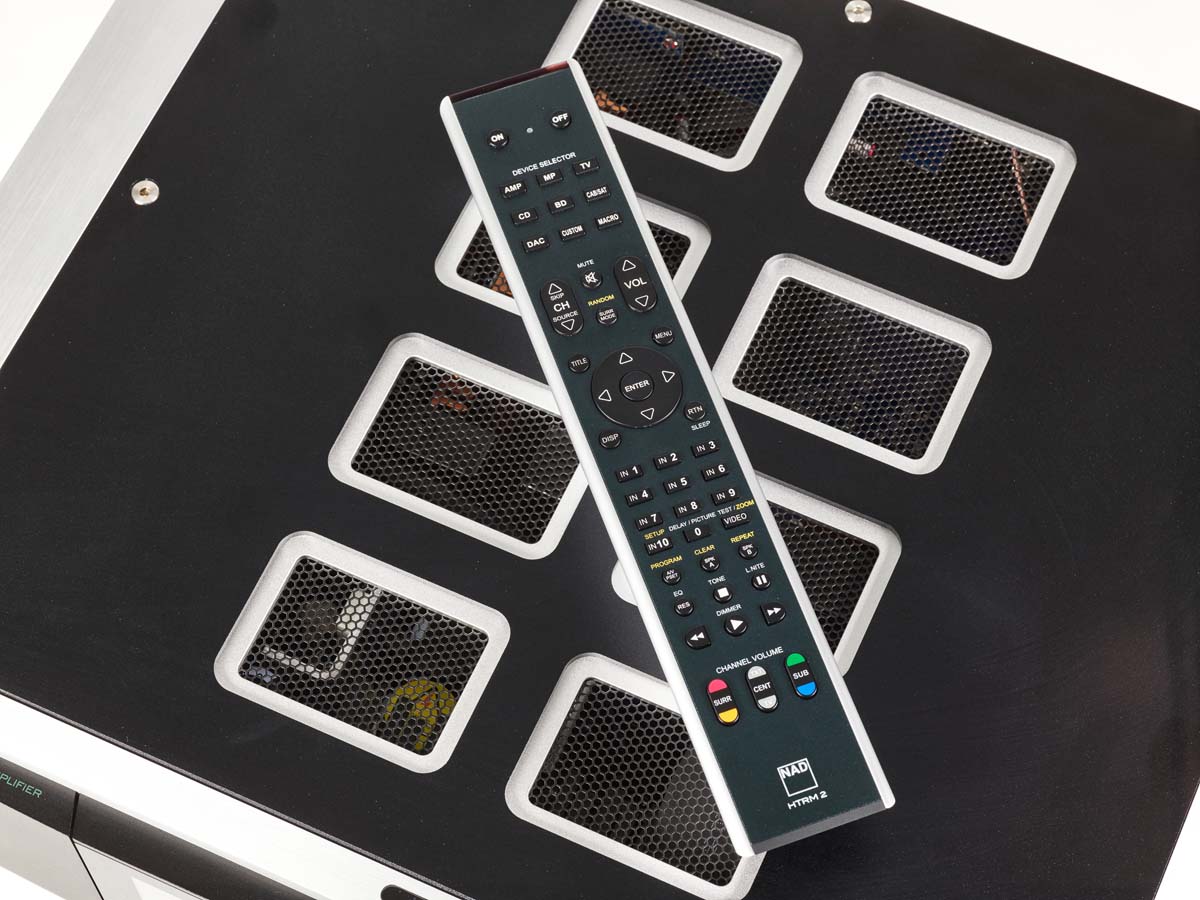
For such a complex, multi-faceted unit, getting the C399 set up and running couldn’t be easier. I used an Ethernet connection. As I already had BluOs installed on my iPhone and iPad, the moment I opened the app, the C399 was instantly recognized and ready to go to work. A remote handset is supplied (that will also operate other NAD components), but you can use the BluOS app via your smartphone or tablet if that is your preference. A nice feature enables custom names to be assigned to the generic inputs. The unit also features I/R in/out, 12V trigger in/out, and integration with many other NAD components, not to mention third-party home-automation systems such as Control4, Crestron, RTI, URC, AMX, Savant, and Elan certified.
Many years ago, NAD introduced a superb SACD player that was discontinued, became something of a cult object, and is now all but impossible to find on the second-hand market. In the meantime, the company has for all practical purposes abandoned that format and DSD, instead lavishing its efforts on Red Book and the higher resolutions of PCM. This makes a lot of sense in value-driven digital components like the C399, especially when you consider that PCM has improved to the point that it has achieved parity with DSD, while catering to the latter, and SACD would raise the price considerably for formats that appear more and more to be occupying a niche market.
My regular readers know I like preamplifiers and integrated amplifiers with balance and tone controls. The latter are very good here, bass centered at 40Hz, treble at 10kHz, with a very restricted range of only ±7dB. In use, they reminded me of the tone controls on the first serious piece of audio electronics I ever purchased, back in 1969, the Acoustic Research AR amplifier. AR claimed it was impossible to make an unmusical sound with its tone controls; I found the same to be true of the C399’s. When I mentioned this to Greg Stidsen, he informed me it was none other than NAD’s own brilliant Bjorn Erik Edvardsen who designed the AR amplifier before he joined NAD. (No wonder that amp was such a great performer back in the day, not to mention one of the most value-driven pieces of electronics at the time.) The countless recordings that are too closely miked, too bright at the top, or too thin at the bottom can be gently ameliorated. “Gently” is the operative word here. While the extremes can be adjusted with virtually no effect on the midrange, there were times I wished the bass turnover closer to 100Hz, the treble moved down to around 7kHz, with ±10dB of range: Szell’s Cleveland recordings with the Cleveland Orchestra (Columbia/Sony), many of them anyhow, need a bit more warmth than these controls can provide. All the same, these are still very useful.
The only serious functional problem I had concerned the C399’s HDMI eARC port. For the first several weeks the C399 was quite erratic when it came to shaking hands with my recent-model Sony smart TV, this despite changes of HDMI cables and ensuring the TV was outputting a PCM signal. Sometimes it would work; sometimes it wouldn’t. The only way I could fix this when it occurred was in effect to reboot the C399 by detaching the AC plug, waiting about 30 seconds, then plugging it back in, at which point the C399 recognized the TV, and all would be well. After several weeks of this, the problem simply disappeared, never to reappear until the other night, some weeks later, when I got home late, turned on the TV, and found the problem had returned. The solution? Detach the AC plug, wait 30 seconds, plug it back in, problem solved—until the next time. Greg Stidsen told me NAD’s engineers are aware of the issue and an improvement is in the works. The problem has to do with HDMI content protection, and the ease with which the complex encryption protocols that allow eARC-equipped devices to communicate with each other can sometimes get out of sync. Apart from this one feature, the C399 operated flawlessly.
Conclusion
During the evaluation period two audiophile friends dropped in to listen a few times, both of whom have outstanding systems. The first was so impressed he asked if I could bring the C399 over so that he could hear it in his system, which consists in electronics that total over four times the price of the NAD. The other, who is into extremely expensive equipment, was so gobsmacked by what he heard as to leave him totally shaken, mumbling how that level of performance could come out of a unit this unpretentious in size, weight, appearance, and price. He visited again a week later, then again a few weeks after that, each time departing in a similar state of disbelief. Let me reassure you that with both friends, and myself, our reactions are most definitely not an instance of Dr. Johnson’s dancing dog—you know, it’s not that the dance is so good, it’s that a dog is doing it.
Or to put it another way, yeah, sure, initially we were each struck by the size/weight/feature/price disproportion in view of the incredibly high performance. But once past that, we all three agreed that considered strictly for its basic purpose as an integrated amplifier, the C399 is a true high-end component of superior performance for which absolutely no allowances have to be made. When the excellent phonostage and DAC are factored in, it’s obvious that for sheer value the C399 is so far off the charts it’s almost a joke. That it costs a mere dollar under two grand is a conundrum only for those who need to know the price of something before they can judge it. The rest of us can rejoice in how fortunate it is that products like this exist to make the rewards of high-end audio available to multitudes. In this context I cannot help but be struck by how appropriately named NAD’s Classic Series is, for it was always the dream of the great pioneers of audio that quality reproduction of recorded music in the home should be affordable to all and sundry. I salute NAD for keeping this dream alive and continuing to be a leader in the field. Products like the C399 demonstrate that in the right hands high performance and high value, far from being mutually exclusive, are matches that really do seem to be made in heaven.
Specs & Pricing
Type: Integrated amplifier and streaming DAC
Power: 180Wpc into 8 ohms, 20Hz–20kHz, <0.02%
Damping factor: >150
Signal-to-noise ratio: >95 dB (A-weighted, 500 mV input, ref. 1W out in 8 ohms)
Inputs: Unbalanced: phono, two line, two digital coaxial, two optical, HMDI eARC
Outputs: Unbalanced preamp, record, two subwoofers, headphone, two pairs speaker systems
Phonostage: 46k ohms/100pF; input sensitivity: 1.08mV (ref. 500 mV out, volume maximum); maximum input: >80mV RMS (ref. 0.1 % THD at 1kHz)
DAC: 32-bit/384kHz ESS Sabre, support up to 24-bit/192kHz
Dimensions: 173/” x 4¾” x 15 3/8″
Weight: 25 lbs.
Price: $1999; $2598 with BluOS-D module
NAD Electronics
633 Granite Court
Pickering Ontario
L1W 3K1 Canada
nadelectronics.com
The post NAD C399 Hybrid Digital DAC Amplifier appeared first on The Absolute Sound.